Is This Safe? The Honest Answer
The honest answer is yes, and the reason it’s yes is more interesting than the reassurance. Vegetable fermentation has one of the best safety records of any food-preservation method humans have. But fermentation as a category has genuinely killed people, and where it has killed people tells you exactly which rules matter and why. Getting that distinction right is more useful than either the “it’s totally safe, relax” version or the “you’re culturing bacteria on your counter” version.
So this page draws the line in the right place.
🔴 The headline: no documented botulism from any vegetable ferment
Per CDC-derived reporting, there are no documented incidents of botulism in fermented vegetables — sauerkraut, kimchi, lacto-fermented pickles, kombucha, lacto-fermented sodas, kvass, kefir, yogurt, or cheese.
Not “rare.” Not “a handful of cases in the literature.” No documented incidents, across a food category practiced by most of the human species for thousands of years, in every climate, mostly without thermometers.
That is a remarkably strong record and it deserves to be stated as plainly as the warnings usually are. Home canning, by contrast — a newer technology, using heat and a sealed jar — is a recognized and recurring source of foodborne botulism, and CDC maintains dedicated guidance for it.
Why the difference? Because they work in opposite directions.
| Home canning | Vegetable fermentation | |
|---|---|---|
| Strategy | Kill everything, then seal it away from recontamination | Grow the right things so nothing else can establish |
| If it fails | A sterile, sealed, low-acid, anaerobic container — the ideal C. botulinum habitat | An acidic environment packed with competitors |
| Failure mode | Silent. It looks fine. | Loud. It smells wrong, looks wrong, tastes wrong |
| Margin | Depends on your process being right | Deepens over time as acid accumulates |
A failed canning job creates a perfect botulism incubator. A failed ferment creates something that announces itself. Fermentation is a fail-loud technology, and that’s most of the safety story.
The mechanism, briefly
Two things protect a vegetable ferment, and they reinforce each other:
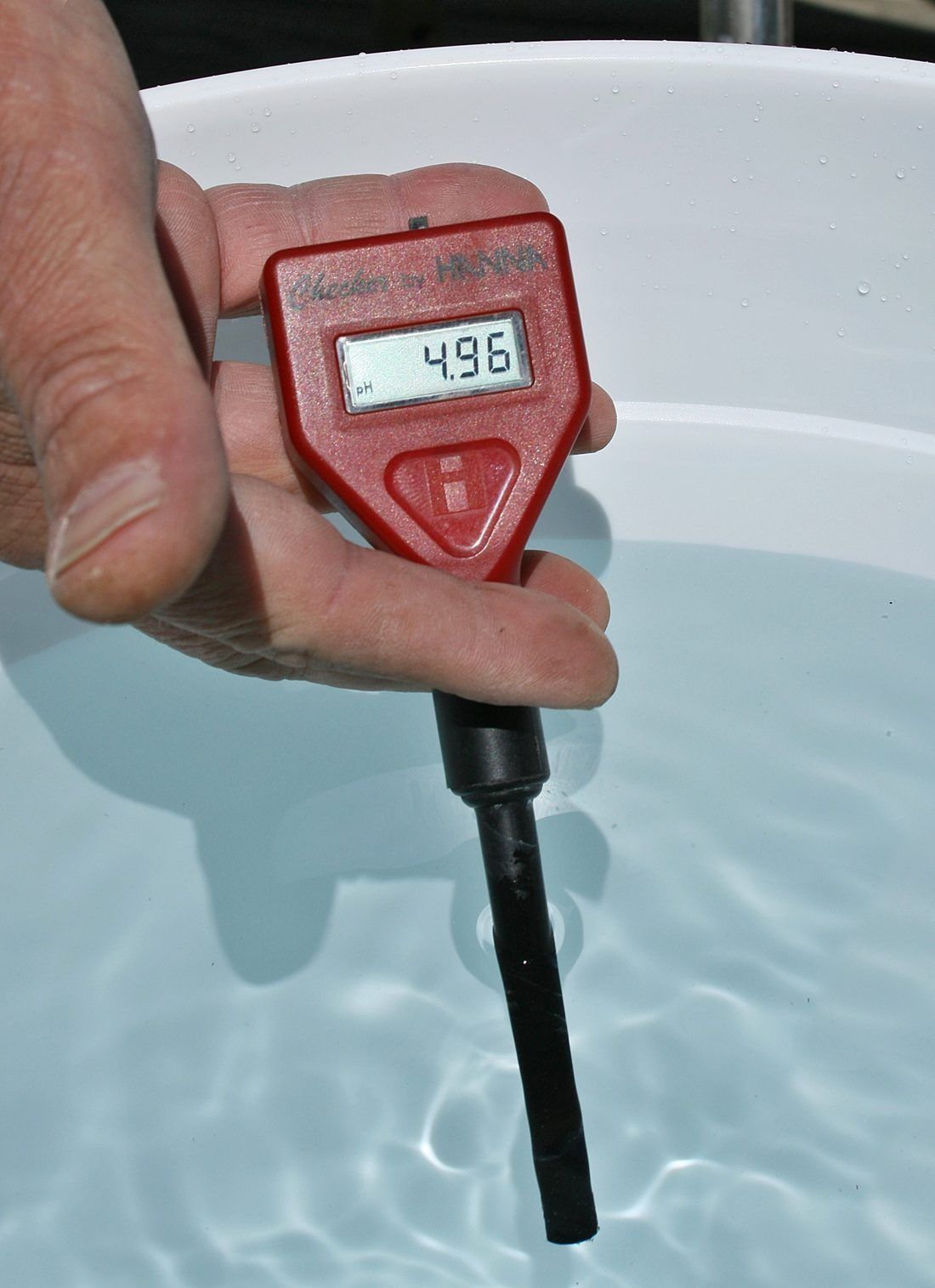
Acid. Clostridium botulinum cannot grow or produce toxin below about pH 4.6. A finished vegetable ferment lands around pH 3.4 — not marginally past that line but more than an order of magnitude past it in hydrogen-ion concentration. And crucially, the acid only increases with time. There’s no point at which a properly-started ferment ages into danger.
⭐ This is the one place on the site where I would genuinely tell you to buy a meter. In a ferment nobody adds the acid — it is grown, so nobody can predict where it lands, and a jar that stalled looks exactly like a jar that worked. Measuring pH covers what to buy, why strips are not adequate above 4.0, and the single most common way people kill a probe.
Competition. A healthy ferment is a population explosion of lactic-acid bacteria that consume the available sugar and physically occupy the niche. Even before the pH is protective, sheer numbers are.
The full succession — salt handicaps the competition, Leuconostoc opens and drives out oxygen, Lactobacillus finishes the acidification — is on The Basics.
🔴 Now the part that matters: where fermentation actually kills people
It’s Alaska, and it’s not vegetables. It’s fish and marine mammals.
In Alaska, most foodborne botulism comes from fermented fish and aquatic animals: fermented fish heads (“stinky heads”), fermented fish eggs, fermented beaver tail, fermented seal and walrus flipper, fermented whale, seal oil, and dried unsalted fish. From 1990 to 2000 there were 58 botulism events affecting 103 people in Alaska. Of the reported deaths attributed to C. botulinum in that period, one was linked to whale and one to fermented fish heads.
These are traditional Alaska Native foods with deep histories, and they are not the point of blame here. The point is the mechanism, and CDC states it directly: Alaska botulism is an age-old problem “compounded in recent decades by altering traditional practices in an unsafe manner, in particular, to include the use of plastic or glass containers for fermentation.”
Read that again, because it is the single most instructive sentence in this entire section.
The traditional method was a grass-lined pit in cool ground — cool, and gas-permeable, and never fully anaerobic. The modernization was a sealed plastic bucket or glass jar, often above ground and warmer. Same food, same recipe, same people. Different vessel.
Switching to the “cleaner,” more modern, more convenient container is what made a traditional food lethal. It made it warmer and it made it airtight, and warm plus airtight plus low-acid protein is precisely the C. botulinum specification.
I find that genuinely sobering, and it reframes the whole enterprise. The lesson is not “traditional methods are safe” and it isn’t “modern equipment is better.” It’s that the vessel and the temperature are part of the recipe, and changing them changes the microbiology whether or not you meant to.
So the actual risk axis isn’t fermentation — it’s what you’re fermenting
Line the whole category up by risk and it sorts cleanly, and not by how old or how “natural” the process is:
Lowest risk — acidifying plant ferments. Sauerkraut, kimchi, cucumber pickles, fermented vegetables generally. Low-protein, sugar-bearing, rapidly self-acidifying, no documented botulism. The salt-and-submerge rules are all you need.
Low risk — cultured dairy. Yogurt, kefir, buttermilk. You add a large, vigorous, known culture that acidifies fast, which is a strong defense. The real dairy hazards are upstream — raw-milk pathogens — not the fermentation.
Low risk — acidic beverages. Kombucha, water kefir, tepache. Very acidic, very fast. Their documented problems are a different category entirely: leached lead from glazed vessels and over-acidification, not botulism. See Vessels & Crocks.
Moderate risk, well-managed — mold ferments. Koji, miso, tempeh, natto. You’re deliberately growing a fungus, so strain purity and temperature control genuinely matter. High-salt miso is very stable; a warm 30-hour tempeh incubation is the one to respect. Buy known spores; don’t wild-catch a mold.
🔴 Highest risk — low-acid protein ferments. Fermented fish, fermented meats, anything where the substrate is protein rather than sugar and the pH does not drop fast or far. This is where every fatality is. These are exactly the ferments that require added nitrite, controlled temperature and humidity, measured starter cultures, and pH monitoring — the whole apparatus of fermented sausage — and it’s why that apparatus exists.
I’ll say this plainly because I make sausage too: the industrialization of protein fermentation was a public-health win. Measured cure, standardized starter cultures and controlled chambers made fermented sausage dramatically safer than traditional guesswork. That’s the opposite of the vegetable story, where industrialization mostly made things blander. Both are true at once.
And a hard finding from the Sausage work that belongs here too: the hurdle stack for raw fermented sausage has no validated lethality against Salmonella and STEC — FSIS’s own Q&A answers that question “No,” and there have been outbreaks at plants meeting every control. Raw fermented meat is a genuinely unsolved problem. Raw fermented cabbage isn’t.
The one line that governs everything
Below pH 4.6, botulism cannot happen. Above it, in an anaerobic low-acid environment, it can. Every rule in fermentation is downstream of getting to and staying below that number, fast.
That’s also why the pickled-egg finding from the Marinated Eggs dive belongs here as the cautionary mirror image. In the CDC’s home-pickled-egg botulism case, the pickling liquid was pH 3.5 — fully adequate to prevent germination. The acid was never the problem. The eggs had been punctured with toothpicks, held at room temperature and exposed to sunlight, and toxin was found a thousand times more concentrated in the yolks than the brine. The acid never reached the inside of the egg.
Same lesson as Alaska, different food: it isn’t the recipe, it’s whether the protection actually reaches everywhere it needs to. Acid in the jar doesn’t help the part of the food the acid can’t get into.
The practical rules
Short list. Everything else is flavor.
- Salt by weight, at the specified percentage. NCHFP: “Do not attempt to make sauerkraut or fermented pickles by cutting back on the salt required.” Salt is a control.
- Keep everything under the brine. Always. This is the one you’ll be tempted to fudge.
- Ferment in the right temperature window. 60–75 °F for vegetables. Above 80 °F you get soft and you narrow your margin. Don’t ferment vegetables warm to hurry them.
- Use the right vessel — non-reactive, food-grade, uncrazed, and known glaze. See Vessels & Crocks.
- Don’t scale the salt down and don’t scale the sugar up in a recipe you didn’t test.
- Use a tested recipe for anything canned afterward. Fermenting is forgiving; canning the result is not. If you want shelf-stable jars, follow a tested process from NCHFP exactly.
- Trust your nose, and be willing to throw it out. A ferment that has gone wrong is not subtle. Losing a batch costs a few dollars.
When to throw it out
Genuinely fine, don’t worry:
- Cloudy brine, white sediment, vigorous bubbling then none, brine overflowing, a strongly sour or sulfurous smell, softening at the very top layer, discoloration of the top ⅛ inch.
- Kahm yeast — a flat, wrinkled, white or cream film on the surface. Harmless. Skim it.
Throw it out:
- Fuzzy, raised, colored mold — blue, green, black, pink, orange — especially through the body of the ferment rather than just a spot on the surface.
- Any smell that reads as putrid, rotten, fecal, or cheesy rather than sour.
- Slimy or ropy brine with an off smell (a little viscosity early in a ferment can be normal and pass; slime plus a bad smell does not).
- Anything from a cracked, crazed, or unknown-glaze vessel that you have doubts about.
- Anything that was above the brine for a long stretch, or that you found with the weight floated and the surface dry.
- Anything you’re not sure about. This is the real rule. The value of the batch is less than the value of not eating it.
Full diagnostics with the kahm-versus-mold distinction are on Troubleshooting.
Who should be more careful
Non-negotiable, and worth saying because the fermentation world can be evangelical:
- Immunocompromised people, pregnant people, young children, and the elderly should be more conservative about live-culture foods generally, and Poison Control states specifically that young children, pregnant people and the immunocompromised should not drink kombucha, home-brewed or commercial.
- Histamine intolerance is real and fermented foods are high in histamine and other biogenic amines. If ferments reliably give you headaches or flushing, that’s a plausible mechanism and not something to push through.
- Sodium. A 2.25% ferment is a salty food, and the brine is saltier than the vegetable. That matters if you’re managing blood pressure.
- MAO inhibitors interact with the tyramine in aged and fermented foods. That’s a real pharmacological interaction to discuss with a doctor, not internet caution.
What I actually do
Thirty-plus years in, here’s my whole safety practice, and it’s short: I weigh the salt on a scale. I keep everything under the brine. I ferment cool. I use vessels I know the provenance of — which, after doing this research, now includes actually testing the antique ones. And I throw out anything that smells wrong without arguing with myself about it.
That’s it. I’ve never had a ferment make anyone sick. I’ve thrown out maybe half a dozen batches over three decades, every one of them because I let something ride above the brine.
The failure mode of this hobby is a wasted cabbage. That’s a good failure mode to have.
Where to go next
- Troubleshooting — kahm versus mold, soft pickles, stalled ferments.
- Salt & Water — the percentages, and how to compute a brine.
- Vessels & Crocks — the lead-glaze question, in detail.
- Beyond Vegetables — the protein ferments, where the real risk lives.
Comments (0)