Yogurt
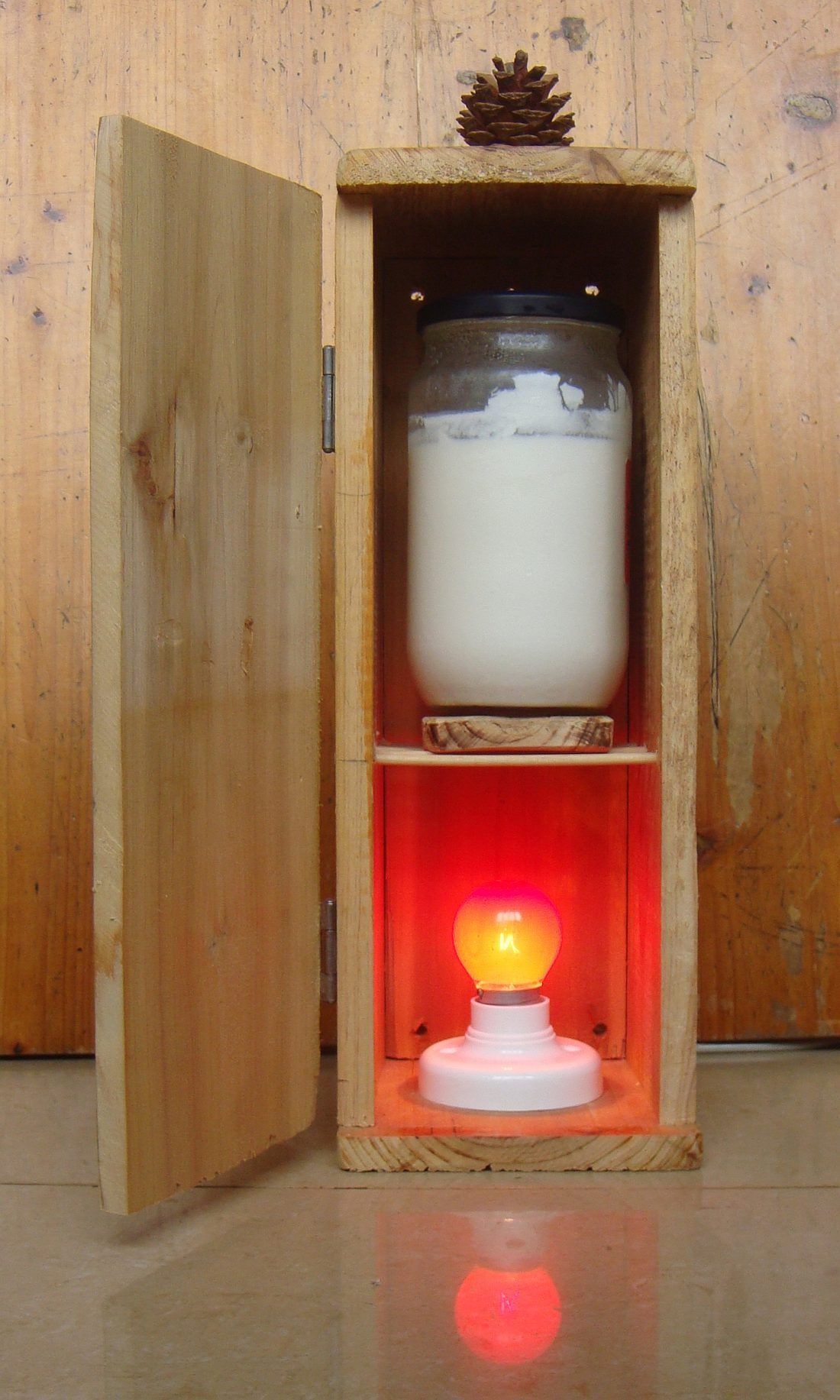
I have made a lot of yogurt. I started in the early 1980s, and my first incubator was a cardboard box with a light bulb in it, controlled by a PID controller, holding a rack of half-pint jars at temperature.
I built that rig because I wanted the yogurt to come out the same way every time. What I did not know then — and what makes me happier about it now than I was at the time — is that a tight temperature hold isn’t merely a consistency trick. Temperature is the dial that decides which of yogurt’s two organisms wins, and that decision is the flavor. That cardboard box wasn’t keeping jars warm. It was authoring the yogurt.
🔴 Legally, yogurt is exactly two organisms
The US standard of identity, 21 CFR 131.200, is unusually specific, and it settles several arguments at once. Yogurt is milk cultured with a characterizing bacterial culture containing:
- Lactobacillus delbrueckii subsp. bulgaricus, and
- Streptococcus thermophilus
plus not less than 3.25% milkfat and not less than 8.25% milk solids not fat, and a pH of 4.6 or lower measured on the finished product within 24 hours after filling.
FDA modernized this standard in a final rule issued 11 July 2021, with compliance required for products labeled on or after 1 January 2024; the same rule revoked the separate lowfat and nonfat yogurt standards that used to live at 21 CFR 131.203 and 131.206.
Two things fall out of that, and both are useful:
1. Every other culture on a yogurt label is an addition. L. acidophilus, Bifidobacterium, L. casei, L. rhamnosus — all of those are extras added on top of the two organisms that legally make it yogurt. There’s nothing wrong with them. But “contains 6 live cultures!” is marketing about the four optional ones.
2. pH 4.6 again. That’s the same threshold as the canning acid line and the botulism line. Not a coincidence — the same organism, the same chemistry. The legal definition of yogurt has a food-safety number built into it.
🔴 Why 110 °F is not either bug’s favorite temperature
Here’s the finding that reframes the whole page.
The standard advice is to incubate yogurt at about 110 °F — extension guidance gives 42–44 °C (108–111 °F) for 4 to 8 hours, inoculating the milk at 110–112 °F, with a working figure of 110 °F ± 5 for 4–7 hours. Fine. Everyone knows that.
But look at what the two organisms actually prefer:
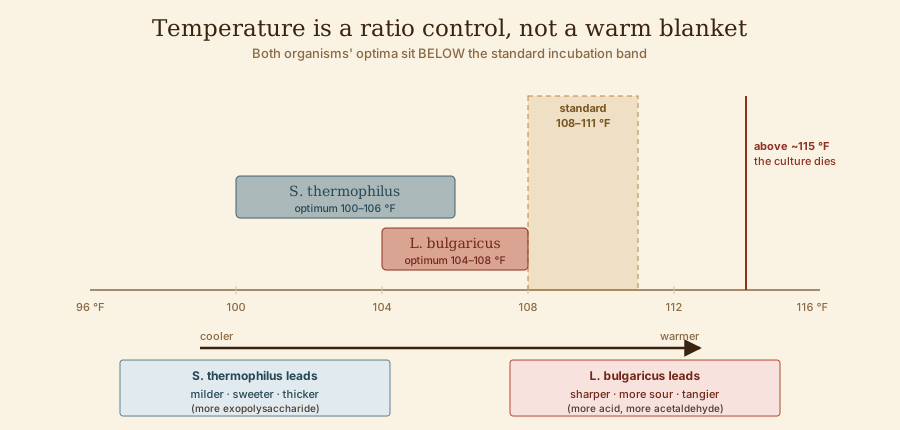
- Lactobacillus bulgaricus grows best at 104–108 °F
- Streptococcus thermophilus prefers 100–106 °F
Both optima are below the standard incubation temperature. So 110 °F isn’t chosen because it’s where either organism is happiest. It’s chosen because of what it does to the balance between them — and the balance is what you taste.
Run warmer and L. bulgaricus pulls ahead. More acid, faster, sharper, more sour, more of the acetaldehyde that gives yogurt its characteristic tang.
Run cooler and S. thermophilus leads. Milder, sweeter, slower, and noticeably more viscous — S. thermophilus strains are the bigger producers of the exopolysaccharides that thicken yogurt without additives.
A 1986 study on their associative growth found that temperature influences the two organisms’ compatibility by determining the concentration or type of stimulatory factor(s) produced by L. bulgaricus — that is, temperature doesn’t just change their growth rates independently, it changes how they talk to each other.
Therefore: holding temperature tightly is not fussiness, and it isn’t only about reliability. It is flavor authorship. A few degrees is the difference between mild-and-thick and sharp-and-tangy, made with identical milk and identical culture.
Which means the PID controller on that light bulb in 1982 was doing real work, and doing more of it than I understood. Set it warm for tang. Set it cool for thick and mild. Hold it, and you get the same yogurt every time — which is only worth wanting once you’ve chosen which yogurt you want.
The symbiosis
The two organisms don’t just coexist, they feed each other — the accepted picture, and the reason they’re paired in the first place:
- S. thermophilus goes first. It scavenges dissolved oxygen (making the milk anaerobic, which L. bulgaricus prefers) and produces formic acid and CO₂, which stimulate L. bulgaricus.
- L. bulgaricus repays it. It’s the stronger proteolytic organism — it breaks milk proteins into peptides and free amino acids, which S. thermophilus needs and can’t liberate for itself.
Each one makes the milk more hospitable for the other. Together they acidify faster than either does alone. This is called protocooperation, and it’s a genuinely elegant piece of microbiology that somebody stumbled into thousands of years before anybody could describe it.
Making it
The whole process is: heat the milk, cool it, add culture, hold it warm, chill it.
1. Heat the milk to 180–185 °F, holding for 10–20 minutes.
This step is not pasteurization — even pasteurized milk benefits, and here’s why. Heating to 180 °F denatures the whey proteins (chiefly β-lactoglobulin), which then bond into the casein network as it sets. The result is a markedly thicker, firmer yogurt with less whey separation. This is the single biggest quality lever after temperature, and it’s the step people skip.
The longer you hold at 180 °F, the thicker the result — 20–30 minutes gives noticeably more body than 10. It also cooks off a little water, concentrating the solids.
2. Cool to 110–112 °F. A water bath in the sink speeds this up. Don’t add culture hot; you’ll kill it.
3. Inoculate. Either:
- A few tablespoons of live yogurt per quart, from your last batch or a store-bought plain yogurt with live cultures. Temper it with a little warm milk first so it disperses instead of clumping.
- A freeze-dried starter, which is more consistent and doesn’t drift.
4. Hold at temperature for 4–8 hours. Options, worst to best:
- Oven with the light on (drifts, but works)
- Cooler with jars of hot water (works, drifts down)
- Instant Pot / multicooker yogurt setting (good, convenient)
- Dedicated yogurt maker (good, small)
- Sous-vide circulator in a water bath (excellent, precise)
- A box, a heat source, and a controller (excellent, cheap, and yours)
5. Chill without disturbing it. Move it to the fridge and leave it alone for several hours. The set firms considerably as it cools. Jostling a warm set yogurt breaks the gel and you get weeping.
Half-pint jars, which is what I’ve always used, are worth recommending: they come to temperature fast and evenly, they portion themselves, and if one batch fails you’ve lost a little.
Milk choices
| Milk | Result |
|---|---|
| Whole | Richest, best texture. My default |
| 2% / 1% | Works; thinner. Add milk powder if you want body |
| Skim | Thin and tart. Needs added solids |
| Ultra-pasteurized (UHT) | Controversial — some report poor sets, and the proteins are already denatured. It does work, and it needs no heating step. Try it before believing either camp |
| Raw | Makes lovely yogurt, and heating it to 180 °F pasteurizes it anyway — so the raw-milk benefit is largely lost in the process. Know that going in |
| Goat | Naturally thinner (different casein structure), tangier. Excellent, but don’t expect a firm set |
| Sheep | Very high solids — thick, rich, superb |
| Cream added | A splash makes a luxurious yogurt |
To thicken without straining: add ⅓–½ cup nonfat dry milk powder per quart. It raises the solids directly. Slightly chalky if you overdo it.
Strained, Greek, skyr, labneh
All the same trick — remove whey — at different intensities.
- Greek yogurt — strained until roughly twice as concentrated. Thick, high protein, tangy.
- ⚠ “Greek-style” — often not strained but thickened with added milk protein concentrate, starch, or gums. Read the label. It’s a different product wearing the name.
- Skyr — Icelandic. Traditionally made with rennet as well as culture (technically closer to a fresh cheese) and strained very hard. Extremely thick, very high protein, quite mild.
- Labneh — Levantine. Strained until spreadable, salted, often rolled into balls and stored under olive oil. Somewhere between yogurt and cheese, and one of the best things you can do with a batch.
Strain in cheesecloth or a fine sieve in the fridge. One hour = thicker yogurt; 4 hours = Greek; overnight = labneh. Roughly half the volume leaves as whey.
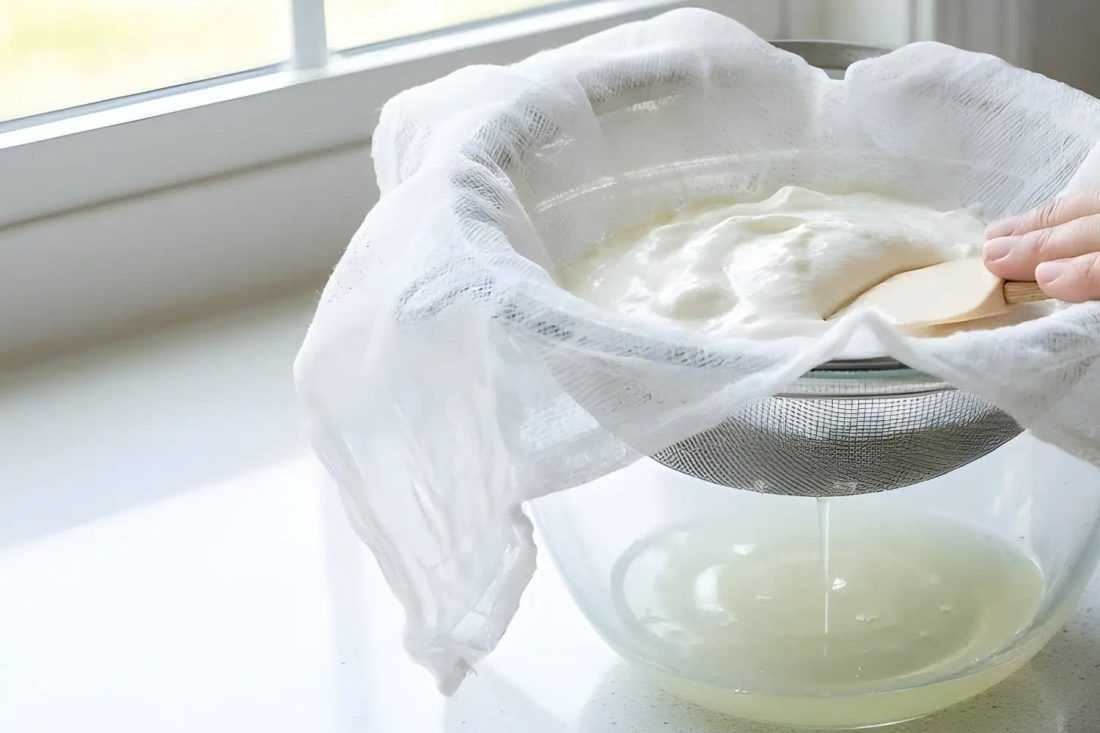
Save the whey. It’s a real ingredient — bread liquid (excellent), a soup base, a smoothie addition, the cooking water for grains, a marinade, or plant food. Pouring it down the sink is throwing away half of what you made.
The world’s yogurts
The same organisms, differently handled, everywhere:
- Dahi (India) — the yogurt of the subcontinent, set daily, often from a spoon of the previous batch. The base of raita, lassi, and countless curries. Traditionally set in clay pots, which wick moisture and thicken it.
- Ayran (Turkey) / doogh (Iran) — salted yogurt drinks, often with mint and sometimes carbonated. Deeply refreshing, and the salted-yogurt-drink concept is worth trying if you only know sweet ones.
- Lassi (India) — sweet, salted, or mango. And chaas / buttermilk — thinner, spiced.
- Matsoni / Caspian Sea yogurt — a mesophilic yogurt (see below) from the Caucasus. Sets at room temperature, mildly ropy.
- Viili — Finnish, and my favorite of the odd ones. Also mesophilic, and famously ropy — you can lift it in strands. It’s cultured by Lactococcus lactis subsp. cremoris plus a mold, Geotrichum candidum, which grows a velvety layer on the surface. Finnish immigrants brought it to Michigan’s Upper Peninsula, and it’s on the Finnish Table page for exactly that reason.
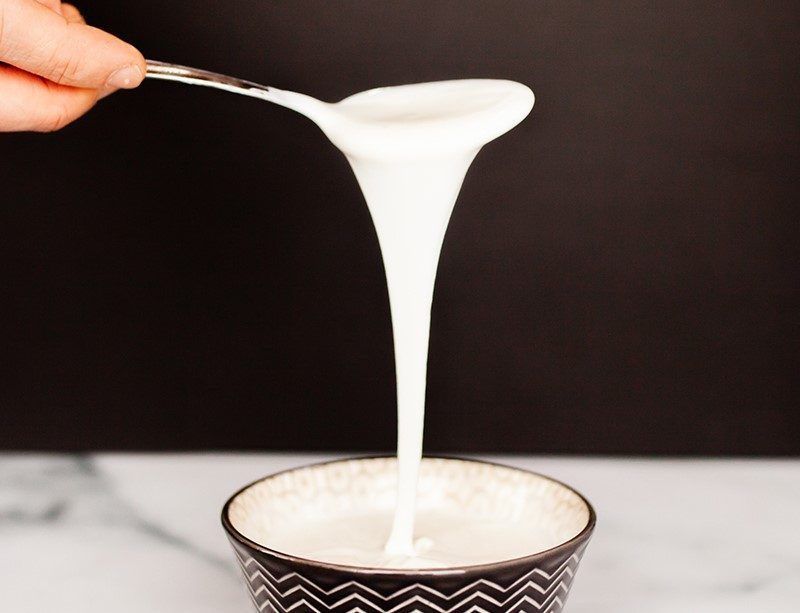
- Filmjölk, långfil (Scandinavia) — more mesophilic soured milks; långfil is spectacularly ropy.
- Kefir — related but genuinely different: a mixed bacteria-and-yeast culture on a grain matrix. Its own page.
Mesophilic versus thermophilic — the distinction worth knowing
Thermophilic cultures (true yogurt, L. bulgaricus + S. thermophilus) need ~110 °F and therefore need an incubator.
Mesophilic cultures (viili, matsoni, filmjölk, buttermilk) work at room temperature, 70–77 °F — set it on the counter and forget it.
If you don’t want to build or buy an incubator, make a mesophilic culture instead. Nobody tells beginners this and it’s the single most useful practical fact on the page. Viili on the counter is easier than yogurt in an oven, and it’s a more interesting product.
Where it goes wrong
Didn’t set at all. Temperature too low or too high (above ~115 °F kills the culture); dead starter; added the culture while the milk was too hot; or antibiotic residue in the milk. Check the starter first.
Thin and runny. Skipped or shortened the 180 °F hold — the usual cause. Or low-solids milk, or under-incubation.
Too sour. Incubated too long or too warm. Pull it earlier next time, or drop the temperature.
Grainy or curdled. Overheated during incubation, or the starter was stirred in while the milk was too hot.
Watery whey on top. Some is normal — stir it back in. A lot means the set was disturbed while warm, or the 180 °F hold was skipped.
Ropy or slimy. In true yogurt, usually a contaminating organism, and I’d start over. In viili it’s the whole point.
Cultures weakening over generations. Real. Backslopping (using each batch to start the next) drifts, because the two organisms don’t stay in balance indefinitely. Around 10–20 generations is a reasonable expectation before flavor and set degrade. Then start fresh from a commercial starter. This is exactly what a purchased freeze-dried starter avoids.
Where to go next
- Non-Dairy Yogurt — why plant milks behave completely differently, and what actually works.
- Kefir — the grain-based cousin, and the culture you cannot make from scratch.
- Cheese — where a longer, ranker, rennet-driven version of this goes.
- Egg Temperatures — the other place in this collection where a few degrees decides the whole outcome.
Comments (0)