Fermented Cucumber Pickles
A real fermented pickle — a cucumber that made its own acid in a salt brine over weeks — is a different food from the vinegar pickle in the supermarket, and it is my favorite thing I make. It’s also the hardest of the common vegetable ferments, which is why I tell people not to start here. Cucumbers have a texture problem that cabbage doesn’t, and the classic beginner heartbreak is opening a crock to find pickle-shaped mush.
Everything on this page is about getting the crunch and the sour at the same time.
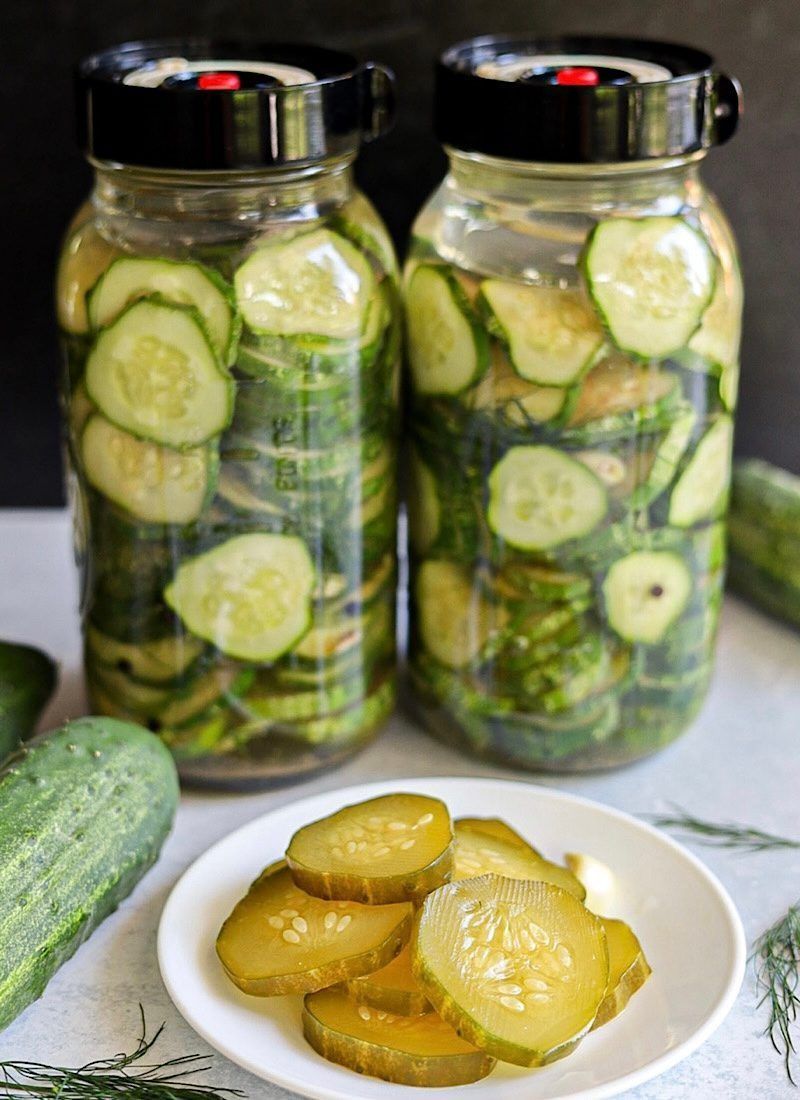
What makes a real pickle
A vinegar pickle has finished acid poured over it and is usually heated. A fermented pickle grows its own acid: lactic-acid bacteria on the cucumber skin convert the cucumber’s sugars into lactic acid over weeks, in nothing but salt water.
You can taste the difference immediately. Vinegar gives you a sharp, one-note, front-of-the-mouth sourness. Lactic acid is rounder, deeper, and comes with all the aromatic byproducts of a living ferment. A proper full-sour deli pickle has a savory, almost brothy quality that vinegar cannot reach.
Neither is wrong — I make both, and the vinegar version is on Pickling. But they’re different foods, and most Americans have never eaten the fermented one.
The tell in a store: a fermented pickle is in the refrigerated case, the label says salt and water and not vinegar, and the brine is cloudy. Shelf-stable pickles in clear brine are vinegar pickles.
The cucumber is most of the outcome
More than any other ferment, this one is decided before you start.
Use pickling cucumbers. Kirby, Boston Pickling, National Pickling, or whatever the local variety is. They are bred for this: dense flesh, small seed cavity, thin skin, low water content, and no wax.
Do not use slicing cucumbers. The long dark-green waxed supermarket cucumber is bred for salad — high water, big seed cavity, thick waxed skin. It will go hollow and soft. English/hothouse cucumbers are worse.
Freshness is not negotiable, and this is the real secret. Pick or buy them and ferment them the same day if you possibly can, and within 24 hours regardless. A cucumber begins losing firmness and developing softening enzymes the moment it’s picked, and a three-day-old cucumber is already compromised before it hits the brine. If you have any control over the supply chain — a garden, a farm stand, a farmers’ market first thing — use it. This single factor separates good pickles from disappointing ones more than any technique on this page.
Size: 3–4 inches for whole pickles. Uniform, so they ferment evenly.
Reject: anything soft, yellowing, bruised, or with a soft spot. One bad cucumber will soften a whole crock.
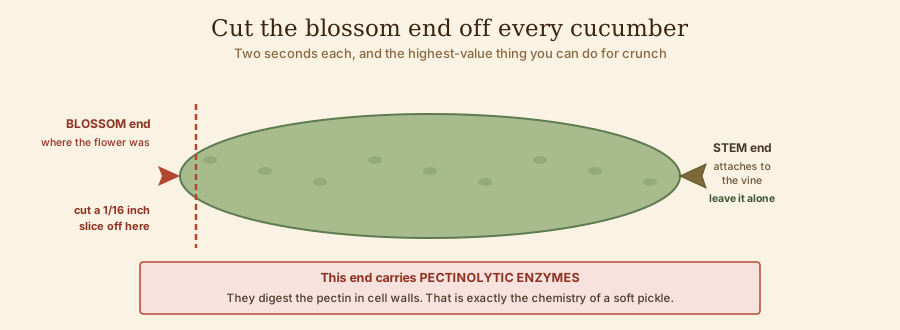
🔴 Cut off the blossom end
This is the highest-value tip on this page and it takes two seconds per cucumber.
NCHFP, verbatim:
“Remove and discard a 1/16-inch slice from the blossom end of fresh cucumbers, as blossoms may contain an enzyme which causes excessive softening of pickles.”
The blossom end is the narrow end, away from the stem — where the flower was. It carries a concentration of pectinolytic enzymes, which digest the pectin in cell walls. That is precisely the chemistry of a soft pickle, and it’s sitting on one end of every cucumber.
Slice a thin coin off the blossom end of every single cucumber. Nothing else you do about texture matters as much.
Related: remove any actual blossoms, and don’t ferment cucumbers with flowers attached. Same enzyme, same problem.
The brine
Cucumber pickles use a much stronger brine than sauerkraut, and the numbers look alarming until you understand why.
Kraut is shredded and salted at 2.25% of the vegetable’s weight — the cabbage makes its own brine. Cucumbers are whole and can’t be crushed, so they’re submerged in a brine you mix, computed as a percentage of the water. Traditional brined-cucumber fermentation runs 5–8% salt by weight of the water.
Those aren’t comparable figures. Once osmosis equalizes salt between the brine and the cucumber interiors, a 5% brine around cucumbers ends up in similar overall territory to a 2.25% kraut. The high number is the starting condition of the liquid, not the finished food.
Why so strong:
- Crunch. Higher salt keeps pectin firm. This is the main reason.
- Selectivity. A whole cucumber ferments slowly, so the vulnerable early window is longer and needs more salt covering it.
- Because the vegetable dilutes it. A crock is mostly cucumber, and all of it contains water that will join the brine.
To mix a brine: water weight × percentage. Water is easy — 1 litre = 1000 g — so 2 litres of water at 5% needs 100 g of salt. Dissolve fully, and cool it completely before it goes near the cucumbers.
⚠ A number I’m deliberately not printing. I wanted to give you NCHFP’s own tested salt weight for fermented dills, and I couldn’t retrieve their recipe page — the old URL is dead and the new one didn’t render the recipe body for me. Home recipes in the wild vary a lot and are not interchangeable. The 5–8% band above is sound and generally sourced, and the temperature and timing figures below are NCHFP’s. But for a tested, specific, follow-it-exactly recipe — especially if you intend to can the result — go to NCHFP directly rather than trusting a number I couldn’t verify. I’d rather tell you where the gap is than fill it with something authoritative-sounding.
Temperature and time — NCHFP’s numbers
These I can give you precisely, and they matter enormously for cucumbers:
- 70–75 °F for about 3 to 4 weeks — the standard window for a full ferment.
- 55–65 °F is acceptable but takes 5 to 6 weeks.
- 🔴 Above 80 °F and the pickles become too soft during fermentation.
That last line is the one to tape to the wall. Heat is the other half of the softening problem, along with the blossom-end enzymes. A hot kitchen in August — which is exactly when cucumbers are in season, cruelly — is working against you. Ferment in the coolest place you have.
NCHFP also notes: “Regular dill pickles and sauerkraut are fermented and cured for about 3 weeks. Refrigerator dills are fermented for about 1 week.”
Sizing rule of thumb: 1 gallon of container per 5 lb of vegetables.
The other crunch weapons
Beyond fresh cucumbers, the blossom end, high salt, and cool temperature:
Tannins. Grape leaves, oak leaves, horseradish leaves, or a black tea bag in the crock. The mechanism is real — tannins inhibit pectinolytic enzymes. The effect is modest but it’s traditional, free, and harmless. Two or three grape leaves in a gallon crock, laid on top.
Calcium chloride (“Pickle Crisp”). The honest modern answer, food-grade, genuinely effective. Calcium ions cross-link pectin. It isn’t traditional and it isn’t a fermentation aid — it’s a texture aid, and it works.
Alum. Traditional, and NCHFP doesn’t recommend it. Use calcium chloride instead.
Horseradish root. A chunk in the crock. Tannins, plus antimicrobial compounds, plus it tastes good. Traditional in Eastern Europe and it does something.
Don’t over-trim, don’t slice. A whole cucumber with intact skin holds up vastly better than spears, and spears better than chips. If you want fermented chips, make them and eat them within a couple of weeks.
Half-sour, full-sour, and what those words mean
The deli vocabulary is genuinely descriptive — it’s about how far down the pH curve you stopped.
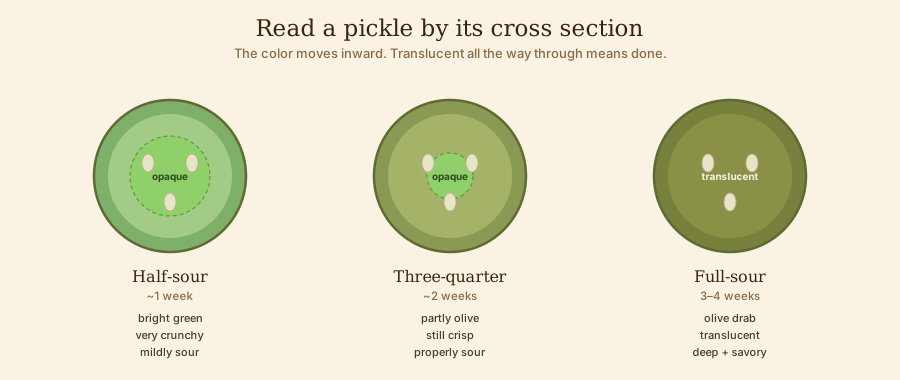
Half-sour. About a week. Still bright green, still very crunchy, mildly sour, tastes recognizably of cucumber. Lower salt, short ferment, straight to the fridge. This is the New York deli “new pickle” and it’s my favorite in high summer.
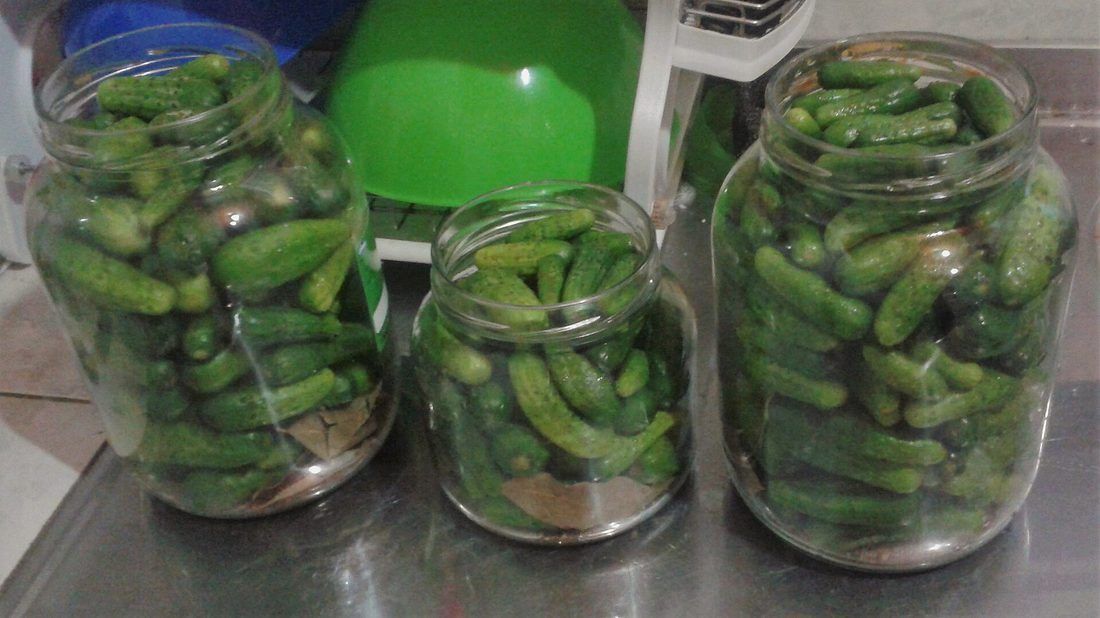
Three-quarter sour. Two weeks-ish. In between. Partially olive-colored.
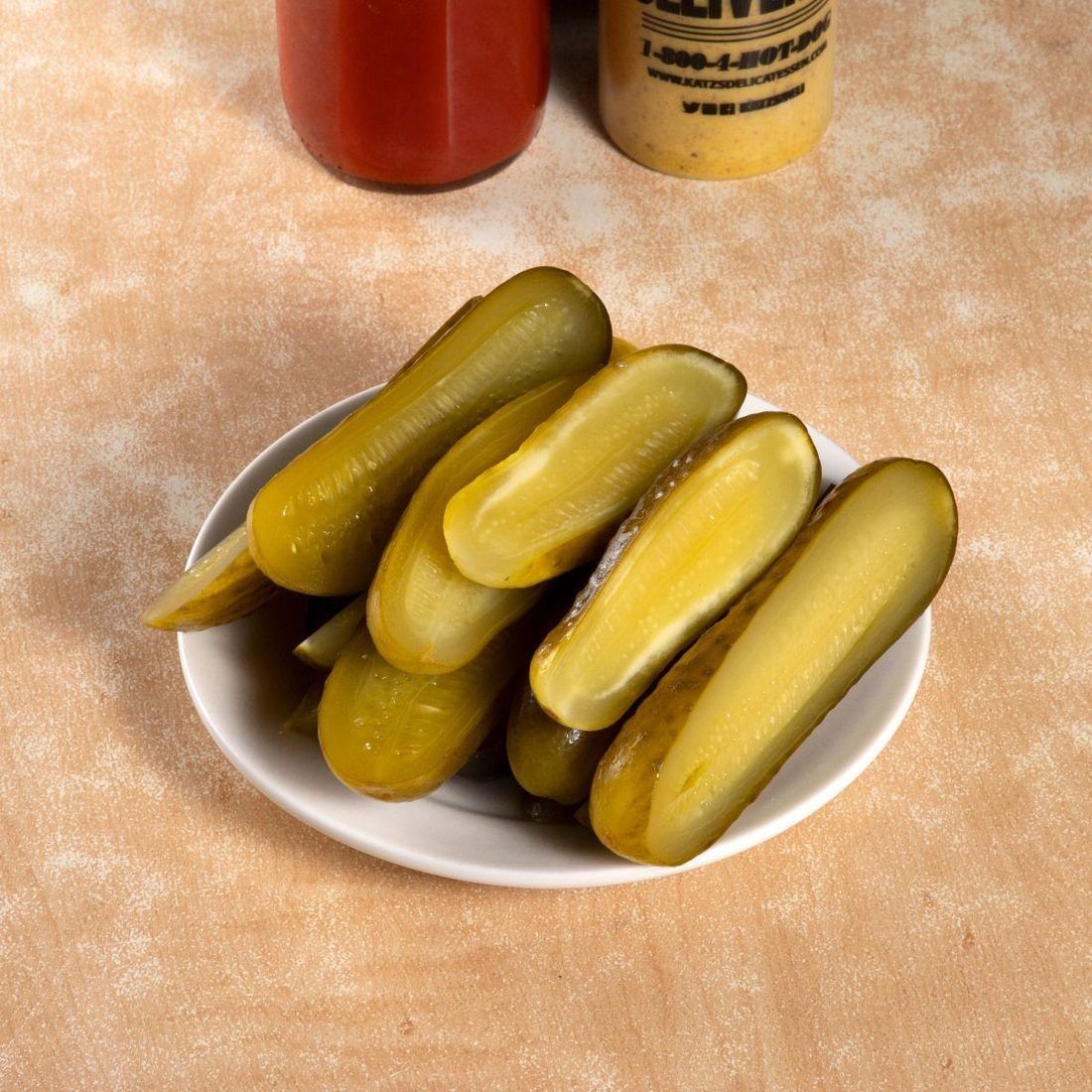
Full-sour. Three to four weeks or more. Olive-drab all the way through, translucent, deeply sour, savory and complex, softer but still with snap if you did the other things right. The classic “kosher dill” of a real Jewish deli — and kosher there refers to the garlic-and-dill style, not to religious certification.
The visual tell is reliable: a fermented pickle goes from bright green to olive-drab as the acid works on the chlorophyll, and it goes translucent as the brine penetrates. Cut one in half — if the center is still opaque bright green, it isn’t done.
What goes in the crock
The classic garlic-dill:
- Cucumbers, blossom ends trimmed
- Dill — whole heads with seed if you can get them; dill seed otherwise. Heads are better.
- Garlic — a lot. Whole peeled cloves, 6–10 per gallon. It ferments too and it’s delicious.
- Black peppercorns, whole
- Mustard seed — yellow or brown
- Coriander seed, optional, very good
- Bay leaf
- Grape or horseradish leaves for tannin
- Dried chile or fresh hot peppers, optional
- Horseradish root, a chunk, optional
Layer aromatics with the cucumbers rather than dumping them on top, brine to cover, weight it, and keep everything submerged.
The timeline
Days 1–3: cloudiness begins in the brine. Bubbles start. The smell is faintly sour and garlicky.
Days 3–7: active fermentation, sometimes vigorous. Brine goes properly cloudy and may foam. This is when a surface film is most likely — see below. The color starts to turn at the skin.
Week 1: half-sour stage. Taste one.
Weeks 2–3: color moves inward, sourness builds, brine settles and clears somewhat.
Weeks 3–4: full-sour. Olive throughout, translucent. Taste every few days from week two and stop when you like it.
Then refrigerate. Cold slows it to a crawl. They’ll keep for months and slowly get more sour.
Expect a surface film, and know what it is
Cucumber ferments throw a surface film more readily than kraut does, partly because the brine is clear and still and the vegetables are whole.
Kahm yeast — a flat, wrinkled, white or cream-colored film, sometimes with a slightly powdery look. Harmless. It’s a wild yeast that tolerates acid and needs air, so it colonizes the surface. It can impart a slightly musty flavor if you let it go, so skim it off when you see it and get on with your life.
Mold — fuzzy, raised, and colored: blue, green, black, pink, orange. Different thing, different answer. See Troubleshooting, which has the distinction laid out properly, because getting this one wrong in either direction costs you either a good batch or a bad decision.
NCHFP notes that fermenting crocks were traditionally checked and skimmed regularly, and that’s the right instinct: look at it every few days. A water-sealed Gärtopf largely eliminates the problem, which is one of the strongest arguments for buying one.
The world’s other cucumber pickles
- Polish ogórki kwaszone — dill, garlic, horseradish leaf. The Central European standard, and the tradition my technique really descends from.
- Russian solyonye ogurtsy — often with blackcurrant or oak leaves, sometimes fermented in a barrel. Traditionally paired with vodka, and correctly so.
- German Salzgurken — the salted (as opposed to vinegar Gewürzgurken) cucumber.
- New York deli sour — garlic-forward, the American descendant of the Eastern European Jewish immigrant pickle, and a genuinely great regional food.
- Kosher dill — the style, garlic and dill, not necessarily a hechsher.
- Turkish and Middle Eastern turşu — mixed vegetables including cucumber, often with a splash of vinegar alongside the salt.
- Indian cucumber pickles — a different technique entirely: oil, salt and spice rather than brine, and worth knowing about as a contrast.
Other vegetables in brine, which are all easier
If cucumbers are giving you trouble, everything else in this style is more forgiving. Same method, 3–3.5% brine, two to three weeks:
Carrot sticks (excellent, stay crisp, great first added-brine ferment) · green beans (dilly beans — outstanding) · cauliflower · radishes (fast, pink brine, wonderful) · turnips (with a slice of beet for the Middle Eastern pink torshi) · whole garlic cloves (slow, may turn blue-green, harmless) · peppers (and see hot sauce mash) · asparagus · okra · green tomatoes · beets (sugary, ferment fast) · celery · cabbage wedges.
Carrots or dilly beans are the ferment I’d point a beginner at second
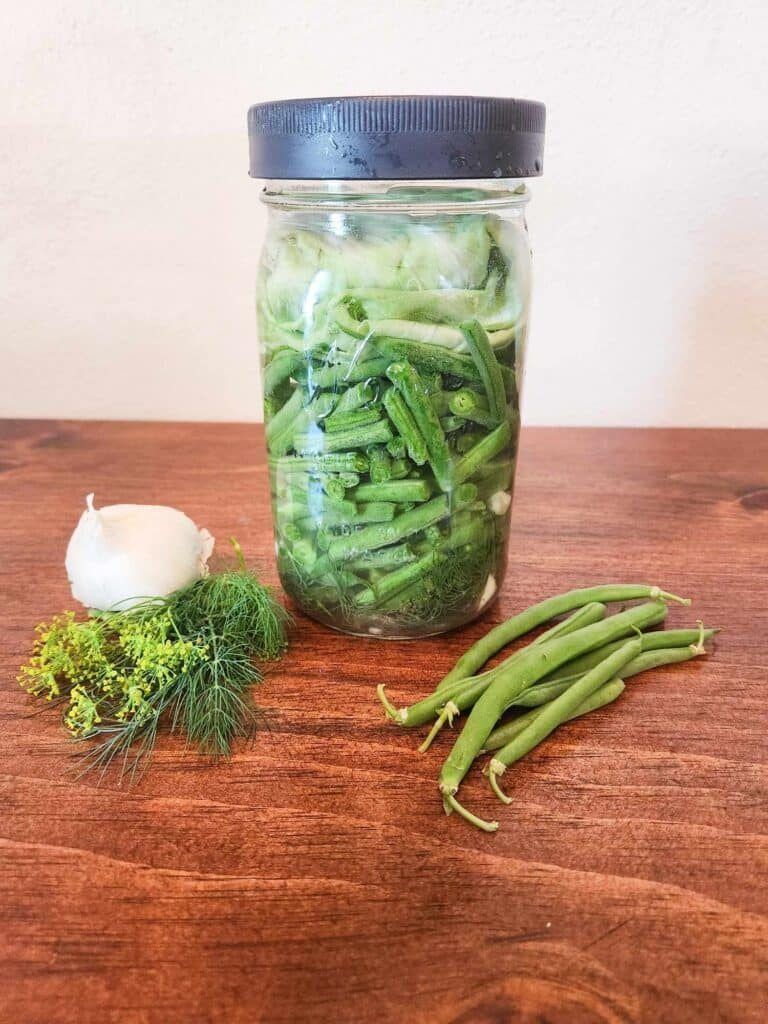 , right after kraut — they
teach added-brine math and they’re almost impossible to ruin.
, right after kraut — they
teach added-brine math and they’re almost impossible to ruin.
Where to go next
- Salt & Water — computing brines, and the salt types.
- Troubleshooting — soft pickles, hollow pickles, kahm versus mold.
- Sauerkraut — the easier, self-brining sibling.
- Pickling — the vinegar half of the pickle world.
Comments (0)