Kimchi & the Asian Table
Europe salted cabbage and stopped there. East and Southeast Asia salted, fermented, and then seasoned — and built entire cuisines whose backbone is a fermented vegetable eaten at every meal. The technique is the same lactic-acid fermentation as sauerkraut. The result is a much larger world.
I keep kimchi going more or less continuously, and I’ve tagged a number of the recipes in the collection with it — the Asian Favorites work overlaps this page constantly.
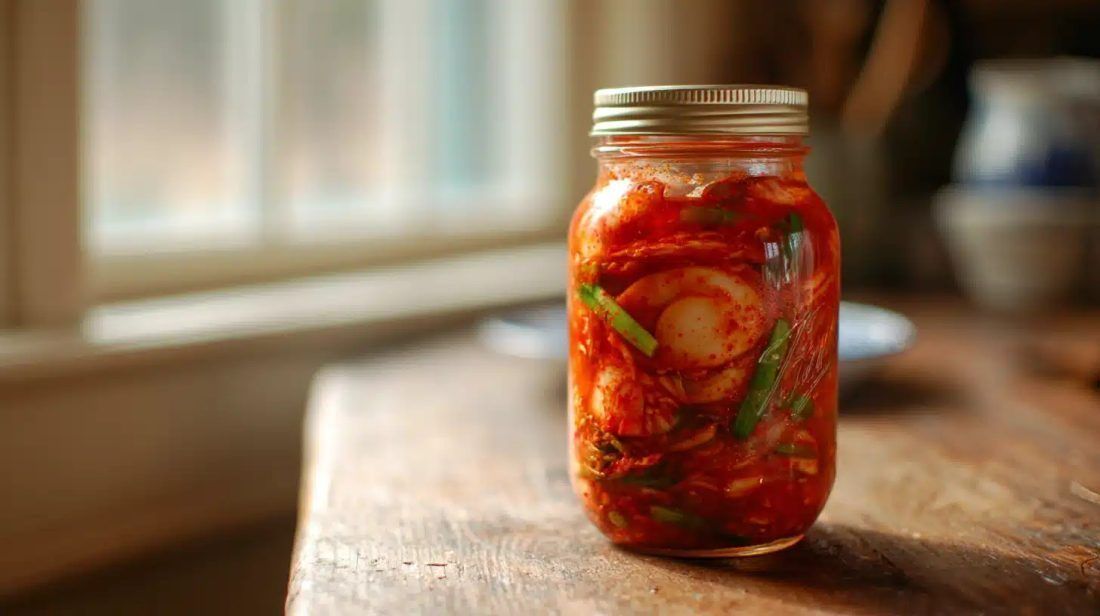
Kimchi is a category, not a recipe
There are hundreds of kimchis. Kimchi means fermented seasoned vegetables, and the one Americans know — baechu-kimchi, whole-leaf napa cabbage with red pepper — is one member of a large family. Korean sources catalog well over a hundred distinct types by vegetable, region, season, and method.
Some you should know:
| Kimchi | What it is |
|---|---|
| Baechu-kimchi | Napa cabbage, the default. Whole-leaf or cut |
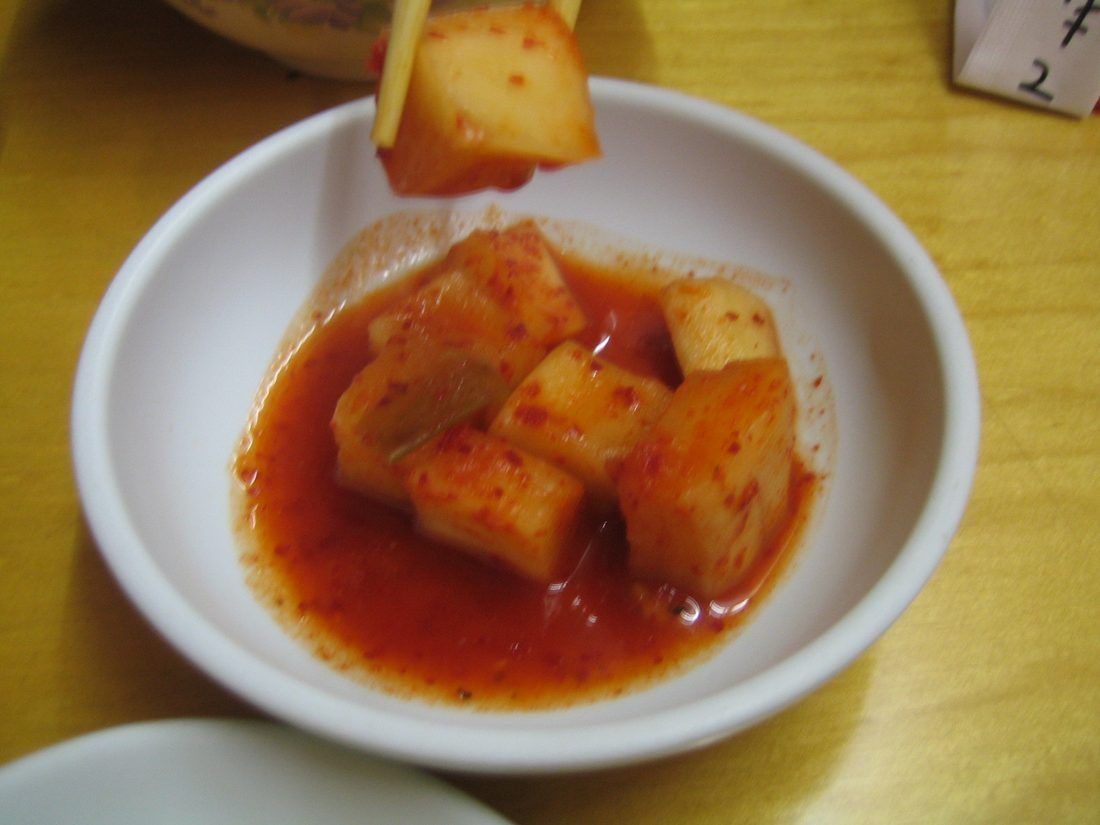
| Kkakdugi | Cubed Korean radish (mu). Crunchy, my favorite with stew |
| Oi-sobagi | Stuffed cucumber. Summer kimchi, eaten fresh |
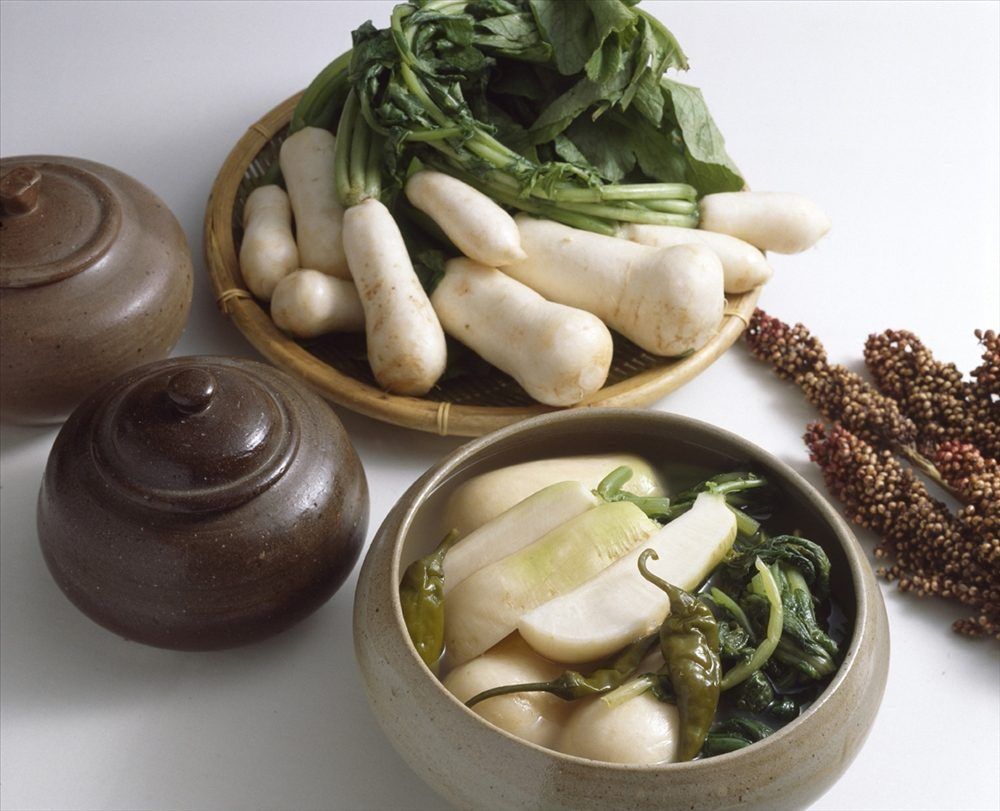
| Dongchimi | ”Winter radish water kimchi” — clear, unspiced brine, cold and refreshing |
| Nabak-kimchi | Watery, mild, pink from a little pepper. A soup-like kimchi |
| Baek-kimchi | ”White kimchi” — no chile at all. What kimchi was before chiles |
| Chonggak-kimchi | Whole young “ponytail” radishes with tops on |
| Pa-kimchi | Scallion. Assertive |
| Gat-kimchi | Mustard greens. Sharp |
| Bossam-kimchi | Wrapped parcels stuffed with fruit, nuts, seafood — the celebration version |
🔴 Kimchi was not red for most of its history
Chiles are American. They reached Korea via Portuguese and Japanese trade routes and only became a standard kimchi ingredient somewhere around the 17th–18th centuries. Kimchi is far older than that.
So for most of its existence, kimchi was a salted, fermented, seasoned vegetable without any chile — closer to what survives today as baek-kimchi (white kimchi) and dongchimi. Those aren’t modern mild variants invented for children and foreigners. They’re the older form.
If you’ve only had the red kind, make a baek-kimchi once. It tastes like the ancestor, and it’s a genuinely different and beautiful food — pear, garlic, ginger, jujube, sometimes pine nuts, in a clear brine.
The method, and why it’s two stages
Kimchi differs from kraut in one structural way: you salt and rinse first, then season.
Stage 1 — brine the cabbage. Quarter napa cabbage lengthwise, or cut into pieces. Salt it heavily — either dry-salting between the leaves or soaking in a strong brine — for 2 to 6 hours, turning occasionally. The cabbage wilts and loses a lot of water. Traditional Korean practice uses coarse solar sea salt (cheonyeom), which is genuinely different: coarse, slow-dissolving, and often aged for a year or more to mellow its bitterness.
Stage 2 — rinse, drain, and dress. Rinse the salt off — two or three changes of water — and drain well. Then coat every leaf with the seasoning paste.
Why rinse? Because the finished kimchi needs to be seasoned, not salt-preserved. The salt did its job in stage 1: it drew out water (so the cabbage stays crisp rather than weeping later) and knocked back the competition. If you left all of it in, the paste would be inedible and the ferment would stall. The final salt level in kimchi is lower than in kraut, which is part of why kimchi ferments faster and is meant to be eaten over weeks rather than stored for a year.
This is the step people skip when they treat kimchi as “spicy sauerkraut,” and skipping it is why their kimchi is either too salty or too wet.
The paste
The four things that make it kimchi:
Gochugaru — Korean red pepper flakes. Not substitutable. Coarse-ground, sun-dried, bright red, fruity, and only moderately hot. Cayenne is too hot and too sharp; paprika has no heat; crushed red pepper is the wrong flavor entirely. Buy real gochugaru; it’s cheap and available and the whole dish depends on it. Coarse grind for texture, fine for color.
Garlic and ginger — a lot of garlic. More than seems reasonable.
A starch slurry — traditionally sweet rice flour cooked with water into a thin porridge. It’s not thickener for its own sake: it’s food for the bacteria, giving the ferment accessible starch and sugar, and it helps the paste cling to every leaf. This is a real functional ingredient, and skipping it gives you a thinner, faster, less interesting kimchi.
Umami / the salty-savory element — and this is where kimchi stops being vegetarian in its traditional form:
- Jeotgal — Korean salted fermented seafood. Saeu-jeot (shrimp) is the most common.
- Myeolchi-jeot — anchovy sauce.
- Sometimes both, sometimes fresh oysters or squid in seasonal versions.
For a vegan kimchi, the honest substitutions are dried shiitake and kombu (a strong dashi-style stock reduced into the paste), plus a little soy sauce or doenjang. It’s very good. It is not the same thing, and I’d rather say so than pretend the swap is invisible.
Plus: Korean radish cut in matchsticks, scallion in lengths, sometimes Asian pear
 or
apple for sugar, sometimes sugar directly.
or
apple for sugar, sometimes sugar directly.
Fermenting and eating it
Pack it tight into a jar with headspace — kimchi is aggressive and it will overflow. Press until brine rises over the top.
Ferment at room temperature for 1 to 3 days (less in summer, more in winter), then refrigerate. That’s much shorter than kraut. You’ll see bubbles and the smell will turn sour and sharp.
Then it keeps changing in the fridge for months, and this is the important part that Western cooks miss: kimchi has stages, and each stage has its own dishes.
- Fresh (days) — crunchy, bright, barely sour. Eat as a side dish (banchan). Best raw.
- Ripe (1–3 weeks) — properly sour, complex, effervescent. The peak eating window.
- Sour / mugeunji (months) — deeply sour, soft, funky. This is not spoiled kimchi. This is
cooking kimchi, and arguably the more valuable state. It’s what you want for:
- Kimchi jjigae — kimchi stew with pork and tofu. The single best use of old kimchi.
- Kimchi bokkeumbap — kimchi fried rice.
- Kimchijeon — kimchi pancake.
- Buldak, budae jjigae, braises, dumpling filling.
Old kimchi is a feature. Aged sour kimchi is deliberately kept and prized. Never throw out kimchi for being too sour — you’ve just made a different ingredient.
A real note on the smell: kimchi in a home refrigerator perfumes everything in it. Kimchi refrigerators are a standard Korean appliance for exactly this reason. Double-bag it or use a jar with a genuinely good gasket, and expect the fridge to smell anyway.
Kimjang
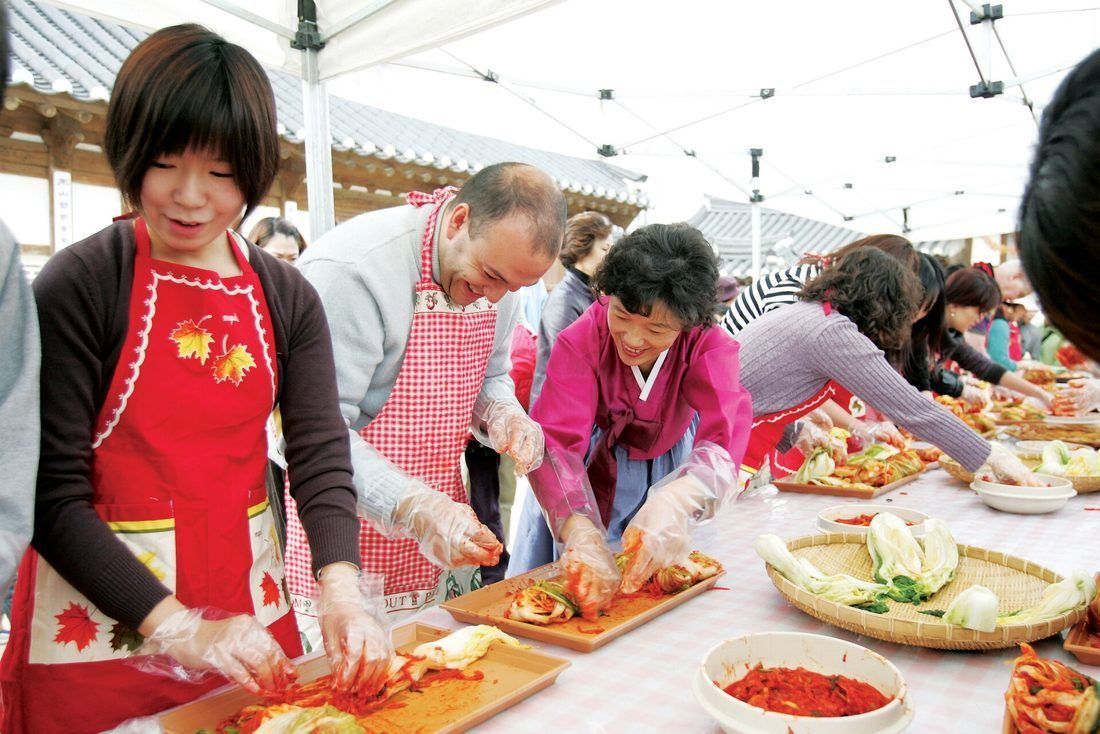
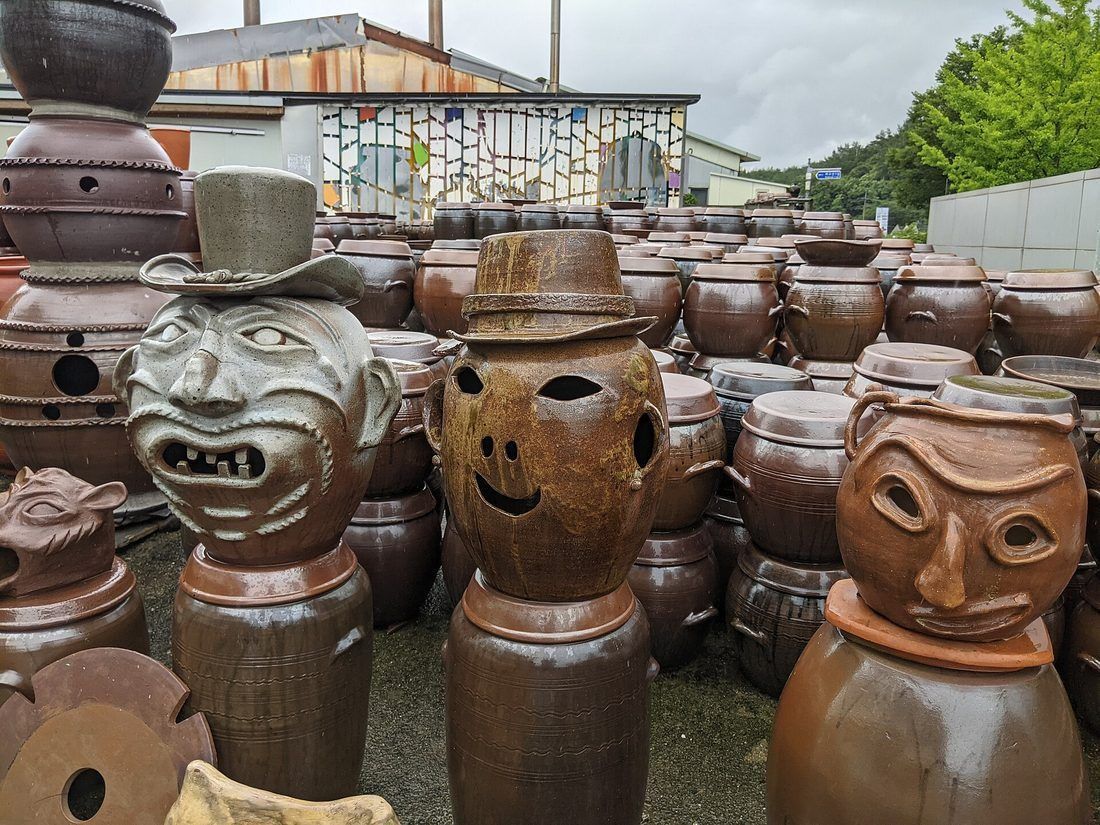
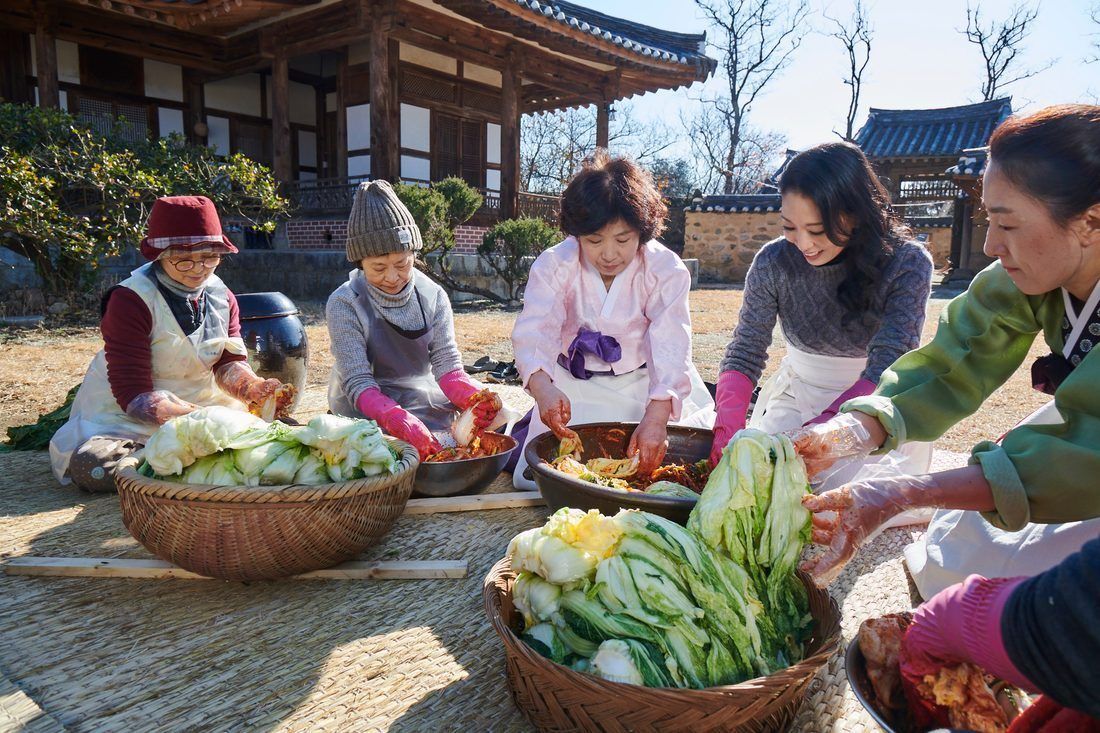
Worth knowing about: kimjang is the communal late-autumn kimchi-making — families and neighbors processing enormous quantities of cabbage together to lay in the winter’s supply, traditionally buried in onggi (large earthenware jars) in the ground for stable cool temperatures.
 UNESCO inscribed
kimjang on its intangible cultural heritage list in 2013.
UNESCO inscribed
kimjang on its intangible cultural heritage list in 2013.
The buried-onggi detail is the same insight I keep running into: cool, stable, earth-buffered temperature makes a better ferment, and every tradition found it independently. It’s the same reason my crocks live in the basement, and it’s the direct counterpart of the German Gärtopf in a cellar.
The wider Asian vegetable table
Kimchi is the most famous but it is not alone, and the Chinese tradition in particular is old enough to matter to the history page’s argument about sauerkraut.
China
- Suan cai (酸菜) — sour fermented cabbage or mustard greens. Genuinely ancient, regionally various, and the reason the “China invented sauerkraut” story is half right. Northeastern suan cai is fermented whole-head napa; Sichuan versions use mustard greens.
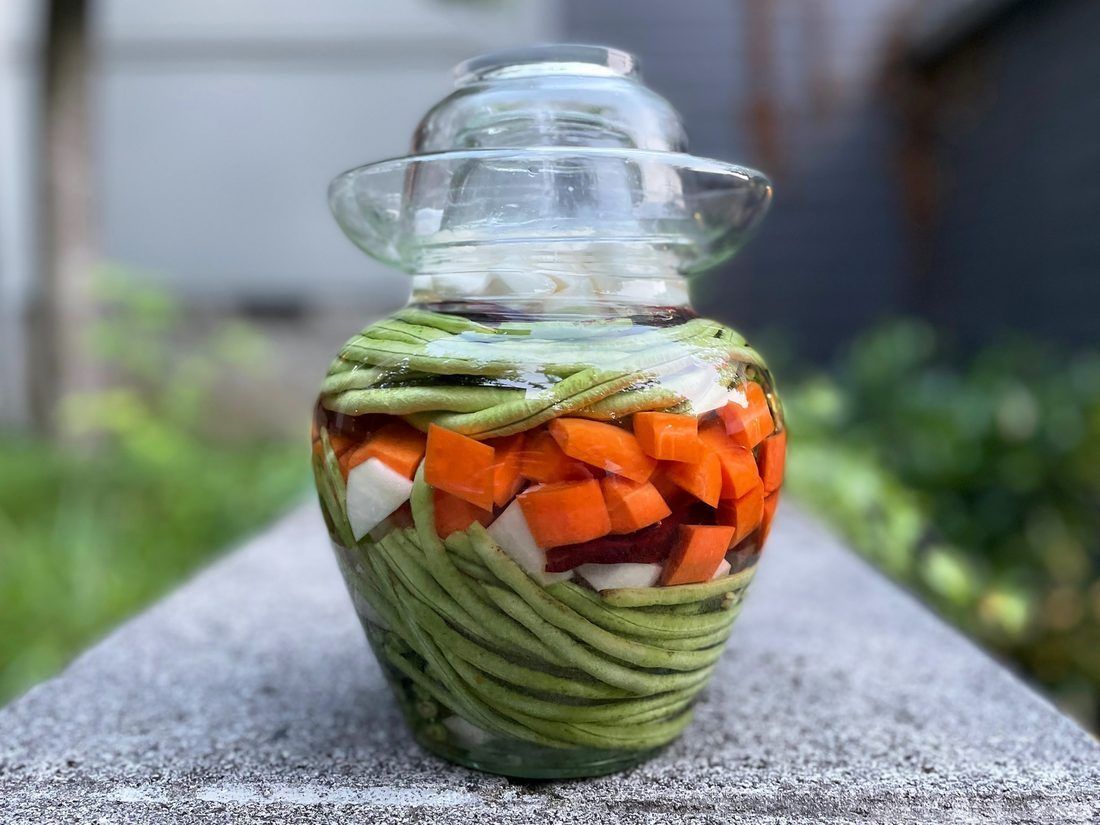
- Pao cai (泡菜) — Sichuan brine-pickled vegetables, kept in a dedicated jar with a water-seal rim (a Chinese cousin of the Gärtopf) whose brine, the “mother water,” is maintained and fed for years.
- Zha cai (榨菜) — the knobbly mustard stem, salted, pressed, and chile-rubbed. Dense, crunchy, intensely savory.
- Suan doujiao — sour long beans. Excellent, underrated.
Japan — tsukemono, an entire discipline:
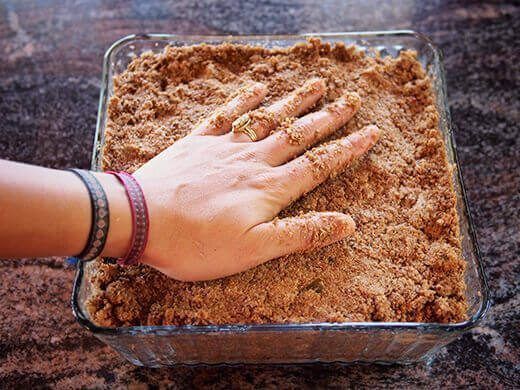
- Nukazuke — vegetables buried in a live rice-bran bed (nukadoko) that is fed, turned daily, and maintained for years or generations. It’s the closest thing in the vegetable world to a sourdough starter, and one of the great fermentation practices.
- Shibazuke, suguki, takuan — the lactic-fermented tsukemono. Takuan, fermented daikon, is bright yellow, sweet-sour and pungent.
- ⚠ Note that many tsukemono sold today are not fermented — quick vinegar, sake lees (kasuzuke) or miso (misozuke) pickles. Delicious, different process.
Southeast Asia
- Vietnamese dưa chua / dưa cải — sour mustard greens, and the pickled vegetables that go in bánh mì.
- Thai phak dong — sour fermented greens; and naem, a fermented pork-and-rice sausage that properly belongs with the protein ferments.
- Filipino atchara — green papaya, more often vinegar-based.
- Burmese tea-leaf salad (lahpet thoke) — fermented tea leaves eaten as a food, which is a genuinely startling idea and delicious.
India — a whole separate branch that’s easy to miss:
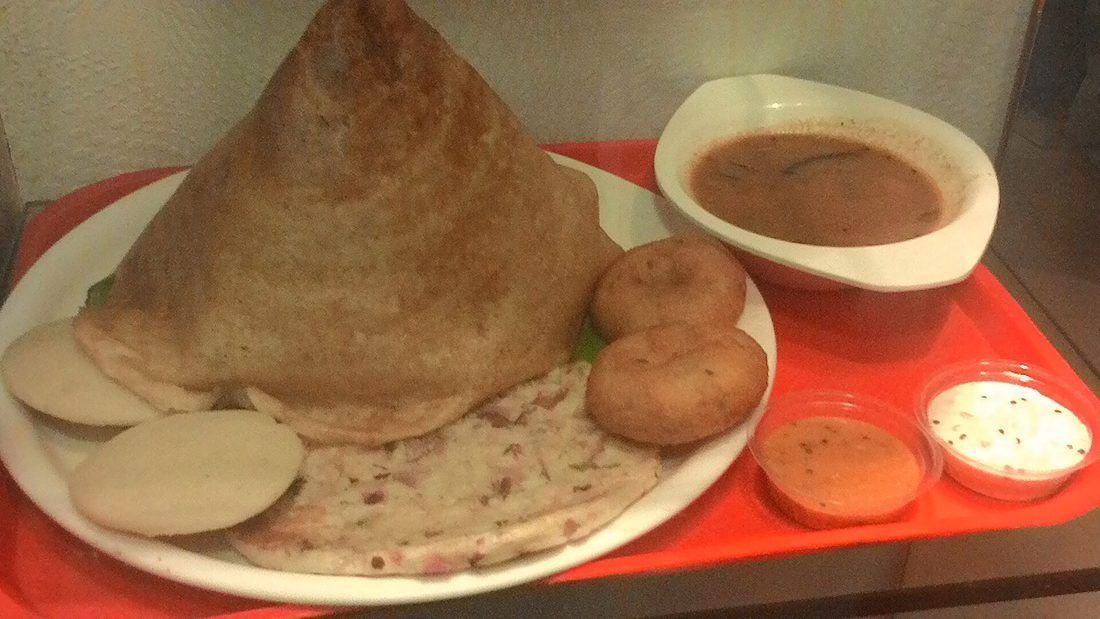
- Idli and dosa batter — rice and urad dal, wild-fermented overnight. The leavening and the sour are both bacterial, and the dal contributes the organisms.
- Kanji — fermented black carrot and mustard drink from the north. See Other Fermented Drinks.
- Achar — the oil-and-salt pickle tradition, mostly a different technique from brine fermentation.
- Dahi — the Indian yogurt tradition, on the Yogurt page.
What I’d make first
Kkakdugi — cubed radish kimchi. It’s easier than cabbage kimchi (no whole-leaf handling, no brine-and-rinse gymnastics — just cube, salt, drain, dress), it’s crunchy and forgiving, and it’s the kimchi I reach for most. Then whole-leaf baechu-kimchi. Then a baek-kimchi to taste the older version.
Where to go next
- Sauerkraut — the same technique without the seasoning.
- Koji, Miso & Soy — the mold-fermented half of the Asian pantry.
- Other Fermented Drinks — kanji, and the rest.
- The Basics — the succession that all of this runs on.
Comments (0)