Vinegar
Vinegar is the end of the road. Every fermented drink in this section, left alone long enough with air, becomes vinegar — and that’s not a failure state, it’s the third of the five fermentation families doing exactly what it does.
It’s also the one family with a hard dependency: acetic fermentation needs alcohol as its raw material. You cannot go from sugar to vinegar directly. Something has to make the alcohol first.
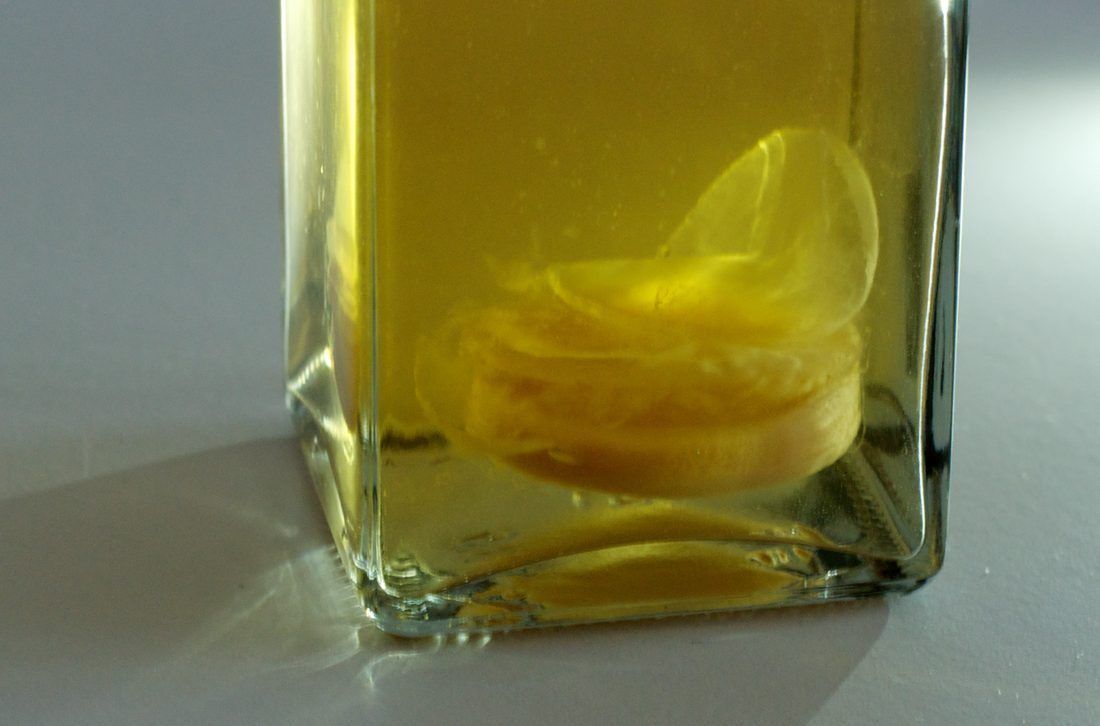
Two ferments in sequence
Step 1 — yeast turns sugar into alcohol. Anaerobic. This is wine, cider, beer, mead.
Step 2 — Acetobacter turns alcohol into acetic acid. Aerobic — and that’s the crucial difference. Acetic-acid bacteria need oxygen. This is why vinegar is made in a wide shallow vessel with a cloth over it, and why the vegetable ferments — which need the opposite — are held under brine.
sugar → (yeast, no air) → alcohol → (Acetobacter, with air) → acetic acid
The word itself tells the story: vinegar is from Old French vin aigre — sour wine. That’s the whole process in the name.
Two practical consequences fall straight out of the mechanism:
- The final acidity is capped by the starting alcohol. Roughly, a given % ABV converts to a similar % acetic acid. So a 6% wine gives you about a 6% vinegar, and a 3% beer gives a weak one. If you want strong vinegar, start with something strong-ish — but not too strong: above about 12–14% ABV the alcohol inhibits the bacteria and the conversion stalls. The sweet spot is roughly 5–9% ABV.
- You can’t skip step 1. “Fermenting sugar into vinegar” isn’t a thing. Sugar water will make alcohol first, whether you intended it or not.
The mother
The gelatinous, cloudy, sometimes rubbery mass in raw vinegar — the mother of vinegar — is bacterial cellulose, produced by the acetic-acid bacteria as a biofilm.
If that sounds familiar, it should: it is the same material and the same genus as a kombucha pellicle. Komagataeibacter (formerly Gluconacetobacter / Acetobacter xylinum) is doing the same job in both jars. A kombucha “SCOBY” and a vinegar mother are close relatives, and a kombucha left too long simply becomes vinegar and grows a mother.
Same caveat as kombucha, too: the mother is not the culture, it’s a structure the culture builds. You inoculate new vinegar with raw, live, unpasteurized vinegar liquid; a mother usually comes along and one will form regardless. Raw vinegar liquid is what matters.
Making it
The easy version, and it genuinely is easy:
- Start with something alcoholic, 5–9% ABV. Leftover wine (the classic), hard cider, beer, mead, or over-fermented kombucha. If it’s commercial wine, dilute it — most table wine at 12–14% is too strong; cut it about 2:1 with water to land near 7–8%.
- Add raw live vinegar — about 20% by volume — or a mother. Bragg’s or any unpasteurized vinegar works as a starter. Pasteurized vinegar will not work; nothing’s alive in it.
- Put it in a wide vessel — a crock, a wide-mouth jar, a bowl. Surface area is the rate limiter, because the bacteria need oxygen at the interface. A narrow bottle takes forever.
- Cover with cloth, not a lid. It must breathe.
- Leave it somewhere warm and dark — 77–86 °F is ideal, warmer than most ferments in this section. Cool rooms work, slowly.
- Wait 3 weeks to 6 months. Don’t stir it; you’ll sink the mother. Taste from a month on.
- When it’s as sharp as you want, bottle it. Leave the mother behind to start the next batch, or filter it out.
- Optionally age it — vinegar mellows and rounds significantly over months in a sealed bottle.
Fruit-scrap vinegar — the beginner version and a genuinely good use for waste. Apple cores and peels (or any fruit trimmings) covered with sugar water, fermented open for a couple of weeks so wild yeast makes alcohol, then strained and left to acetify. Two steps, no starting alcohol needed, and it’s how most home vinegar actually gets made.
The types
| Vinegar | From | Notes |
|---|---|---|
| Wine (red/white) | Wine | The European standard. Sharp, clean |
| Cider | Hard cider | Fruity, soft. The American default |
| Malt | Beer/ale | Britain. Fish and chips |
| Rice | Sake | Mild, low acidity (~4%). The last link in the koji chain |
| Black (Chinkiang) | Glutinous rice, sorghum | Malty, smoky, complex. Not a substitute for anything |
| Balsamic (tradizionale) | Cooked grape must | See below — barely a vinegar in the ordinary sense |
| Sherry | Sherry | Nutty, superb, underrated |
| Coconut | Coconut sap/water | Southeast Asia, Philippines |
| Distilled white | Neutral grain alcohol | Pure acetic acid + water. Cleaning and canning |
| Kombucha | Kombucha | Tea-tasting, lovely, free |
Balsamic deserves a note, because the word is nearly meaningless
Aceto Balsamico Tradizionale di Modena (DOP) is made from cooked grape must — no wine, no separate alcohol step in the usual sense — aged for a minimum of 12 years through a descending series of barrels of different woods (the batteria), each year topped up from the barrel above. It is syrupy, sweet-sour, complex, and priced accordingly. Very little of it exists.
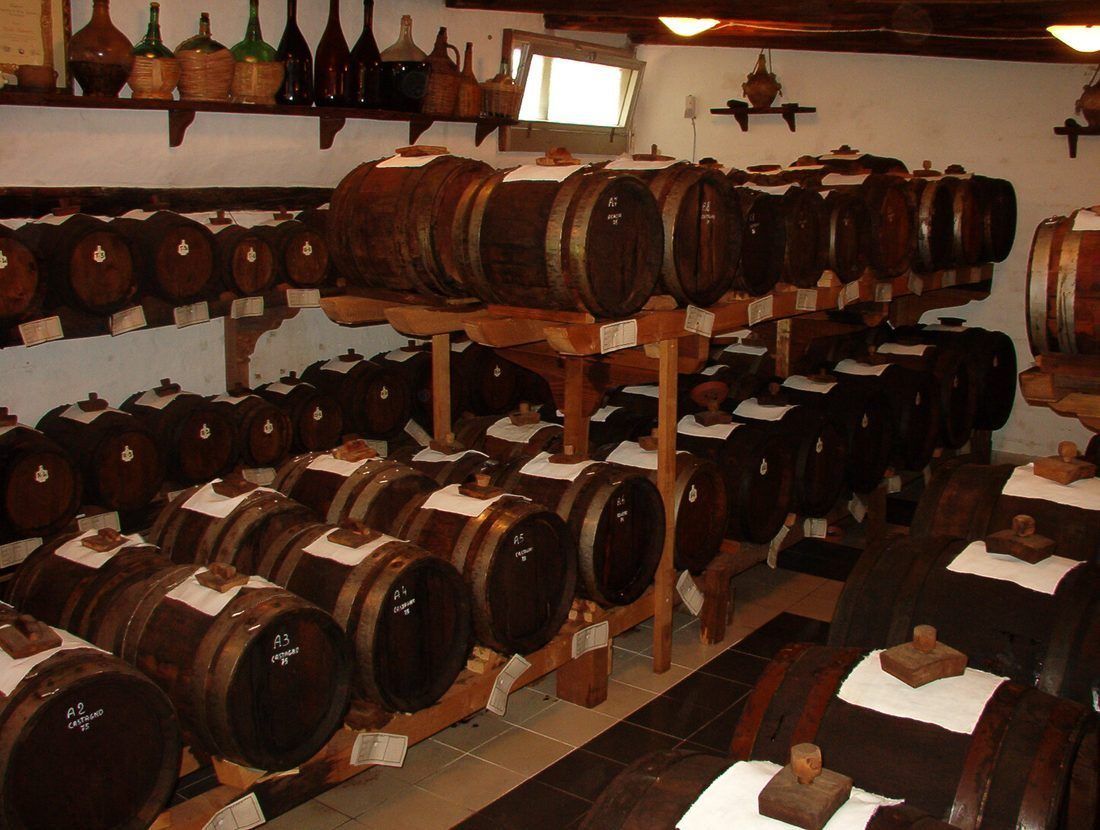
Aceto Balsamico di Modena (IGP) is the ordinary supermarket product: wine vinegar plus grape must, often plus caramel coloring, aged briefly. It’s a fine salad ingredient and it is not remotely the same thing.
And “balsamic glaze” is usually the IGP product boiled with sugar. Read the label; the ingredient list tells you immediately which of the three you’re holding.
The acidity number, and where it matters
Standard vinegar is 5% acetic acid. That number is not decoration.
🔴 For canning and pickling, 5% is a safety requirement. Tested pickling recipes assume 5% vinegar, and using a weaker one — including most homemade vinegar, whose strength you don’t know — can leave the finished product above the pH 4.6 line where C. botulinum can grow. Homemade vinegar is for eating, dressing and marinating. Use commercial 5% vinegar for anything you’re going to can.
Some vinegars are deliberately weaker: rice vinegar is often around 4%, which is why it tastes so mild — and which means it’s not a drop-in substitute in a canning recipe. Some artisan vinegars run 6–7%.
If you want to know your homemade vinegar’s strength, you titrate it. Realistically, most of us don’t, which is exactly why the canning rule exists.
⚠ And note that a pH meter will not answer this question, which surprises people who own one. pH measures how strong the acid acts; titration measures how much acid is there, and it is the second number the canning rule is written around. A meter is still worth owning for everything else — what to buy, and the band where strips are honest — but do not read 3.2 on a homemade vinegar and conclude you have 5%.
Using it
Beyond the obvious:
- Deglazing. A splash in a hot pan lifts the fond and brightens everything.
- Finishing. A few drops of good vinegar at the end of a braise, a soup, or a pot of beans does what salt can’t — it’s the same corrective role as lemon.
- Balancing rich food. The reason kraut goes with pork, in liquid form.
- Shrubs and switchel — fruit-vinegar drinks. See Other Fermented Drinks.
- Meat. Acid works on the surface, millimeters in — not to the middle. Genuine tenderizing is a much slower and shallower business than marinade instructions imply, which is a finding I ran into on the coffee-marinated steak too.
- Worcestershire sauce — vinegar is its backbone, and that whole condiment is a fermented-vinegar construction worth reading about.
- Quick pickles — the fast, bright, unfermented half of the pickle world.
Troubleshooting
- Nothing happening after a month — too cold, too little surface area, not enough live starter, or the alcohol is too strong. Dilute it, move it somewhere warmer, use a wider vessel.
- Vinegar eels — tiny harmless nematodes that live in raw vinegar. Unsettling, not dangerous. Filter and pasteurize (heat to 150 °F) if you’d rather not.
- Fruit flies — the real pest, as always with an open aerobic ferment. Tight-woven cloth.
- A slimy mother sinking — normal. It forms a new one at the surface.
- Fuzzy colored mold on top — different from the mother, which is smooth and gelatinous. Skim it, and if it recurs, start over.
- Weak and watery — the starting alcohol was too low, or it got diluted. There’s no fixing it after the fact; the acidity ceiling was set at the beginning.
Where to go next
- Kombucha — the same bacteria, stopped earlier.
- Koji, Miso & Soy — where rice vinegar comes from.
- Pickling — the vinegar-based preservation half.
- Worcestershire Sauce — a whole dive on one fermented vinegar condiment.
Comments (0)