Beyond Vegetables: The Protein Ferments
Everything else in this section is comparatively forgiving. This page is the part that isn’t.
Fermenting protein — meat, fish, whole soybeans — is where all the documented fatalities are. Not because the technique is exotic, but because the substrate is wrong for the defense mechanism that protects a crock of cabbage. Cabbage acidifies fast and hard. A fish does not.
I make fermented sausage and I’ve written a lot about it elsewhere. What belongs here is the comparison — why these ferments need an apparatus that vegetables don’t, and what the difference teaches about all of it.
Why protein is different
Three things break at once when you move from cabbage to meat:
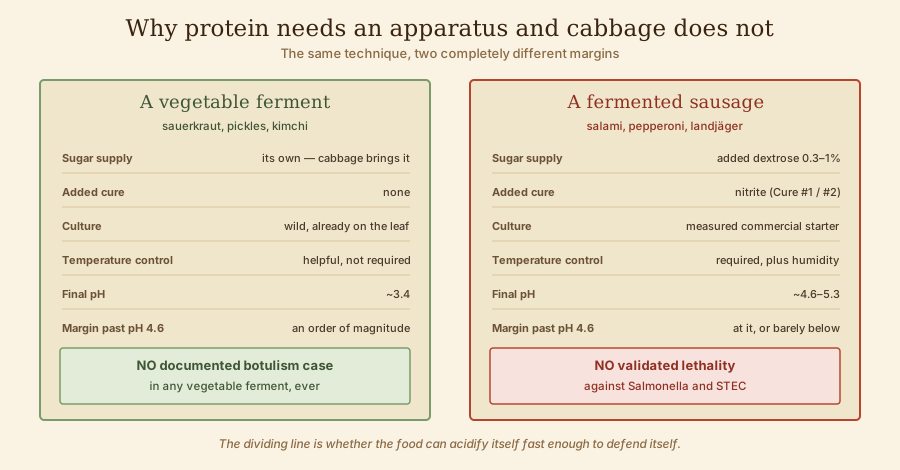
1. There’s no sugar to ferment. Lactic-acid bacteria make acid out of sugar. Cabbage brings its own. Meat brings almost none — which is why fermented-sausage formulas add dextrose. You are literally supplying the fuel that a vegetable ferment supplies for free.
2. The pH doesn’t drop far enough. A vegetable ferment lands around pH 3.4 — an order of magnitude past the 4.6 botulism line. A fermented sausage lands somewhere around 4.6–5.3. That’s at or barely below the line, not comfortably past it. The acid defense is thin instead of overwhelming.
3. Clostridium botulinum likes exactly these conditions. Low-acid, moist, anaerobic, protein-rich, ambient temperature. That is the specification, and a stuffed casing or a sealed container of fish meets it.
So the protection has to come from somewhere else, and that somewhere else is nitrite, plus salt, plus controlled temperature and humidity, plus a measured starter culture, plus water-activity reduction through drying. That’s the “hurdle” model: no single barrier is sufficient, so you stack several.
🔴 And the hurdle stack has a real, unsolved gap
This is the hardest finding from the Sausage work and it belongs on this page in plain language:
The traditional hurdle stack for raw fermented sausage has no validated lethality against Salmonella and STEC. FSIS’s own Q&A answers the question of whether the standard fermentation-and- drying process is a validated kill step: “No.” And it isn’t theoretical — there have been outbreaks, including two in 2021 affecting seventy-plus people, at plants meeting every control.
That’s not an argument against making salami. It’s an argument for knowing what you’re relying on. Fermentation and drying reduce pathogens and make the product stable; they do not sterilize it. The industry answer is a validated heat step, or sourcing and testing discipline, or accepting a residual risk that is small but real.
Compare that honestly with cabbage: no documented botulism case, ever, in any vegetable ferment. The two ends of this section are not the same activity wearing different clothes.
Fermented sausage, briefly
The full treatment is the Sausage section — seven parts of it — so here’s just the shape:
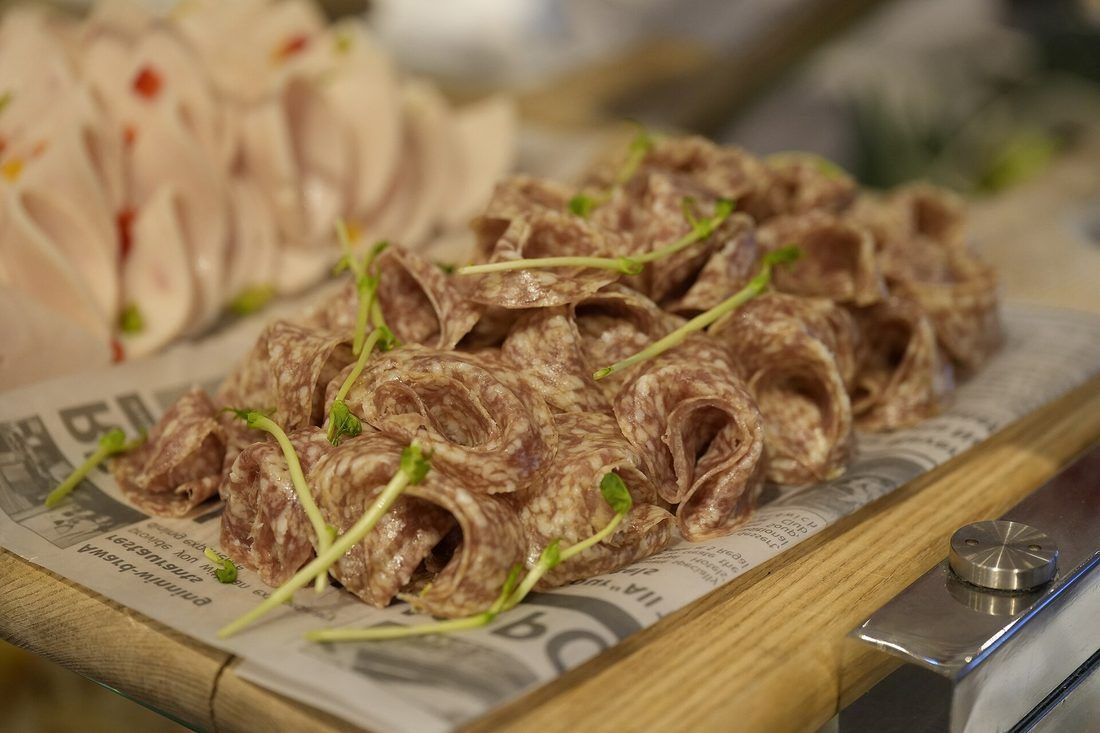
What makes a sausage fermented rather than merely cured: a deliberate lactic fermentation that drops the pH, giving both the tang and a preservation hurdle. Summer sausage, salami, pepperoni, soppressata, chorizo (the Spanish cured kind), landjäger, ‘nduja.
The apparatus:
- Cure #1 (sodium nitrite) for short/cooked products; Cure #2 (nitrite + nitrate) for long-dried ones, where the nitrate is a slow-release reservoir over months.
- Dextrose as fermentation fuel — typically 0.3–1% depending on target pH.
- A commercial starter culture (Pediococcus, Lactobacillus, Staphylococcus carnosus) instead of wild organisms. This is the single biggest safety improvement over traditional practice.
- A controlled chamber — fermentation warm and humid, then drying cool and progressively drier.
- pH and weight monitoring. You measure, you don’t guess. Target weight loss is typically 30–40%. A sausage lands in the 4.6–5.3 band, which is precisely where paper stops being acceptable and a spear-tip meter starts being the only honest instrument — what that costs and how to use it.
And a warning that has come up repeatedly in my sausage work: published nitrite figures are context-specific and reading one in isolation will hurt you. A general “dry-cured = 625 ppm” figure exists, but dry-cured bacon is 200 ppm — following the general number would over-cure by 3×. Get the right number for the right product.
Landjäger is worth naming here because it surprised me: it’s a schnittfeste Rohwurst — a sliceable raw sausage — not a cooked one, which puts it squarely in this risk category. There are five raw formulas in the Sausage section and they’re written with that understood.
Fermented fish — the oldest and the most dangerous
Fermented fish is one of humanity’s oldest condiment technologies and the source of the most important safety lesson in this whole dive.
The sauces, which are safe
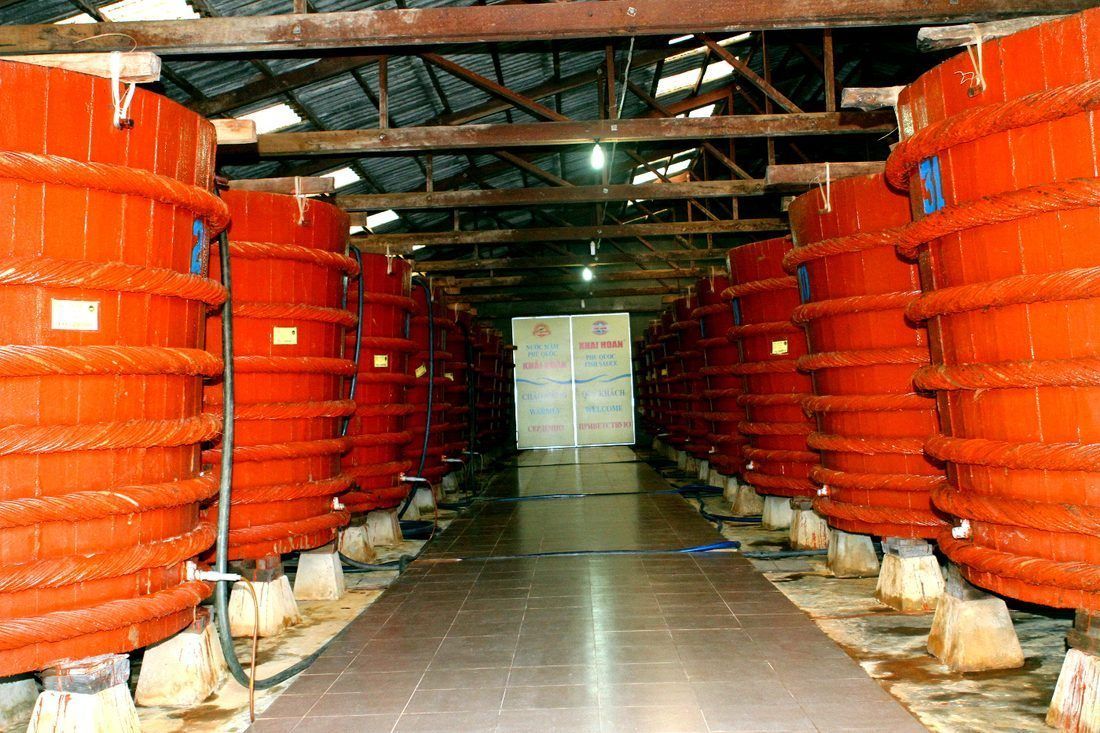
Fish sauce — nam pla, nuoc mam, patis, budu — is anchovies and salt at roughly 1 part salt to 3 parts fish, fermented in barrels for a year or more and drawn off as a clear amber liquid.
It’s safe because the salt is enormous.
 At those concentrations, nothing pathogenic grows. The
fermentation is largely autolytic — the fish’s own enzymes, plus halophilic bacteria, digesting
protein into free amino acids. It’s the same umami chemistry as miso,
arrived at from an animal instead of a bean.
At those concentrations, nothing pathogenic grows. The
fermentation is largely autolytic — the fish’s own enzymes, plus halophilic bacteria, digesting
protein into free amino acids. It’s the same umami chemistry as miso,
arrived at from an animal instead of a bean.
Roman garum and liquamen were the same thing, and they were everywhere — a staple condiment of the classical Mediterranean that vanished almost completely from European cooking and survived in Asia. Worcestershire sauce, with its anchovies, is arguably its European descendant, which is a connection I chase properly in the Worcestershire dive.
Others: shrimp paste (bagoong, belacan, kapi, and the saeu-jeot that goes in kimchi) · pla ra · jeotgal · surströmming (Baltic herring, lightly salted and famously pungent — a lower-salt ferment, and note that it is professionally produced) · hákarl · rakfisk · funazushi (fermented crucian carp in rice, the ancestor of sushi — the rice was originally the ferment and got discarded).
🔴 And the Alaska lesson, which is the whole point of this page
In Alaska, most foodborne botulism comes from fermented fish and marine mammals — fermented fish heads (“stinky heads”), fermented fish eggs, beaver tail, seal and walrus flipper, whale, seal oil, and dried unsalted fish. From 1990 to 2000: 58 botulism events affecting 103 people. Of the reported deaths attributed to C. botulinum, one was linked to whale and one to fermented fish heads.
These are traditional foods with long histories, and the point is not to blame them. The point is the mechanism, and CDC states it directly: Alaska botulism is an age-old problem “compounded in recent decades by altering traditional practices in an unsafe manner, in particular, to include the use of plastic or glass containers for fermentation.”
The traditional method was a grass-lined pit in cool ground — cool, gas-permeable, never fully anaerobic. The modernization was a sealed plastic bucket, often warmer and above ground. Same recipe, same people, same food.
Switching to the cleaner, more convenient, more modern container is what made a traditional food lethal.
I keep coming back to that because it inverts the instinct. We assume the sealed food-grade container is the safe choice and the dirt pit is the risky one. Here it’s the reverse, and the reason is that the pit was doing two things the bucket doesn’t: keeping it cold, and letting it breathe.
The transferable rule: the vessel and the temperature are part of the recipe. Change them and you’ve changed the microbiology, whether you meant to or not. That applies to a crock of kraut too — it’s just that with kraut, the acid covers for you.
Dairy — the gentler protein ferment
Milk is protein too, but it behaves like the vegetables, and it’s worth understanding why: lactose. Milk brings its own abundant sugar, so lactic-acid bacteria acidify it fast and far, and you land at a protective pH within hours. That’s why yogurt and kefir are easy and safe.
Cheese is the long game — the same acidification, plus rennet, plus salt, plus moisture removal, plus months of controlled aging, and it has its own whole section on this site including the aging fridge I rebuilt.
The genuine dairy hazards are upstream of the fermentation: raw-milk pathogens (Listeria, Salmonella, STEC) that the culture may not eliminate. Fermenting contaminated milk doesn’t fix it.
Eggs — the cautionary parallel
Worth including because it’s the cleanest illustration of “the protection has to reach the food.”
The CDC investigated botulism from home-pickled eggs, and the finding is not what anyone expects: the pickling liquid was pH 3.5 — fully adequate to prevent germination. The acid was never the problem. The eggs had been punctured with toothpicks (a tip the internet loves, meant to help the brine penetrate), held at room temperature and exposed to sunlight — and toxin was found a thousand times more concentrated in the yolks than in the brine.
The acid never got inside the egg. The puncture holes gave C. botulinum a route into a low-acid, anaerobic interior that the brine’s acid never reached.
Same lesson as Alaska in a different food: it isn’t the recipe, it’s whether the protection actually reaches everywhere it needs to. Full treatment on Marinated Eggs, whose spine is exactly this — that the marinade never reaches the yolk, which is both why a ramen egg is delicious and why a pickled egg can be dangerous.
So where does this leave the beginner
Do these freely: vegetables, yogurt, kefir, kombucha, vinegar, high-salt miso, fish sauce if you’re patient. The margins are wide and the failure modes are loud.
Do these with the apparatus and the reading: fermented sausage — scale, cure calculations, starter culture, controlled chamber, pH meter, and the Sausage section rather than a blog post.
Don’t improvise these at all: fermented fish or marine mammal in a sealed container at room temperature; low-salt fermented meat without nitrite; anything where you’re guessing at a nitrite quantity; punctured eggs in brine.
The dividing line isn’t tradition versus modernity, and it isn’t complexity. It’s whether the food can acidify itself fast enough to defend itself. Cabbage can. Fish can’t.
Where to go next
- Sausage — seven sections, including the raw-sausage safety findings in full.
- Cheese — the long dairy ferment.
- Safety — the whole risk picture in proportion.
- Marinated Eggs — the pickled-egg case, properly told.
Comments (0)