A History of Fermentation
Fermentation is older than agriculture, older than pottery, and a great deal older than any explanation of it. For most of human history we did this without knowing what we were doing, and it worked anyway. That gap — thousands of years of reliable practice sitting on top of a completely wrong theory — is the most interesting thing about the history, and it is why so much of what gets repeated about fermentation’s origins turns out to be folklore.
I want to start there, because two of the stories you will read everywhere about the food on my own basement shelves are wrong, and the real versions are better.
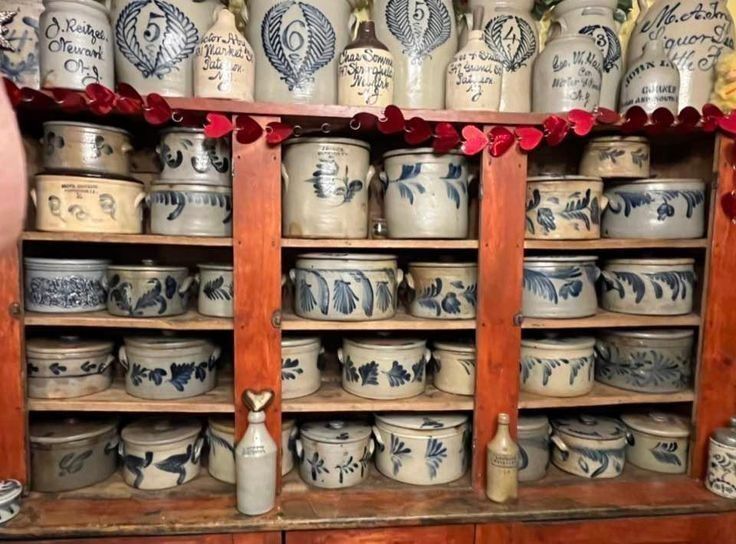
Nobody invented this
There is no inventor and there was never a first batch. Fermentation is what happens to wet, sugary organic matter when you leave it alone in the presence of the microbes that are already on it. Fruit ferments on the branch. Milk in a warm skin bag sours within hours. Honey diluted by rain becomes mead without human help. The earliest human involvement was not invention but noticing — that some of the spoiled things were good, and that some of them kept.
That order matters. We did not learn to ferment food in order to preserve it; we learned that some kinds of spoilage were preservation. Everything after that is refinement: controlling the salt, controlling the air, controlling the temperature, and learning which vessel to use.
The archaeological record is patchy in exactly the way you would expect, because the evidence is mostly residue. Fermented-beverage residues have been recovered from pottery at Neolithic sites in China and the Near East. Bread and beer show up together in Egyptian records because they are the same process pointed at two different textures. Dairy fermentation almost certainly predates any written mention of it, because lactose tolerance in adults is a later genetic development than dairying itself — which is to say, the first dairying peoples largely could not drink fresh milk comfortably, and fermenting it was the thing that made milk food. Yogurt and cheese are not sophistications of drinking milk. They are how milk got eaten first.
The Roman written record, which is where the cabbage story really starts
By the time anyone was writing things down, salted and soured vegetables were ordinary.
Cato the Elder (234–149 BCE), in his farming manual, describes preserving cabbage and turnips in salt. Columella (c. 4–70 CE) does the same. These are not exotic notes — they are agricultural housekeeping, the Roman equivalent of telling you how to put up beans. Fermented cabbage was a normal European farm product two thousand years ago and change.
Hold onto that date, because it demolishes the story everyone tells about sauerkraut.
🔴 The Great Wall / Genghis Khan story is folklore
Here is the version you will find in most articles, on most sauerkraut jars, and in a good deal of otherwise careful food writing:
Laborers building the Great Wall of China were fed cabbage fermented in rice wine. Genghis Khan encountered it during his conquests, carried it west with his armies, and that is how Europe — Germany in particular — got sauerkraut.
It is a great story. It fails three separate ways, and any one of them is fatal.
1. The chronology is impossible. Cato was writing about salting cabbage around 160 BCE. Columella in the first century CE. Genghis Khan lived roughly 1162–1227 CE. Europe was preserving cabbage in salt somewhere between 1,300 and 1,400 years before Genghis Khan was born. There was nothing to import.
2. The geography is wrong. The Mongols reached Hungary and raided Poland and Lithuania. They never reached Germany — which is precisely the place the story exists to explain. The transmission route doesn’t touch the destination.
3. The logistics are absurd. Sauerkraut is heavy, wet, and calorie-poor: close to the worst conceivable provision for the fastest cavalry army in history. And the Mongols were pastoral herders, not cabbage farmers. Asking a horse army to haul crocks of brined cabbage across Asia is asking it to stop being a horse army.
Now — the part where I have to be careful, because it would be easy to overcorrect. Chinese fermented vegetables are real and genuinely ancient. Suan cai is not made up. China has one of the world’s deepest traditions of pickled and fermented vegetables, and I write about that on Kimchi & the Asian Table. The false part is not “China fermented cabbage.” The false part is the transmission story — the claim that Europe learned it from China by way of the Mongols. Both traditions are old. Neither needed the other.
What actually happened is much less romantic and much more likely: people who had salt and cabbage figured out salted cabbage, independently, in a lot of places, because it is not a hard idea. That is how most fundamental food technology spreads — by reinvention, not by courier.
🔴 Captain Cook, sauerkraut, and scurvy — the hero story is backwards
The other sauerkraut story worth taking apart is the naval one, and this one is more interesting because the sauerkraut is genuinely there. It’s the conclusion that’s wrong.
What’s documented: Cook’s first voyage, HM Bark Endeavour, 1768–71, was provisioned with forty bushels of malt, a thousand pounds of “portable broth,” vinegar, mustard, wheat, and sauerkraut. The second voyage, Resolution, 1772–75, carried malt wort, sauerkraut, cider, and other antiscorbutics. Cook completed extraordinary long-distance voyages without losing men to scurvy, at a time when scurvy routinely killed more sailors than combat.
So far so good. Here is where the popular version goes wrong.
You cannot isolate sauerkraut as the cause. Cook was running many interventions simultaneously — malt, kraut, broth, cider, citrus concentrate — plus an unusually strict regime of shipboard cleanliness and ventilation. Any honest reading says “this bundle worked,” not “the cabbage did it.” And sauerkraut’s vitamin C content is real but modest, and heat-sensitive; it is a contributor, not a cure.
And the twist, which is the actual story: Cook thought the answer was malt. He said so, repeatedly and influentially. Because he was Cook — the most respected navigator alive — his reports were taken up by Sir John Pringle and used to prop up the fashionable medical theories of the day, and in doing so they held off the adoption of lemon juice as the standard antiscorbutic for roughly another twenty years. Some historians conclude flatly that Cook set the treatment of scurvy back.
Think about what that means. The most famous success in the history of shipboard nutrition produced the wrong lesson, and the wrong lesson was believed because of how successful the man was, and sailors died of a solved disease for another two decades. It is one of the cleanest examples I know of the difference between something working and knowing why something works — which is the whole theme of this section’s history.
The long era of correct practice and wrong theory
Until the middle of the nineteenth century, nobody knew what fermentation was. The dominant explanation was spontaneous generation: life arising from non-living matter, which is exactly what a crock of cabbage turning into something alive and sour looks like if you have no concept of microorganisms.
That did not stop anyone. The techniques got extremely good anyway:
- Salt by feel and by season. Farm households salted heavier for warm cellars and lighter for cold ones, and were right about it, without knowing they were managing a competition between salt-tolerant and salt-intolerant bacteria.
- Vessel design that solves a problem nobody could name. The water-sealed German Gärtopf — a moat in the rim, a lid sitting in the water, gas out and air not back in — is a one-way valve engineered by people with no theory of anaerobic bacteria. It is a correct solution to an unarticulated problem.
- The follower and the weight. Every serious tradition independently arrived at hold the vegetables under the liquid with a heavy flat thing. Stone, wood, a plate, a water-filled bag. Different continents, same answer.
Then Pasteur, in the 1850s and 60s, established that fermentation is the work of living microorganisms, and the whole thing flipped from craft mystery to microbiology. What’s striking is how little the practice had to change. The science largely arrived and said: what you have been doing is right, and here is why.
What the twentieth century took away
The modern break is not that we stopped fermenting. It’s that fermentation got moved out of the house and into the factory, and in the process most of it got replaced by something that only looks the same.
The great substitution was vinegar for time. A fermented pickle makes its own acid over weeks, from the sugars in the vegetable, by way of living bacteria. A modern shelf-stable pickle has finished acid poured over it and is then heated — which is faster, utterly consistent, perfectly safe, and a different food. Both are legitimate; I make and eat both. But when a factory has to ship a product that tastes identical in March and October, “wait three weeks and see” is not an option. So the industry chose vinegar, and two generations grew up thinking a pickle is a cucumber in vinegar. It isn’t, historically. It’s the fast version.
The same swap happened everywhere:
| Traditional | Industrial replacement | What got lost |
|---|---|---|
| Fermented cucumbers | Vinegar brine + pasteurization | The living acid, the depth, the funk |
| Sauerkraut in a crock | Canned kraut, heat-sterilized | Live cultures; texture |
| Sourdough | Commercial baker’s yeast | Flavor from acid; keeping quality |
| Cultured butter/buttermilk | Sweet cream butter; acidified “buttermilk” | The culture entirely |
| Naturally soured milk | Refrigeration | The reason to sour it |
| Fermented sausage | Nitrite + starter culture + controlled chamber | Not much, honestly — this one improved |
That last row matters, and I’ll defend it. The industrialization of fermentation was not uniformly a loss. Standardized starter cultures and measured cure made fermented sausage dramatically safer than the traditional guesswork, and I say so on the safety page too. The honest summary is: industrialization made the dangerous ferments safer and the safe ferments worse.
And what came back
The revival is real, and it is a home revival. Sauerkraut and pickles never fully left the farmhouse; kimchi never left Korea; yogurt was reintroduced to Americans mostly as a commercial product and then re-domesticated. What changed in my lifetime is the information. When I made my first crock of sauerkraut in the early eighties, my sources were a library book and whatever an older relative remembered. It failed — I write about exactly how and why on Getting Started — and there was nobody to ask.
Now the tested guidance is free and excellent: extension services, the National Center for Home Food Preservation, real microbiology written for cooks. The old knowledge and the actual mechanism are available at the same time, to anybody, which has never been true before. The crock is unchanged. The understanding is not.
Where to go next
- The Basics — what is actually happening in the crock, and why it gets safer rather than spoiled.
- Getting Started — the half-gallon jar and airlock I still recommend to everybody, and why I went back to it after failing at a crock.
- Vessels & Crocks — jars, the Gärtopf, and the big stoneware, including the one question about antique glaze that nobody asks and should.
- Sauerkraut — the centerpiece, and the thing my whole basement smells like.
Comments (0)