Peppers, and the Hot-Sauce Shelf
I put crushed red pepper in nearly everything I pickle. It is the one habit that shows up in every jar I make, and on my pickled cherries it is not a background note — it is the best thing about them, and the reason I keep making them a ton of different ways.
So this page was always going to happen. What I did not expect was that the hot-sauce shelf at an ordinary supermarket turns out to be the clearest illustration of this section’s whole argument that I have found anywhere — clearer than Japan, clearer than India. Both halves of it are sitting there next to each other, in bottles, for four dollars.
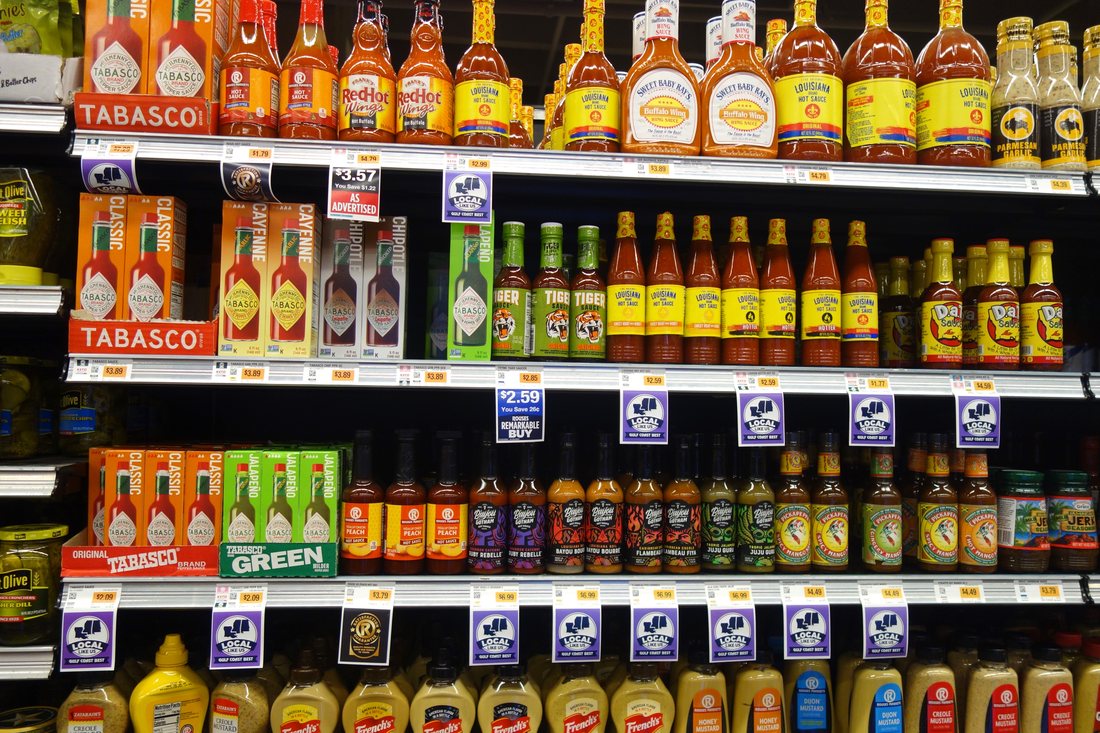
This is a shop shelf, and that is the point. Everything on it says “hot sauce.” The bottles on the left spent up to three years fermenting before any vinegar was added; several of the others never fermented at all. Nothing on the label tells you which is which.
Peppers in a jar
Peppers are one of the easiest things in this section to pickle well, for a reason worth understanding.
Capsaicin is not water-soluble. It is a non-polar molecule, it is very soluble in ethanol, and it is essentially indifferent to water. Which means that when you put a chili in a vinegar brine, the heat does not leach out and vanish the way a water-soluble flavour would. It migrates slowly, it stays in the jar, and it goes into everything else in there with it.
That has two consequences I use constantly:
- A jar of pickled peppers gets hotter as it sits, not milder, because the capsaicin has been redistributing the whole time.
- A few chilies will heat a whole jar of something else. This is why crushed red pepper works so well in cherries, in cucumbers, in almost anything — you are not adding heat to the peppers, you are using the peppers to add heat to the brine.
⚠ And the folk advice about putting the fire out is shakier than it is usually stated. Milk does work, but the best-supported mechanism is casein acting as an emulsifier — an amphiphilic protein that surrounds the capsaicin and carries it off the receptors — rather than “fat dissolves it.” Sources genuinely disagree about how well plain oil and fat dissolve capsaicin at all. Alcohol dissolves it very well indeed, which is precisely why a beer makes the burn worse before it makes it better. I am flagging the disagreement rather than picking the tidy version.
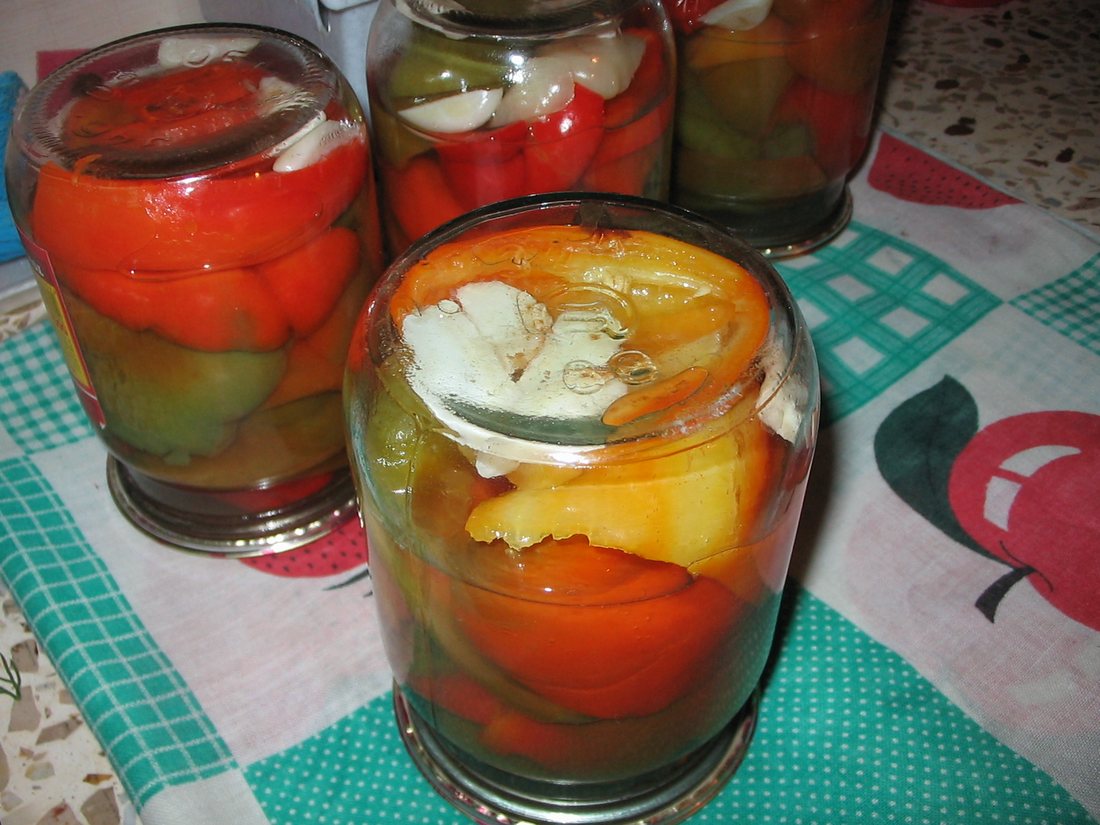
Peppers and garlic in a clear brine. Clear is the tell this section keeps coming back to: that acid was poured in. Had it been a ferment the liquid would be cloudy, and cloudy is the one thing you can read through the side of a jar without opening it.
The standard jar: small firm chilies, whole, pricked once each so the brine can get in, in the standard brine with garlic and a bay leaf. Pepperoncini, banana peppers and Hungarian wax are the mild end; serranos and jalapeños the working middle. Mexican jalapeños en escabeche — carrots, onion, jalapeño, oregano — carry the same word that travelled from Persian sikbāg to a Jamaican fish fry, which I chased down on the Caribbean page.
⭐ Tabasco does both, in order, and tells you so
This is the one. A bottle of Tabasco is a ferment and a vinegar pickle, in sequence, and the company describes the sequence on its own website.
McIlhenny’s own account: the red peppers are “carefully handpicked, mashed, and mixed with a small amount of salt on the same day.” The mash goes into white oak barrels, and the barrel tops are sealed with salt — a lid that lets fermentation gas out and keeps everything else from getting in. It ages there for up to three years. Then it is “blended with high-quality distilled vinegar for 28 days, strained, and bottled.”
Three years growing the acid. Twenty-eight days adding it.
That is Fermentation and this section, in one bottle, in that order, at a ratio of roughly forty to one. And it settles an argument I have had with myself about where hot sauce belongs: it belongs to both, and any answer that picks one is describing a different sauce.
Reading the rest of the shelf
Once you know what to look for, the aisle sorts itself:
| Style | What was done to the pepper | Which section |
|---|---|---|
| Tabasco | Salt-fermented in oak up to 3 years, then vinegar | Both, in that order |
| Louisiana-style (the thin red ones) | Fermented mash, then vinegar and salt | Mostly ferment |
| Cholula / Tapatío style | Cooked with vinegar and spice, no ferment | Pickled, straight |
| Chipotle en adobo | Smoked and dried, then simmered in a vinegar adobo | Pickled |
| Pikliz | Raw vegetables in vinegar, days not months | Pickled |
| Gochujang, doubanjiang | Fermented paste, no added acid at all | Ferment |
⚠ And one I am not going to pretend to have settled: sriracha. Huy Fong’s — the green-cap bottle — has distilled vinegar on the label, and the company does not publish a fermentation step. Whether the mash meaningfully ferments before the vinegar goes in is asserted confidently in both directions online, and every source I could find for either position was a blog. Meanwhile the Thai sriracha from Si Racha, which is the older and separate lineage, is generally a fermented sauce. So: the two things sharing the name are probably not made the same way, and I cannot tell you what is happening inside the green-cap bottle. Fermented Hot Sauce · Hot Sauce, Canned
Scoville, and what the number is now
The Scoville scale started in 1912 as a taste test — Wilbur Scoville diluted a pepper extract in sugar water until a panel of tasters could no longer detect the heat, and the dilution factor was the score. It was a panel of human tongues, with everything that implies.
Nobody measures it that way now. Heat is measured by HPLC — the actual capsaicinoids are quantified in the lab — and then converted back into Scoville units so the number stays familiar. The scale survived; the method it was named for did not. Which is a pattern this section keeps running into: the 4,000-year timeline, alum, the Beukelszoon story — a thing everyone repeats, whose origin turns out to be a different thing entirely.
⚠ Peppers under oil are a different food with different rules
Calabrian chilies in oil, chili crisp, harissa under a film of oil — these are excellent and they are not governed by anything on this page.
A pepper in vinegar is safe because of the vinegar. A pepper in oil is safe only if it was acidified first, and the oil is a lid rather than a preservative. That has its own page now: Under Oil, which is where Italy’s national health institute says the most common home-preserving error in the country actually is.
⭐ A fermented sauce is the case where measuring earns its keep. A vinegar sauce arrives acid by construction; a ferment arrives wherever the bacteria took it, and a bottle you intend to keep out of the fridge needs a number rather than a hope. Measuring pH — and a sauce is one of the few things here you can honestly read with strips, because a finished hot sauce is usually well under 4.0.
What I owe this page
Two recipes that ought to exist and do not: pickled peppers as a standing jar, and giardiniera, which belongs as much here as it does on the Under Oil page. I have neither, which is a strange gap for someone who puts chili in everything.
Next: Under Oil — the fourth language to split this word, the home preserve most often involved in Italian botulism cases, and a correction I owe two pages of my own.
Comments (0)