Is This Safe? The Honest Answer
Mostly, yes — and more reliably than fermenting, because you are not depending on anything to grow. But pickling has a small number of genuine hazards, and they are specific enough to name. That is better than a page of general caution, which teaches nobody anything.
Here is the whole list. Four things.
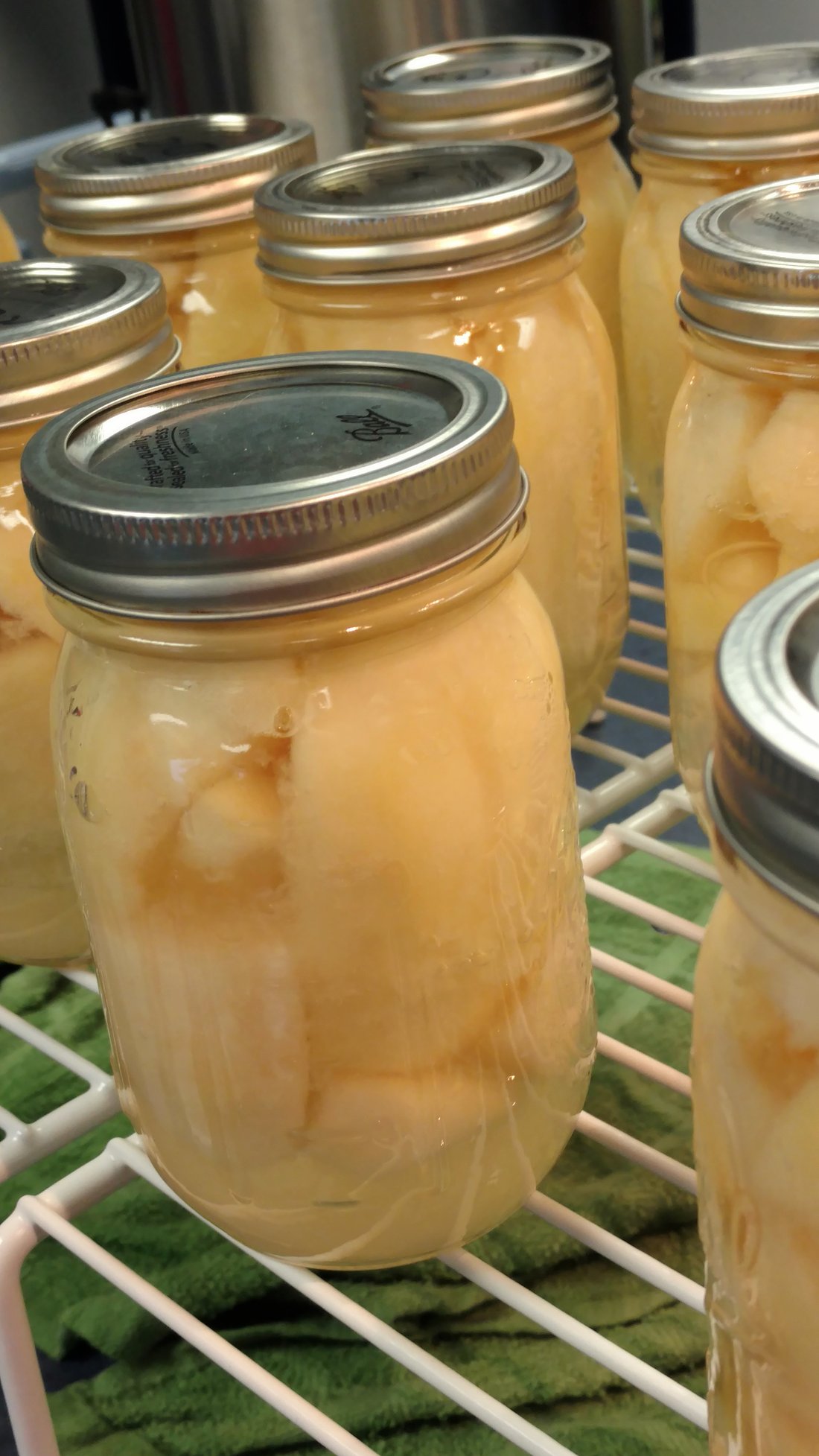
1. 🔴 Never dilute the vinegar in a canned recipe
This is the one. If you remember nothing else from this section, remember this.
A canned, shelf-stable pickle is safe for exactly one reason: its finished acidity sits below pH 4.6, and Clostridium botulinum cannot grow below pH 4.6. That is the line the entire craft of canning turns on, and in a pickle the vinegar is what puts you under it.
So:
- You may always add spice, garlic, heat, herbs, sugar. None of them affect the acid balance in any way that matters.
- You may never add water, cut the vinegar, or substitute a weaker vinegar. That is the one change that can push a jar back over the line.
- Use 5%-acidity vinegar, labelled. Never homemade vinegar, never unlabelled vinegar, for anything going on a shelf.
- Do not scale a recipe by adding more vegetables to the same brine. The vegetables carry water. More vegetables in the same acid is dilution wearing a disguise.
The reason this rule feels disproportionate is that the failure is invisible. An under-acidified jar looks, smells and sounds exactly like a good one. There is no bulge, no smell, no fizz to warn you. You cannot inspect your way out of this — you have to get it right at the brine stage.
Refrigerator pickles have more latitude, because the cold is doing preservation work alongside the acid. That is genuinely why I tell people to start there.
2. 🔴 Pickled eggs, and the internet’s favourite tip is the mechanism
This one is worth spelling out because the popular advice is not merely useless, it is precisely the thing that put a healthy man in hospital.
CDC’s report on a 1997 Illinois case of botulism from home-pickled eggs (MMWR 49(34):778–780) is unusually explicit. Verbatim: “The pH of the pickling liquid was 3.5 (i.e., adequate to prevent C. botulinum germination…”
The acid was never the problem. What the report describes instead is that the eggs had been “punctured with toothpicks”, held at room temperature, and “exposed to sunlight” — and the toxin was found at roughly 1,000× higher concentration in the yolks than in the brine. CDC’s recommendation is blunt: “Pricking, poking holes… should be avoided.”
The reason is the same fact that governs every marinated egg ever made: brine does not reach the yolk. It penetrates a few millimetres of white in a day. The yolk stays a low-acid, oxygen-free pocket in the middle of an otherwise perfectly safe jar — and piercing the egg does not acidify that pocket, it just gives spores a road in.
And the NCHFP position on canning them: “There are no home canning directions for pickled eggs.” There is no tested process. Pickled eggs are a refrigerator food. Mine live in the fridge and they get eaten inside a month.
3. Garlic in oil, mushrooms, and anything low-acid under a layer of fat
Oil is not a preservative. Oil is a lid — it excludes oxygen, which is exactly the condition C. botulinum wants.
- Garlic in oil is the textbook case. CDC has documented type A botulism from a commercial chopped-garlic-in-oil product (1989, three cases), which is why the product was reformulated with acidifying agents. Untreated garlic in oil at room temperature can grow toxin with no change in taste or smell. Homemade garlic or herb oils go in the refrigerator, and CDC says to discard them after four days.
- Mushrooms are low-acid and there is outbreak history with home-canned ones. Wild mushrooms in particular. Plain mushrooms, with no added acid, need a pressure canner — a boiling-water bath will not do it. Russian-style pickled mushrooms — which I love — are otherwise a refrigerator preparation. 🔴 Correction, added later: this bullet used to say a tested pressure-canning process was the only route for pickled mushrooms, and that was wrong. NCHFP publishes a tested boiling-water process for Marinated Whole Mushrooms — 20 minutes for half-pints — carrying 2½ cups of 5% vinegar and ½ cup of bottled lemon juice per 7 lbs of mushrooms, and 2 cups of oil. Enough added acid takes a low-acid food out of the pressure-canner category; the oil is irrelevant to that. See Under Oil, which is where I found the error.
- Any low-acid vegetable you plan to put on a shelf needs either enough added acid to get under pH 4.6, or a pressure canner. A boiling-water bath tops out around 100 °C, which does not kill the spores; a pressure canner reaches 115–121 °C, which does.
The general shape: a sealed, oxygen-free, low-acid, room-temperature container is the botulism recipe. Vinegar is what makes a pickle jar not that.
⭐ And if you leave a tested recipe, knowing where your jar sits stops being a guess and becomes a measurement. Measuring pH covers what to buy, how to prepare a sample so the number means anything, and the second line almost nobody states: paper and strips are only acceptable at pH 4.0 or below. Between 4.0 and 4.6 the regulation expects a meter.
4. Olives, if you cure your own
Raw olives must be debittered before they are edible, and the home-cured olive has a real botulism history. The rules and the chemistry are on the olive page, because they are specific enough to need their own room.
What is not dangerous
An equally important list, because unnecessary fear makes people throw out good food.
- Cloudy brine is almost always the anti-caking agents in table salt, or garlic, or spice sediment. On a vinegar pickle it is cosmetic. (In a ferment, cloudy is normal and expected.)
- Garlic turning blue or green is a harmless reaction between garlic’s sulphur compounds and trace copper, encouraged by acid. It looks alarming. It is nothing.
- A softened pickle is a disappointing pickle, not a dangerous one. See The Crunch Problem.
- Sediment in the bottom of the jar is spice and vegetable solids.
- Vinegar smell on opening — that is the food working correctly.
When to actually throw it out
- A canned jar that did not seal, unless you refrigerate it and eat it promptly.
- A bulging lid, a jar that spurts, or any sign of pressure. Do not taste it. Do not “just check.”
- Mold on a vinegar pickle. In a ferment, surface kahm yeast is normal and scrapeable; on a vinegar pickle, mold means the acid is not doing its job and something is wrong. Out.
- Anything you cannot account for — you don’t remember making it, it isn’t labelled, the brine went from clear to opaque on a shelf.
- Any home-canned low-acid food you are not certain was processed correctly.
Label your jars with the date. Every single one. I have been doing this for decades and the jar I cannot identify is the jar I throw away, every time, without exception.
Comments (0)