Grandma Hay's Pickles
Everything in this section starts here, in one kitchen, with one person, and for a long time I did not know there was anything else.
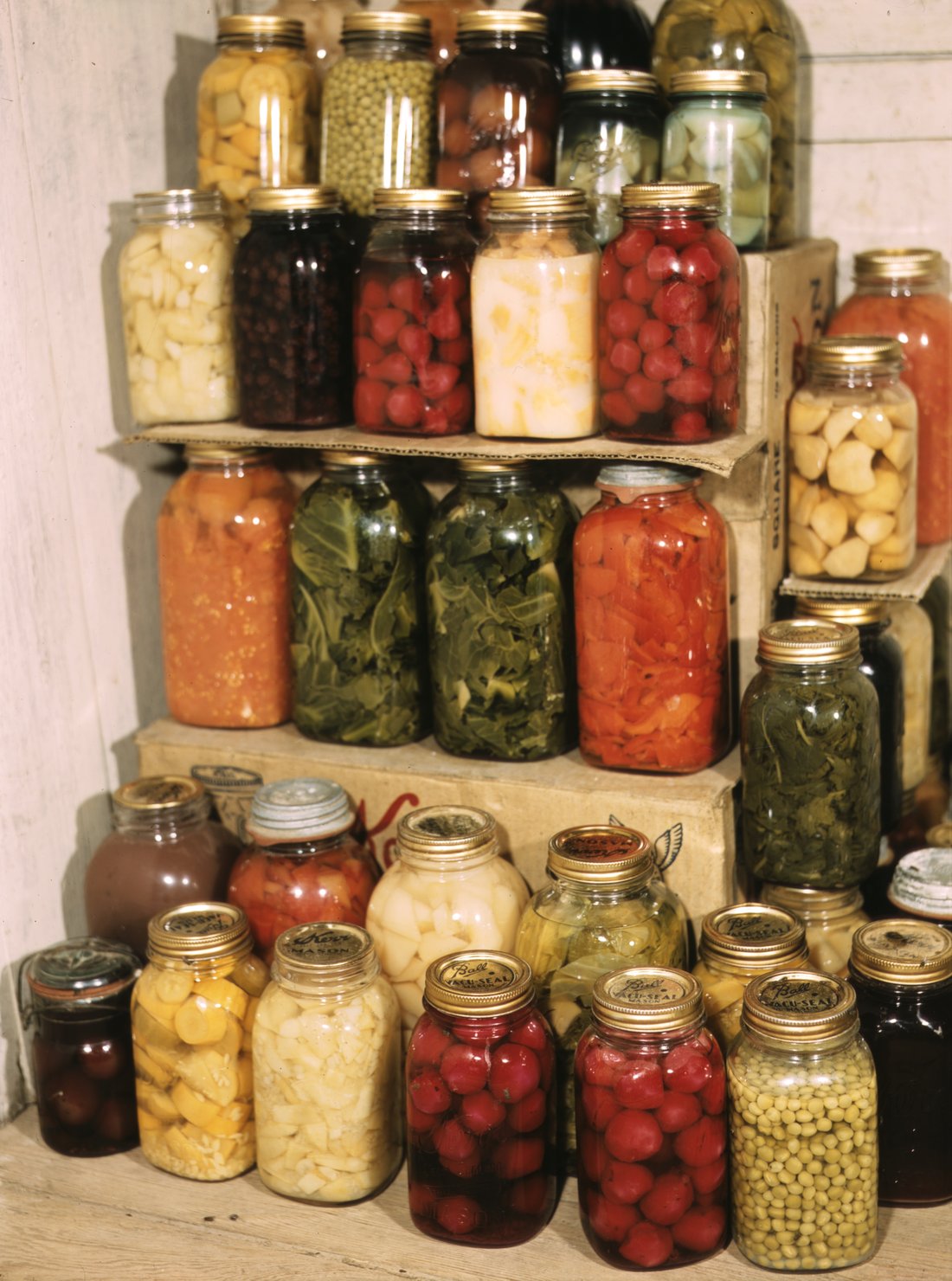
Grandma Hay was my father’s grandmother — my great-grandmother, and “Grandma Hay” to the whole family. She canned, and I canned with her, and what she made was the entire universe of pickled food as far as I was concerned. Pickles. Pickled peaches. Watermelon rind. Sweet pickles I did not much like.
I did not know what was out there. That is the honest description of where I started, and it is why the Marine Corps hit me the way it did.
🔴 These recipes are my reconstructions, and I want to say that plainly
Grandma Hay never wrote any of it down.
Not the peaches, not the rinds, not the sweet pickles. There is no card, no notebook, no back of an envelope. What there is, is that I canned with her often enough and long enough to have it memorised — the smell, the order of operations, when she decided the syrup was right, what went in the jar first.
So the recipes on this site under her name are mine, built from that memory, and I would rather say so than hand you a fake heirloom. I have seen enough family recipes on the internet that have clearly been polished into something that never existed. What follows is my best reconstruction of somebody else’s cooking, forty-some years on. It tastes like I remember. That is a different claim from “this is her recipe,” and it is the one I can actually make.
If you have a version from your own family, yours is probably not the same, and that is rather the point of a food that was never standardised.
The peaches
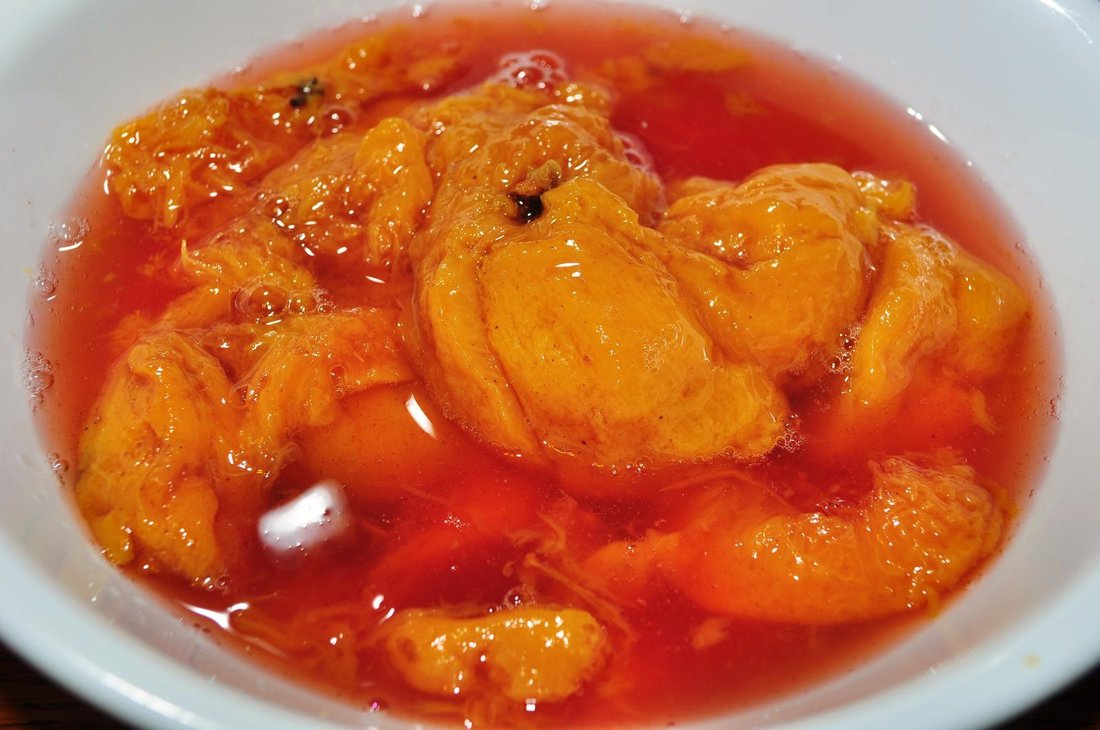
Pickled peaches are a sweet pickle with a spice bill closer to a holiday than a deli. Peaches, vinegar, sugar, and the warm end of the spice rack — cinnamon, clove, allspice — and the smell of that syrup coming up is the single strongest food memory I have from childhood.
The things that matter, as best I can reconstruct them:
- Firm, slightly underripe freestone peaches. A ripe peach turns to mush in hot syrup. This is the one place I would overrule my own instinct at the market.
- Cling to the whole spices, not ground. Ground clove in particular will take over the jar and turn the syrup muddy.
- Whole or halved, not sliced. They hold their shape and they look like something on the shelf.
- Hot pack. A dense fruit needs the head start, and it drives the air out so the fruit does not float — see The Brine.
- They need time. A pickled peach at one week is a peach in syrup. At a month it is a pickled peach. Somewhere in between, the spice stops sitting on the surface and gets into the fruit.
What I did not know as a kid, and only learned when the Marine Corps sent me to Tennessee, is that she was not doing something eccentric. She was standing at the end of an entire regional tradition — the Southern pickled peach is a real and widespread thing, and finding a whole world of it behind my great-grandmother’s jars is one of the better surprises this food has given me.
The watermelon rinds
Grandma Hay’s Watermelon Rind Pickles
Watermelon rind pickle is one of the great thrift foods, and I mean that as praise. You eat the watermelon. You are left with a mountain of rind, which is the part everybody throws away — and it turns out that the pale, dense layer between the red flesh and the green skin is a superb pickling vegetable. Firm, almost translucent when it’s done, and it takes sweet spice as well as anything.
The work is in the preparation and there is no way around it:
- Peel off all the green skin, and scrape off all the red flesh. Only the white-to-pale-green layer goes in the jar. Any red left on turns to mush and clouds the syrup.
- Salt soak first, several hours or overnight, then rinse well. This firms the rind before it ever meets the syrup and it is not an optional step.
- Then a hot pack in a sweet spiced syrup — same family as the peaches: cinnamon, clove, sometimes ginger.
It is fiddly, it uses a garbage ingredient, and it makes something better than most things you can buy. Of all the food on this page it is the one I would most like to see come back.
The sweet pickles, and one honest paragraph
She also made sweet pickles, and I am not a fan.
That is not a criticism of her. Sweet cucumber pickles — bread-and-butter and their relatives — are a legitimate and popular food and half the country prefers them to a dill. I would rather have the sugar in a fruit and the vinegar in a cucumber, and the sweet-sour cucumber has never worked for me.
I am including this because a page about a beloved relative that pretends everything she made was perfect is not worth reading, and because I would rather tell you what I actually think than write a paragraph of warmth I do not feel about a pickle. She was a wonderful cook. I did not like the sweet pickles. Both are true.
(If you do like them, the history is genuinely interesting and it is on the history page — bread-and-butter pickles have a trademark date, which is more than almost anything else in this section can claim.)
What she actually taught me
Not recipes, as it turns out — I had to rebuild those. What I got from canning beside her was the habits, and they are the part that transferred to everything else I have made since:
- You do this when the fruit is ready, not when you are ready. Preserving runs on the crop’s calendar.
- Jars get filled all the way and lids get checked. Twice.
- You make more than you need, because the point is February.
- The shelf is a kind of accounting. You can see what kind of year it was by looking at it.
Every crock in my basement and every jar in the fermentation section is downstream of standing in that kitchen. She was working with vinegar and sugar and I ended up spending forty years on the other method as well — but the reason any of it appealed to me is that I had already seen somebody turn a bushel of something perishable into a shelf full of something that would keep.
Next in the story: The South — where I found out she’d been part of something much larger all along.
Comments (0)