Starting a Coffee Business · 14 of 20
Grinders: for the Stall, for Customers and for a Shop
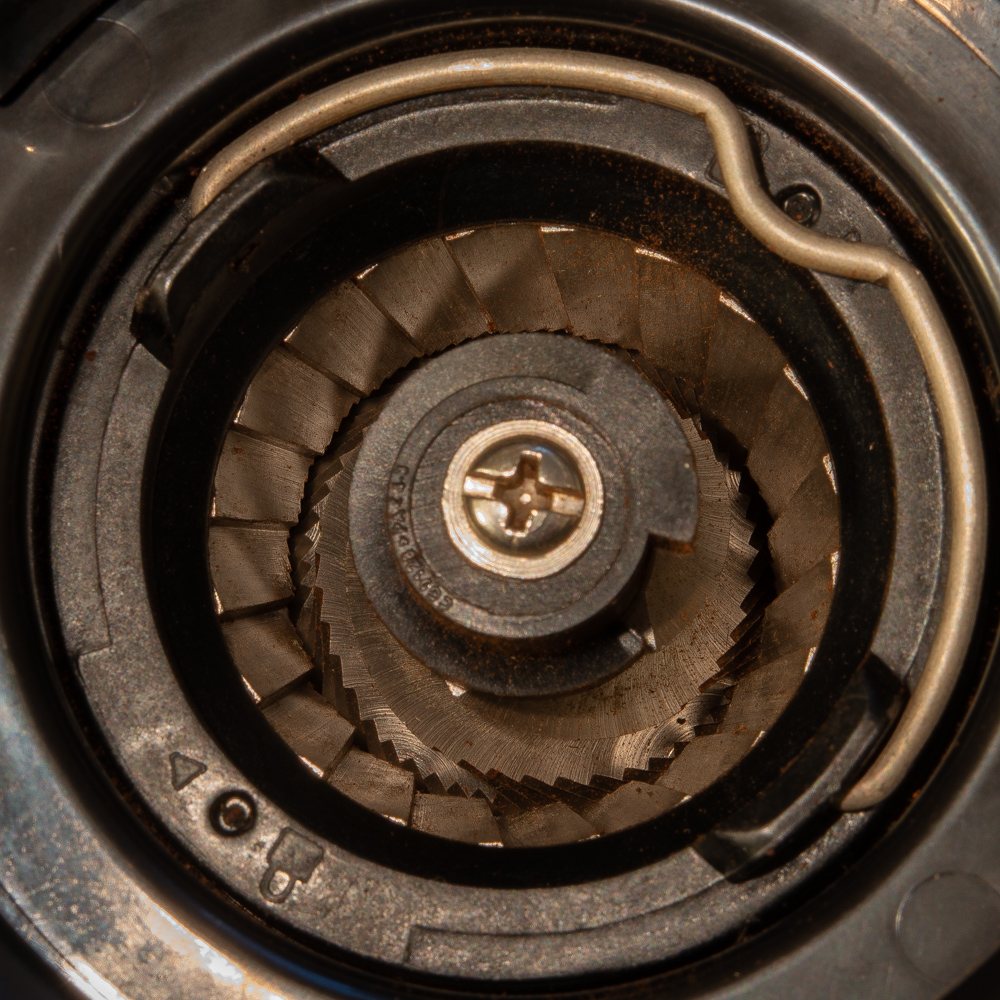
I already own and use a burr grinder. A stall needs grinders for three different jobs: grinding each cup’s dose in front of the customer, grinding a whole bag for someone who has no grinder at home, and selling grinders to people who should own one. This page takes each in turn, then looks ahead to the shop, and answers a question I had: whether every coffee should have its own grinder.
Prices were read on 2 October 2026.
Why a burr grinder at all
A blade grinder has no setting. It chops, and the only control is how long the button is held; coffee near the blade is cut again and again while the rest is not. A burr grinder sets a gap that every piece of coffee has to pass through. The result is grounds of about the same size, and grounds of the same size extract at the same rate. Mixed dust and chunks give a cup that is bitter and sour at once.
That is a description of how the two work. Blogs print precise percentages for the difference; none traces to a published measurement, so none is repeated here.
Grinding a cup’s dose at the stall
A pour-over takes 15 to 20 g. Energy is no obstacle: even a bag takes only 6 to 8 Wh. The questions are speed, noise and what the power station’s 600-watt inverter will start.
| Grinder | Type | Power | Speed | Price |
|---|---|---|---|---|
| Timemore Whirly 01S | 42 mm conical, built-in battery | 60 W motor | 15 g in about 30 seconds; about 35 pour-over doses per charge | $169 |
| OutIn Fino | 38 mm conical, built-in battery | up to 18 grinds per charge | $180 | |
| Baratza Encore | 40 mm conical, mains | 70 W or 240 W (sources disagree) | 0.8–1.1 g a second | $150 |
| Fellow Ode Gen 2 | 64 mm flat, mains | 140 W | not published | $400 |
| 1Zpresso K-Ultra | conical, hand | none | 18 g in about 25 seconds | about $259 |
| Timemore Chestnut C3 | conical, hand | none | $79–$119 |
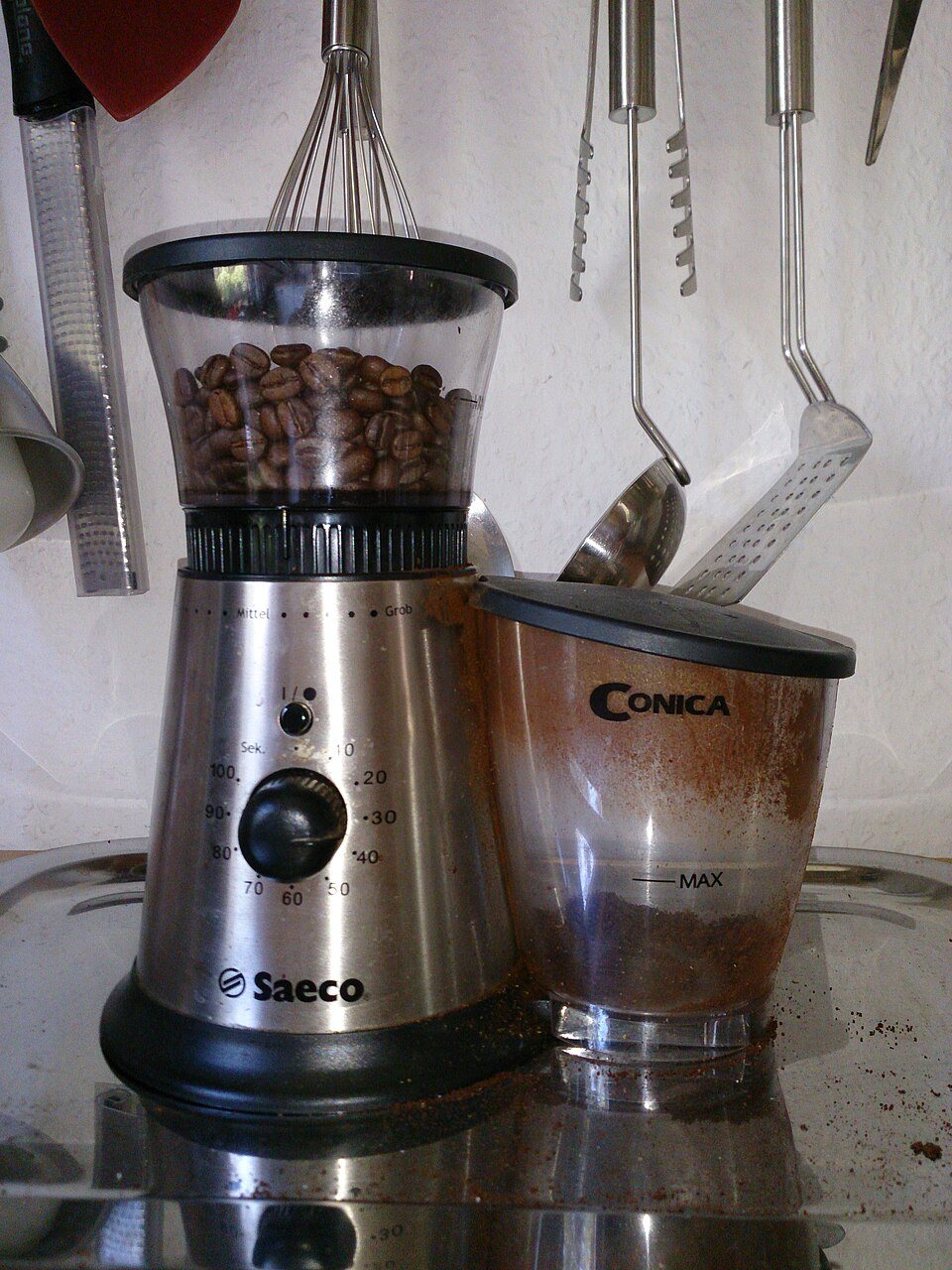
For doses, any of these works. The battery grinders are built for exactly this: a weighed dose, ground in half a minute, with no cord. A Baratza Encore or a Fellow Ode on the power station is quieter in use and draws almost nothing. A hand grinder is theatre, and for one cup at a time it is fast enough.
A fourth way: a hand grinder on a tool battery. KINGrinder’s manual and 1Zpresso’s FAQ both allow their hand grinders to be turned by a small power tool through the ¼ in hex on the shaft. A cordless drill in a cradle would make a stall grinder whose battery is swapped, not recharged. The plan, the numbers and the risks are on A Drill-Driven Grinder.
A practical arrangement: the house coffee for the airpots is ground at home that morning. At the stall, a small electric or battery grinder does each pour-over dose to order, and a good hand grinder sits on the table for sale and for show.
Grinding a bag for a customer
A 12 oz bag is 340 g, and the home-scale grinders are slow at it:
| Grinder | Time for a 12 oz bag | Runs on a 600 W power station? | Weight | Price |
|---|---|---|---|---|
| Baratza Encore | 5 to 7 minutes | Yes | 7 lb | $150 |
| Baratza Vario W+ | 2½ to 3½ minutes | Yes (130 W) | ||
| Ditting 807 | 45 seconds | Within its rating (500 W); starting surge not confirmed | 38 lb | $1,999 |
| Mahlkönig Guatemala 2.0 | about 25 seconds | No (1,100 W) | 62 lb | $2,399 |
| Bunn G1 HD | under 30 seconds | No (1,320 W) | $1,457 | |
| Mahlkönig EK43 | about 17 seconds | No (1,300 W) | 57 lb | $3,899 |
| Hand grinder | about 8 minutes of cranking |
The Ditting 807 is the only true shop grinder that fits inside the power station’s rating, and whether the station will start its motor has to be tested before buying. The others need a 1,500-watt inverter or an outlet.
The law matters here too. Grinding a labelled bag at the stall is processing food on site, which is outside the cottage food exemption on a plain reading (the rules page). Until MDARD says otherwise, the answer for the first seasons is simpler and cheaper than any bag grinder: bring sealed bags of both whole bean and ground, ground at home the day before, and labelled for the brew method (“ground for drip”). A 12 oz bag ground on a home burr grinder takes five minutes. Twenty bags is an evening.
Grinders to sell
A grinder is the best thing a coffee stall can sell beside the beans, because it is the single largest improvement most customers can make, and it brings them back for whole beans.
| Tier | Grinder | Price | Who it is for |
|---|---|---|---|
| Entry, hand | Timemore Chestnut C3; KINGrinder K6 | $79–$119; about $109 | One or two cups a day; campers; the first burr grinder |
| Everyday, electric | Baratza Encore | $150 | The household drip-coffee maker’s grinder. Repairable: the maker sells replacement parts. |
| Portable electric | Timemore Whirly 01S | $169 | Travel, the office, a camper |
| Upper, hand | 1Zpresso K-Ultra; Comandante C40 | about $259; $266–$360 | The enthusiast |
| Upper, electric | Fellow Ode Gen 2 | $400 | Filter coffee at home, quietly |
Why buy it from the stall. The honest reasons are service, not price: the grinder is set for the coffee the customer has just tasted, they are shown how to adjust it, and they can bring it back to the same table next week with a question. A large retailer will match or beat the price. It will not grind a sample bag on the customer’s new grinder in front of them.
Becoming a reseller. Baratza, Fellow, Timemore, Hario and 1Zpresso all have wholesale or reseller programmes, mostly by application; Hario’s US wholesale is on a marketplace with a $200 minimum. None publishes its discount, so the margin on a grinder is unknown until an application is answered. Start with one hand grinder and one electric, in small numbers, and add what people ask for.
Other gear worth a place on the table: V60 drippers ($13 to $30), phin filters, filters, a simple scale, and a French press. The phin sells itself once people have watched one drip. Nothing published gives a typical margin on brewing gear. Gift Baskets puts these together with the beans and the honey: three baskets for someone buying a first grinder, and seven more.
For the shop
When there is a counter and a 20-amp circuit, the choices change.
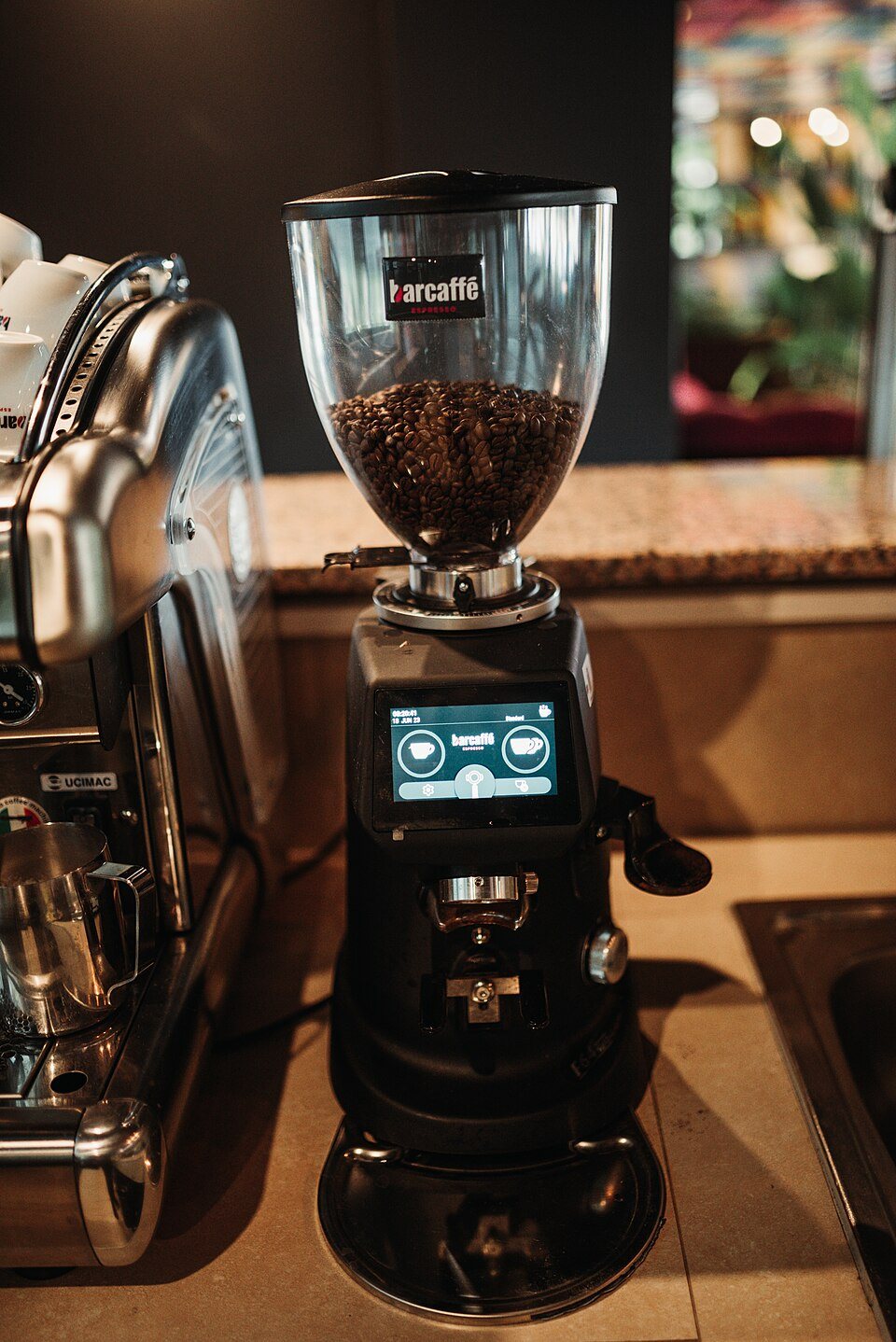
Bags and batch brew. A shop grinder: the Ditting 807 ($1,999), the Mahlkönig Guatemala ($2,399) or EK43 ($3,899), or a Bunn G1 ($1,457), the kind seen in grocery aisles. These are built for throughput.
The brew bar. The EK43 doubles as a single-dose grinder: its maker describes it as having “low grind retention by design.” A weighed dose of any coffee goes in and comes out, and it is ready for the next. The Ditting 807 Lab Sweet ($2,999) is made for the same job.
Espresso, if espresso is added. A hopper-fed espresso grinder with 65 mm burrs or larger: Mahlkönig E65S ($3,099), Eureka Atom W 65 ($1,449 to $1,549), Fiorenzato F64 Evo ($1,695), Mazzer Mini ($1,295), Nuova Simonelli Mythos ($3,100).
Should each coffee have its own grinder?
No. The trade’s answer, from a commercial equipment supplier and a grinder manufacturer, is one grinder per job, not one per coffee:
- The house espresso gets its own grinder, because for espresso the grind setting is the recipe. Every change of coffee in a hopper-fed grinder costs a purge of old grounds and a new dial-in.
- Decaf espresso gets a second, smaller one, so that nobody empties and resets the main grinder for one decaf drink. The reason given is workflow and waste.
- Bags and batch brew get a shop grinder, built for volume.
- Several coffees on a brew bar are handled by single dosing, not by more grinders. A low-retention grinder takes one weighed dose at a time, and almost nothing of the last coffee stays behind.
Where one grinder does serve more than one coffee, the practice is to purge: grind a few grams of the new coffee and throw them away. Makers say “near zero” without numbers. One laboratory study has since turned up that measured it; that figure, and how to purge and clean a grinder of any size, are on Grinding.
The one case for a dedicated grinder beyond those is flavoured coffee. The oils stay in the burrs and turn up in the next coffee. No source addressed it directly; the grinder makers’ own point about stale residue “muddying” fresh coffee is the reason to keep flavoured beans, if they are ever sold, away from every other grinder.
For the stall, that settles it. Single-dosing a small grinder to order is already the arrangement the trade recommends for a rotating line-up. One grinder, brushed out between coffees, is enough.
Sources
- Makers’ pages: Timemore (Whirly 01S, Chestnut C3), OutIn, 1Zpresso, Baratza, Fellow, Ditting, Mahlkönig, Bunn.
- Retailer specifications for the Baratza Encore, Vario and Forté and the Fellow Ode (the Encore’s wattage is given as 70 W by one and 240 W by another).
- Mahlkönig, “Guide to coffee grinders,” “Microns and grind consistency,” “Checklist: best commercial grinder” and its cleaning guide.
- Espresso Parts, three articles on how many grinders a café needs and how to lay out the grinding workflow; Clive Coffee on single-dose grinders.
- Reseller pages of Baratza, Timemore, Fellow, Hario and 1Zpresso.
- Bag-grinding times are calculated from each maker’s stated grams per second.
Comments (0)