Starting a Coffee Business · 16 of 20
The Stall: Layout, Kit, and the Cookies and Jam Beside the Coffee
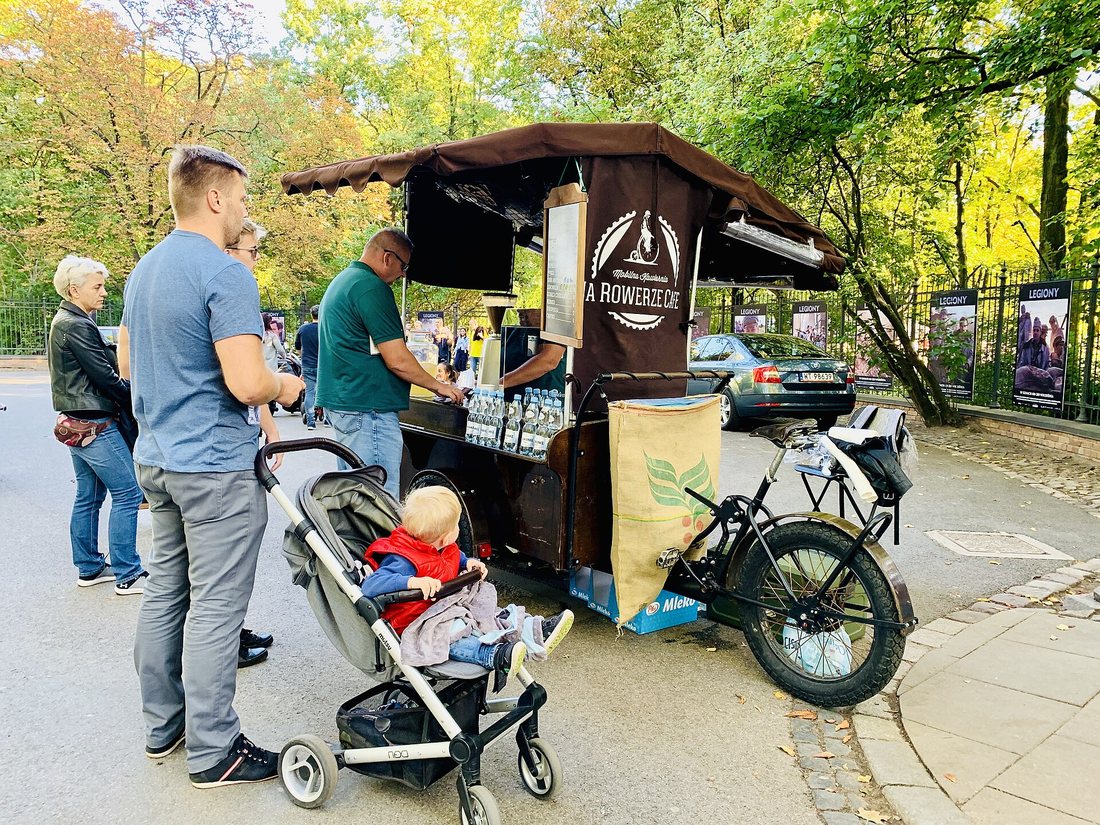
I already sell honey at farmers markets. A coffee stall is the same ten feet of pavement with far more on it: hot water, a handwashing station, two coolers, brewers, bags, baked goods, jam and a way to take cards with no signal. This page is the layout, the kit list and the market-day checklist, each item tied to a rule or a calculation on the other pages.
What the rules require of the space
From MDARD’s guidance, a stall that samples or serves has to have:
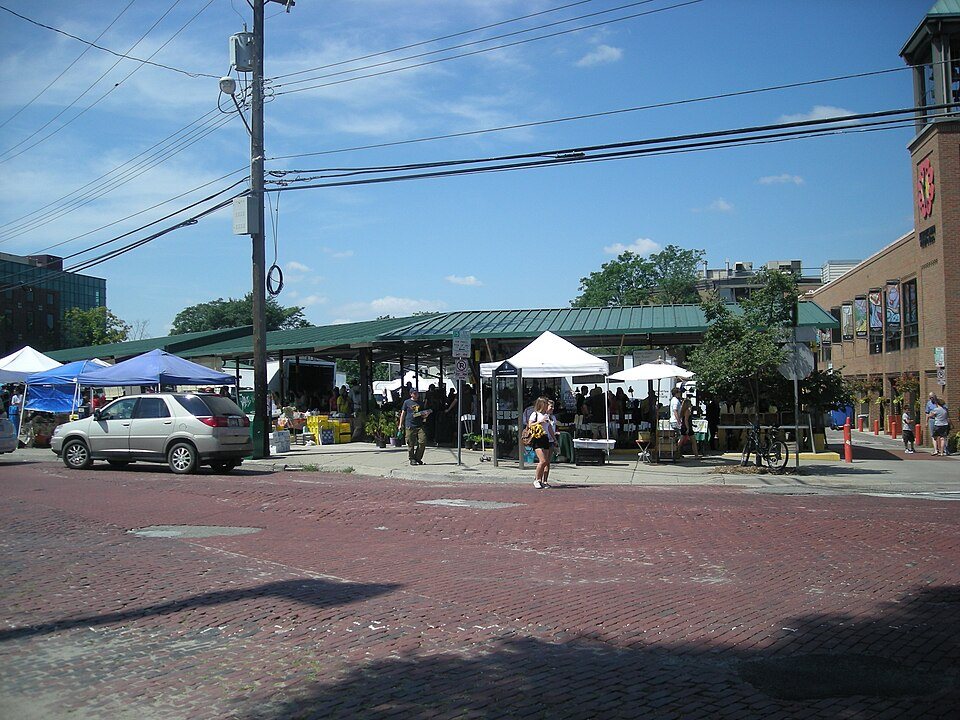
- a canopy overhead;
- everything, including stock and cups, at least 6 inches off the ground;
- tables with smooth, cleanable surfaces, and mats or a platform if the ground is grass, dirt or gravel;
- samples protected from customers’ hands, or served by the vendor;
- a handwashing station in the space or within about 15 feet, used only for handwashing;
- preparation surfaces out of customer traffic;
- a covered bin for rubbish.
Markets add their own. Every one of them wants the canopy weighted. One Michigan market’s rules ask for at least 20 lb on each leg; vendor advice runs to 25 to 40 lb a leg on pavement. If any cooking or heating device is used, a fire official may ask for the canopy’s flame-resistance label (CPAI-84 or NFPA 701), which is sewn into a compliant top.
The handwashing station
The inexpensive build that satisfies the guidance:
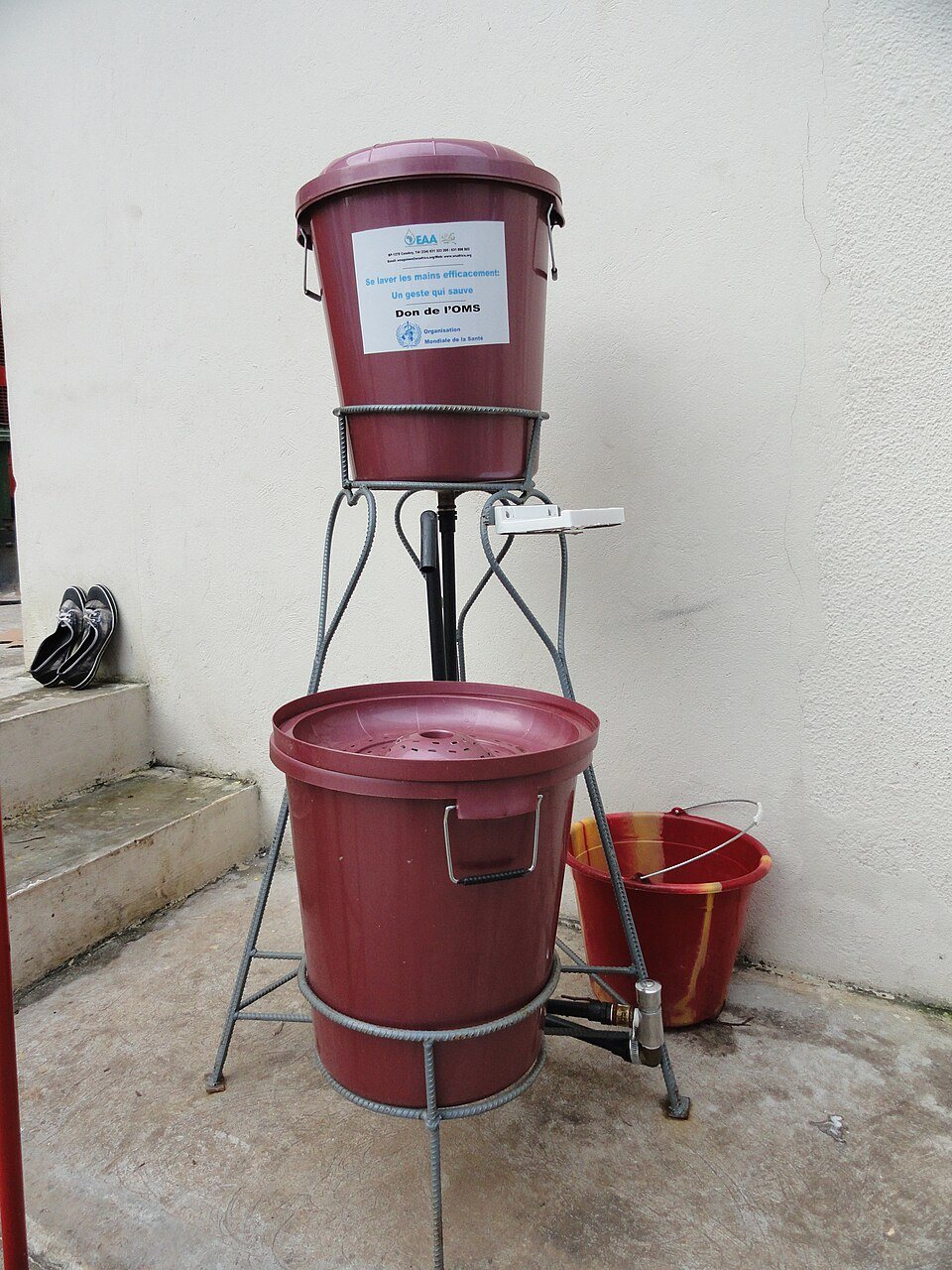
- a 5-gallon insulated drink container with a spigot that stays open hands-free, filled with warm water;
- a catch bucket of 5 gallons or more underneath;
- pump soap, paper towels, a waste basket.
The water has to be warm, and the container that holds brewing water cannot double as the handwash supply. Filled at about 115 to 120 °F in an insulated container, it should still be near 100 °F after a five-hour market. Check it with the stall thermometer.
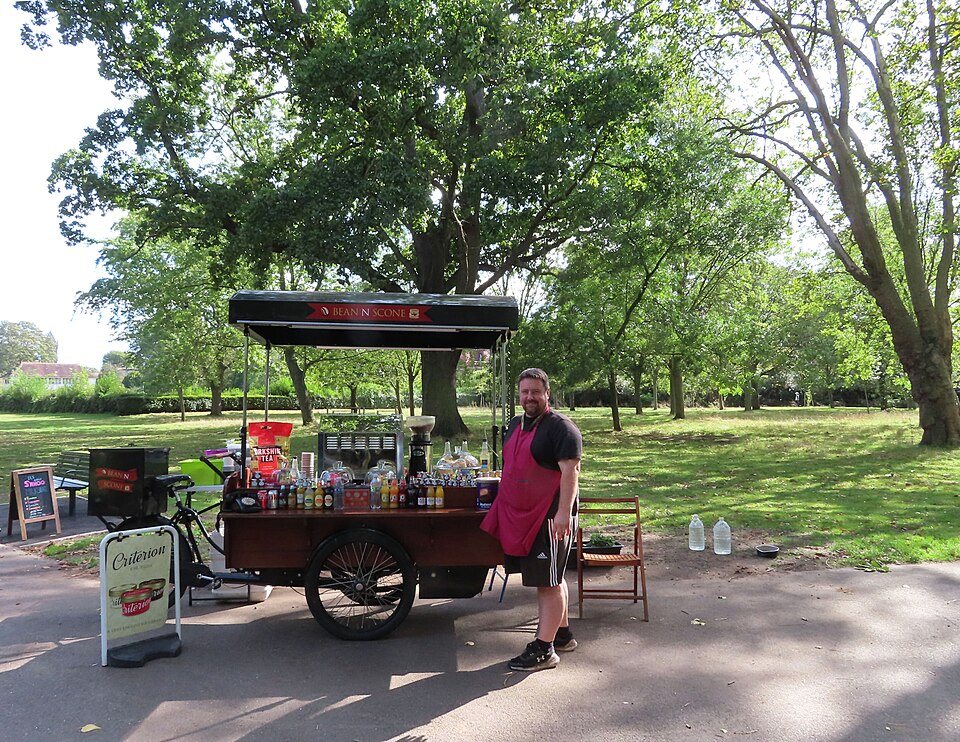
A layout for one person
No published guide to laying out a market coffee stall was found. This is a suggestion that satisfies the rules above, in a 10-by-10 canopy with an L of two tables:
| Zone | Where | What is there |
|---|---|---|
| Taste | Front left corner | Three tasting airpots, sample cups, served across the table; a card for each coffee |
| Buy | Front centre | Bags of coffee behind their pots; honey; jam; wrapped cookies and scones; grinders and gear; the price board; the card reader |
| Order and pick up | Front right corner | The drink menu; finished drinks handed over here |
| Brew | Side table, behind the front | Kettle, drippers, phin, scale, grinder, hot-water airpots, power station; out of reach of the public |
| Wash | Rear corner | Handwashing station |
| Cold and stock | Under the back table, on a crate | Drink-ice cooler; food cooler; water jugs; spare cups |
The customer moves left to right: taste, choose a bag, order a drink, collect it. The line for drinks forms at the right and does not block the bags.
The kit
Shelter and tables
- 10-by-10 canopy with a flame-resistance label; four weights of 25 to 40 lb
- Two tables with wipeable tops; fitted covers
- Crates or a pallet to keep stock off the ground; mats for grass
Water and heat
- About 20 gallons of potable water from an approved supply, in food-grade containers
- Three or four vacuum airpots for brewing water, filled at a boil before leaving
- The electric kettle, tested on the power station; the power station at 100%; the solar panel
- A sealed container for wastewater
Brewing
- Three tasting airpots and a large manual dripper to refill them
- Two pour-over drippers on a stand; filters; a scale with a timer
- A 24 oz phin for concentrate and a 4 oz phin for show
- A small grinder for doses
- Spare brewers in sealed bags, to swap in instead of washing
Cold
- Cooler A, drained: commercially bagged ice for drinks, with a scoop
- Cooler B: condensed milk, milk, eggs if approved, with a thermometer, at 41 °F or below
Safety and sanitation
- Handwashing station, as above
- A probe thermometer, 0 to 220 °F (no thermometer, no licence)
- Sanitizer and its test strips (one teaspoon of unscented bleach per gallon is MDARD’s rule of thumb); wiping cloths
- A closed bin for used brewers and cloths going home
Selling
- Bags of coffee, whole bean and ground; honey; jam; wrapped baked goods; gear
- Cups, lids, sleeves, sample cups, the stamp
- Price board and coffee cards
- Card reader, charged; a cash float
- The licence and paperwork; the sales tax licence; proof of insurance if the market asks
Taking cards with no signal
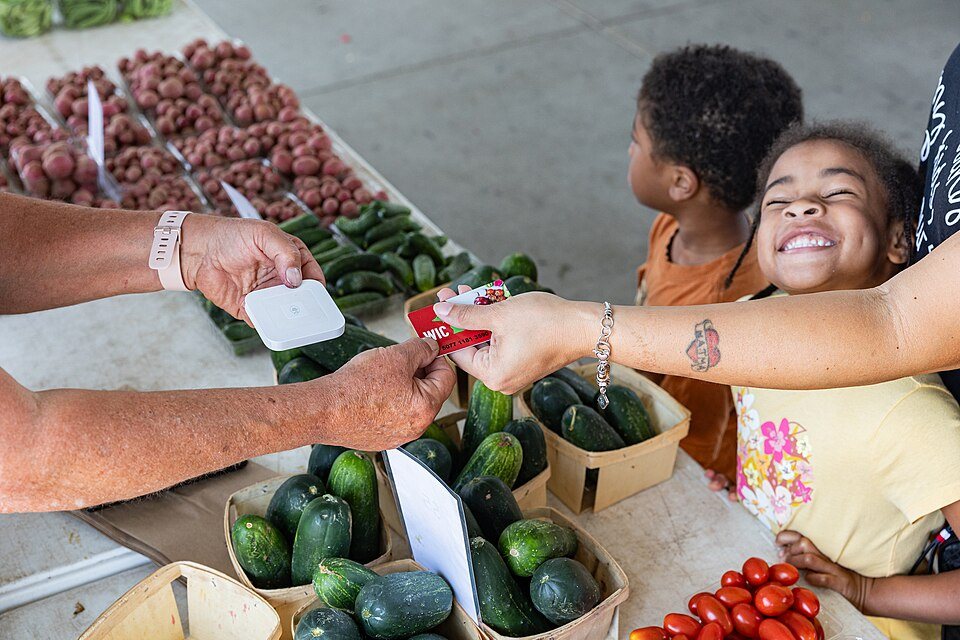
Square’s offline mode stores card payments on the device and processes them when it reconnects. Its conditions, in Square’s words: payments must be uploaded “within 72 hours,” after which they “expire” and “cannot be retrieved or reprocessed,” and “You’re responsible for any expired, declined, or disputed payments accepted while taking offline payments.” Tap to Pay on a phone, gift cards and EBT do not work offline. So at a market with no signal the stall carries the risk of every declined card, and should reconnect before leaving the car park.
Cookies and something like a scone
Baked goods from the home kitchen are cottage foods. They have to be wrapped and labelled at home, each with the full cottage label; they cannot be sold loose from a tray (the rules page). That shapes the choice. What sells beside coffee at a stall is something that survives a morning in a bag, can be eaten in one hand, and does not need refrigeration.
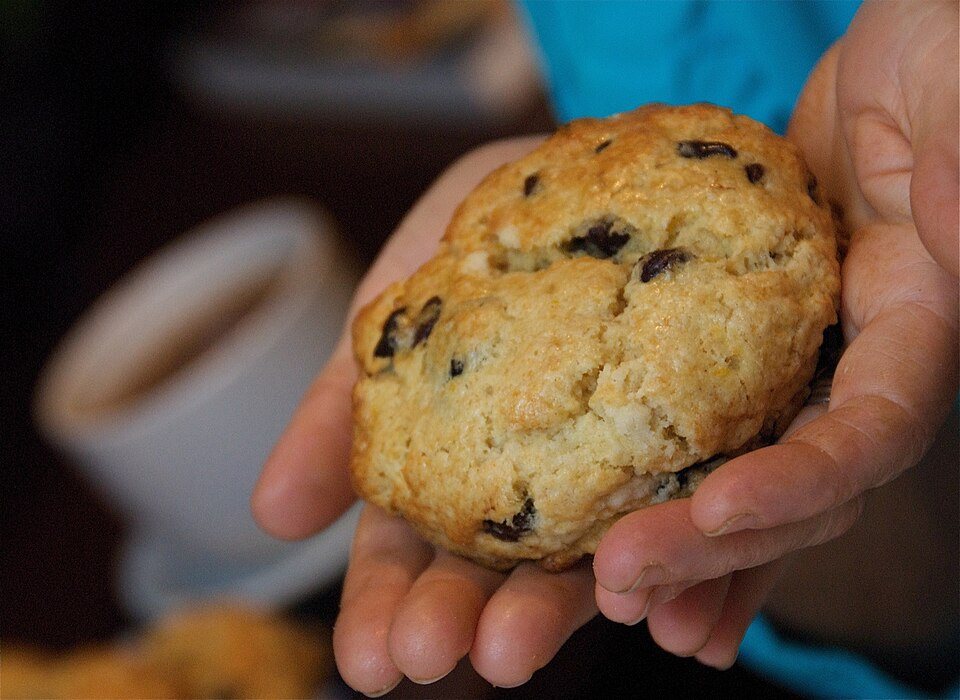
| Bake | Why it suits the stall | From the collection |
|---|---|---|
| Biscotti | Made to be dunked. Dry, so it keeps for weeks and does not crumble in a bag. Almost no waste. | Almond; Cranberry Orange |
| Shortbread | Keeps well, travels well, and takes honey in the dough | Honey Dandelion Shortbread; Sourdough Discard Shortbread |
| Ginger molasses cookies | A dark, spiced cookie beside a dark roast | Ginger Molasses |
| Maple cookies | Ties to the maple syrup on the table | Maple Cookies |
| Oatmeal cookies | The safe seller | Oatmeal |
| Scones | The classic with coffee; best on the day they are baked | Classic Scones |
| Stroopwafel | A thin caramel waffle that sits on the cup and softens in the steam | Stroopwafel |
| Granola, bagged | A cottage food by name; honey-sweetened | Granola with Smoked Honey |
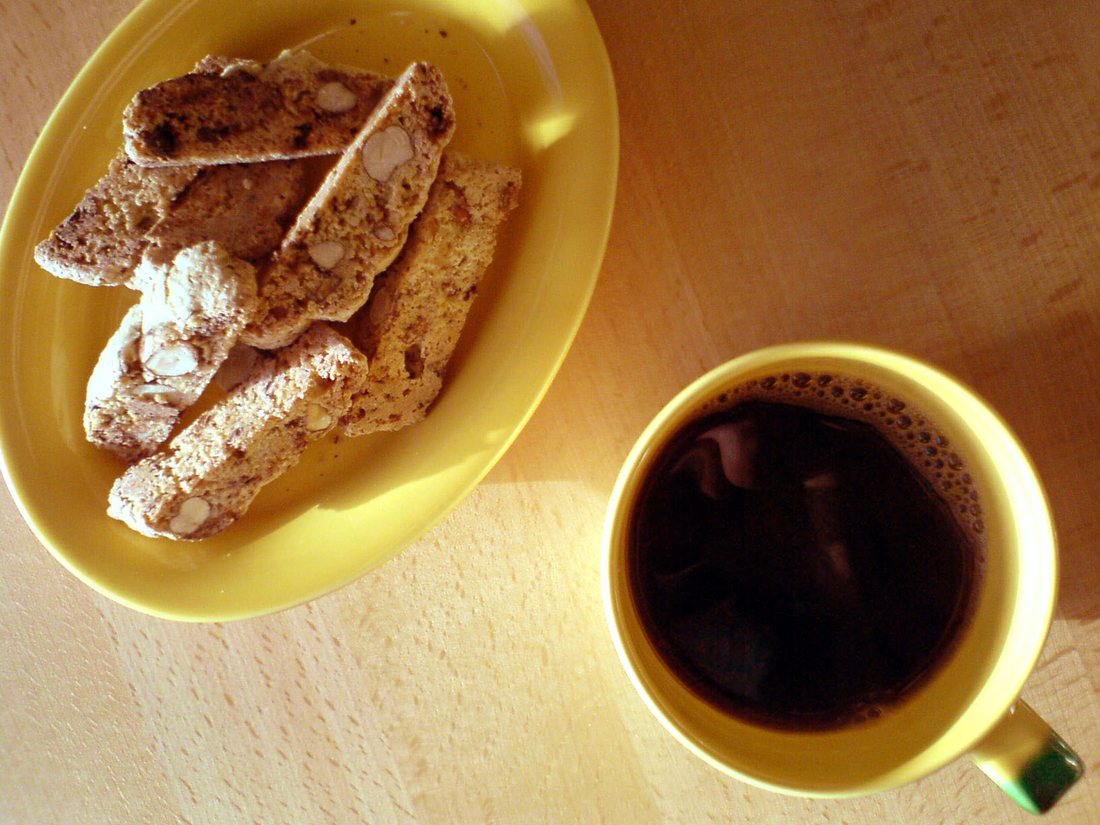
Notes on those:
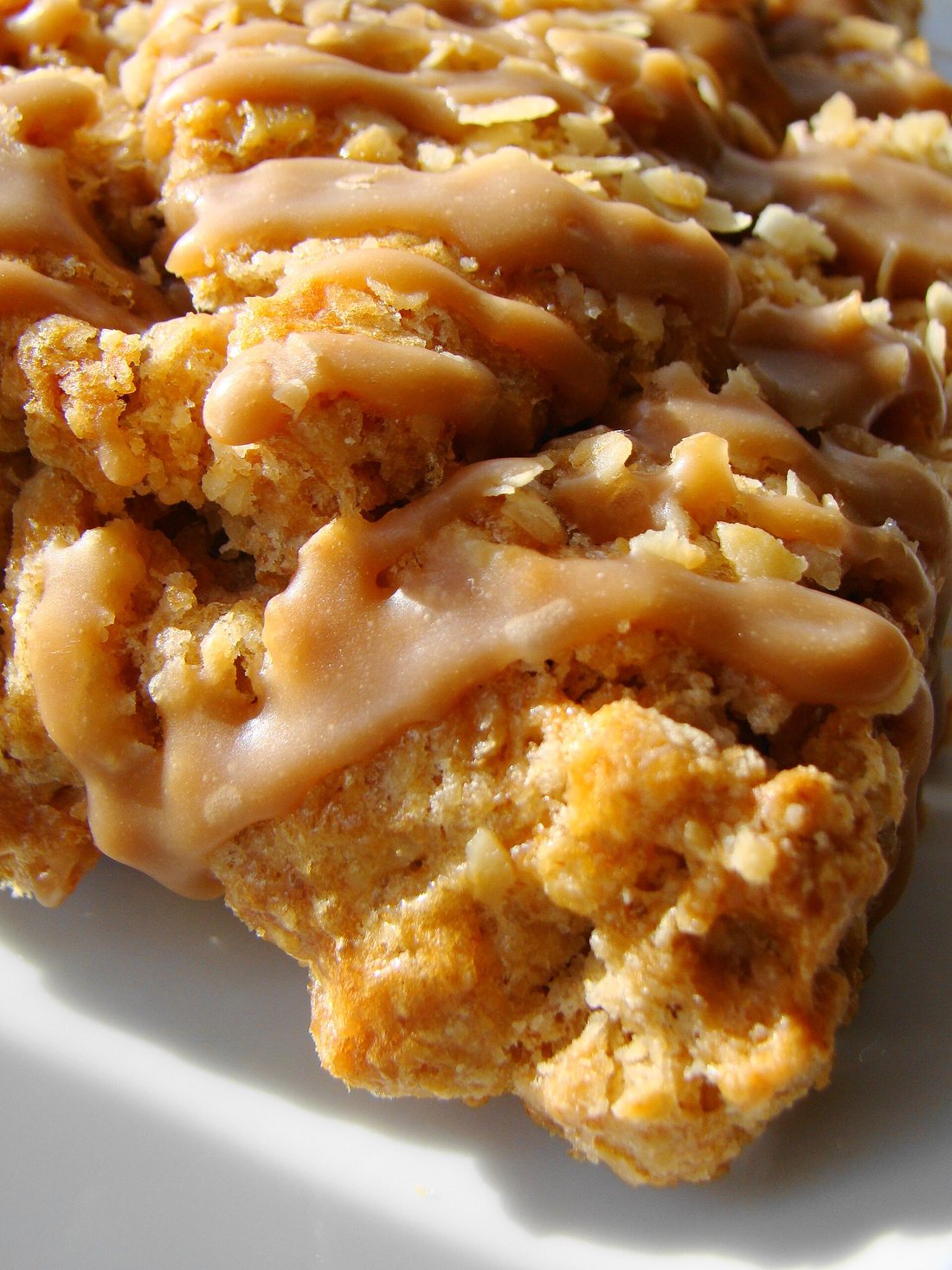
- A scone glaze made of sugar and lemon juice or water is fine. A glaze or filling made with cream, cream cheese or custard is not allowed under cottage food.
- Scones stale in a day. Bake them the morning of the market, or the night before, and bring only what will sell. Biscotti and shortbread are the opposite: bake once, sell for two weeks.
- A scone cannot be served with jam on it. Spreading jam at the stall is preparing food, and a licensed booth may not serve cottage food. Sell the wrapped scone and the jar side by side.
- The honey in the cookie is an ingredient like any other under cottage food. It is the easiest way to put the hives into the bakery.
A cookie at $3 to $3.50 and a scone at $4 to $5 are the starting prices (Prices and Customers), and a coffee-and-pastry price of about a dollar less than the two together.
What to eat with which coffee
Two rules cover most of it: match strength to strength, and let one of the pair be sweet. The first table is judgement, to be tested at the stall.
| The coffee | Pair it with | Why it works |
|---|---|---|
| Light roast, black (washed Ethiopia, pour-over) | Lemon or berry scone; plain shortbread; blueberry muffin | Bright, fruity coffee wants fruit or butter beside it, and nothing loud. Shortbread’s butter softens the acidity. Avoid: dark chocolate; heavy spice. |
| Medium roast, black (the house coffee) | Oatmeal cookie; coffee cake; maple cookie; almond biscotti | Caramel and nut in the cup meet oats, brown sugar, maple and almonds on the plate. American coffee cake is named for what it is served with. Avoid: very tart fruit. |
| Dark roast, black | Ginger molasses cookie; chocolate anything; biscotti for dunking | A strong, bittersweet coffee needs something that can stand up to it: molasses, spice, chocolate. Biscotti is dry by design and made to be dunked. Avoid: delicate, lightly flavored bakes: they vanish. |
| Honey coffee | Honey shortbread; plain scone; granola | Echo the honey, or stay plain and let it lead. Avoid: anything iced or frosted: sweet on sweet. |
| Coffee with milk | Cinnamon bun; scone with jam; coffee cake | Milk softens the coffee, so richer and sweeter bakes fit |
| Cà phê sữa đá (kah fay shoo-uh dah · [kaː˨˩ fej˧˧ ʂɨə˨˩˦ ʔɗaː˦˥]) (phin, condensed milk, ice) | Something plain or salty: buttered toast, a plain butter cookie, salted shortbread | The drink is already dessert. Salt and plain butter make the next sip taste sweeter. Avoid: frosted or filled bakes. |
| Iced coffee, black | Lemon bar; fruit scone; shortbread | Cold dulls sweetness and sharpens acidity, so bright, buttery bakes suit it. Avoid: dry, hard biscotti: nothing to dunk in. |
Some pairings belong to a place. These are customs, as described in reference articles on each tradition:
| The coffee | Pair it with | Why |
|---|---|---|
| Filter coffee — Sweden | Cinnamon bun (kanelbulle) | Fika: the coffee break as an institution, in some workplaces written into the contract. Coffee is “often accompanied by pastries such as cinnamon buns.” |
| Any hot coffee — the Netherlands | Stroopwafel, set on top of the cup | The steam warms the waffle and softens the syrup inside. In Australia they are sold as “coffee toppers.” |
| Café au lait with chicory — New Orleans | Beignets under powdered sugar | Café du Monde’s pairing. Chicory went into the coffee during a Civil War shortage and stayed; it “adds a chocolate-like flavor.” |
| Café de olla — Mexico | Pan dulce | Coffee brewed in a clay pot with cinnamon and piloncillo (raw cane sugar): already spiced and sweet, so the bread beside it is plain and soft. |
| Cafecito — Cuban Miami | Pastelito de guayaba (guava pastry) | Sold together at the walk-up café windows, all day. A tiny, very sweet coffee and a flaky fruit pastry. |
| Turkish coffee | Turkish delight, and a glass of water | ”Often served with something small and sweet to eat.” The coffee is unfiltered and strong; the sweet follows it. |
| Arabic coffee (qahwa, with cardamom) | Dates | Served unsweetened; “to balance the bitterness, it is often accompanied by dates,” dried fruit or nuts. |
| Ethiopian coffee ceremony | Popcorn, peanuts or himbasha bread | Three rounds of coffee roasted and brewed in front of the guests, “accompanied by a small snack such as popcorn.” |
| Melange or mocha — Vienna | Apple strudel; Linzer torte | The coffee house is where people sit for hours; cakes and tarts are part of the furniture. |
| Morning coffee — Japan | Thick buttered toast and a boiled egg | ”Morning service” at a kissaten: the toast comes with the price of the coffee. |
The same table is one of the reference cards.
The jams
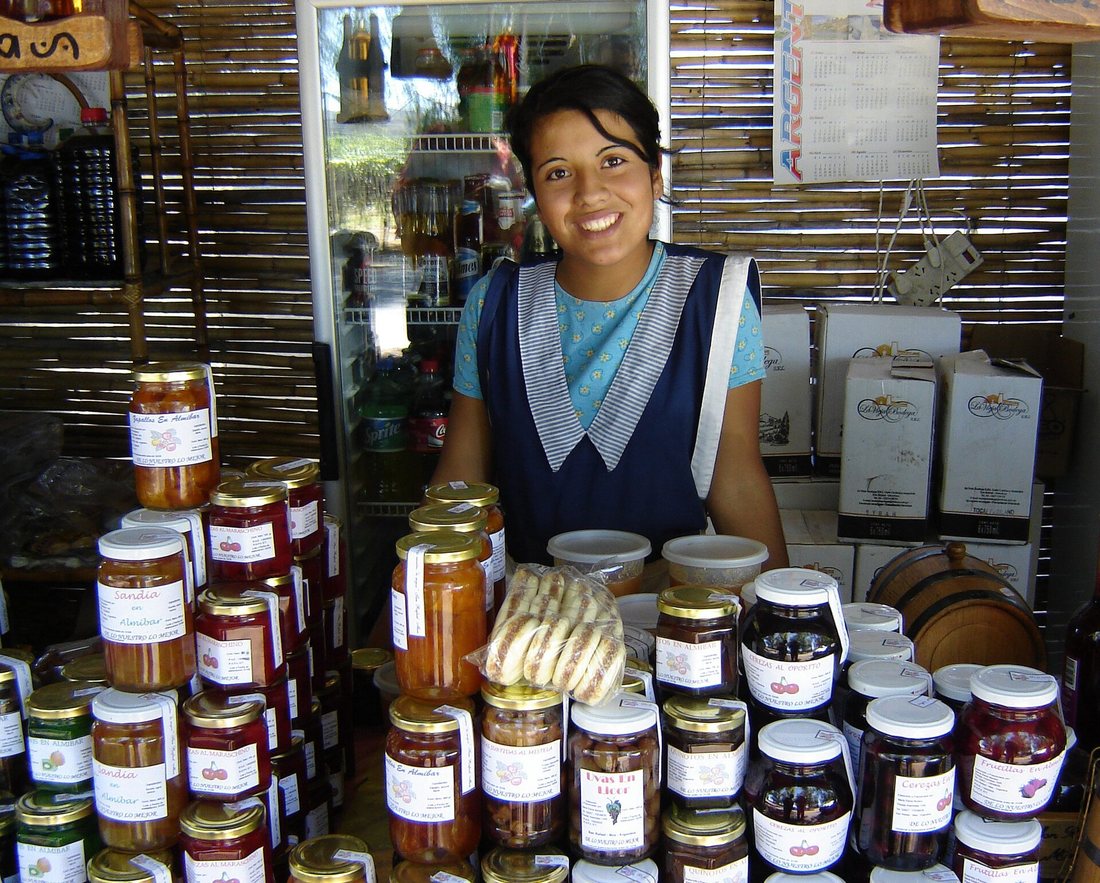
Jam sweetened with honey or maple syrup can be a cottage food if the finished jam reaches 65% soluble solids on a refractometer and the fruit is on the federal list (the rules page has the detail). Three things follow at the stall:
- Keep the refractometer reading for every batch, with its date. A honey-sweetened jam sounds like a “low-sugar” jam, which is not allowed, and the reading is the answer.
- The collection’s existing honey jams, such as Honey-Sweetened Blueberry Jam and Strawberry Honey Jam, were written as home recipes. Before one is sold, its finished solids need measuring; a recipe written to be less sweet may fall short of 65%.
- Samples of jam are allowed as cottage food samples, portioned at home into small lidded cups.
An 8 oz jar at $8 to $10 is the range Michigan makers charge.
T-shirts and the rest
Shirts, mugs, stickers, grinders and brewing gear are ordinary taxable goods at 6%. They need no food licence and they do not spoil. Two cautions: every market has rules on what may be sold, and many are producer-only, so ask whether merchandise is allowed; and a table crowded with goods hides the coffee. One shirt on a hanger at the back of the canopy does more than a stack on the table.
The market-day checklist
The night before
- Roast-dated bags counted and packed; ground bags labelled by brew method
- Baked goods wrapped and labelled; jam counted
- Power station and card reader on charge
- Doses for pour-overs weighed into lidded cups
- Bagged ice bought, or planned for on the way
Before leaving
- Hot-water airpots filled at a rolling boil
- Tasting pots brewed and time-tagged
- Handwash container filled with warm water
- Food cooler packed and at 41 °F or below
Setting up
- Canopy up and weighted before anything else
- Handwashing station first, then sanitizer bucket and test strip
- Thermometer out
- Tasting station, then bags, then the brew table
- Licence displayed
During
- Fresh tasting pot at the midpoint, or at three hours
- Swap brewers, do not rinse them on the ground
- Check the cooler thermometer
Packing up
- Wastewater sealed and taken away
- Used brewers and cloths in the closed bin
- Reconnect the card reader and confirm the offline payments went through
- Count what sold, by coffee, and write it down. That record is the only market research that exists for this stall.
Sources
- MDARD, “Applying for and Safely Operating a Temporary Food Establishment License” and “Guidelines for Providing Safe Food Samples at Farmers Markets”; MDARD cottage food pages.
- Vendor rules of the Milford, Birmingham and Richland Park farmers markets (canopy weights).
- Square, “Process card payments with offline mode.”
- 21 CFR 150.160 (jam); the heat-retention estimate for the handwash container rests on a retailer’s figure for foam-insulated carriers.
Comments (0)