Coffee · 13 of 21
A Drill-Driven Grinder: A Hand Grinder on Tool Batteries
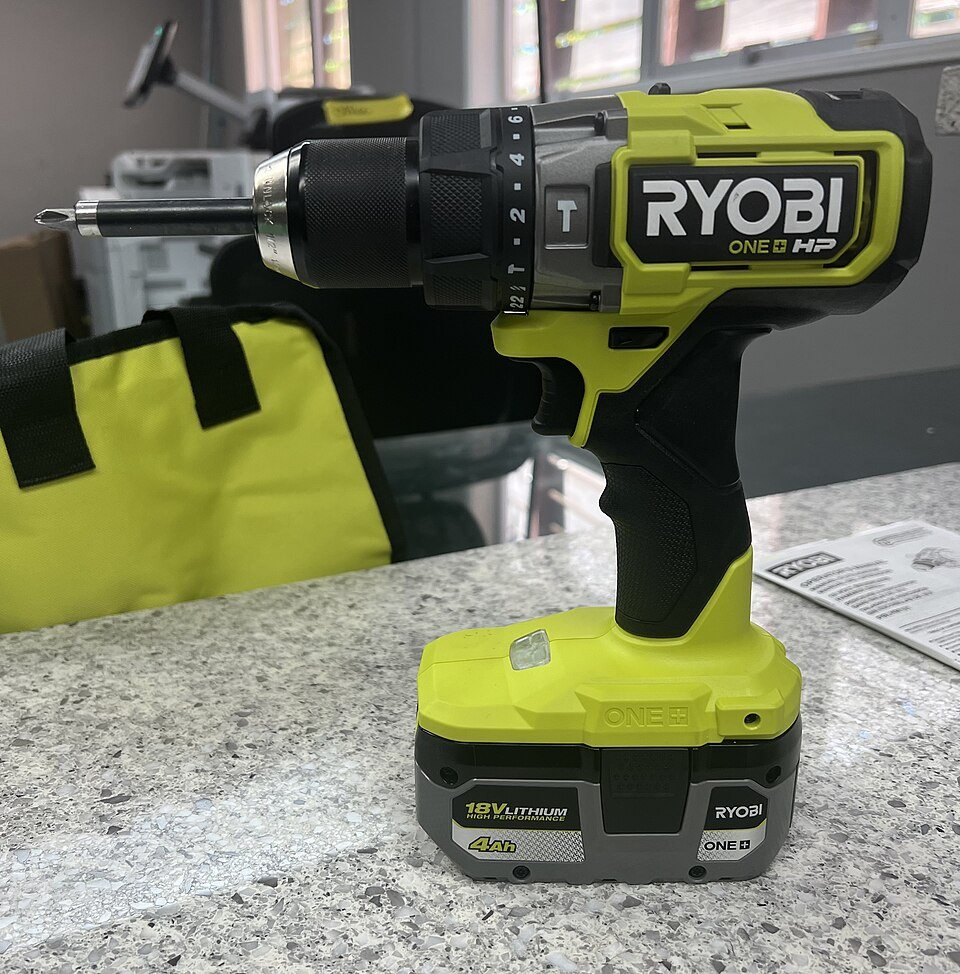
A video on KINGrinder’s site shows one of its hand grinders being turned by a battery drill, with the handle taken off. That set me thinking. A good hand grinder has the same kind of burrs as an electric one that costs several times as much. What it lacks is a motor. A cordless drill is a motor with a speed trigger, a torque limiter and a battery that slides off. Put the two in a cradle and a market stall has a grinder that never needs an outlet: when the battery runs down, I swap it.
I have not built this. This page is the plan: what the grinder makers say about it, what the numbers say, how I would build it, and the reasons it might be a bad idea.
The short version
- The maker allows it. KINGrinder’s K6 manual has a section on driving the grinder with a power tool, and 1Zpresso’s FAQ says a drill suits all of its grinders.
- A drill is far stronger than the grinder needs. KINGrinder names a tool of 15 to 25 N·m. A full-size 18-volt drill makes up to 96 N·m. The drill’s clutch has to be set low enough to slip before the grinder’s shaft is hurt.
- Slow is the instruction. No maker gives a number of turns per minute. KINGrinder says to slow down; 1Zpresso says the grinder gets hot. Low gear and a light trigger.
- Energy is not the limit. One 4 Ah battery should grind something like ninety doses. Heat is the limit, in the grinder and in the drill.
- It is for doses, not bags. A cup’s worth at a time. A customer’s 12-ounce bag still wants a plug-in grinder.
What the makers say
| Maker | In its own words | Where |
|---|---|---|
| KINGrinder | Under the heading “HOW TO USE IT BY ELECTRIC?”: “Electric screwdriver at a 15~25Nm torque.” “6.35mm(1/4 inch) Hex Shank.” “Take out the handle and install the black O-ring to the plastic lid.” “Ensure that the bit holder is fully inserted into the center shaft, grasp the grinder firmly, and gradually apply power.” “Please Slow Down the grinding speed to prevent damage to the central shaft.” | The K6 manual, from KINGrinder’s manual page |
| KINGrinder | With the lid and handle set up as separate parts, “the drill-grinding is applicable.” | Dual Method of the PC Lid |
| 1Zpresso | ”The 6.35mm electronic screwdriver/drill is applicable to all the 1Zpresso grinders and it doesn’t need to be a powerful one. We suggest using a drill for one or two cups within a short period of time, or it could get hot and affect the taste.” | 1Zpresso FAQ |
| Hario | Sells its own small motor, the Electro Solo, that fits on several of its hand grinders. | Prima Coffee’s listing |
| Comandante | Its FAQ says nothing about drills or motors, for or against. | Comandante FAQ |
Four things are worth reading closely in KINGrinder’s lines.
- The word is “electric screwdriver,” not “drill.” The tool it has in mind is a small one, 15 to 25 N·m. An 18-volt drill is a larger tool than the manual describes.
- The part at risk is named: the central shaft. That is the rod the burr sits on and the bit holder plugs into.
- The speed advice has no number. “Slow down” is all of it. No maker publishes a top speed.
- The manual says nothing about warranty, heat or how long it may run. It has no warranty text at all. No maker’s page says a drill voids a warranty, and none says it does not.
The same manual has two rules that a motor makes easier to break: “Do not rotate the handle when the grind setting is at 0 or below 15 clicks, as this could damage the burr set,” and “Avoid second grinding as the coffee fine powder may block the parts.”
The numbers that do not match
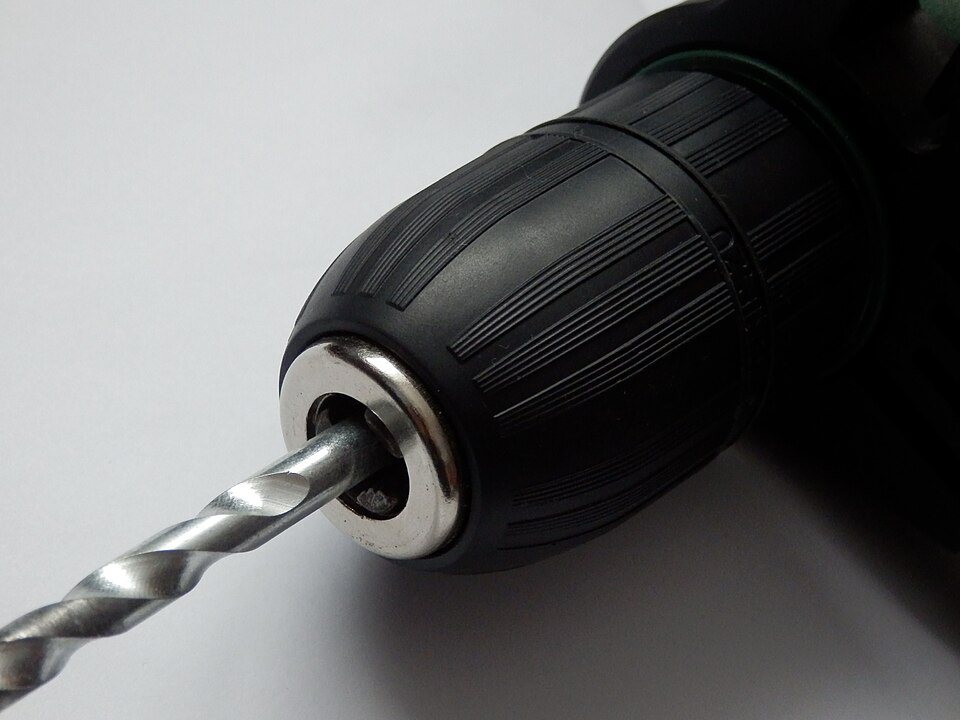
Torque is twisting force. The trouble with a drill is how much of it there is.
| Torque | |
|---|---|
| A hand on a grinder’s crank | about 3 to 4 N·m, by one writer’s estimate |
| The tool KINGrinder names | 15 to 25 N·m (133 to 221 in-lb) |
| Ryobi HP Compact drill (PSBDD02) | up to 450 in-lb (51 N·m) |
| Ryobi HP drill (PBLDD02) | up to 850 in-lb (96 N·m) |
The hand figure is from Mark Prince’s article on cordless grinders at CoffeeGeek, which gives “approximately 3 to 4 Nm of continuous rotational torque” without saying how it was measured. Nobody has published the torque a K6 needs.
So the smaller of the two drills can deliver twice the top of the maker’s range, and the larger about four times. In ordinary grinding the drill only pushes as hard as the beans resist, so none of that matters. It matters when something jams: a stone in the coffee, a very hard bean, or the burrs set too close. Then the drill pushes with everything it has, and the weakest part gives way. The maker has said which part that is.
The clutch is the fuse. The numbered ring behind the chuck sets how much torque the drill will pass before it slips and clicks. Ryobi does not publish the torque at each number, so it has to be set by trial: start at 1 and go up one number at a time until the drill grinds without slipping. Leave it there. The setting marked with a drill bit bypasses the clutch and is never used.
How fast
There is no tested best speed for the cone-shaped burr of a hand grinder under a motor. The published work on burr speed is about large flat burrs. What is known:
| Turns per minute | |
|---|---|
| A hand on a crank | 80 to 120 (“A comfortable hand crank sits between 80 and 120 RPM” — CoffeeGeek) |
| Small cordless screwdrivers people use on hand grinders | about 200 |
| A Baratza Encore, a plug-in grinder with 40 mm conical burrs | 450 to 550 (two retailers give different figures) |
| Ryobi PBLDD02 in low gear, trigger fully pulled | 700 |
| The same drill in high gear | 2,150 |
The teeth of a 48 mm burr at 200 turns a minute travel at about half a metre a second. The Encore’s smaller burr at 550 travels at a little over one metre a second. A K6 would have to reach about 460 turns a minute to match it.
The speed I would start at is 100 to 300 turns a minute: faster than a hand, well under a plug-in grinder. That range comes from the figures in the table. It is not a maker’s number. On either drill it is under half of the trigger’s travel in low gear. High gear is never used.
Which drill
“Brushless” means the motor has no carbon brushes to wear out, and electronics do the switching. Ryobi’s brushless drills are the HP line. Read from Ryobi’s own pages on 2 October 2026:
| Drill | Low gear / high gear | Torque | Clutch | Price |
|---|---|---|---|---|
| PBLDD02B, HP ½ in drill-driver | 0–700 / 0–2,150 RPM | up to 850 in-lb | 24 positions | $139, tool only |
| PSBDD02K2, HP Compact | 0–450 / 0–1,700 RPM | up to 450 in-lb | not stated | $139 with two 1.5 Ah batteries and a charger |
The compact drill is the better match. Its low gear tops out at 450 turns a minute, so more of the trigger’s travel is usable, and its torque is nearer what the grinder’s maker has in mind. It is 6.1 inches long, which makes for a smaller cradle.
Three things in Ryobi’s operator’s manual for this family of drills bear on the job:
- Heat at low speed. “Running at low speeds under constant usage may cause the tool to become overheated. If this occurs, cool the tool by running it without a load and at full speed.” A grinder asks for exactly that: low speed, held. Doses are short, which helps. A queue of twenty is the case to watch.
- No lock-on. Speed is set by how far the trigger is pulled, and the drill stops when it is released. There is no dial and no button to hold it on.
- Change gear only when stopped. “Never change speeds while the tool is running.”
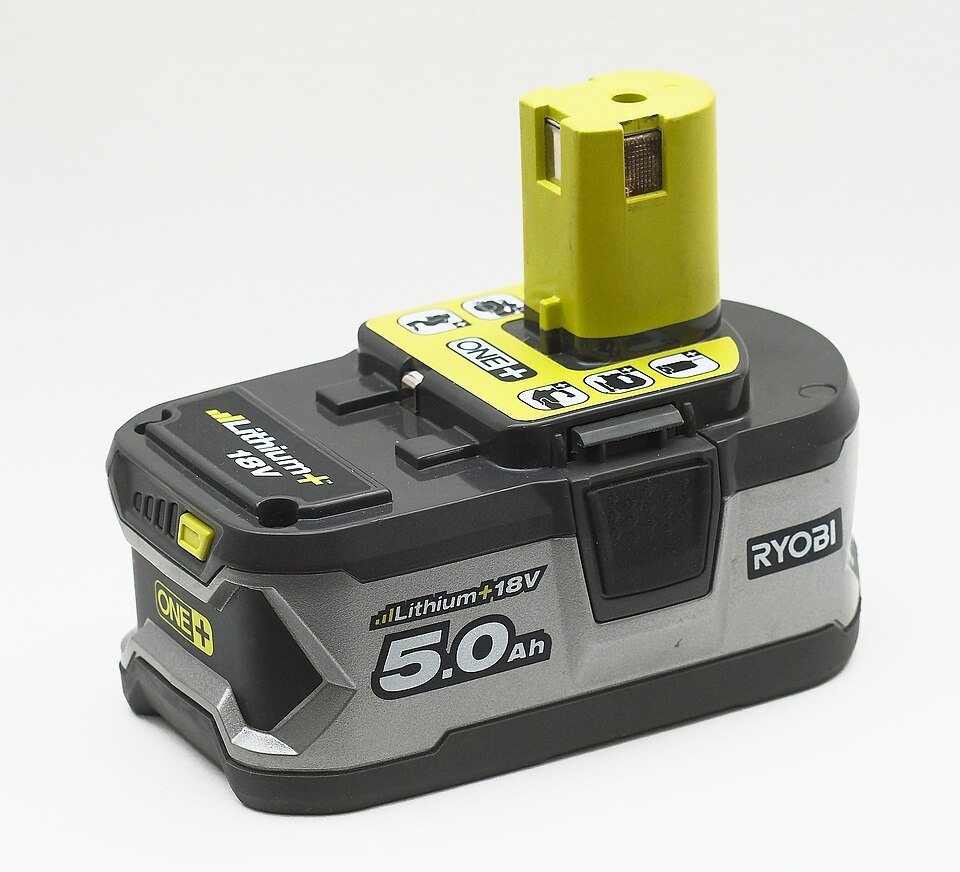
| Battery | Energy | Price |
|---|---|---|
| 2 Ah | 36 Wh | $89 |
| 4 Ah | 72 Wh | $89 (reduced from $129) |
| 6 Ah | 108 Wh | $159 |
| 8 Ah | 144 Wh | $179 |
Prices are from Ryobi’s battery page. Ryobi gives amp-hours; the watt-hours are amp-hours times 18 volts.
How many doses a battery grinds
Two ways to work it out give about the same answer.
- From a plug-in grinder. A Baratza Encore is rated 70 watts by one retailer and grinds 0.8 to 1.1 g a second. Twenty grams takes 18 to 25 seconds, which is 0.35 to 0.5 Wh.
- From the mechanics. Power is torque times speed. At 3.5 N·m and 100 turns a minute that is about 37 watts at the burr. An 18 g dose takes about 40 seconds at hand speed: 0.4 Wh of work. If the drill wastes half of what it draws at part trigger, the battery gives up about 0.8 Wh.
At 0.8 Wh a dose, a 4 Ah battery grinds about 90 doses. At the lower figure it is nearer 200. Either is more pour-overs than a market morning sells. The 1.5 Ah packs sold with the compact drill hold 27 Wh each, about thirty doses on the cautious figure. The half-wasted figure is an assumption; no one publishes a drill’s efficiency at part trigger.
A bag is another matter. At half a gram a second, 340 g takes about eleven minutes in ten or more hopper loads. That is the opposite of 1Zpresso’s “one or two cups within a short period of time.” A customer’s bag goes through a plug-in grinder.
Why it needs a cradle
Whatever force turns the burr, the body of the grinder feels the same force the other way. KINGrinder says to “grasp the grinder firmly.” For one dose at home, a hand does that.
The arithmetic for a jam is less friendly. A K6 is about 55 mm across. To resist 3.5 N·m, a hand has to hold about 13 kg of sideways force by grip alone. If the grinder jams and the drill reaches 15 N·m before the clutch slips, that becomes about 56 kg. No hand holds that. The grinder spins in the hand or the drill twists out of the other one. Ryobi’s manual describes the same thing in drilling: the tool will “grab and kick opposite to the direction of rotation.”
A cradle takes that force with wood and a strap. It also keeps the drill and the grinder on one line, so the shaft is turned and not bent.
The build
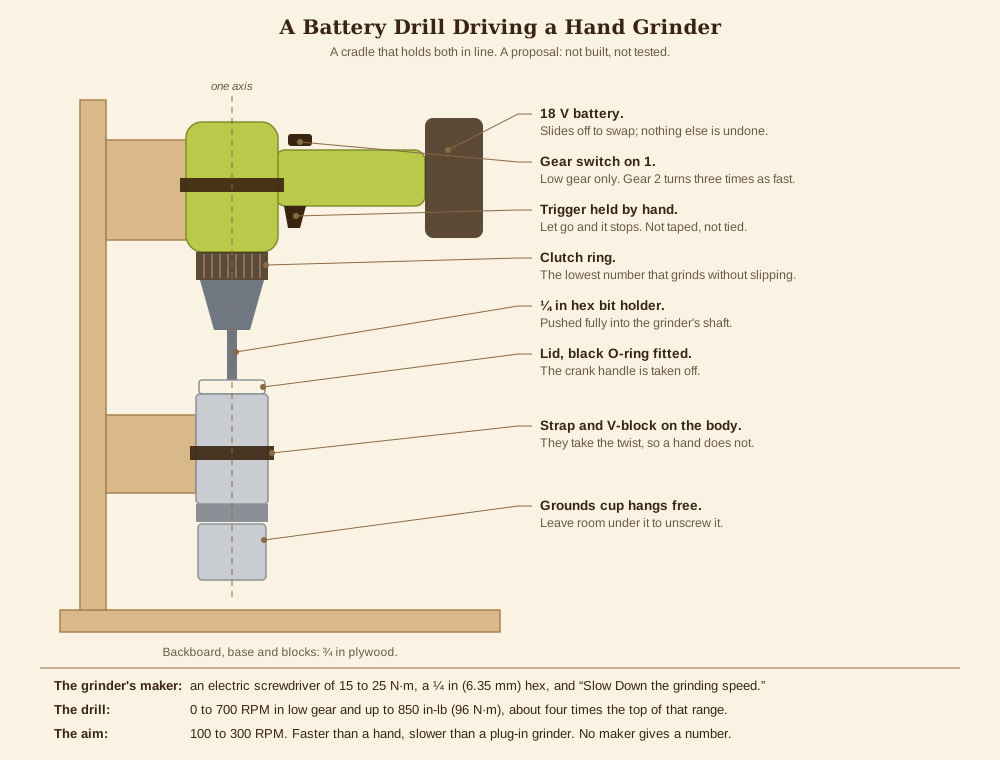
Parts
| Part | Notes |
|---|---|
| A hand grinder with a ¼ in hex drive | KINGrinder K-series or any 1Zpresso. Other makes use other shaft shapes and need an adapter. |
| An 18-volt brushless drill with a clutch and two gears | The compact one, for the reasons above |
| Two batteries | One on the drill, one on the charger or in the box |
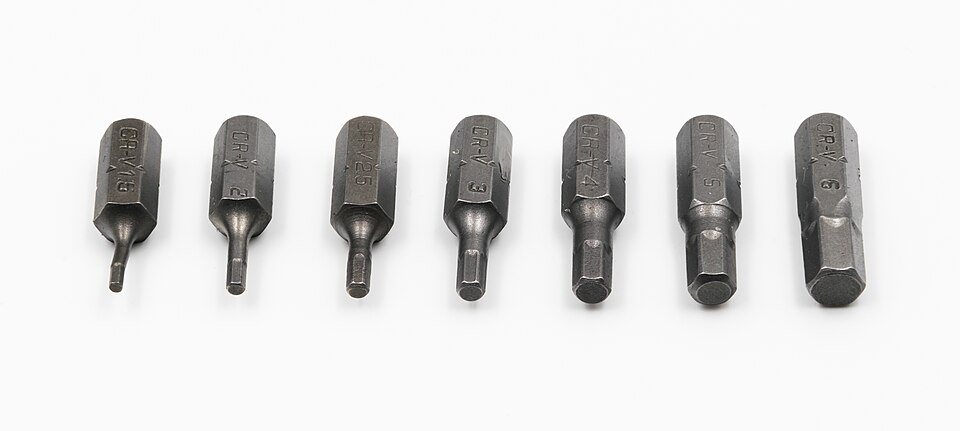
| A ¼ in hex bit holder, 2 to 3 in long | Plain steel, and no longer than it needs to be |
| ¾ in plywood | A backboard about 6 by 24 in, a base about 10 by 12 in, and two blocks |
| Two straps | Hook-and-loop cinch straps or worm-drive hose clamps with a strip of rubber under them |
| A rubber or cork pad | Between the V-block and the grinder, so the strap grips without marking the body |
Steps
- Make the V-block. Cut a V about an inch deep along one face of a plywood block, wide enough to cradle the grinder’s body. Glue the pad into the V.
- Make the drill saddle. Shape a second block to fit the back of the drill’s motor housing. It only has to stop the drill from rocking.
- Fix the V-block to the backboard, high enough that the grounds cup hangs clear of the base with room to unscrew it and take it away.
- Set up the grinder. Take the handle off and fit the black O-ring to the lid, as the manual says. Do not leave both O-rings on. Strap the grinder into the V-block by its body. The cup stays free.
- Push the bit holder fully into the grinder’s shaft. Close the drill’s chuck on the other end.
- Find the drill’s position. With the bit holder joining the two, hold the drill against the backboard and mark where its saddle goes. This is the step that puts them on one line. Fix the saddle and strap the drill to it.
- Check the line. Turn the chuck by hand through a full turn with the grinder empty and set coarse. It should turn freely all the way round. If it binds at one point, the two are out of line; move the saddle.
- Fix the backboard to the base and add a brace behind it.
If the two cannot be brought into line, a short flexible bit extension between the chuck and the grinder will forgive a small error.
Setting it up
- Grind setting well above 15 clicks. For pour-over the manual suggests 100.
- Gear switch on 1. Clutch on 1.
- Load one dose. Squeeze the trigger gently until the burr turns at about hand speed.
- If the clutch clicks and the burr stops, release, go up one clutch number, and try again.
- When a dose grinds through without a click, stop raising it. Write the number on the cradle.
- Feel the grinder’s body after three doses in a row. Warm is the signal to pause.
Measuring the torque first. It costs a luggage scale and five minutes, and it replaces the borrowed estimate with a real number. With the handle still on and beans in, clamp the body, hook the scale on the knob, and pull at right angles to the crank through a full turn. Kilograms times 9.81 times the crank’s length in metres is the torque in N·m. A reading of 2.2 kg on a 15 cm crank is 3.2 N·m. Do it at the pour-over setting and the finest setting to be used, with the lightest roast.
Reasons it might be a bad idea
- The shaft. The maker’s one warning. A clutch set by trial is a guard, not a guarantee.
- Heat in the grinder. 1Zpresso’s caution is about taste: a hot burr changes the coffee.
- Heat in the drill. Ryobi’s low-speed warning describes this use.
- A held trigger is the only safe trigger. A tied or taped trigger takes away the one thing that stops the drill at once. Doses take well under a minute, so there is no need.
- The drill’s vents are above the beans. A drill cools itself by blowing air through its motor. The grinder’s lid closes the hopper around the shaft, which helps. No maker says anything about it.
- It cannot be washed. “The entire grinder should not be washed with water,” the manual says; it is brushed out, and taken apart at least every 30 days. At a licensed booth the inspector may ask how that is kept clean. See Michigan Rules.
- Neither tool is listed for commercial food use. KINGrinder calls the product a “Manual Hand Coffee Grinder,” and nothing on its site claims an NSF or commercial listing.
- Light roasts are the hard case. CoffeeGeek’s test found that small cordless screwdrivers stall on dense, light-roasted beans, and that a 12-volt or 16-volt drill in “gear one,” with the trigger feathered “to keep the RPMs low,” drove a hand grinder “through the lightest roasts without a single stutter.” An 18-volt drill has more to spare.
What it costs, against buying one
| Price | |
|---|---|
| KINGrinder K6 | about $100 to $149, depending on the seller |
| Ryobi HP Compact drill with two batteries and a charger | $139 |
| Plywood, straps, bit holder | under $20 |
| Total | about $260 to $310 |
| Timemore Whirly 01S, a battery grinder built for the job | $169 |
On price alone the ready-made battery grinder wins. The rig wins if the drill and its batteries are already in the workshop, since then it costs a grinder and an afternoon. It also wins on batteries: the Whirly’s is built in, and when it is flat the grinder waits for a charger. The rig takes the next pack off the shelf. The other grinders for a stall are compared on Grinders.
What is not known
- The video on KINGrinder’s home page is not titled or described there, so its spoken advice is not quoted here. The written position is the manual’s.
- A top speed for any hand grinder. None is published.
- Whether “15~25Nm” is a smallest tool, a largest, or both.
- The torque a K6 needs, steady or at a jam.
- The torque at each number on a Ryobi clutch.
- What speed does to the grind from a conical burr. The measured work is on flat burrs.
- Whether KINGrinder’s warranty covers a grinder used this way.
Sources
- KINGrinder, K6 manual (English), linked from kingrinder.com/manual; Dual Method of the PC Lid; K4 and K6 comparison.
- 1Zpresso, FAQ.
- Ryobi, product pages for the PBLDD02B, the PSBDD02K2 and 18V batteries; operator’s manual for the PBLDD01 drill-driver.
- Mark Prince, “The Cordless Espresso Grinder Conundrum: Why Torque is Hard,” CoffeeGeek, 30 September 2026.
- Baratza Encore figures from Red Rooster Coffee’s listing; K6 grinding times and dimensions from retailers’ and reviewers’ pages.
- The energy, rim-speed and grip-force figures are worked out from those sources. The speed range and the build are this page’s own proposal.
Comments (0)