Starting a Coffee Business · 5 of 20
Bags, Labels and What a Bag Costs to Make
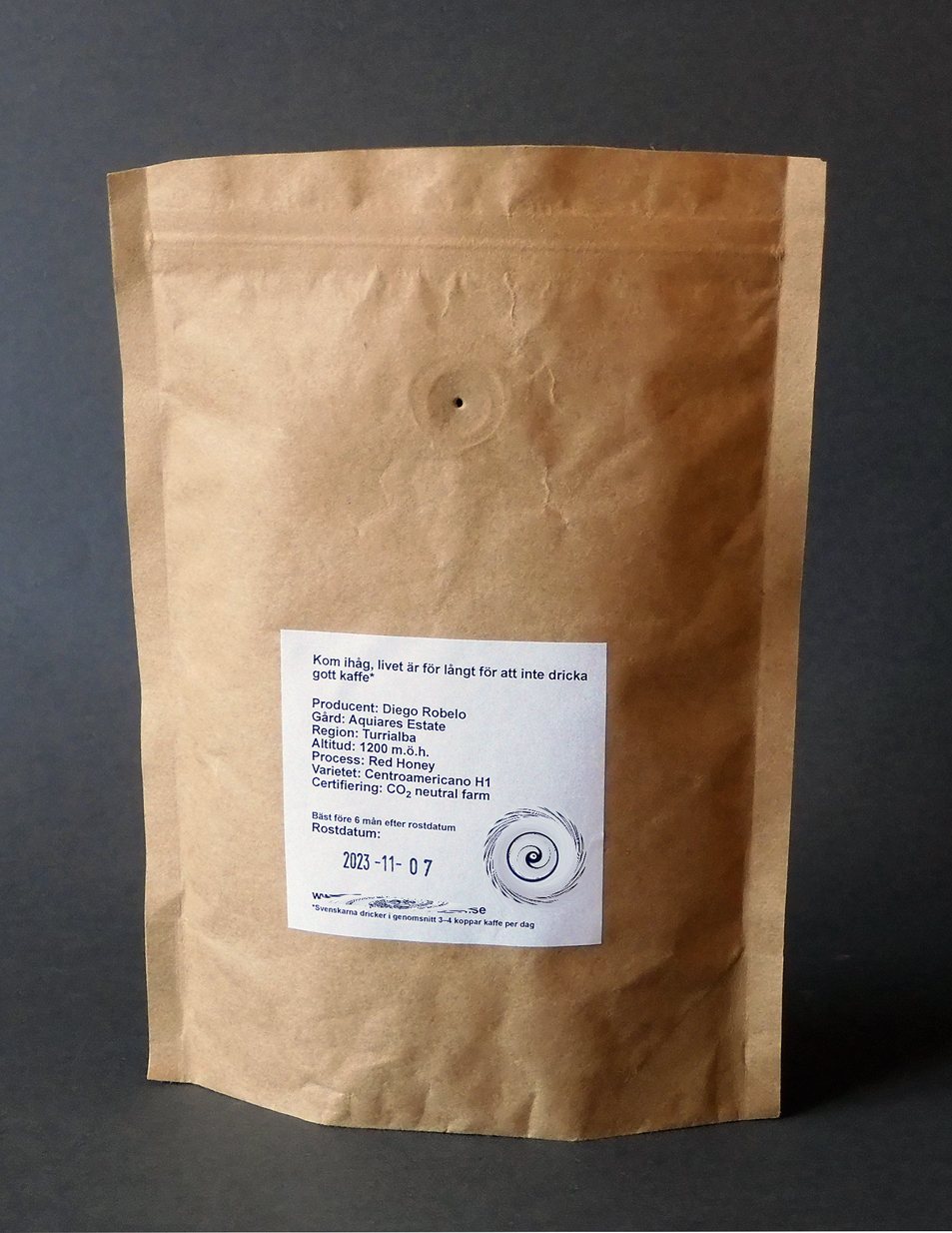
A bag of coffee on a market table is a few ounces of packaging around about six dollars of green coffee. This page prices the bag, the valve, the label and the coffee itself, and sets the result against what Michigan roasters charge. Prices were read on 2 October 2026.
The bag
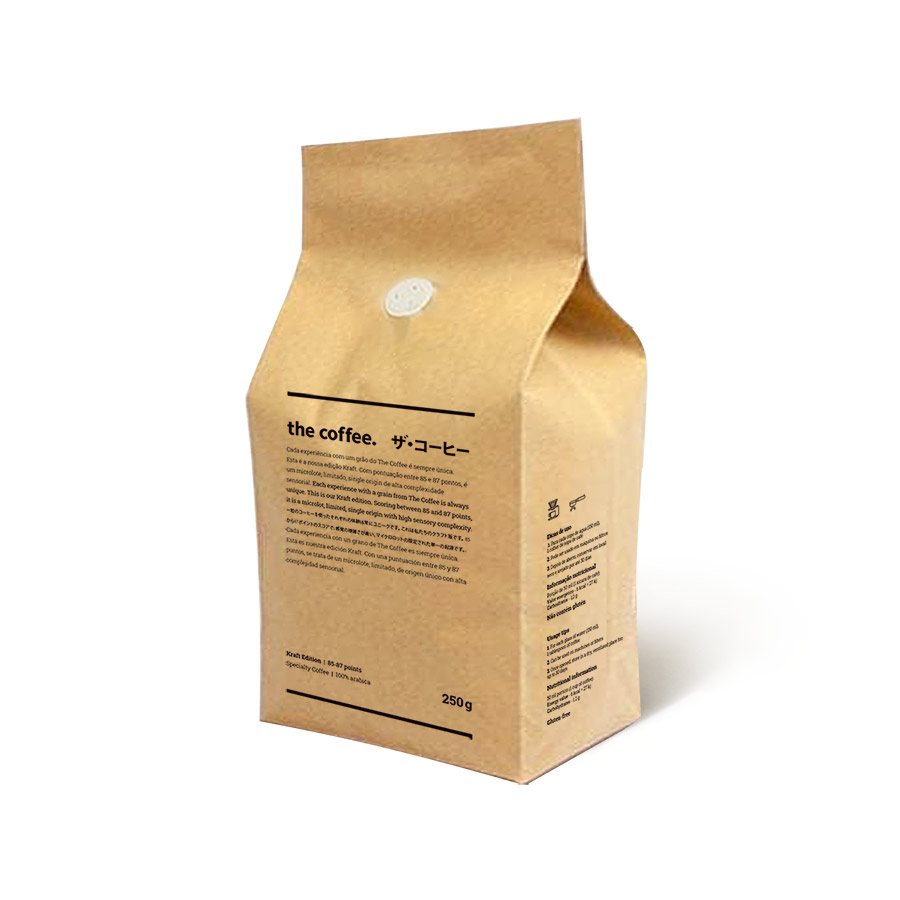
Fresh-roasted coffee gives off carbon dioxide for days, so a coffee bag has a one-way valve: gas gets out and air does not get in. A plain paper tin-tie bag is far cheaper, at 12 to 31 cents, but it is not a barrier bag and the coffee stales faster in it. What the valve does, what the bag should be lined with, and why vacuum sealing, desiccant packs and oxygen absorbers do not belong in it are on Packaging Roasted Coffee.
| Bag | Sold in | Per bag | Notes |
|---|---|---|---|
| Uline stand-up coffee pouch, 16 oz, valve and zipper (S-23457) | carton of 500, $225 | $0.45 | Glossy black or kraft; heat-sealable above the zipper |
| Uline stand-up coffee pouch, 8 oz, valve and zipper (S-23456) | carton of 500, $190 | $0.38 | |
| TricorBraun Flex kraft block-bottom, 12–16 oz, valve | case of 500, $413 | $0.83 | No zipper; tin tie fitted for $0.11 more |
| Elevate compostable kraft pouch, 12 oz, valve and zipper | pack of 100, $95 | $0.95 | Certified compostable, valve included |
Uline has no 12 oz pouch with a valve; its 12 oz kraft pouches are sold without one. A 12 oz fill goes in the 16 oz pouch. Freight on the cartons is extra and was not found.
Which one. The kraft block-bottom bag with a tin tie is the bag people picture when they think of a small roaster, and it stands square on a table. The Uline pouch is half the price and reseals with a zipper. The compostable pouch costs twice the Uline and suits a stall that sells honey from its own hives; it can be bought a hundred at a time, which matters in the first season. A sensible start is one pack of 100 compostable pouches, then a decision once the bags have been on a table.
Sizes. Twelve ounces is the commonest retail size among the Michigan roasters checked. Some sell 8 oz and 16 oz, or 10 oz. An 8 oz bag at a lower price is worth having at a market: it is an easier first purchase for someone who has just tasted a sample.
Sealing. A bag without a zipper needs a tin tie or a heat seal. A zipper pouch can be heat-sealed above the zipper so the customer is the first to open it. An 8-inch hand impulse sealer runs about $100. Packaging has more on seals.
Filling. At 27 to 80 bags a week the method is a scoop and a bench scale. Weigh-and-fill machines start around $6,000, which is more than the roaster. Whether Michigan requires a certified legal-for-trade scale for bags sold by net weight is a question for the rules page.
The label
At this scale most small roasters use two labels:
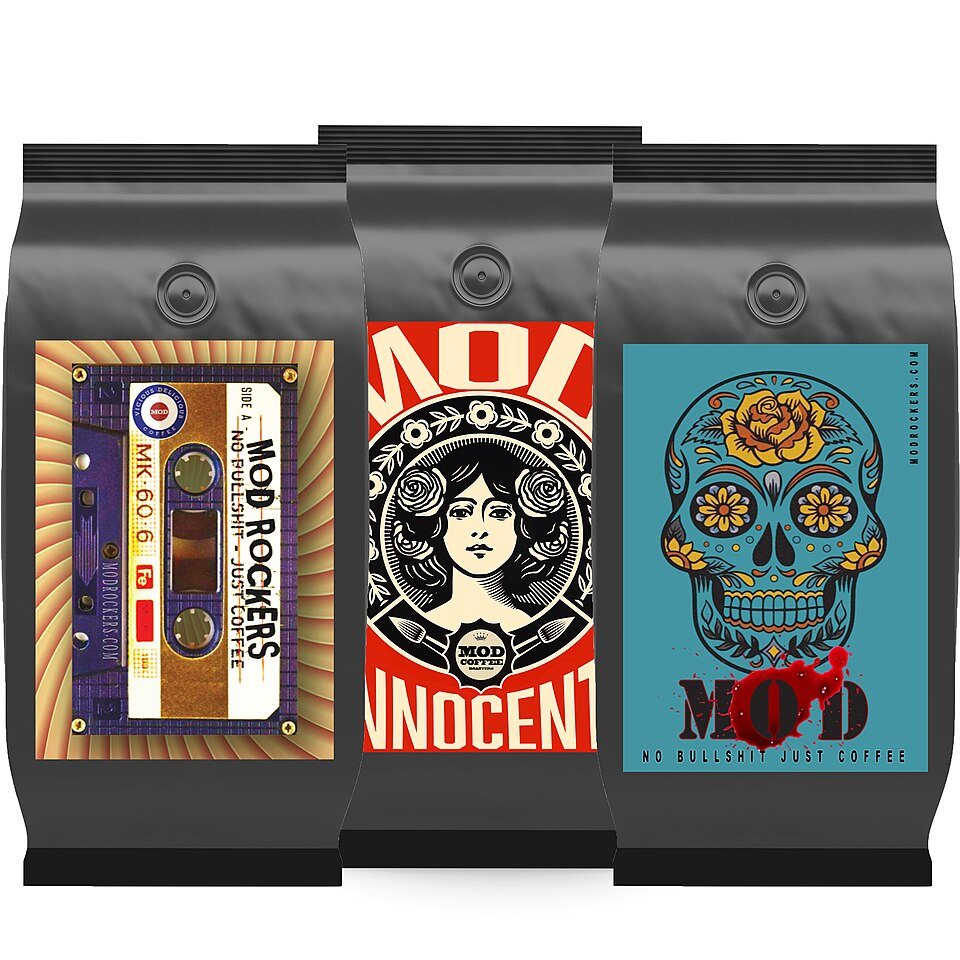
- a brand label, bought printed by the roll; and
- a small coffee label with the origin, roast level and roast date, printed on a thermal label printer or written by hand.
Indicative costs, all from search results and not from a first-hand quote: printed roll labels about 18 to 31 cents each at a thousand and 66 cents at a hundred; blank sheet labels for home printing about 8 cents; a thermal label printer about $200, with labels at 2 to 3 cents.
What the Michigan roasters checked put on a bag: the origin or blend name, the process (washed, natural), the roast level, the net weight and tasting notes. Add the roast date. What Michigan’s cottage food law requires on the label, including the home-kitchen statement, is on the rules page.
What one 12 oz bag costs to make
Coffee loses about 15% of its weight in the roaster, so a 12 oz bag takes 0.882 lb of green coffee (12 ÷ 0.85 = 14.1 oz).
| A: box buying, plain pouch | B: 20 lb buying, kraft bag | C: 1 lb buying, compostable pouch | |
|---|---|---|---|
| Green coffee | Colombia at $6.11/lb, shipping included: $5.39 | Colombia at $7.45/lb: $6.57 | Colombia at $8.50/lb: $7.50 |
| Bag with valve | $0.45 | $0.94 with tin tie | $0.95 |
| Label | $0.18 | $0.31 | $0.66 |
| Electricity (one-kilo roaster) | $0.04 | $0.04 | $0.04 |
| Total | $6.06 | $7.86 | $9.15 |
Columns B and C leave out the shipping on the green coffee, which could not be found, so they run a little higher than shown. A Brazil natural at $5.74 a pound brings column A to about $5.73. On a Behmor, electricity adds about 13 cents a bag.
Two things stand out. Green coffee is 80 to 90% of the cost, so the quantity it is bought in moves the cost of a bag by about two dollars. The choice of bag moves it by about fifty cents. The place to save money is the green coffee, and the place to spend it is the packaging the customer sees.
The table leaves out the market fee, the coffee brewed for samples, the roaster itself, insurance and time. Those are on The Numbers.
What Michigan roasters charge
Read from each roaster’s own online store, in-stock coffees only:
| Roaster | Bag | Price |
|---|---|---|
| Ferris Coffee & Nut, Grand Rapids | 12 oz | $13.95 house blends; $16.95–$19.95 single origins |
| Mighty Good Coffee, Ann Arbor | 12 oz | $16.00 |
| Madcap Coffee, Grand Rapids | 12 oz | $15.99 for its two everyday coffees; most single origins are 8 oz at $18–$32 |
| Stovetop Roasters, Grand Rapids | 10 oz | $16–$18 |
| Higher Grounds, Traverse City | 12 oz | $17–$19; Ethiopias $20–$22 |
| Uncommon Coffee Roasters, Saugatuck | 12 oz | $18.50; blends $16.50–$17 |
| Foster Coffee, Owosso | 12 oz | $19.50 core blends; single origins $23–$29 |
| Great Lakes Coffee, Detroit area | 12 oz | $20–$21 |
| RoosRoast, Ann Arbor | 8 oz / 16 oz | $10 / $20 |
Converted to a 12 oz bag, everyday coffees run from about $14 to $21, with $16 to $19 in the middle. These are online prices from established roasters with shops. Prices at Michigan market stalls specifically were not found by this search; Prices and Customers takes that up.
Against a making cost of $6 to $8, a bag at $16 to $18 leaves $8 to $12 before the market fee, samples, equipment and tax.
Sources
- Supplier listings read 2 October 2026: Uline (S-23456, S-23457, kraft barrier pouches), TricorBraun Flex, Elevate Packaging.
- Green prices: Genuine Origin and Sweet Maria’s listings of the same date.
- Sweet Maria’s weight-loss table (15.1% at Full City+).
- Roaster stores read the same day: Ferris, Mighty Good, Madcap, Stovetop, Higher Grounds, Uncommon, Foster, Great Lakes Coffee, RoosRoast.
- Label and sealer prices are from search summaries (Sticker Mule, Avery, OnlineLabels, Rollo, Interplas) and are indicative only.
Comments (0)