Starting a Coffee Business · 3 of 20
Choosing a Roaster: the Behmor, the Bullet R2 and the R2 Pro
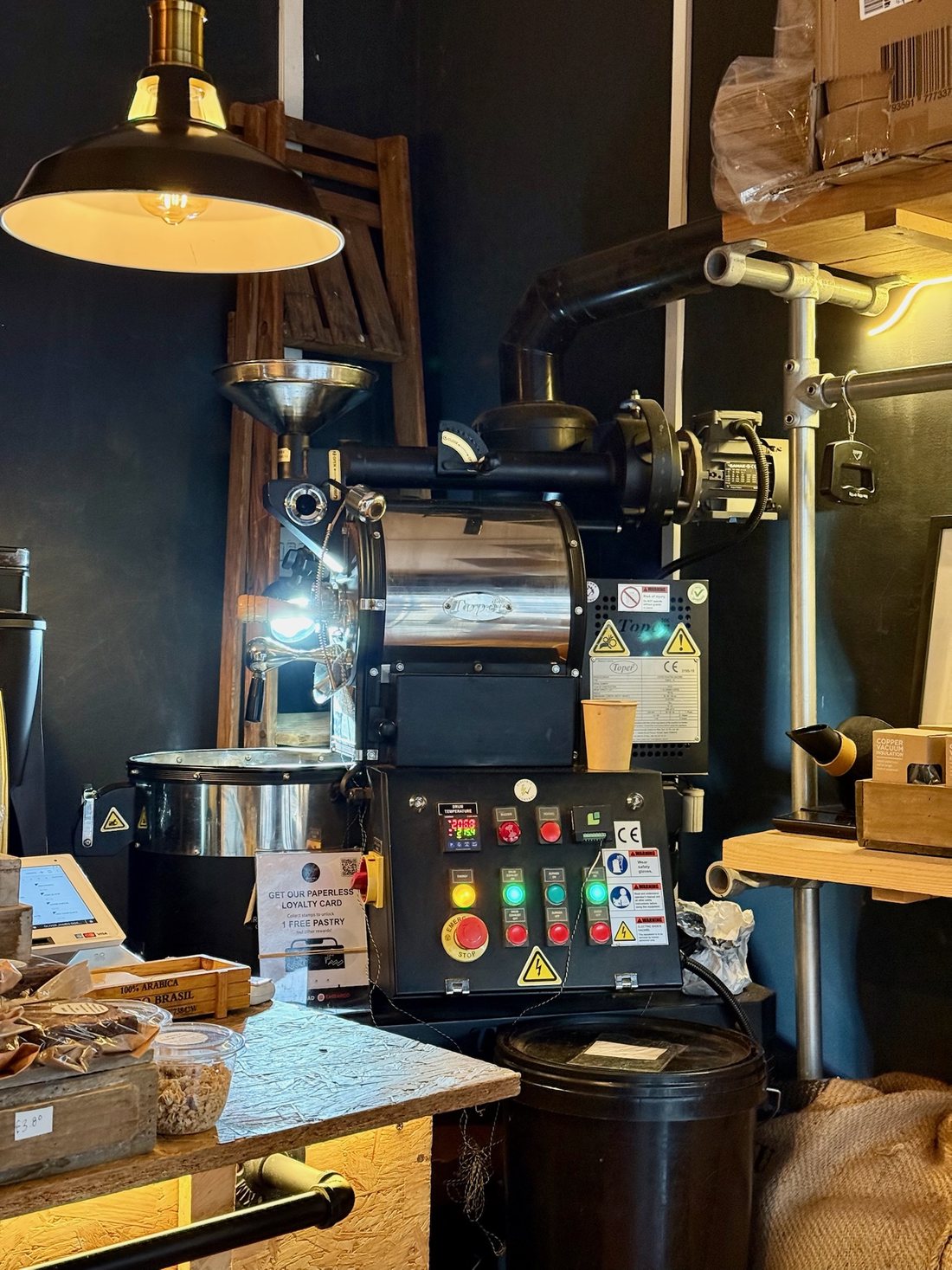
So far I have roasted coffee the cheap ways, with home methods and no machine. The plan for the stall was a Behmor 2000AB first and an Aillio Bullet R2 or R2 Pro later. This page is the homework on that plan: what each machine can produce in a week, what its maker says about selling the coffee, and what it needs from the wall.
The short version: the Behmor is a good machine for learning to roast and a poor one for supplying a stall, and its own manual says so. The step that makes a business possible is a one-kilo roaster, and between the two Bullets the choice comes down to whether there is a 240-volt outlet where the roaster will sit.
All prices and specifications below were read on 2 October 2026.
How much coffee a stall needs
Everything turns on pounds per week, so that comes first. A 12 oz bag holds three-quarters of a pound, and coffee loses weight in the roaster: about 13% at a medium roast and 15% at a dark one, by Sweet Maria’s averaged table. At 15% loss:
| Roasted coffee sold in a week | 12 oz bags that is | Green coffee needed |
|---|---|---|
| 10 lb | 13 | 11.8 lb |
| 20 lb | 27 | 23.5 lb |
| 40 lb | 53 | 47.1 lb |
| 60 lb | 80 | 70.6 lb |
Brewed cups and samples come out of the same supply. At a typical 20 g of coffee per 12 oz cup, a hundred cups is another 4.4 lb roasted.
The only sales volumes found for farmers-market roasters are two forum posters from 2015, who reported 350 and 600 lb a year, which is 7 to 12 lb a week. That is two people, not a benchmark, but it suggests the first season sits nearer the top of the table than the bottom.
The Behmor 2000AB Plus
The current model is the Behmor 2000AB Plus, $479 at Roastmasters and Burman Coffee Traders. It is a drum roaster the size of a countertop oven with a smoke-suppressing afterburner, and it is the best-known way to roast up to a pound indoors.
Three lines in its own manual decide what it can do for a business.
“Allow 1 hour between roasts.” That is item 4 of the manual’s roasting reminders. A one-pound roast takes about 20 minutes and the cooling cycle about 13 (those two times come from retailers and a tutorial, not from the manual’s text), so one batch occupies roughly an hour and a half. By the manual, a four-hour session yields three batches, about 2.6 lb of roasted coffee.
Commercial use voids the warranty. The manual: the roaster is “not intended to be used commercially or in any commercial/ industrial setting. Any commercial usage or attempted commercial usage automatically voids any and all warranties.” One retailer’s listing calls it suitable for “small-scale boutique commercial roasters”; the manual is the document that governs.
It does not do dark roasts. “The Behmor Roaster is not intended to roast coffee to levels known as Vienna, French, or Italian,” and “Never roast past 10 seconds into 2nd crack.” For Full City+ it recommends dropping the batch to 12 oz. That rules out a true dark roast for the customer who wants one, and the dark robusta roast a phin coffee is built on.
Other points worth knowing before buying one:
- The full pound depends on line voltage. The manual ties the 454 g capacity to “an actual input voltage of 120v” and forbids extension cords.
- There is no bean-temperature reading and no logging. The two temperatures it shows are the exhaust and the chamber wall, and the manual says “Never gauge degree of roast based on these temps.”
- At 75% of the roast time it beeps and demands a button press within 30 seconds, or it aborts into cooling. It is a safety feature, and it means the roast cannot be left.
- It asks for a dry burn and interior cleaning every five roasts.
What that means in hours
| Weekly sales | Batches (1 lb green) | Hours, following the manual | Hours, ignoring the one-hour rest |
|---|---|---|---|
| 10 lb | 12 | 19 | 7 |
| 20 lb | 24 | 37 | 14 |
| 40 lb | 48 | 74 | 28 |
| 60 lb | 71 | 110 | 41 |
The last column contradicts the manual and is there only to show the ceiling. Even on that reading, twenty pounds a week is two full working days at the roaster.
So the Behmor’s job is the learning year. It will teach first crack, development time and what each coffee does, on real one-pound batches, for under $500. It can supply tasting samples and a table of a dozen bags for a trial market. It cannot be the production roaster, and using it as one gives up the warranty.
The Aillio Bullet R2 and R2 Pro
The Bullet R1 is listed by Aillio as “No Longer Available.” The current machines are the R2 and the R2 Pro, announced in June 2024. Sweet Maria’s sells both in the US at Aillio’s prices, and Aillio ships from a California warehouse.
| Bullet R2 | Bullet R2 Pro | |
|---|---|---|
| Price | $4,099 | $5,299 |
| Batch | 150 g to 1,000 g | 150 g to 1,200 g |
| Power | 1,700 W | 2,300 W |
| Supply | 110–120 V or 200–240 V; 15 A at 120 V | 200–240 V only; 12 A; NEMA 6-20P plug |
| Heat steps | 10 | 14 |
| One kilo to first crack | 7–9 minutes | within 6 minutes |
| Cooling tray | fan tray | fan tray with a stirring arm |
| Drum, sensors, software, size, weight (16 kg) | the same | the same |
| Warranty | 2 years | 2 years |
Both heat the drum directly by induction, read the bean mass with an infrared sensor, log every roast and connect to Aillio’s RoasTime software. Those are the features that make a roast repeatable, and repeatable is what a customer buying the same bag twice is paying for.
Batch size and speed. Sweet Maria’s, which tests the machines it sells, reports full 2.2 lb batches on the R2 and 2.65 lb batches on the Pro, each in 11 to 12 minutes to a City+ roast, with the tray cooling a batch in under 4 minutes. On the Pro it reports “4 to 5 back to back batches per hour,” because the next batch can start while the last one cools. Its headline of “up to 13 pounds per hour” is at the optimistic end; the same batch counts work out to 9 to 11 lb an hour at 15% loss. For the R2, four batches an hour gives about 7.5 lb an hour, though nobody has published a measured rate for the R2 on 120 V, so that figure is an estimate.
| Weekly sales | R2: batches / hours | R2 Pro: batches / hours |
|---|---|---|
| 20 lb | 11 / about 3 | 9 / about 2½ |
| 40 lb | 22 / about 5½ | 18 / about 4½ |
| 60 lb | 33 / about 8½ | 27 / about 7 |
Warm-up, chaff emptying, weighing and bagging are not in those hours.
Commercial use. Aillio’s US store says of the Pro that it is “Expressly engineered for commercial operations,” and answers yes to commercial use of the R2 as well. The warranty text itself could not be found, so whether selling the coffee changes the two-year term is a question to put to the seller in writing before buying.
Early-production notes. Sweet Maria’s recorded green coffee leaking from the front of some early R2s in spring 2025, and Pro cooling trays that shipped months after the roasters. Both were early-run problems; they are worth asking about.
R2 or R2 Pro
What the extra $1,200 buys is 200 g more per batch, a faster roast, four more heat steps and the stirring cooling tray. Sweet Maria’s puts the batch difference plainly: with the Pro “you can yield a full 2 lbs per batch factoring in weight loss.”
At the volumes in the table, either machine does a week’s roasting in one or two sessions. The deciding question is electrical:
- The R2 Pro does not run on 120 V at all. It needs a 240 V circuit of 15 A or more and a NEMA 6-20 receptacle.
- The R2 runs on a household outlet, but draws the whole of a 15 A circuit, so it wants a circuit to itself.
Where a 240 V outlet already exists, or is cheap to add, the Pro is the better production tool. Where it does not, the R2 covers the whole 20-to-60-pound range, and the money saved pays for most of a season’s green coffee.
There is one more constraint, and it comes from the law, not the machine. Roasted coffee sold under Michigan’s cottage food exemption has to be made in the home kitchen (the rules page has the detail). A Bullet needs its exhaust carried outside; Aillio says the buyer “will almost certainly need to design your own” venting. Where the roaster may legally sit and how its smoke gets out need settling before either machine is ordered.
The machines in between and beyond
| Roaster | Batch | Power | Price | What it is |
|---|---|---|---|---|
| Fresh Roast SR800 | 6–8 oz | 120 V, 1,750 W | $334 | Air roaster; the cheapest good start |
| Gene Café CBR-101 | 250 g | 120 V | $690 | Small off-axis drum |
| Behmor 2000AB Plus | 12 oz–1 lb | 120 V | $479 | Covered above |
| Kaleido Sniper M2 | up to 400–500 g | 120 V | $1,399–$1,899 | Small electric drum with logging |
| Kaleido Sniper M10 | up to 1–1.2 kg | 2,600 W | about $2,600–$3,100 | See the note below |
| Aillio Bullet R2 | 1 kg | 120 V, 1,700 W | $4,099 | Covered above |
| Aillio Bullet R2 Pro | 1.2 kg | 240 V, 2,300 W | $5,299 | Covered above |
| Sonofresco 1 lb / 2 lb | 1.4 / 2.8 lb | Propane or natural gas, plus 120 V for controls | from $3,799 | Fluid-bed; 18 minutes a batch including cooling |
| Arc 800 | 800 g | Propane, plus 120 V for controls | $5,250 | Gas drum |
| Mill City MCR500 | 500 g | Gas, 220 V controls | $9,100 | Commercial sample roaster; needs a rated flue |
| Mill City 2 kg | 2 kg | Gas or electric | $19,500–$20,500 | A small shop roaster |
| Bellwether | 1.5 kg | 240 V, 30 A, ventless | $14,900 on its own page | Automated electric shop roaster |
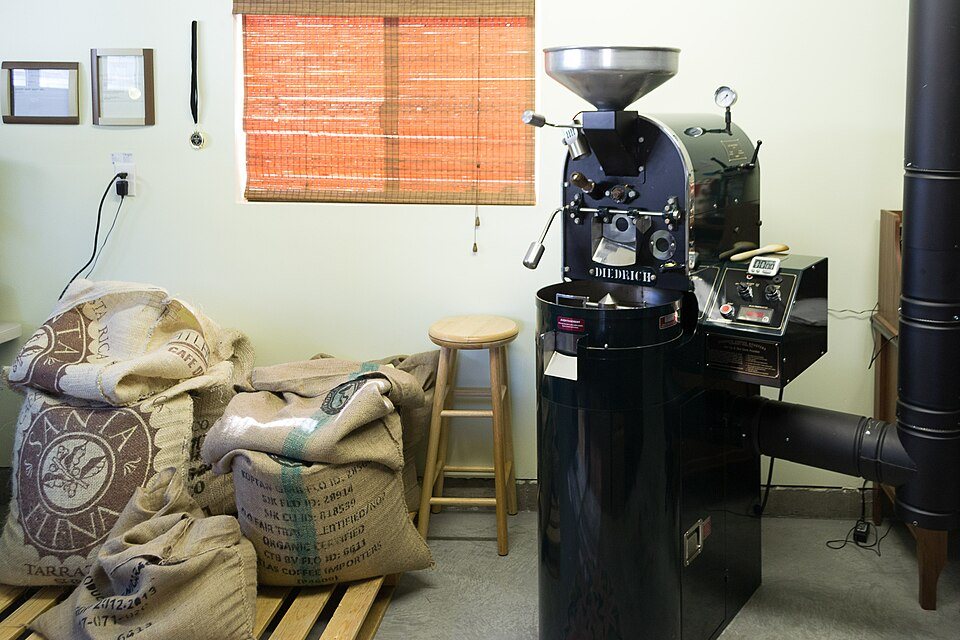
Two cautions on that table. The Kaleido M10’s 2,600 W is 21.7 amps at 120 V, more than a 15 A or a 20 A household outlet supplies, so whether it reaches full power on a US kitchen circuit is not established. And several of the smaller entries rest on retailer copy and were not checked against a manufacturer’s sheet.
The gas machines (Sonofresco, Arc, the grill-mounted drums) are what many market roasters run in a garage or outdoors. Under cottage food they raise the same question as the Bullet’s vent: whether that counts as the home kitchen.
Smoke, chaff and fire
Roasting in volume at home is a fire risk that both manufacturers state outright.
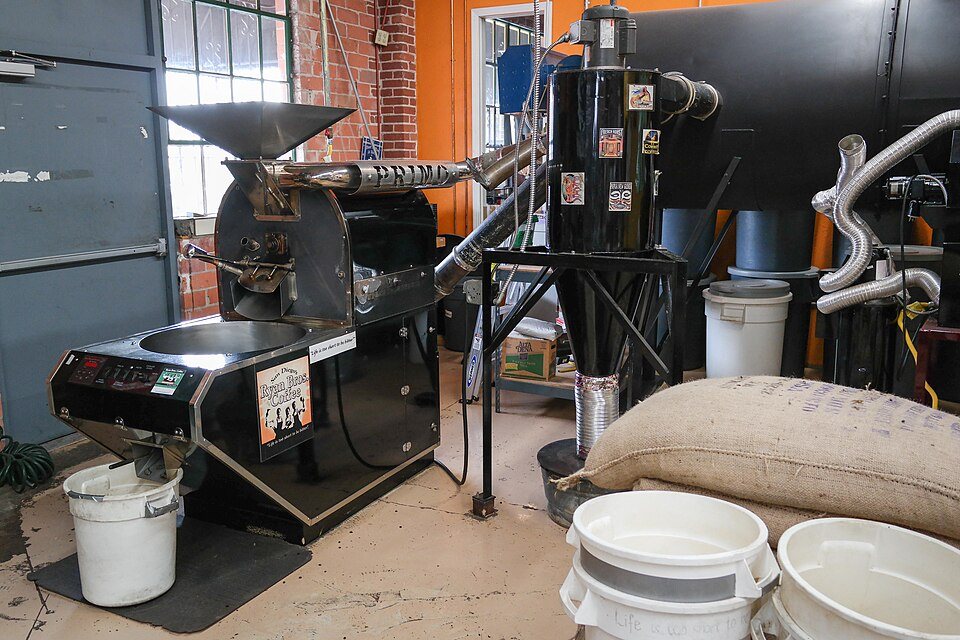
- Behmor: “Like all food products coffee beans can ignite,” and “The Behmor 2000AB Plus is NOT a set and walk away device.” In a bean fire the instruction is to unplug it, keep the door shut and never use water.
- Chaff is the fuel. Aillio asks for the chaff collector to be emptied every 2 to 3 kg, which at full batches is every second or third roast, and for a deeper clean every 30 kg. At 40 lb a week that deep clean comes round about every ten days.
- Aillio’s stated working range is 10 to 30 °C. An unheated Michigan garage in January is below it.
No published measurement of the smoke output of either machine was found, and no Michigan fire-code or insurance rule specific to home roasting. A call to the home insurer before roasting for sale is cheap.
The plan that follows from the numbers
- Now: keep learning on the methods I already use, and on a Behmor if I buy one. Its job is skill and samples.
- First market season with coffee: a small table of bags, roasted in the week before, at a volume the Behmor can honestly make by its manual. That is about 2½ lb a session, or three 12 oz bags and some samples, so a dozen bags for a trial market is four sessions spread over the week.
- When bag sales pass about ten pounds a week: a one-kilo roaster. The R2 if the roasting space has only 120 V; the R2 Pro if it has 240 V.
- The shop: a 3 to 5 kg drum, bought used, as Roasting Machines already argues.
Sources
- Behmor 2000AB Plus operation manual (footer V30, 21 October 2024), behmor.com; Behmor quick-start guide.
- Roastmasters and Burman Coffee Traders listings for the Behmor (price, retailer notes).
- Aillio: aillio.com, r2-specs, docs.aillio.com (specifications, maintenance, venting), us.aillio.com product pages.
- Sweet Maria’s library: Bullet R2 and R2 Pro FAQ pages, availability notes, and “How to calculate weight loss in coffee roasting” (read through an archive mirror; capture dates not recorded).
- Daily Coffee News, 3 July 2024, on the R2 launch.
- Manufacturer or seller pages for the Sonofresco, Arc 800, Mill City, Bellwether and Kaleido machines.
- CoffeeForums, “Startup Roaster Selling at Farmers Markets” (January 2015), for the two sales volumes.
Comments (0)