Starting a Coffee Business · 6 of 20
Packaging Roasted Coffee: Valves, Vacuum, Desiccant Packs and How Long It Keeps
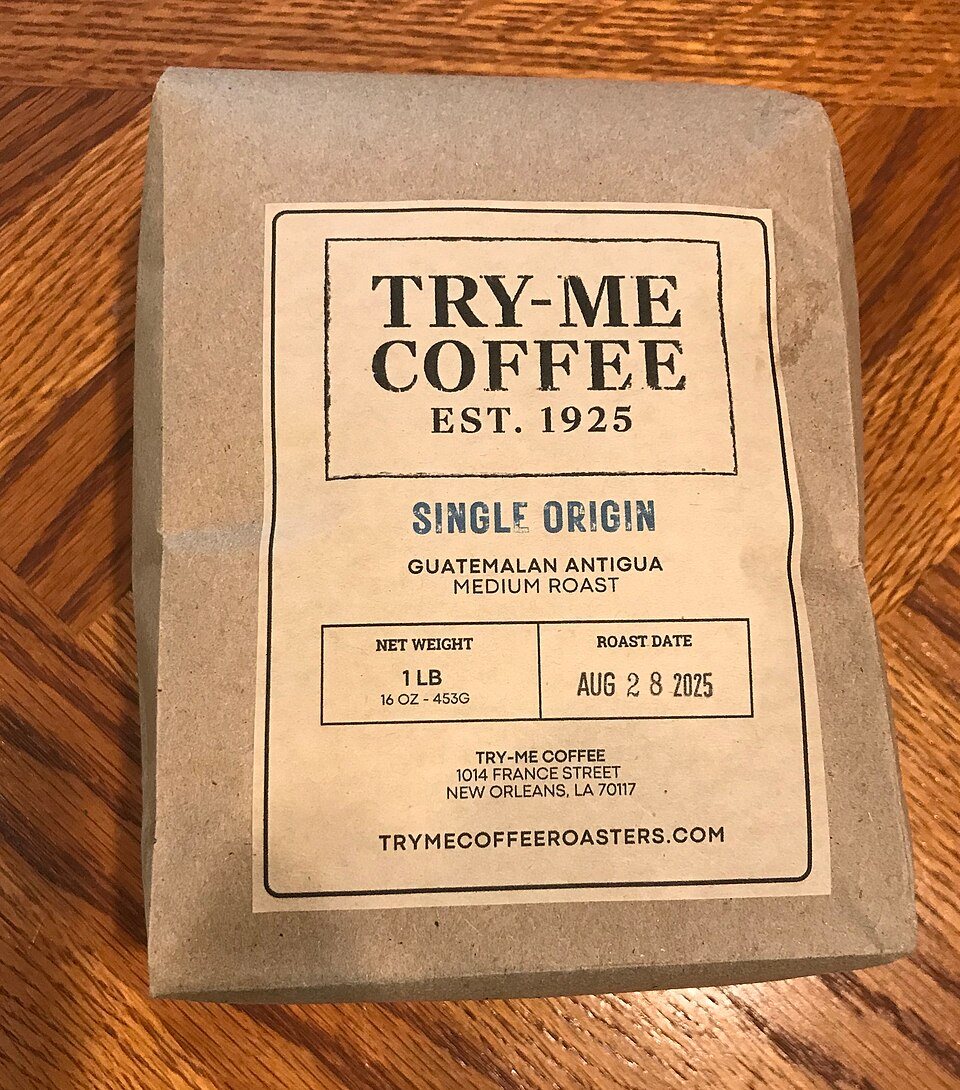
The bags page prices the bag and the label. This page is about what the package is for: what makes roasted coffee go stale, what a one-way valve does, and whether vacuum sealing, desiccant packs or oxygen absorbers belong in a bag of coffee. I have not packed coffee for sale yet. What follows is the published research and the makers’ own documents, and the routine I plan to follow.
The short answers
| Question | Answer |
|---|---|
| Vacuum seal it? | No, not fresh coffee. A 12 oz bag still has half a litre to two litres of gas to give off, and a vacuum pulls aroma out with the air. Vacuum sealing is for small portions going into a freezer. |
| Desiccant pack? | No. Roasted coffee is already far drier than a desiccant would make it, a barrier bag keeps moisture out, and silica gel takes up aroma as well as water. |
| Oxygen absorber? | No, not in a bag with a valve. Ordinary sachets work poorly in a dry pack full of carbon dioxide. The kinds made for coffee also absorb the carbon dioxide and are meant for packs with no valve. |
| One-way valve? | Yes. It lets coffee be sealed the day it is roasted, and the gas the coffee gives off then pushes the oxygen out of the bag. |
| Foil or kraft? | A bag with an aluminium layer, or another stated high-barrier film. Kraft paper with a plain plastic liner loses aroma within two weeks, valve or no valve. |
| When to seal? | The same day, as soon as the beans are cool, with the bag pressed flat first. |
| Whole bean or ground? | Whole bean. Ground coffee loses most of its gas within minutes. |
| How long is it good? | Best within three to four weeks of the roast date, and about two weeks once opened. Put the roast date on the bag. |
| Freezer? | Yes, if the pack is airtight and is not opened while cold. Not the refrigerator for an opened bag. |
What makes roasted coffee go stale
Two separate things happen. The coffee loses the gas the roast left in it, and its aroma compounds escape or react with oxygen. Neither is a safety matter. Researchers at the Zurich University of Applied Sciences put it plainly: “Roasted coffee is, from a food safety perspective, a shelf-stable product, when stored at moisture content below 5%.” Stale coffee is disappointing, not dangerous.
| What | How much it matters | Source |
|---|---|---|
| Oxygen | The largest factor. Raising oxygen from 0.5% to the 21% in air “accelerated deterioration 20-fold” in ground coffee, judged by when half of a consumer panel rejected it. | Cardelli and Labuza, 2001 |
| Moisture | A rise of 0.1 in water activity “led to a 60% increase in deterioration.” Fresh from a sealed pack, ground coffee measured 0.09, which is very dry. Shelf life after opening held steady up to 0.36. | Cardelli and Labuza, 2001; Anese and others, 2006 |
| Temperature | Ten degrees Celsius warmer “rose the rate of deterioration about 15-23%” by taste. Gas escapes much faster with heat: about twice as fast for each 10 °C. | Cardelli and Labuza, 2001; SCA |
| Light | No measurement of light’s effect on packed roasted coffee is published. An opaque bag settles it. |
Water activity is a measure of how available the water in a food is, from 0 (bone dry) to 1 (pure water).
One number that is often repeated should not be: that each 1% of oxygen adds 10% to the rate of staling. It appears in a 2012 review by the Specialty Coffee Association, credited to the same 2001 paper, but it is not in that paper’s summary and it does not add up to the paper’s own 20-fold figure.
How much gas a bag gives off
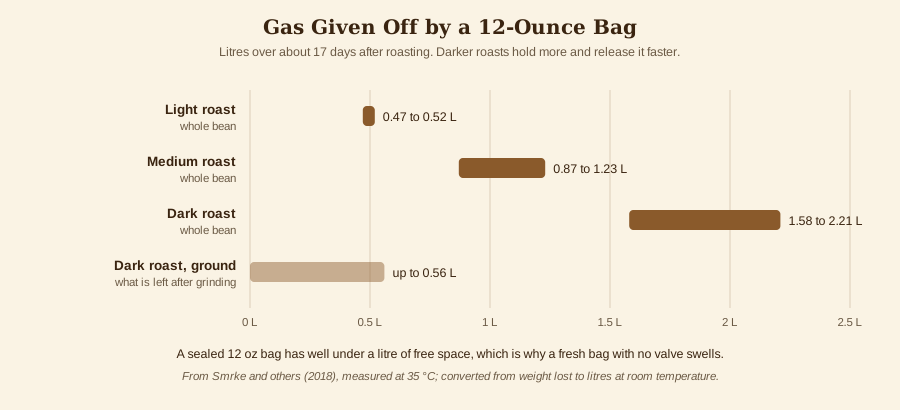
Roasting leaves gas trapped in the bean, about 1 to 2% of its weight. Nearly nine-tenths of it is carbon dioxide. The Zurich group weighed it leaving whole Arabica beans over about 400 hours:
| Roast | Weight lost as gas, per gram of coffee | Litres from one 12 oz bag |
|---|---|---|
| Light | 2.5 to 2.8 mg | about 0.5 |
| Medium | 4.7 to 6.6 mg | 0.9 to 1.2 |
| Dark | 8.5 to 11.9 mg | 1.6 to 2.2 |
Within each roast, the faster the roast the more gas. The litres are worked out from the weights for a 340 g bag at room temperature.
It does not stop on a schedule. A light roast followed for 800 hours was still giving off gas, and the paper says light-roasted whole beans “are still degassing 1 month after” roasting. The Specialty Coffee Association’s summary is that degassing is rapid “for the first 20 days after roasting, slowing dramatically afterwards,” with the peak in the first 24 to 48 hours.
A sealed 12 oz bag has well under a litre of free space. That is the whole packaging problem in one sentence: fresh coffee sealed in a bag with no way out will swell the bag and may burst it.
The one-way valve
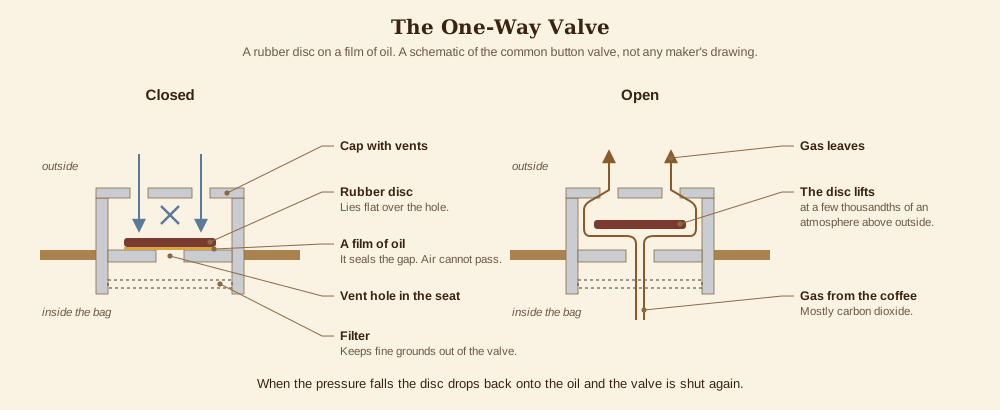
The valve was the answer to that problem. The Italian packaging company Goglio dates its one-way degassing valve to 1961 on its own history page.
How it works. A University of Guelph thesis that took valves apart describes the common “button valve” as a body that “houses an oil layer (sealant liquid), and a rubber diaphragm, held in place by a cover,” with a filter on the inside “to prevent fine coffee particles from blocking the valve.” The rubber alone does not seal. The film of oil between the disc and the vent hole does. When the pressure inside the bag is enough to break that film’s hold, the disc lifts and gas leaves. When the pressure falls, the disc settles and the oil seals it again.
How little pressure it takes. The same thesis measured first openings at 0.37 to 2.14 kilopascals, which is a few thousandths to two-hundredths of an atmosphere. The valve maker Wipf says its valves close again at 0.1 millibar or more. A valved bag never gets tight like a drum.
Does it let air in? Measured, no. In nitrogen-flushed foil bags with valves, the Zurich group found, three weeks after packing, “approx. 70% (v/v) in CO2 and less than 0.5% (v/v) for O2,” and the oxygen “remained very low and close to zero” through nine weeks. The thesis found that valve design had “minimal effect on the ingress of oxygen.” The real risk is a valve that fails, or a bad seal at the top of the bag. A small experiment reported by the SCA found valve bags held no oxygen “unless there was a leak in the seal at the top of the bag.”
What it is really for. The valve does not keep coffee fresh by itself. It relieves pressure, and that lets fresh coffee be sealed straight away in a bag that keeps air out. Then the coffee protects itself. “The release of gases creates a protective atmosphere in packaging,” the Zurich paper says. The gas leaving through the valve carries the bag’s oxygen out with it.
How far that goes depends on how much gas the coffee has. A rough estimate, assuming half a litre of air sealed in with the beans and full mixing:
| Roast | Gas given off | Oxygen left in the bag |
|---|---|---|
| Light | about 0.5 L | about 8% |
| Medium | 0.9 to 1.2 L | about 2 to 4% |
| Dark | 1.6 to 2.2 L | about 0.3 to 1% |
The estimate is arithmetic, not a measurement, and nobody has published the measurement for a small roaster’s bag. It carries two practical points. Press the air out of the bag before sealing, because less air to start with improves every row. And a light roast, or coffee left open for a day or two before bagging, has much less gas to flush with, so it depends more on a prompt seal and a good bag.
Vacuum sealing
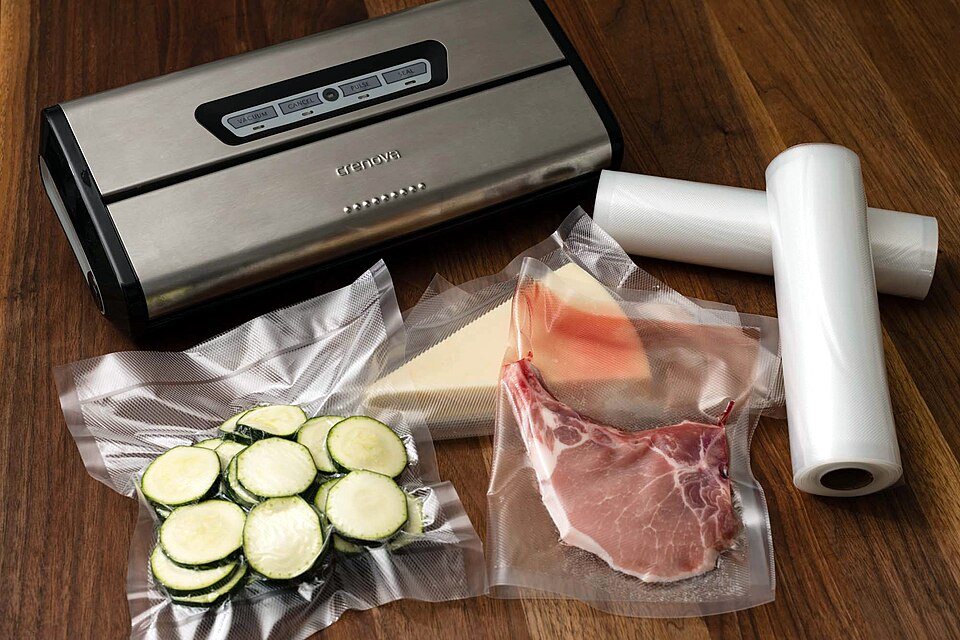
A vacuum sealer takes the air out, and oxygen is the main enemy, so it seems the obvious tool. For fresh coffee it is the wrong one, for two reasons.
- The gas has nowhere to go. A vacuum-sealed 12 oz bag of fresh beans still has half a litre to two litres of gas to release. A 1978 packaging patent describes the industry’s experience: if coffee is not degassed first, “the continued evolution of gases in such containers causes a pressure build-up which is sufficient to subsequently bulge the ends of metal containers or to burst bag-type containers.” The tight brick goes soft, then inflates.
- The vacuum takes aroma with the air. The Guelph thesis notes that “inducing a vacuum within the headspace of the package will remove aroma volatiles.”
The way round the first problem is to let the coffee stand open until the gas is gone, and that is the worst of both: the same patent says coffee degassed in open air “is also appreciably oxidized and the quality thereof is thereby impaired.”
Where vacuum does work:
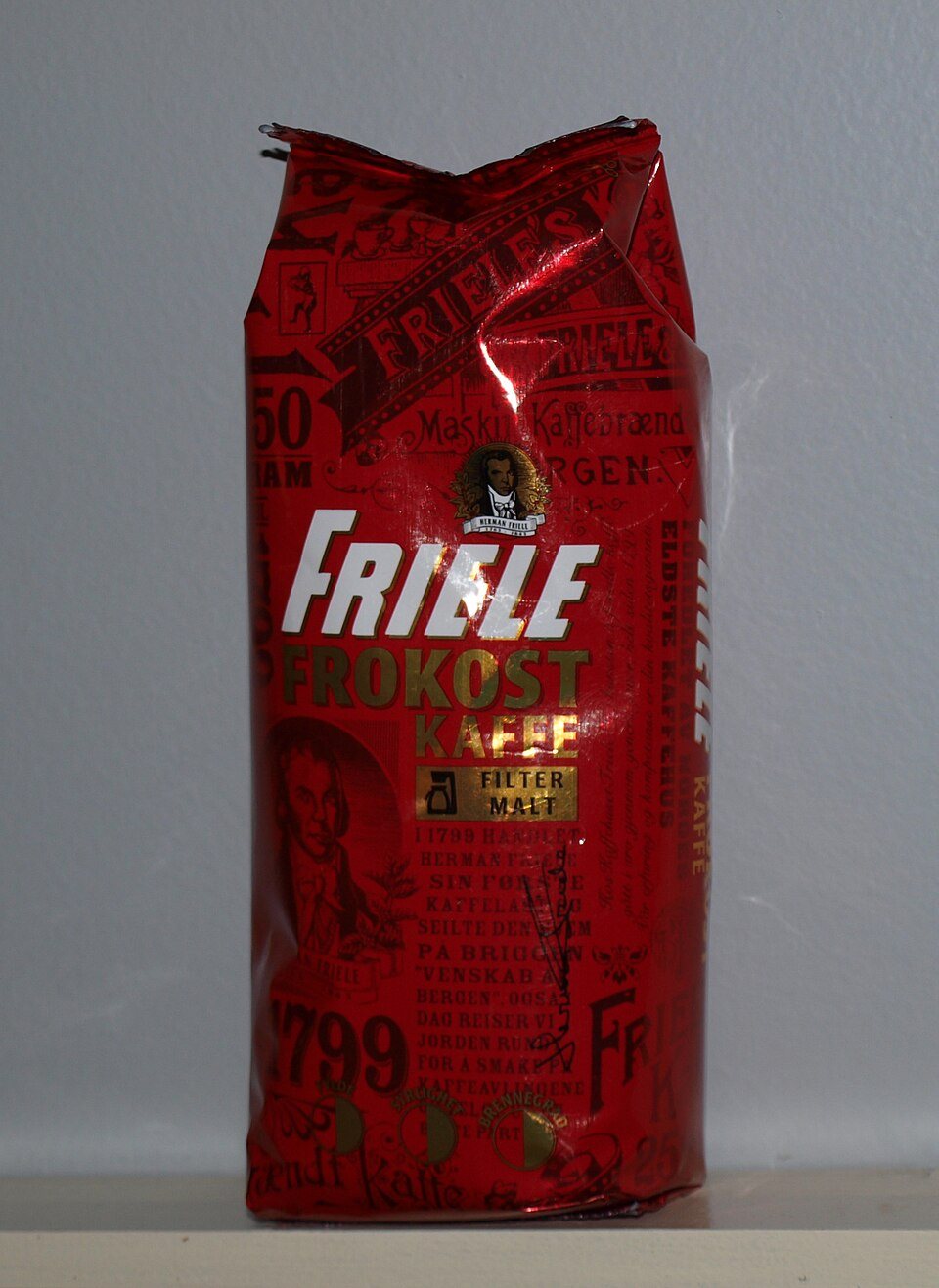
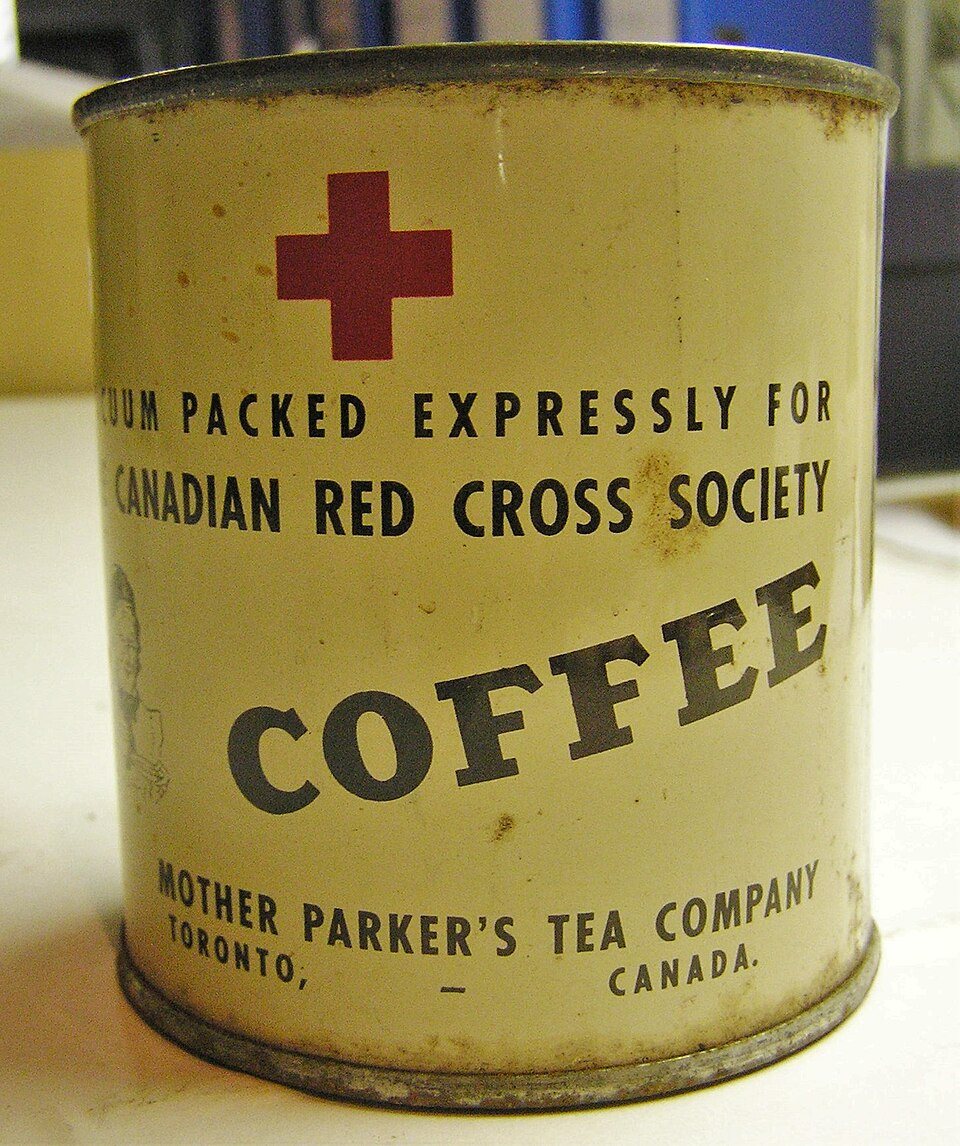
- On coffee that has already degassed, which is the supermarket brick. It accepts the cost above for a shelf life of a year or more.
- With gas flushing. The SCA review reports one study reaching “0% residual oxygen in sealed coffee bags after two rounds of vacuum packing and gas flushing.” That is factory equipment.
- For the freezer. The roaster George Howell, quoted by Perfect Daily Grind, vacuum seals coffee that will be frozen for a month or more. Small portions, sealed, frozen, and opened once.
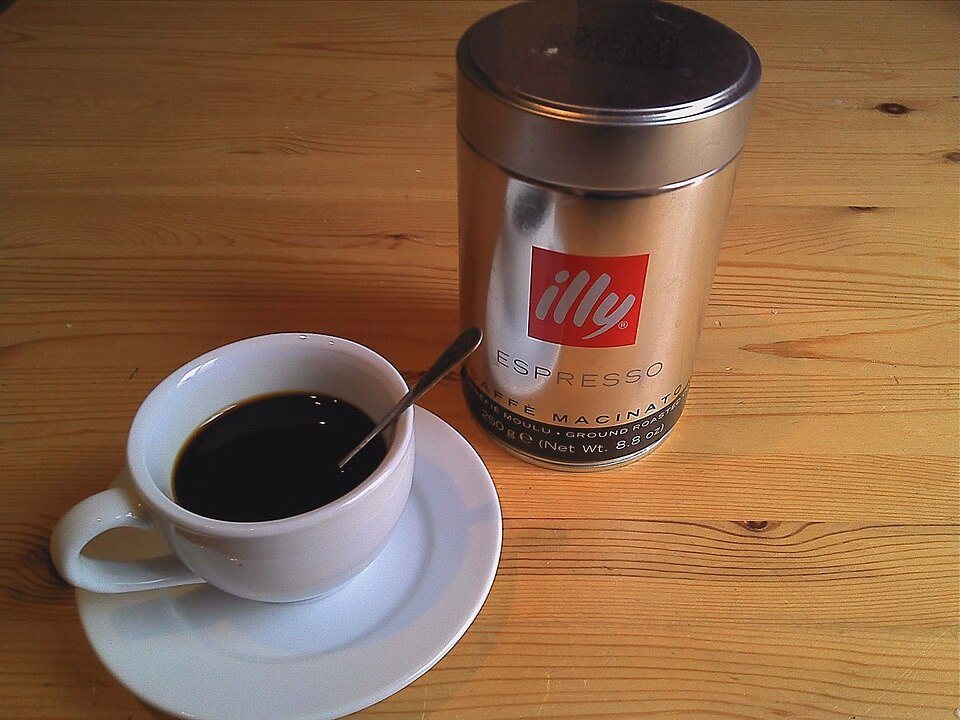
The pressurised can. Illy does something different again. Its FAQ says the coffee “is placed in recyclable cans, along with natural, inert nitrogen, under pressure,” and that an unopened can of ground coffee “will remain fresh for at least two years.” A rigid can holds the pressure a bag cannot. After opening, Illy gives it seven days.
Home vacuum canisters. The Fellow Atmos pulls air out of a canister with a twist of the lid; its maker claims “Fresh 2x Longer” and gives no test. The Airscape has an inner lid that is pushed down onto the beans to force air out; it displaces air and does not pull a vacuum. No independent test of either is published. The nearest controlled study, below, tested an ordinary airtight tin, and the tin did worse than the bag the coffee came in.
Nitrogen flushing
Large roasters blow nitrogen into the bag as it is filled, so the pack starts with almost no oxygen. The targets come from the equipment makers: Rovema recommends “a residual oxygen level of no more than 3%”; the valve maker Plitek gives the industry’s range as “between 0.5-3.0%.” One study in the SCA review found nitrogen-flushed coffee kept six months by taste against three for coffee bagged without flushing.
It is not for a market stall. A flushing sealer is sold by quotation. Forum figures run from a few hundred dollars for a home-made hose and regulator to several thousand for a machine. The gain is months on a shelf. Coffee sold within a week or two of roasting, in a valved bag, with the roast date on it, flushes itself.
There is also a rules question. Michigan’s cottage food pages say nothing about whether a vacuum-packed or gas-flushed bag counts as “reduced oxygen packaging,” which the Food Code regulates for licensed kitchens. That is one more reason to leave both alone under the exemption, or to ask the state first. See Michigan Rules.
Desiccant packs
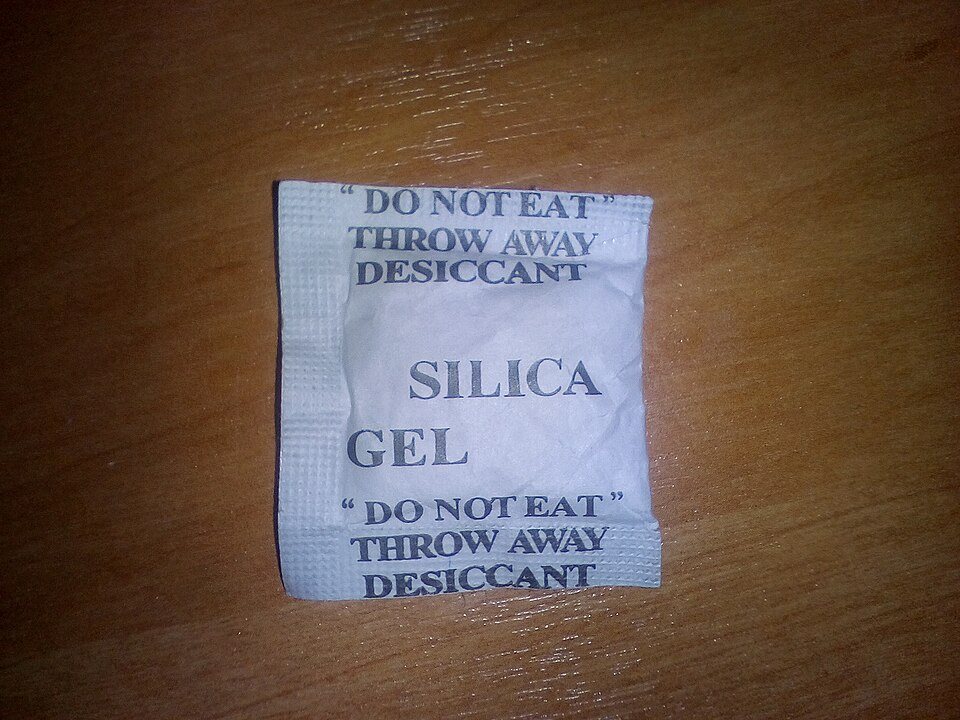
No. Three reasons, each from a source:
- The coffee is already drier than it needs to be. Fresh from the pack it measures a water activity of 0.09. Shelf life after opening does not start to shorten until about 0.36. Nothing in the research treats too little drying as a problem in packed roasted coffee. The problems named are oxygen and lost aroma.
- A barrier bag keeps moisture out anyway. Foil lets through no water vapour that can be measured. In a foil-lined bag a desiccant has nothing to do. In a plain paper bag it would be trying to dry the whole room.
- Silica gel takes up aroma. It is a general adsorbent, not a water-only one. A Procter & Gamble patent records that silica gel and similar materials were once added to packed ground coffee on purpose, to hold aroma, with “limited success”: they were expensive and could “add an undesirable flavor or texture to the coffee.”
No coffee trade body, valve maker or bag maker recommends a desiccant in roasted coffee. The only pages that do are the desiccant sellers’.
Oxygen absorbers
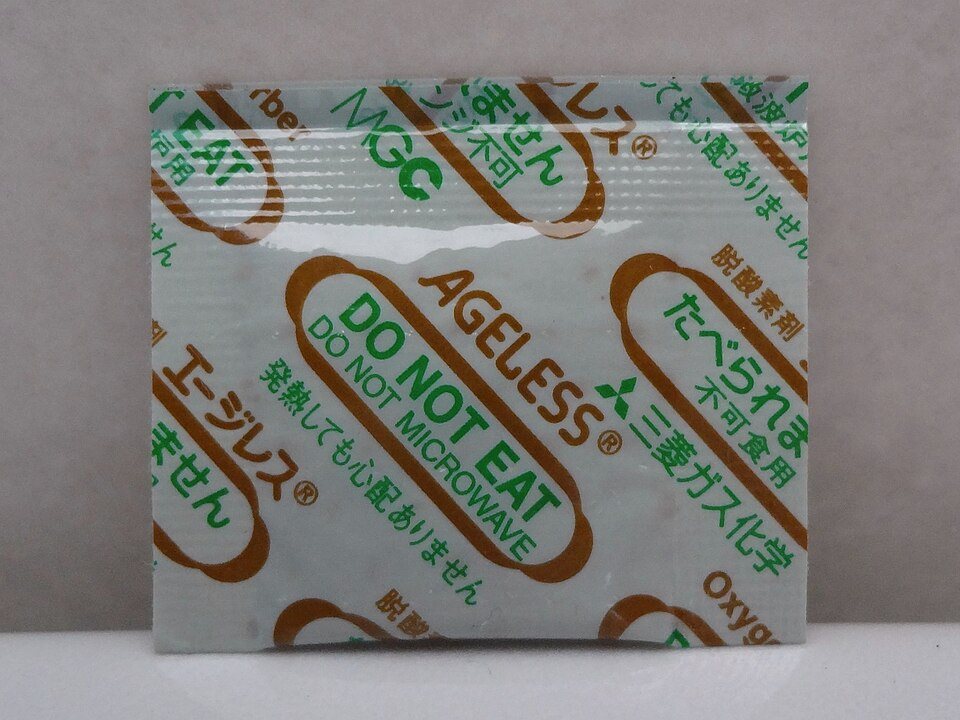
An oxygen absorber is a sachet of iron powder that rusts, using up the oxygen in a sealed pack. In a valved bag of coffee it is not needed, and the ordinary kind does not work well there.
- Ordinary sachets need moisture. Mitsubishi Gas Chemical, which makes Ageless, lists its standard types as “water dependent,” for foods far wetter than roasted coffee.
- Carbon dioxide gets in the way. The company’s own 1982 patent says most absorbers “have low ability to absorb oxygen in a dry atmosphere,” and that their ability “is also decreased in the presence of carbon dioxide.” A bag of fresh coffee is both.
- Coffee types exist, and they do a different job. Ageless type E is listed for coffee: “Oxygen and carbon dioxide are both absorbed simultaneously.” It replaces the valve in a sealed pack with no valve, by soaking up the gas the coffee gives off.
- In a valved bag the coffee does the work, as above.
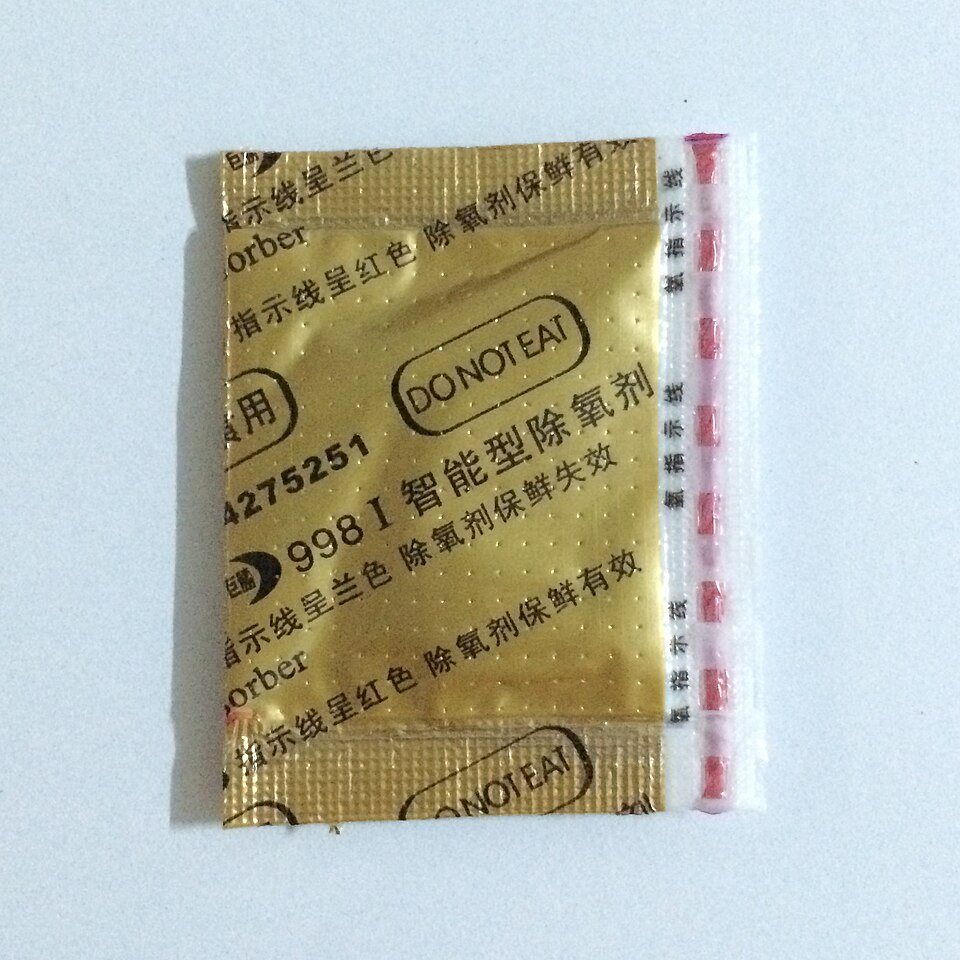
One more thing for espresso: carbon dioxide is what makes crema. A sachet that absorbs it takes that away. Nobody has measured how much.
The bag itself: what is inside the kraft
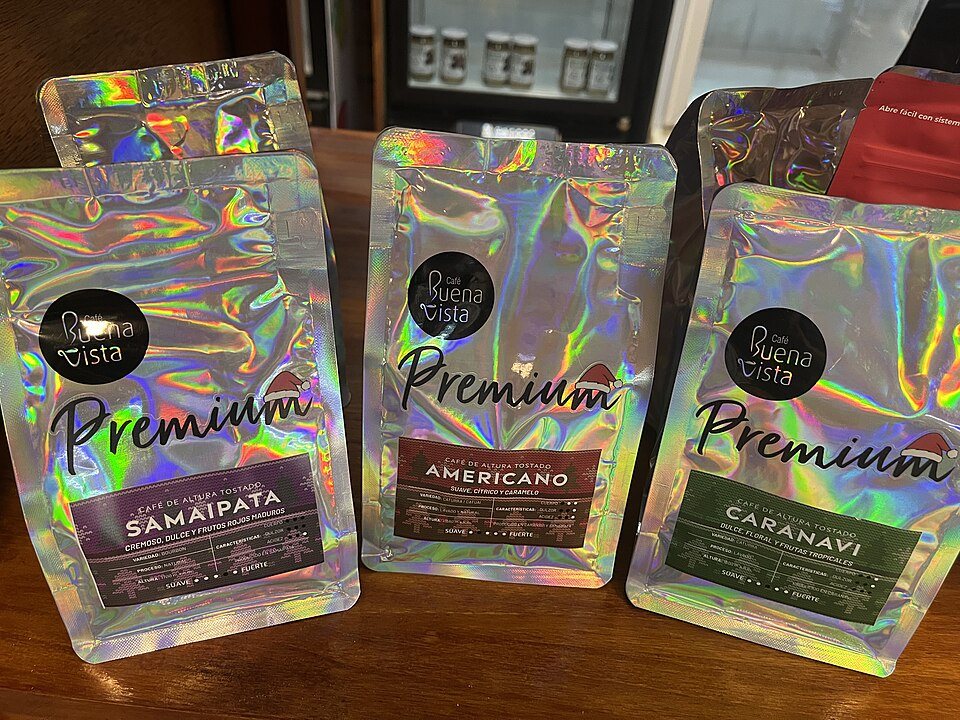
“Kraft” describes the outside of a bag. What matters is the layer inside it.
The one controlled comparison is from the same Zurich group in 2014. They packed 250 g of fresh whole beans in four materials and followed them for 57 weeks: a paper bag; paper with a polyethylene liner; and two laminates with an aluminium layer. All but the plain paper bag had valves. They tracked a chemical marker of freshness. “Already after two weeks the difference in the ratios for coffee packed with aluminum layer compared to no aluminium is significantly different,” they wrote, and “the presence of aluminum as a packaging barrier material strongly preserves the freshness of coffee.” The paper-and-polyethylene bag is the ordinary kraft bag with a plastic liner. It leaked aroma, valve or not. The study measured chemistry and held no tasting panel.
One film maker’s published figures show why:
| Layer | Oxygen let through (cc per m² per day) | Water vapour (g per m² per day) |
|---|---|---|
| Polyethylene (the common liner) | more than 5,000 | about 10 |
| PET (polyester) | 50 to 100 | 15 to 25 |
| Metallised PET | 1 to 3 | 0.1 to 0.5 |
| EVOH (a clear barrier plastic) | under 1.5 | 1.5 to 3.0 |
| Aluminium foil | below detection | below detection |
Those are Stanley Package’s typical values. Polyethylene lets through thousands of times more oxygen than a metallised film.
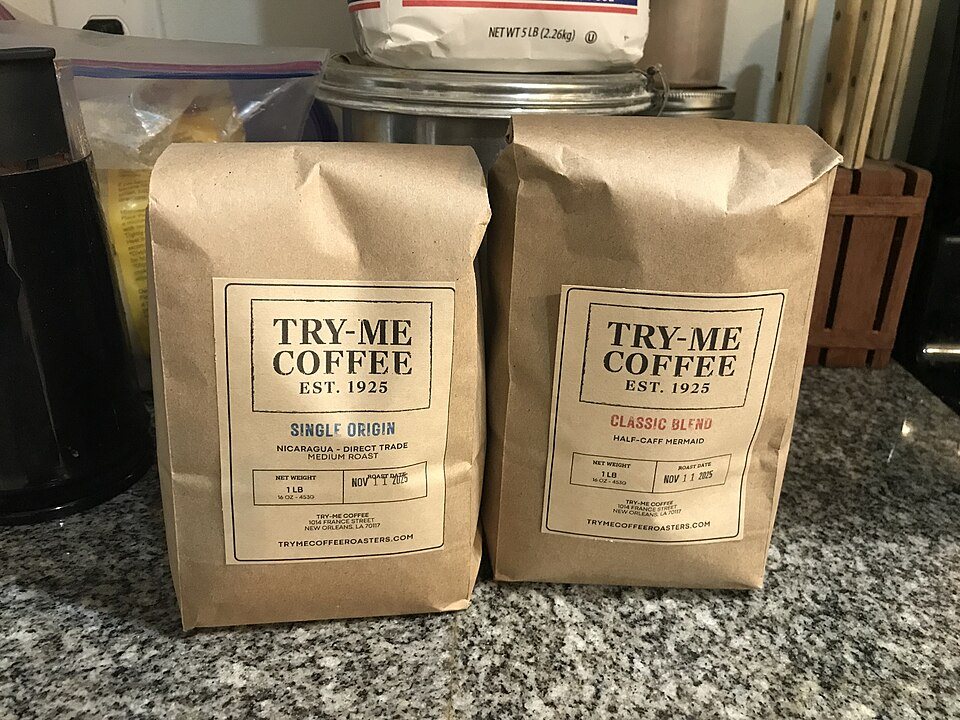
Compostable bags. The makers of the compostable and kraft valve bags on the bags page print no barrier figures. A peer-reviewed test of coffee pods found that a recyclable high-barrier film can match a conventional one, so “recyclable” and “good barrier” are not opposites. Compostable films are a different material. The few figures in circulation for them are much weaker, and none comes from a bag maker.
What to do: before buying a case, ask the supplier for the bag’s structure, layer by layer, and its oxygen transmission rate. A supplier with a good bag will have the number.
Sealing the bag
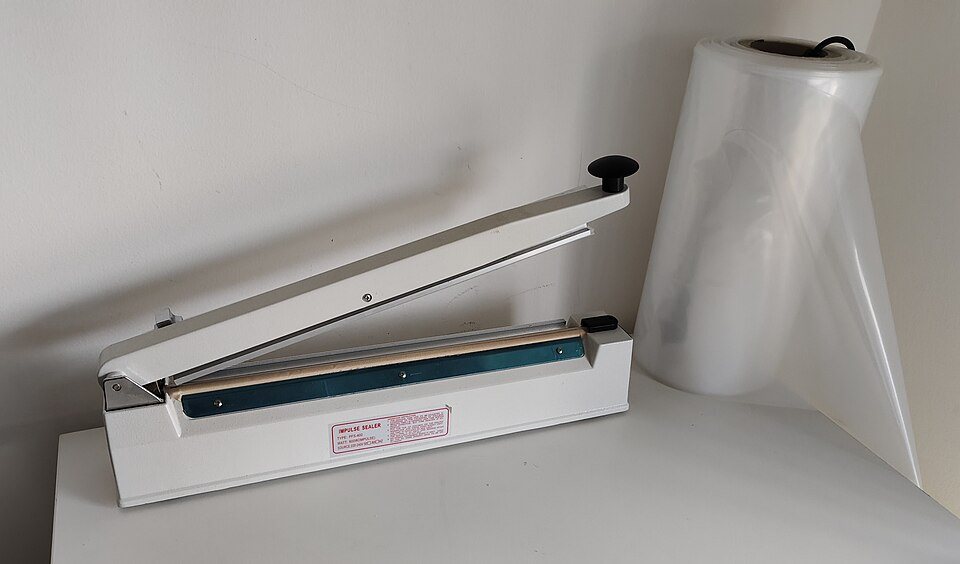
The top seal is where bags fail. In the SCA’s small experiment, the leak was there and not at the valve.
- A fold is not a seal. A tin tie or a clip holds the bag shut. It does not make it airtight.
- Heat-seal above the zipper. A zipper pouch sealed above the zip is airtight until the customer cuts it open, and the zip is theirs to use afterwards.
- Sealers. Uline’s 8-inch tabletop impulse sealer is $97 and is rated for metallised food bags up to 2.5 thousandths of an inch thick. It makes a seal one-sixteenth of an inch wide. A gusseted bag has four layers at its folds, and sealer sellers recommend a constant-heat sealer for foil, gusseted and coated kraft bags.
- No bag maker prints a seal temperature or time. Seal a few empty bags, let them cool, and pull them apart. A good seal does not peel open cleanly.
- Press the bag flat against the beans before sealing, for the reason in the valve section.
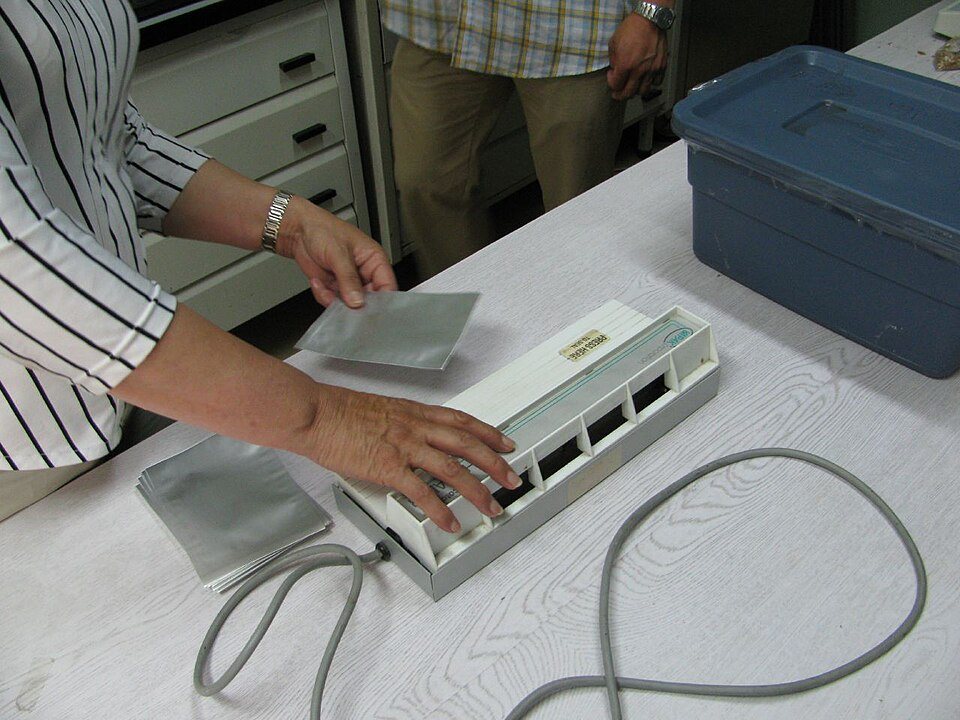
When to bag, and how long to rest
Bag at once. With a valved bag, the roaster maker Mill City says, “you can bag your beans right away and allow the gas to escape through the valve.” The gas that flushes the bag comes mostly in the first two days. Coffee left open that long has spent it on the room.
Rest before brewing is the customer’s wait, not the seller’s. Fresh coffee holds so much gas that it gets in the way of brewing. The advice differs by source:
| Source | Filter coffee | Espresso |
|---|---|---|
| Counter Culture Coffee | 3 to 5 days after roasting | 5 to 7 days |
| Mill City Roasters | 2 to 3 days | 5 to 7 days or more |
Coffee roasted on a Wednesday and sold on a Saturday is three days old, which is right for filter coffee.
How long it keeps
- The SCA: “Whole bean coffee can reasonably be considered ‘fresh’ within about three weeks of roasting.”
- Counter Culture: “coffee should be used within 2–4 weeks after roasting,” and within two weeks of opening the bag. It tells buyers to “look for a ‘Roasted On’ date rather than a ‘Best By’ date.”
- By consumer panel: in the Guelph trial, ground dark roast in valve pouches reached the end of its shelf life at “approximately 8 to 10 weeks.” Industrial packs are given one to two years.
The spread is the finding. “Acceptable to a panel” runs to months in a good pack. “Tastes like fresh coffee” is about three weeks. A stall sells the second kind, and the roast date on the bag is the proof.
Ground coffee
Grinding does in minutes what whole beans do in weeks. The Zurich group found “up to 75% of the trapped gas was released during and immediately after grinding (within 90 s).” The SCA’s Peter Giuliano says ground coffee “might be considered ‘fresh’ for about an hour after grinding.”
Freshly ground coffee still has gas left, up to about half a litre from a 12 oz bag of dark roast, so a bag of it still wants a valve. Valve makers sell types for ground coffee, with a filter to keep the fines out.
In Michigan, coffee sold under the cottage food exemption cannot be ground at the stall; the rules page has the wording. So ground coffee is ground at home. The practice that follows from all of the above:
- Sell whole bean first, and say why.
- Grind as late as possible before market day.
- Grind straight into a valved barrier bag, press it flat, and seal it.
- Use the smallest bag, 8 oz, so it is used up quickly.
- Write the grind date on the bag beside the roast date.
What to tell the customer
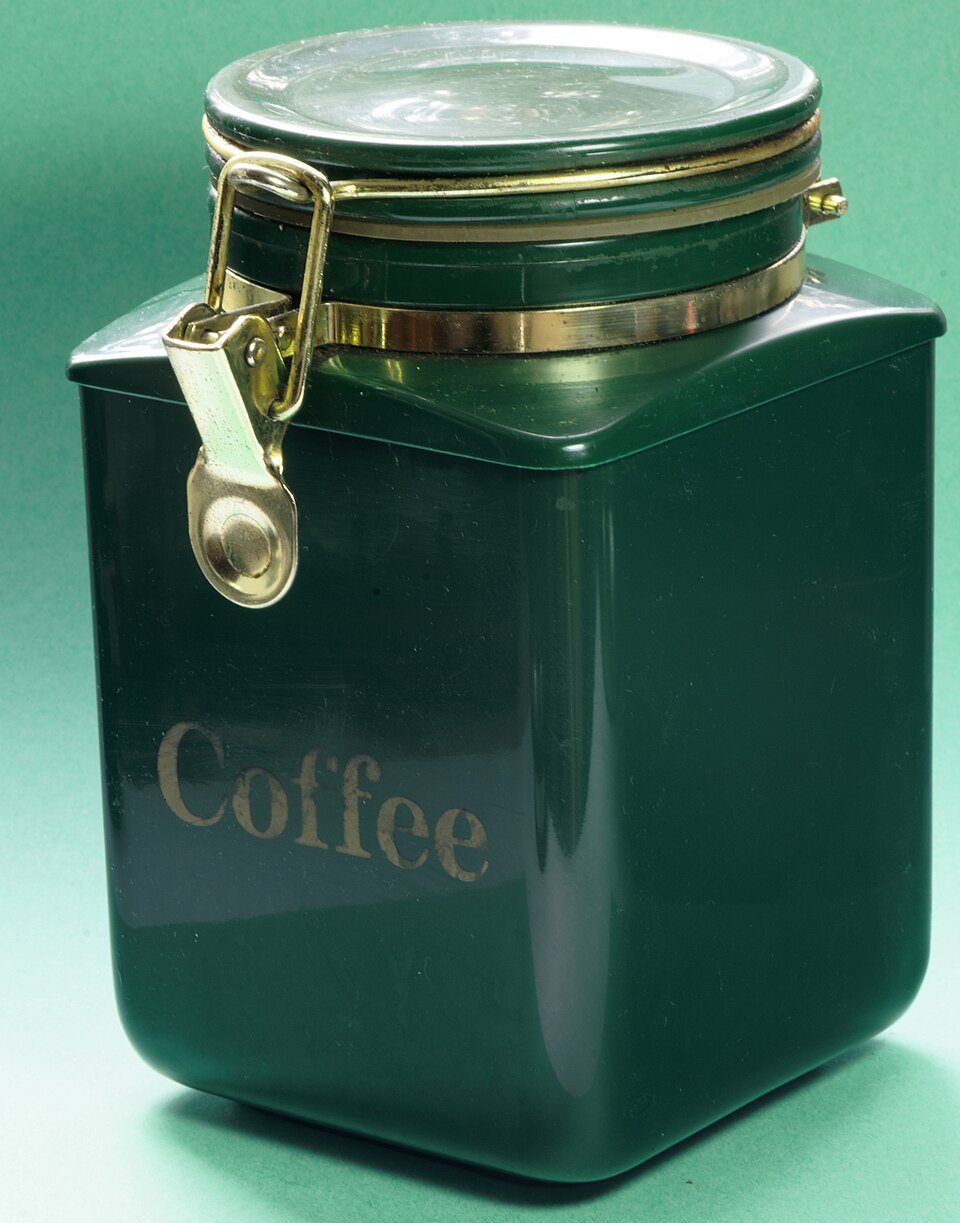
The one controlled study of storage after opening is the Zurich group’s from 2022. They took a kilogram of whole beans, opened it twice a week, and closed it four ways: emptied into an airtight tin, taped shut, folded and clipped, or closed with a built-in screw cap.
- The screw cap did best. “Using a clip, reclosing with tape or transferring beans into a container resulted in a faster loss of freshness.”
- Tipping beans into a tin throws away the protective gas at once. Oxygen in the tin reached room level “within a week,” and the carbon dioxide “fell to essentially zero.”
- After two weeks of opening, all four were within 1% of room air. By then the method no longer matters.
The freezer works, on one condition. Cold slows everything: at −25 °C coffee gives off gas about 35 times more slowly than at 35 °C. In a Penn State study, freezing kept the aroma of beans over nine weeks, most of all in dark roasts. The condition is no moisture. The pack has to be airtight, and it must not be opened cold, or water from the room air condenses on the beans. Roasters who freeze coffee portion it into single doses and grind those straight from frozen.
The refrigerator is disputed. Illy recommends it for its own ground coffee after seven days, warmed to room temperature before opening. Counter Culture says to avoid it for opened coffee, which “easily absorbs moisture, along with any odors.”
A card for the bag, each line from a source above:
Keep the coffee in this bag. Press the air out and close it tight. Keep it cool, dry and out of the sun. Best within a month of the roast date and two weeks of opening. To keep it longer, freeze it sealed in small portions, and do not open a cold bag.
Net weight: fill a little over
Every bag must hold at least the weight printed on it. Two things take weight away after the bag is filled.
- Tare. The empty bag, valve, tie and label weigh something. Weigh them and set the scale to subtract them.
- Gas. Coffee loses weight through the valve as it degasses: up to 11.9 mg per gram for a fast dark roast, which is 4 grams from a 12 oz bag.
The national handbook that inspectors use, NIST Handbook 133, allows a single package labelled 12 oz to be light by no more than 16.3 g, and an 8 oz package by 12.7 g. That is the limit for one bag, not a target. Filling each bag five grams over covers the gas and a little scale error. Michigan’s rules for scales are on the rules page.
The routine I plan to follow
- Roast. Cool the beans fully.
- The same day, weigh into foil-lined valve bags, a few grams over.
- Press each bag flat against the beans.
- Heat-seal above the zipper. Pull-test a seal from each batch.
- Stamp the roast date.
- Store the bags cool and dark, standing up, until market day.
- Sell within two weeks of roasting. Anything older comes home.
- No vacuum sealer, no desiccant, no oxygen absorber.
What is not known
- The oxygen left over time in a valved bag of fresh coffee that was not nitrogen-flushed. The table above is an estimate.
- How much aroma a silica gel sachet takes from a bag of coffee.
- Any independent test of vacuum canisters.
- Barrier figures for the compostable and kraft valve bags sold to small roasters, and a seal temperature for any coffee bag.
- A shelf life in weeks, set by tasting, for whole beans in a small roaster’s valved bag.
- Whether Michigan’s cottage food exemption allows a vacuum-packed or gas-flushed bag.
- The SCA’s Coffee Freshness Handbook is a paid book; its findings here are from the SCA’s own articles about it and from the research papers behind it.
Sources
- Smrke and others, “Effects of different coffee storage methods on coffee freshness after opening of packages,” Food Packaging and Shelf Life 33 (2022).
- Smrke and others, “Time-Resolved Gravimetric Method To Assess Degassing of Roasted Coffee,” Journal of Agricultural and Food Chemistry 66 (2018).
- Glöss and others, “Freshness Indices of Roasted Coffee,” Chimia 68 (2014).
- Cardelli and Labuza, “Application of Weibull Hazard Analysis to the Determination of the Shelf Life of Roasted and Ground Coffee,” LWT 34 (2001), from its published summary.
- Anese, Manzocco and Nicoli, “Modeling the Secondary Shelf Life of Ground Roasted Coffee,” Journal of Agricultural and Food Chemistry 54 (2006).
- Cowell, MSc thesis on one-way degassing valves, University of Guelph (2018).
- Specialty Coffee Association: Emma Sage, “What is the Shelf Life of Roasted Coffee?” (2012); “Preserving Freshness,” 25 Magazine issue 4 (2018); Peter Giuliano, “What is ‘freshly roasted’ coffee?”
- Makers: Goglio; Wipf; Plitek; Mitsubishi Gas Chemical, Ageless types; Rovema; Stanley Package; Fellow; Planetary Design (Airscape); Uline H-163 sealer; Illy FAQ.
- Patents: US 4,069,349 (Continental Group, 1978); US 4,366,179 (Mitsubishi Gas Chemical, 1982); US 5,328,708 (Procter & Gamble, 1994).
- Freezing: Penn State on Cotter and Hopfer (2018); Uman and others, Scientific Reports 6 (2016); Perfect Daily Grind on freezing.
- NIST Handbook 133 (2026), Appendix A, Table 2-5.
- The litres of gas, the oxygen estimate and the 4 gram weight loss are worked out from those sources.
Comments (0)