Starting a Coffee Business · 10 of 20
The Drinks: Pour-Over, Press, Phin and Egg Coffee at a Stall
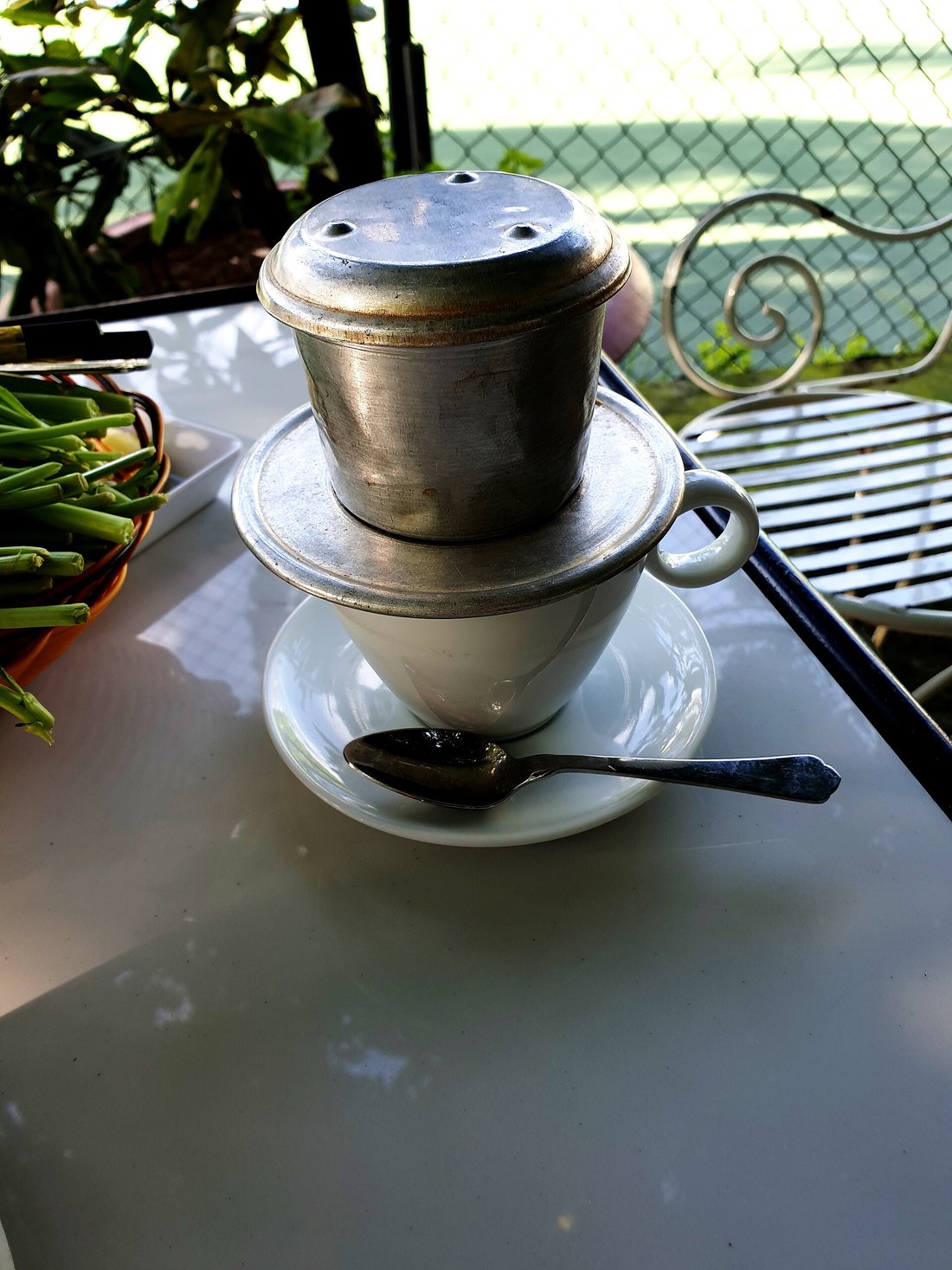
I own a pour-over kit, a French press and a phin, and I use all three at home. A market stall asks a different question of them: which can one person make well, with a line waiting, on a table with no sink and limited hot water? This page goes through each method on those terms and ends with the menu that follows. It assumes the stall holds the licence that brewed cups require; the rules page covers that.
What one person can make in an hour
| Method | Time per cup | Hands busy the whole time? |
|---|---|---|
| Pour-over (V60, Kalita) | 3 to 4 minutes | Yes |
| Clever dripper | about 3½ minutes | No: it steeps, then drains |
| AeroPress | under 2 minutes | Briefly |
| French press | about 4 minutes (the usual figure; no maker’s time was found) | No |
| Phin, 4 oz | about 5 minutes | No |
| Phin, 24 oz | 6 to 7 minutes for 6 to 12 servings | No |
| Batch brew in an airpot | seconds to serve | No |
A café owner quoted in the trade press put the trouble with pour-over plainly: it “requires someone to stand there for three to four minutes, doing nothing else.” If each hand-poured cup occupies the stall for 3½ minutes, the ceiling is 17 cups an hour on one dripper, and the same person is also taking payment, bagging beans and answering questions. Two drippers poured in turn raise that, at a cost in attention.
No stall operator’s own figures were found, so those are ceilings from arithmetic, not observations. The practical reading is that immersion methods free the hands, and a pre-brewed airpot serves a cup in the time it takes to pump.
Pour-over
The method that shows off a light, single-origin coffee, and the one people stop to watch. A V60 or Kalita Wave takes about 20 g of coffee and 320 g of water at 200 to 205 °F, in 3 to 4 minutes; that is 1:16 (Ratios).
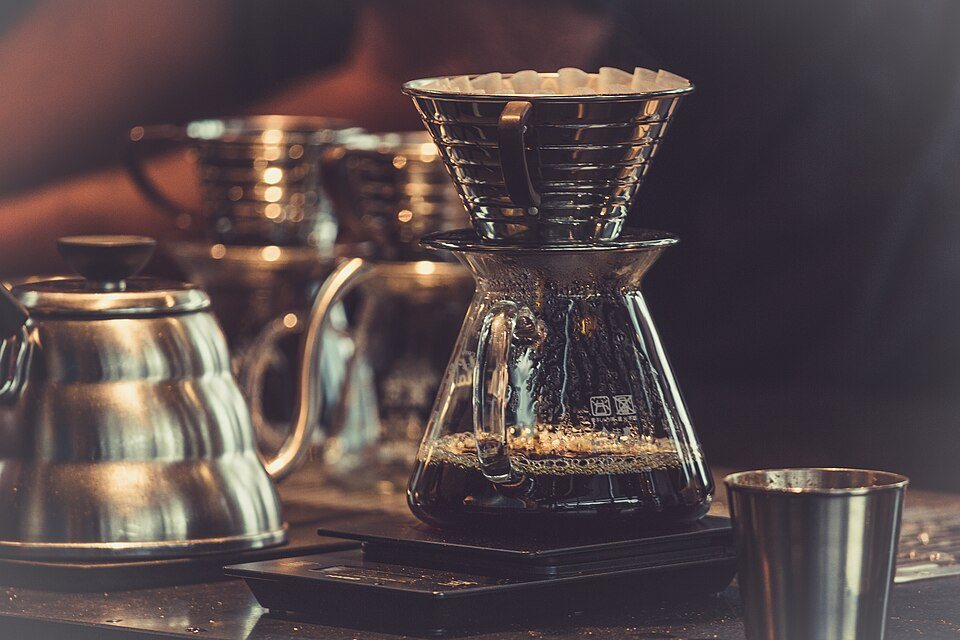
At the stall:
- Keep it for the coffee that deserves it: the washed Ethiopia, the single origin of the week.
- Use two drippers on a stand, not one, and weigh the doses into small lidded cups before the market so nothing is measured during service.
- It needs the hottest water on the table. See Hot Water and Power.
- Charge for the time. It is the slowest drink on the menu.
French press, and the Clever dripper
A French press makes a full-bodied cup with no paper filter and no technique at the moment of brewing. Steep, press, pour. A 32 oz press makes three 10 oz cups at once, which makes it a small-batch brewer more than a single-cup one. It suits the medium and dark roasts.
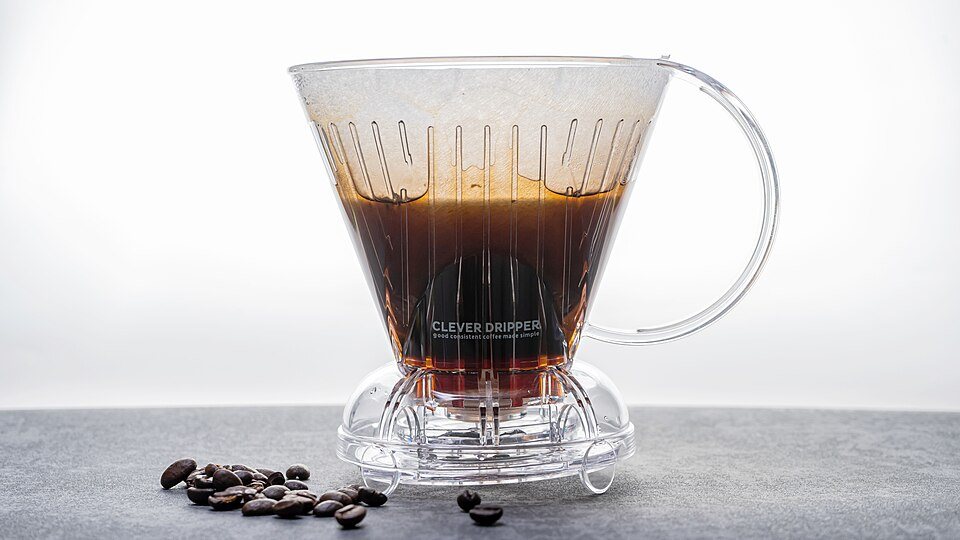
The Clever dripper is the better tool for single cups. It steeps like a press, then drains through a paper filter when set on the cup, so the cup is clean and the hands are free for two of its three and a half minutes.
One caution for both: a brewer used all day is a utensil. With no sink at the stall, bring enough clean ones to swap, sealed in bags, and take the used ones home dirty.
Phin and cà phê sữa đá
I drank cà phê sữa đá (kah fay shoo-uh dah · [kaː˨˩ fej˧˧ ʂɨə˨˩˦ ʔɗaː˦˥]) every morning in Vietnam, and that is why it is on this menu. A phin is a small metal filter that sits on the cup: coffee in, a press plate on top, hot water over it, and a slow drip of strong coffee onto sweetened condensed milk. Stirred and poured over ice, that is the whole drink.
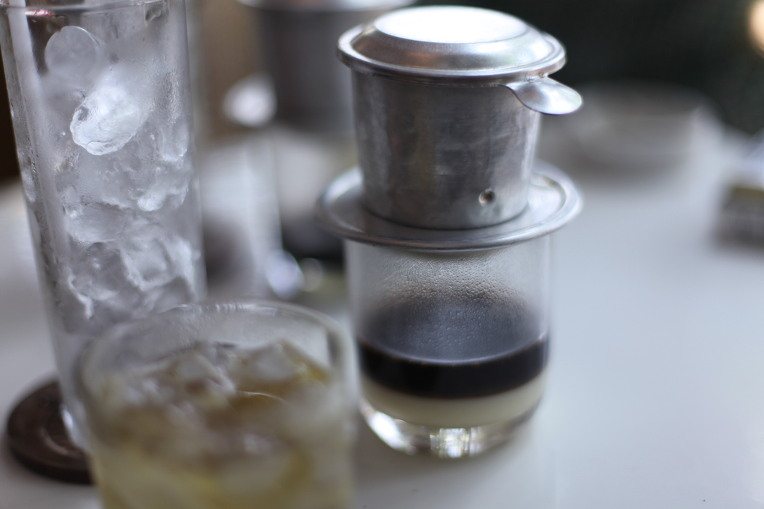
What makes it practical for a stall is the 24 oz phin. One brew takes 6 to 7 minutes, needs no power and no attention, and yields 6 to 12 servings of concentrate. That turns a five-minute wait into an assembly job: condensed milk in the cup, a measure of concentrate, stir, ice. A 4 oz phin dripping on the table beside it shows people how the drink is made.
Details:
- Grind and ratio. One phin maker recommends a fine grind and two parts water to one part coffee by volume, and warns that less than two tablespoons in a 4 oz phin drips too fast. Weigh the dose once and write it down.
- The coffee. Traditionally a dark-roasted robusta. Robusta is harsher and higher in caffeine than arabica, and that is what stands up to the condensed milk. See Green Coffee and the Line-Up.
- The condensed milk. Read the name on the can. By federal standard, “sweetened condensed milk” has at least 8% milkfat. A can labelled sweetened condensed filled milk, or creamer, has vegetable oil in place of the milkfat, and costs about a third less. Unopened cans need no refrigeration. Once opened, keep it in a squeeze bottle in the cooler at 41 °F or below; whether an inspector requires that is not settled, so assume it.
- The recipe. No gram-for-gram recipe from an authoritative source was found. A starting point to test: 2 tablespoons of condensed milk to 2 oz of concentrate, stirred, over a full cup of ice. Adjust by taste, then fix the recipe by weight.
A honey version, with honey syrup in place of some or all of the condensed milk, is on Honey in Coffee.
Condensed milk, cooked in the can: dulce de leche
Across Mexico and the rest of Latin America, and separately in Russia, Britain and Brazil, people take a sealed can of sweetened condensed milk and simmer it in water for hours. What comes out is no longer condensed milk. It is thick, tan to deep brown, and tastes of caramel and toffee: dulce de leche, “sweet of milk.” In Mexico the same confection made from goat’s milk is called cajeta, and other Spanish names include leche quemada, “burnt milk.”
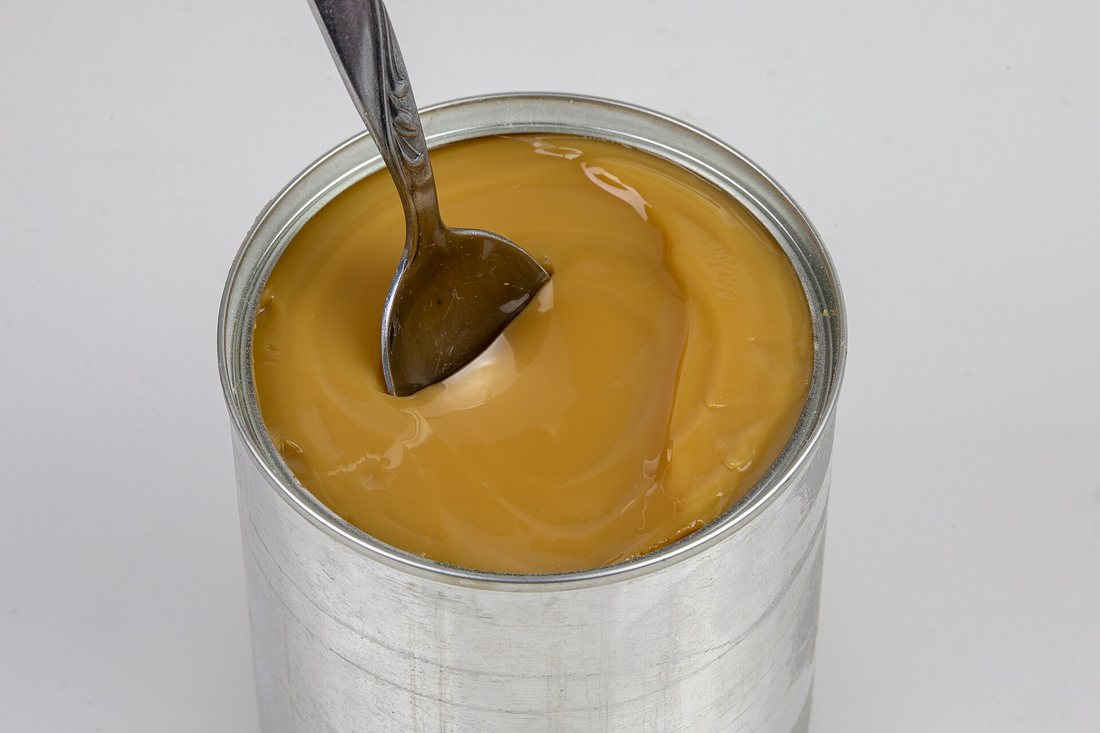
What changes, and why. Nothing is added and nothing leaves the can. Heat alone does it, through two browning reactions. The main one is the Maillard reaction, the same reaction that browns bread crust and roasting coffee: milk proteins react with the sugars. The other is caramelization of the sugar itself. Together they turn a plain, milky sweetness into something darker and more complicated.
| Time at a simmer | Color | Taste | Texture |
|---|---|---|---|
| Uncooked | Cream | Sweet, milky | Pourable |
| About 1½ hours | Pale tan | Butterscotch | A thick sauce |
| About 2½ hours | Caramel brown | Toffee and caramel, a little nutty | Spreadable |
| About 3½ hours | Deep brown | Dark caramel, a slight bitter edge | Stiff; holds its shape |
Those times are the usual home figures, not measurements; the Soviet custom was “about three hours.” A pressure cooker does it in 20 to 25 minutes for a light result and 40 to 45 for a dark one.
Why it began. The honest answer is that nobody knows. Dulce de leche itself is made the slow way, by simmering milk and sugar and stirring for an hour and a half to two hours until it thickens and browns, and its origin is told a dozen ways, none of them documented: Indonesia, the Philippines, Napoleon’s cook, an Argentine general’s maid. The can method is a shortcut to the same thing, and it cannot be older than canned condensed milk, which dates from the 1850s. Its appeal is plain. The milk has already been reduced and sweetened at the factory, so the only step left is the browning, and the sealed can does that with no stirring, no scorching and nothing to wash. That is a reasonable explanation, not a recorded history.
Doing it safely. A sealed can in boiling water is a pressure vessel.
- Keep the can completely covered with water for the whole time, by an inch or two, and top it up from a kettle. A can that boils dry can burst.
- Simmer, do not boil hard. Lay the can on its side so it rolls and heats evenly.
- Let it cool completely in the water before opening it. Opening a hot can sprays boiling caramel.
- Do not use a can with a pull-tab lid or a dent.
Safer ways to the same result: pour the condensed milk into a baking dish, cover it with foil, set it in a pan of hot water and bake at 425 °F for an hour or more, stirring once or twice; or cook it in a jar in a pressure cooker; or buy it. Canned dulce de leche and jars of cajeta are sold in most supermarkets with Latin American foods. (The can maker’s own guidance on heating a sealed can could not be read for this page.)
Where it goes in coffee.
- Stirred into hot coffee in place of sugar and cream: a spoonful melts into a caramel-and-milk coffee. Dark roasts suit it.
- In place of condensed milk in phin coffee, for a caramel version of cà phê sữa đá. Thin it first with a little hot coffee so it mixes.
- As a drizzle inside a clear cup before an iced coffee is poured.
- With a pinch of salt, the same idea as salted caramel.
- Beside the coffee: sandwiched between two shortbread cookies it is an alfajor, and it is the filling of a banoffee pie.
At the stall. A can cooked at home is home-prepared food, so a licensed booth cannot use it in drinks. Bought canned dulce de leche can be, and an unopened can needs no refrigeration. Whether a cookie filled with it qualifies as a cottage food is not addressed on MDARD’s list and would have to be asked.
Egg coffee
Cà phê trứng is strong coffee under a thick, sweet foam of egg yolk whipped with condensed milk. The Giảng café in Hanoi dates it to its founder, Nguyễn Văn Giảng, in 1946, when milk was scarce. That account comes from the family, and another telling says “the late 1940s”; no document from the time was found.

The recipe. Published versions agree on the parts and disagree on the proportions: one yolk whipped with a tablespoon of sugar and a tablespoon of condensed milk; or one yolk to two tablespoons of condensed milk. Whip until pale and thick enough to float, three to five minutes by hand, then spoon it over a small cup of strong hot coffee. In Hanoi the cup is often set in a bowl of hot water to keep it warm.
At a stall this is the hardest drink on the list.
- Pasteurized eggs are required by the Food Code for an egg-fortified drink that is not cooked. Pasteurized shell eggs, or pasteurized liquid yolk sold in cartons for food service, both qualify. Bring the carton.
- The yolk, and the whipped cream once made, need to be at 41 °F or colder. A bowl of egg cream on the table at air temperature is in neither safe range. Either whip each one to order, or work under a written four-hour procedure the health department has approved.
- A balloon whisk needs no power. A battery frother or cordless mixer would be faster; none was found tested on yolk and condensed milk, and whether pasteurized yolk whips to the same foam as raw is also not documented. Test it at home.
- MDARD “does not recommend serving undercooked foods at a temporary food event.” Whether a health department will allow egg coffee at a temporary stall at all has to be asked.
It is a drink nobody else in mid-Michigan sells at a market. It is also three to five minutes of whisking per cup. If it is approved, it is a special for slow markets and a headline for the shop, not an everyday item for a one-person stall.
Batch brew
A big manual dripper brewing straight into a vacuum airpot makes two litres at a time with no power. Coffee held in a sealed vacuum carafe was indistinguishable to coffee professionals at three hours from coffee held thirty minutes (Sampling has the study). Batch brew is the tasting coffee, and it is also the fastest cup on the menu: the house coffee, served in seconds, for the customer who does not want to wait.

A menu that one person can run
| Drink | Method | Why it is here |
|---|---|---|
| House coffee | Batch brew in an airpot | Fast, and it is the sample too |
| Single-origin pour-over | V60 or Kalita, two drippers | The showpiece; priced for its time |
| Cà phê sữa đá | 24 oz phin concentrate, assembled to order | The signature; nothing like it at a market nearby |
| Iced coffee | Flash-brewed over ice | See Iced Coffee and Ice |
| Honey coffee, hot or iced | House coffee or concentrate with honey syrup and milk | The drink only a beekeeper’s stall has |
| Egg coffee | Phin coffee, whipped yolk | Only if approved; a special |
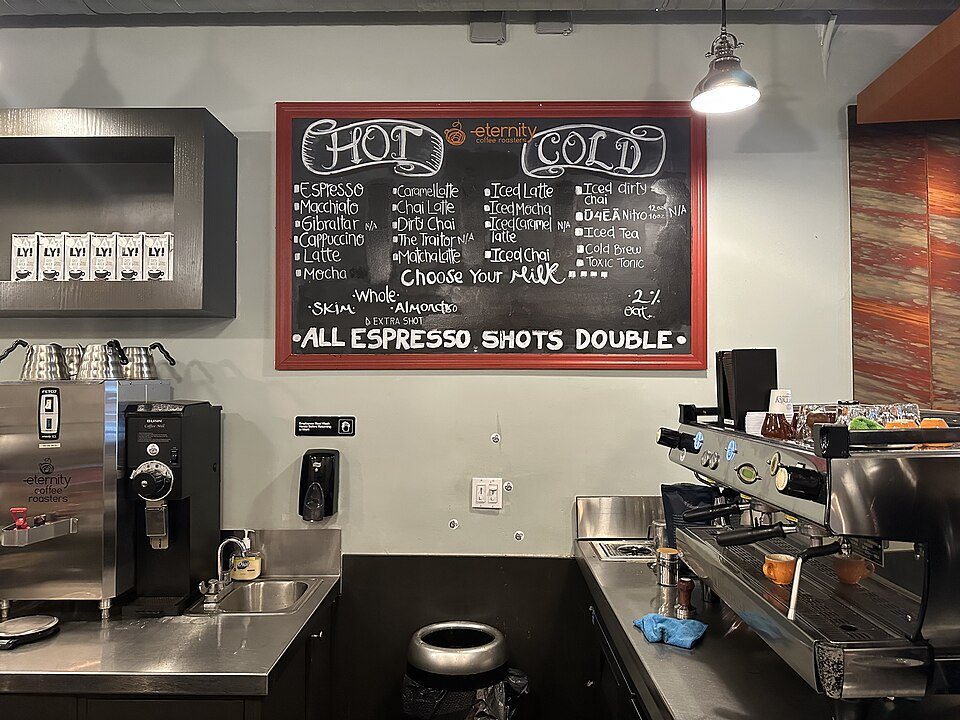
Five drinks from three brewing set-ups: an airpot, a pair of drippers and a large phin. Anything more than that and one person is brewing instead of selling.
Sources
- AeroPress, “How to use”; George Howell Coffee brew guides (V60, Kalita); PT’s Coffee Clever dripper guide.
- Nguyen Coffee Supply phin FAQ and phin size guide (vendor).
- 21 CFR 131.120 (sweetened condensed milk); foodservice case prices for condensed and filled milk.
- Vietnamese and English Wikipedia articles on Cà phê Giảng and egg coffee; The Kitchn and Home Grounds for recipe proportions (via search summaries).
- FDA, “What You Need to Know About Egg Safety”; Michigan Modified Food Code § 3-302.13; MDARD temporary food establishment guidance.
- Dave Lanning of Dave’s Coffee, quoted in the trade press, on pour-over time.
Comments (0)