Coffee · 9 of 21
Grinding: How Much, How Fine, Purging and Cleaning
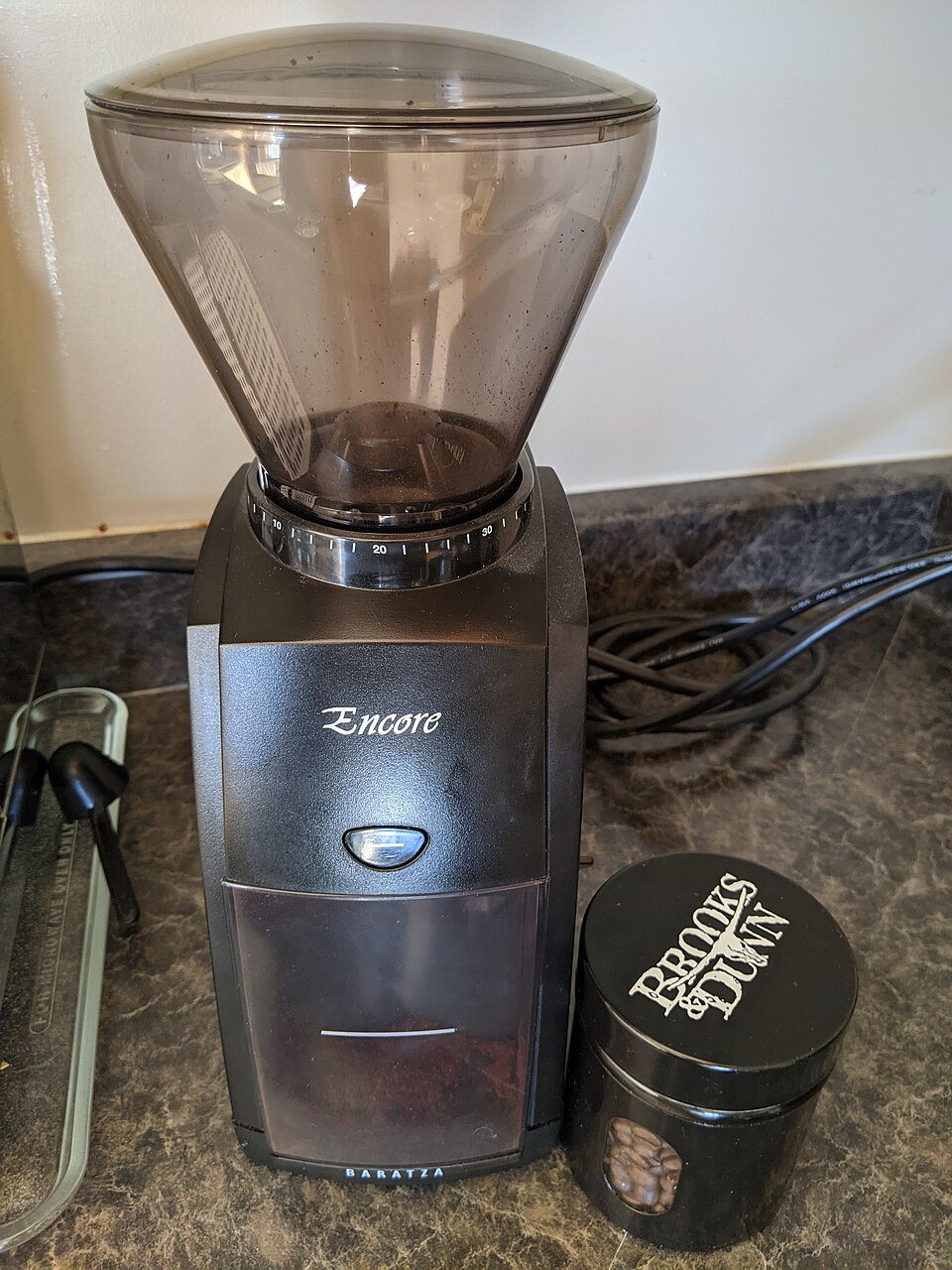
The grinder decides more about a cup than the brewer does, and it is the one piece of coffee equipment that needs looking after. I own a burr grinder. What I wanted to get straight was the housekeeping: how much to grind, what “purging” means, and how to clean the thing without ruining it. This page is that, from a hand grinder up to the big shop grinders, taken from the makers’ own manuals. Where two makers say opposite things, both are here.
Which grinder to buy is a separate question. Grinders covers that for a market stall and a shop, and Brewing has the case for a burr grinder over a blade and the grind size for each method.
Grind only what you need, right before you brew
Whole beans stay good for weeks. Ground coffee does not. The Specialty Coffee Association’s Peter Giuliano puts it this way: “the CO₂ that is lost over weeks in whole bean coffee is lost in minutes after coffee is ground,” and by that measure ground coffee “might be considered ‘fresh’ for about an hour after grinding.” That rule uses the escaping gas as a stand-in for freshness. It is not a taste test. The measurements behind it, including how much gas grinding releases in the first ninety seconds, are on Packaging Roasted Coffee. Every maker’s manual says the same thing in its own words, and the trade’s cupping standard requires coffee to be ground “as close to the cupping time as practical.”
Three habits follow from it:
- Weigh the beans, then grind all of them. This is “single dosing.” The dose is set by the scale, not by a timer, and nothing is left sitting ground. Ratios has the weights for every cup and pot size.
- Keep the beans out of the hopper. Breville’s manual is blunt: “Do not store beans in the bean hopper. Place them back in an airtight container.” A hopper is not airtight, and it sits on a warm motor.
- A hopper and a timer are for volume. A café grinding the same coffee all day keeps the hopper full on purpose. Mazzer warns that the first doses ground into an empty chamber “will have a significantly coarser grain size” than the ones that follow, which is one reason an espresso grinder is kept loaded.
How fine
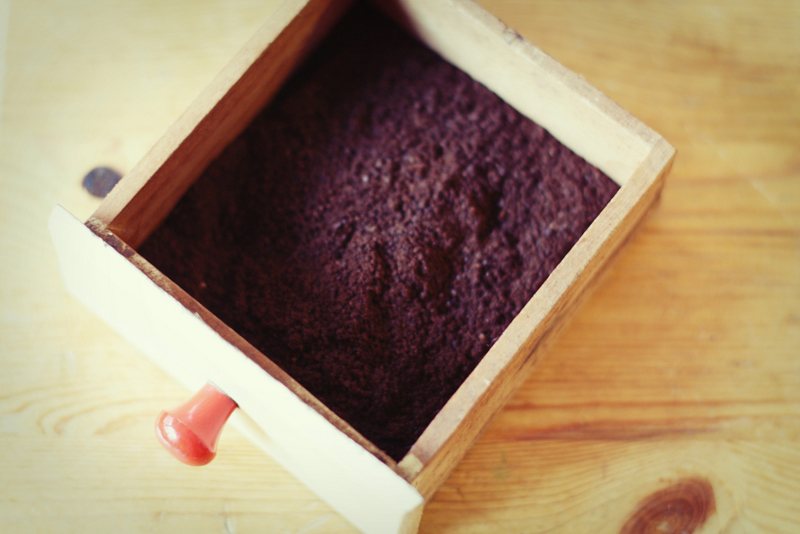
The size to aim for depends on how long the water and coffee are together. The table and the chart are on Brewing: powder for Turkish coffee, table salt for espresso, sand for pour-over, coarse sea salt for a French press. Two things are worth adding here.
The numbers on the dial mean nothing outside your own grinder. Baratza prints starting points for its Encore (espresso 8, AeroPress 12, V60 15, automatic drip 18, Chemex 20, French press 28, on a dial of 40) and then says the real size “will vary depending on many factors including: degree of roast (light vs. dark), freshness, humidity, type of bean, oil content.” Nobody publishes a standard table of grind sizes in microns for each brew method. The charts that give them are hobby sites’ compilations. The one official figure is for cupping: 70 to 75% of the grounds should pass a sieve with 850-micron holes, “slightly coarser than typically used for paper filter drip brewing.”
Change one thing at a time. Keep the dose, the water and the time the same and move only the grind. If the cup is sour and thin, go finer. If it is bitter and harsh, go coarser.
Turn the dial with the motor running. Baratza, Fellow and La Marzocco all say so. Baratza: “Partially ground coffee beans may remain between the burrs after the grinder is turned off. When making ANY grind adjustments, the grinder must be running.” Tightening a stopped grinder packs those fragments into the burrs.
Purging
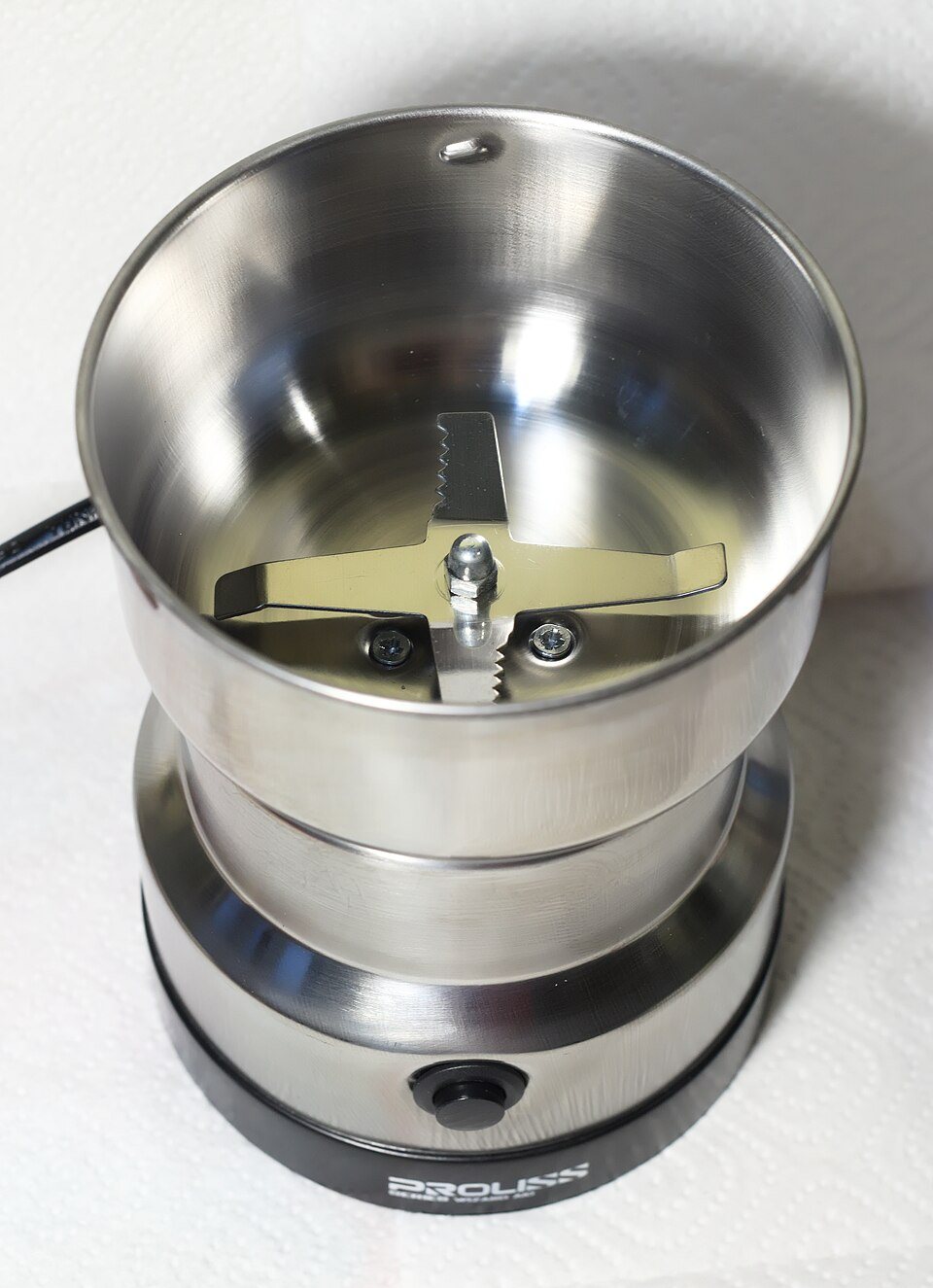
What it is. A grinder never gives back everything that went in. Some ground coffee stays behind: in the burrs, in the chamber around them, and in the chute. The next coffee pushes it out. So the first few grams out of a grinder are partly the last coffee, ground at the last setting, and as old as the last time the grinder ran. Purging is grinding a little coffee and throwing it away so that what follows is all the new coffee.
How much stays behind. Few makers print a figure. Fellow says its Ode Gen 2 holds back “as low as 0.1 g,” against about 1 g for the first model. A laboratory study by Joshua Méndez Harper and Christopher Hendon ground 10 g doses of a dark roast in a Mahlkönig EK43, a big shop grinder, and found about 12% of the dose stayed inside, more than a gram. What stays is mostly the finest particles, because static makes them cling.
When to purge:
- When the coffee changes. The trade’s cupping standard requires it: “grind a small amount of a new sample into a cup to displace coffee grounds from prior samples from the grinder.”
- After a big change of setting. Baratza: “Purge a small amount after major grind-size changes to clear transitional grounds.” La Marzocco, for espresso: “Purge a small amount of coffee (2-3 seconds worth) … You don’t want to be pulling a shot with coffee grounds that were set at your old” grind.
- First thing in the day. Breville: “Run grinder for 2 seconds to purge some coffee before each use, for maximum freshness.”
- After cleaning. The amounts are in the cleaning section below.
- After flavored coffee, which leaves its scent in the grinder. A purge alone may not be enough; see cleaning tablets below.
How much to purge. This is where the manuals stop. No maker prints a number of grams for changing from one coffee to another. What is in print:
| Who | When | How much |
|---|---|---|
| SCA cupping standard | Each new coffee | ”a small amount” |
| Baratza | After a major setting change | ”a small amount” |
| Breville | Before each use | 2 seconds of grinding |
| La Marzocco | After each espresso adjustment | ”2-3 seconds worth” |
| Baratza, Fellow | After cleaning tablets | about 30 g |
| Urnex | After its tablets, home grinder | about 70 g, “or until no visible specks” of the tablets remain |
| Mahlkönig, Ditting | After grinder cleaner | ”the same amount of coffee beans as the grinder cleaner used” |
A way to find your own number. This is my suggestion, not a maker’s instruction. Weigh 20 g of beans, grind them, and weigh what comes out. Do it three times. The shortfall is what your grinder holds. Purge about twice that when the coffee changes: for a low-retention home grinder or a hand grinder that is a few beans, and for a grinder that holds a gram, two or three grams.
Ways to leave less behind:
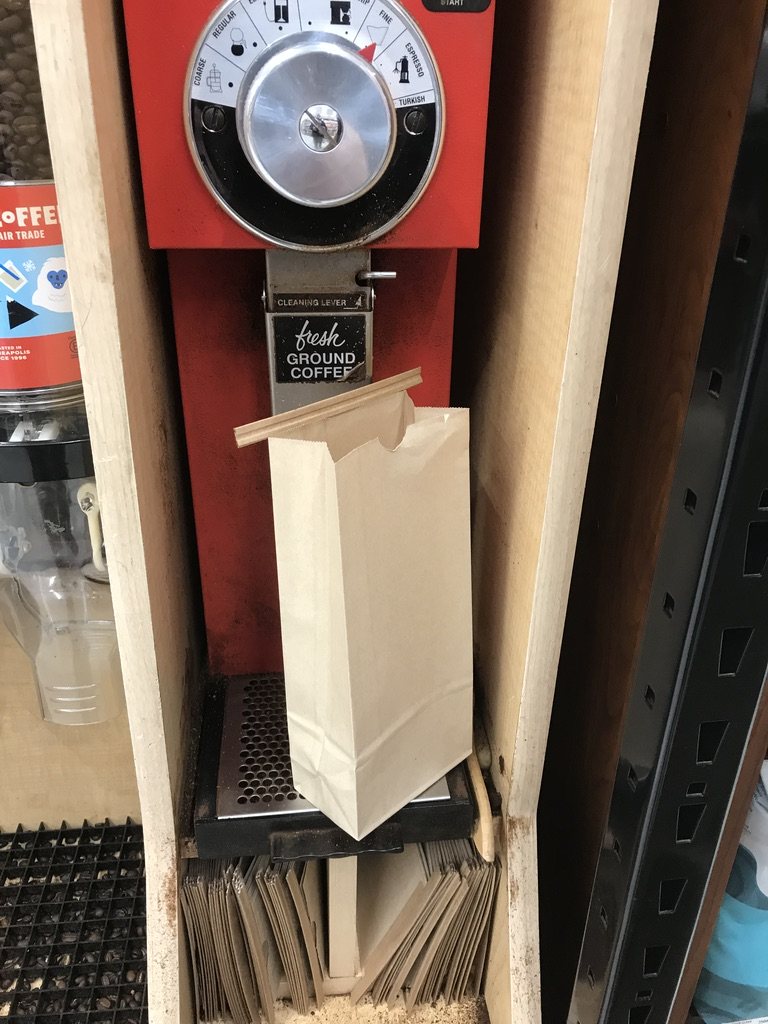
- Tap it. Shop grinders have a knocker on the spout for this. Mahlkönig’s manual says to “tap the knocker against the spout a few times to dislodge any remaining grind residue” after every grind.
- Run it empty for a few seconds after the beans are through.
- Brush the chute. Fellow found its Ode runs “about 60 cycles before it needs to be cleaned to operate at its best,” and that retention creeps up until then.
- A drop of water on the beans. This is the “Ross Droplet Technique”: a drop or a light spray of water on the weighed beans, stirred through before grinding. It cuts static. The laboratory study above measured it. Water at 10 microlitres per gram of coffee, which is a fifth of a millilitre on a 20 g dose, cut what stayed in the grinder from about 12% to about 2.5%. More water than about 50 microlitres per gram made things worse again. The authors add their own warning: “the inclusion of too much water may result in caking or corrosion in the grinder.” None of the grinder makers quoted on this page mentions the technique, for or against, and every maker of steel burrs says to keep water off them. A drop, on the beans, is the whole of it.
Grinding a customer’s bag. A shop or a stall that grinds bags to order runs one coffee after another through one grinder. There is no published guidance on purging between customers’ bags. The routine I would use, put together from the manuals: tap the knocker and run the grinder empty after each bag; start each new coffee with a small purge of that coffee into the waste; and keep flavored coffee out of that grinder altogether, or give it its own.
Cleaning
Why. Coffee is oily, and ground coffee left in a grinder goes stale where it sits. Mazzer: the ground coffee in the chamber and chutes “oxidises rapidly and the oil that is naturally released can make the beverage taste slightly rancid, if not removed on a regular basis.” Oil also makes fresh grounds stick, which is how a grinder clogs. Baratza says dark roasts need cleaning more often for that reason, and that light roasts are “less oily but can create more static and chaff.”
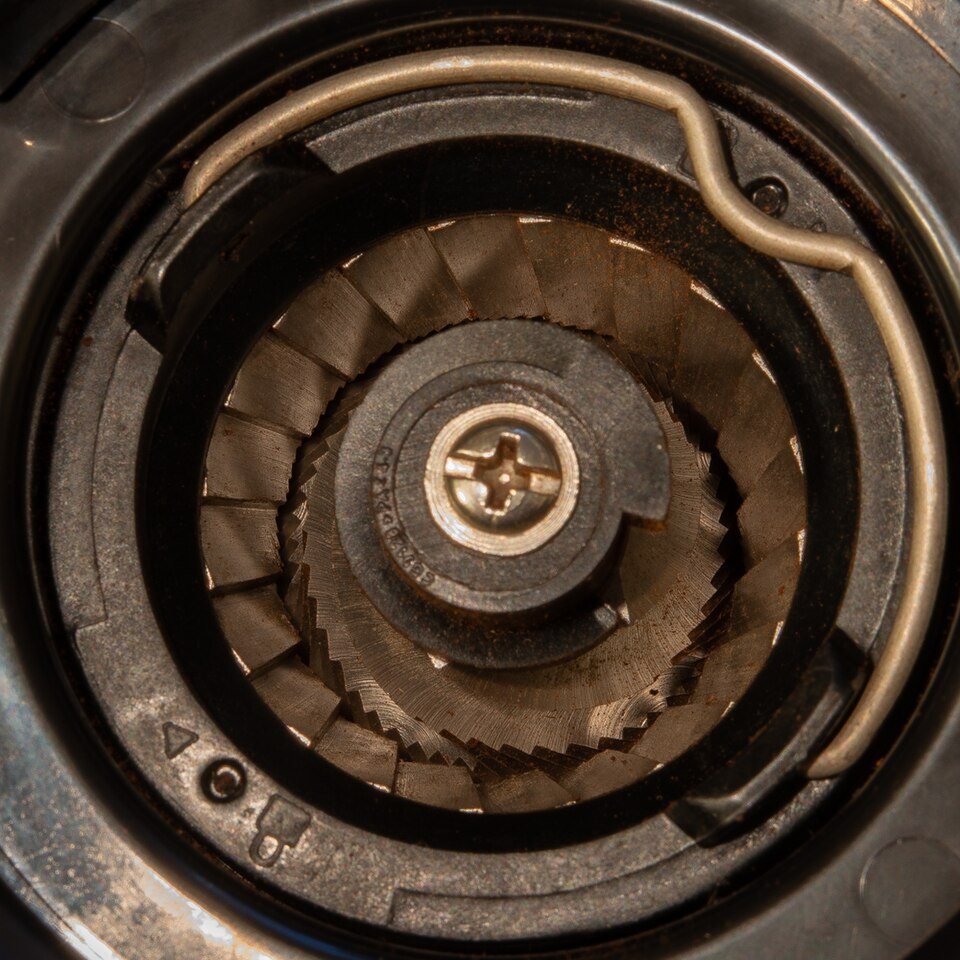
The rules nearly every maker agrees on
- Unplug it first. Every electric grinder’s manual opens its cleaning section with this.
- No water on steel burrs. Baratza: “Do NOT wash the burrs with water, or they will rust.” Fellow, 1Zpresso and Mazzer say the same in their own words.
- No dishwasher, for any part, on any grinder here but the glass jar of one Hario hand mill.
- Brush, don’t scrub. A stiff nylon or bristle brush; Baratza suggests a toothbrush. No metal tools, no abrasives.
- Wash the hopper and the grounds bin by hand in warm soapy water, and dry them completely before they go back.
- Put nothing through the grinder but coffee and grinder-cleaning tablets.
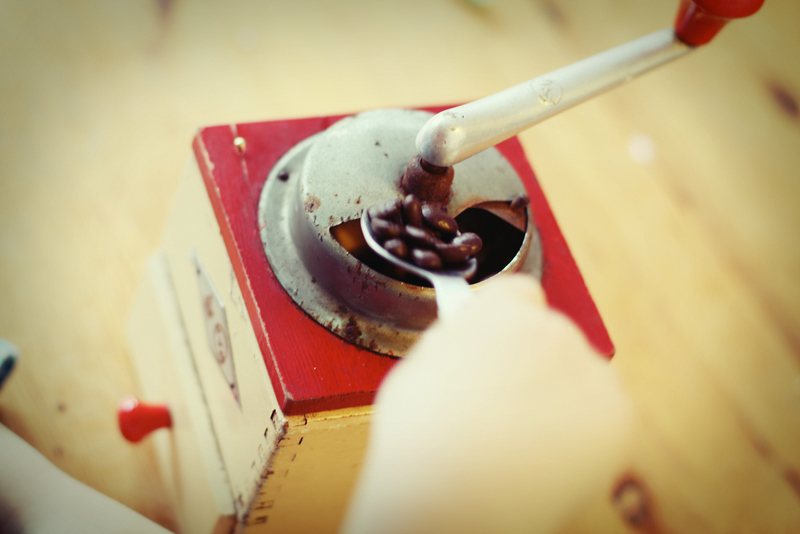
Hand grinders
| Grinder | How to clean it | How often |
|---|---|---|
| Comandante C40 | Brush the burr and the inside. “You can also blow coffee dust out of hard-to-reach areas using compressed air, a camera lens blower or good old lung-power!” Do not soak it or put it in a dishwasher. | ”Once a week (heavy use) or month (light use) is more than enough.” |
| Comandante C40 with carbon-steel “Ironheart” burrs | No water at all: “the carbon steel isn’t stainless.” | Weekly, if used daily |
| 1Zpresso, all models | ”A dry brush and an air blower.” “Do not clean the grinder with water.” | Take it apart and clean it thoroughly once a month |
| Timemore Chestnut | Brush only; its manual says not to wash it | Not stated |
| Hario Skerton (ceramic burrs) | The exception. Its manual says the mill can be washed in a weak, neutral detergent, rinsed and dried completely. | Not stated |
The pattern in that table is not a rule any maker states: ceramic burrs can be washed, and steel ones cannot.
Some hand grinders may be driven by a power tool. KINGrinder and 1Zpresso both say so, with cautions about speed and heat; see A Drill-Driven Grinder.
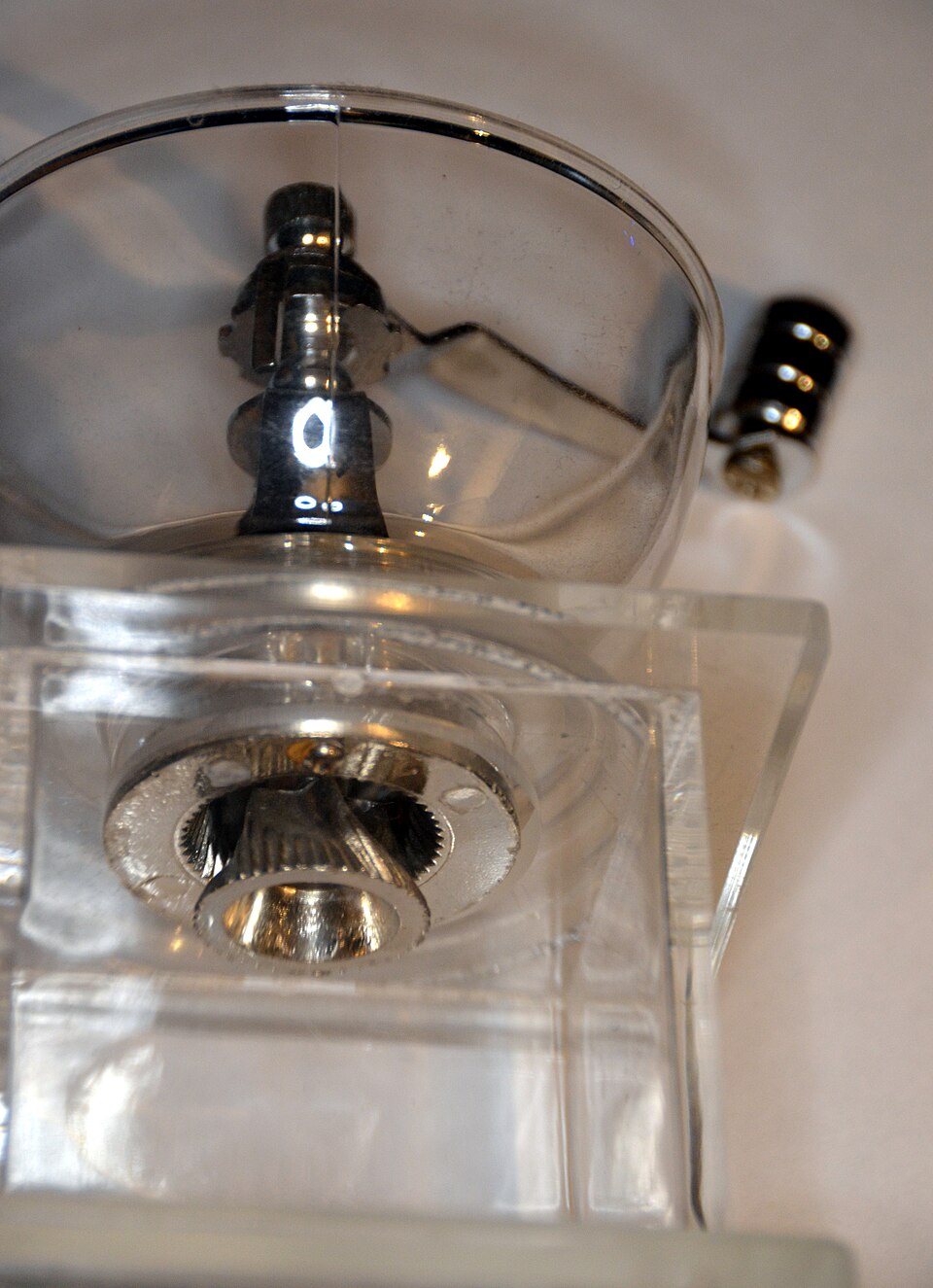
Home electric grinders
| Grinder | Routine | How often |
|---|---|---|
| Baratza Encore | Take off the hopper and the upper burr. Brush out the burrs, the chamber and the chute. Wash the hopper and bin. Tablets are optional, and “highly recommended if grinding primarily dark roast coffee.” | Baratza has given three answers: “at least every few months” (2019 manual), “about once a month” (2022 manual), and “every 4–6 weeks” (its current guide). |
| Baratza Forté | The same, with “a non-metal, bristle brush such as a toothbrush.” Tablets “do not take the place of the normal cleaning steps." | "At least once per month” in home use; more with dark, oily or flavored coffee |
| Fellow Ode Gen 2 | Run it empty for 10 seconds, unplug, then brush or use tablets. Brush the exit chute as well. | Burrs “at least every three months” if used daily; the chute about every 60 grinds |
| Breville Smart Grinder Pro | Empty the hopper, grind out what is left, unplug, wash the hopper and container, brush the burrs. | ”Regularly”; no interval printed |
| Eureka Mignon | Brush or dry cloth, and a vacuum cleaner or compressed air if needed; tablets for a complete clean. | Not stated |
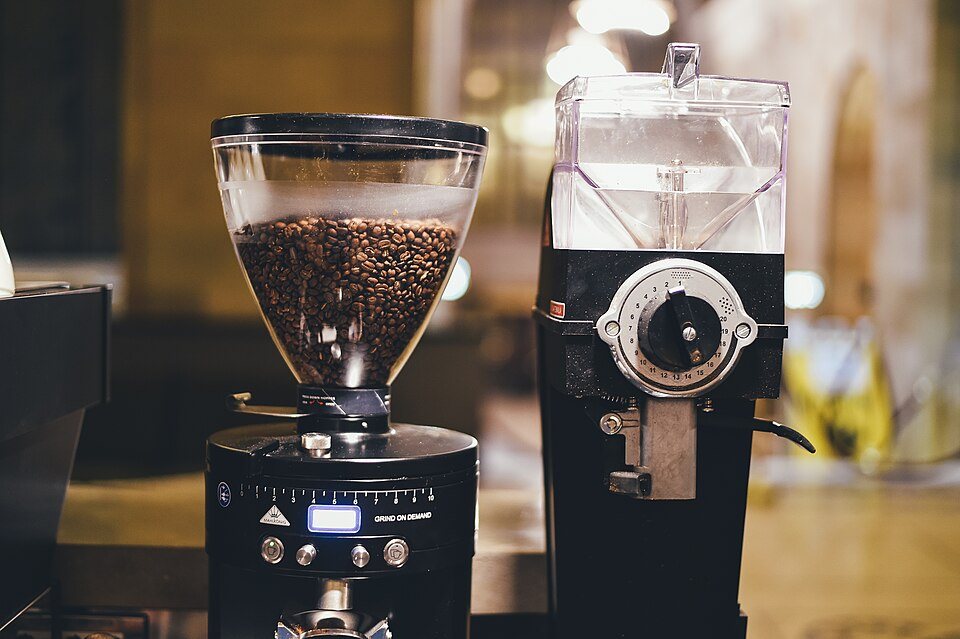
Shop grinders
| Grinder | Routine | How often |
|---|---|---|
| Mahlkönig EK43 | Hopper wiped with a damp cloth and dried. Burrs cleaned by grinding a grinder cleaner at the coarsest setting, then the same weight of coffee. Spout brushed with nylon bristles. | Hopper daily; burrs every 2 to 5 days |
| Ditting 807 | The same; the manual names Grindz as the cleaner. | Hopper daily; burrs and flapper every 2 to 5 days |
| Mazzer | ”Just a brush, or preferably even a vacuum cleaner or dry cloth. Never use water or other products such as cleaners or abrasives." | "Even daily or, once a week at the very least” |
Mahlkönig adds that its grinder “may only be maintained by trained personnel.” Opening the burr chamber of a shop grinder is a service job; brushing, wiping and running cleaner through it are the owner’s.
Cleaning tablets
Grinder-cleaning tablets are food-safe pellets shaped like coffee beans that are ground through the machine. They scrub the burrs and soak up oil without the grinder being taken apart. The usual brand is Urnex Grindz, which Fellow and Ditting name in their manuals.
| Dose of tablets | Then purge with coffee | Price | |
|---|---|---|---|
| Home grinder | One 35 g packet, on a medium setting | About 70 g, by Urnex; about 30 g, by Baratza and Fellow | $15.99 for three packets |
| Espresso grinder | One jar cap, 35 to 40 g | The same amount of coffee | $25.99 for a 430 g jar |
| Shop grinder | Two caps, 70 to 80 g | The same amount of coffee |
Urnex says an espresso grinder wants this once a week and a shop grinder once a month. The makers of the shop grinders say every two to five days. Baratza’s point is the one to keep: tablets are “supplementary to normal cleaning” and “cannot be used to clear a clog.” They do not replace the brush.
For flavored coffee tablets are the remedy the manuals give. Baratza: they “absorb the oils and scent left behind by the coffee.” Its own advice is simpler: “Avoid flavored beans as they are coated in oils.”
Rice, and oats
Not rice. It is the old home remedy, and the makers have turned against it. Baratza’s 2019 manual: “Rice is not a substitute for grinder cleaning tablets. It may damage components within the grinder.” Its current manual says to grind nothing but tablets. Urnex says rice “carries the risk of locking up the motor” and leaves “a starchy residue,” though Urnex sells the alternative.
Oats, in one maker’s hand grinders. 1Zpresso recommends it for odor and oil: “Simply grind rolled oats or instant oats, wipe with a damp (not wet) towel, and dry immediately.” That is one maker speaking about its own grinders. Baratza and Fellow would not allow it in theirs.
Where the makers disagree
| Question | Yes | No |
|---|---|---|
| Compressed air | Comandante, 1Zpresso, Eureka | Mahlkönig and Ditting: “Do not clean the grinder with compressed air” |
| A vacuum cleaner | Mazzer (“preferably”), Eureka | Nobody |
| Cleaning tablets | Mahlkönig, Ditting, Fellow, Baratza, Eureka | Mazzer’s guide says to use no “products such as cleaners” |
| Water on the burrs | Hario’s ceramic mill; Comandante’s stainless C60, rinsed and fully dried | Baratza, Fellow, 1Zpresso, Mazzer, Comandante’s carbon steel |
| Grinding a food to clean it | 1Zpresso: oats | Baratza, Fellow |
| Wasting coffee to “season” new burrs | Baratza’s 2019 manual (50 g); Mazzer (discard the first doses) | Baratza today: “You don’t need to season the burrs with sacrificial coffee” |
So the rule that matters is: read your own grinder’s manual, and do what it says. A habit that is right for a hand grinder can void the warranty on a shop grinder.
A schedule
| Every use | Weekly | Monthly | Every few months | |
|---|---|---|---|---|
| Hand grinder | Tap it out | Brush, if it is used daily | Take apart and brush | |
| Home electric | Run it empty a moment; keep beans out of the hopper | Brush the chute | Hopper off, burrs brushed, hopper and bin washed | Tablets, sooner with dark or flavored coffee |
| Shop grinder | Knock the spout; wipe the hopper at closing | Burrs cleaned every 2 to 5 days by the manual | Burrs checked for wear by a service technician |
How long burrs last
Burrs wear, and worn burrs crush more than they cut. Makers rate them by the weight of coffee ground:
| Grinder | Rated burr life |
|---|---|
| 1Zpresso hand grinders | 100 to 200 kg |
| Eureka Mignon | Check, and possibly replace, every 250 kg |
| Mazzer Mini | 300 to 400 kg |
| Mazzer Super Jolly | 400 kg; 1,200 kg with titanium-coated burrs |
| Mazzer Major, and its ZM filter grinder | 1,200 kg |
At home these numbers hardly matter. Twenty grams a day is about 7 kg a year, so a 100 kg burr set is rated for more than thirteen years. A stall grinding two dozen 12-ounce bags a week puts about 8 kg a week through its grinder, a little over 200 kg in a 26-week season, so a 300 kg burr set is a season or two. Mazzer says its burrs “cannot be resharpened,” and replacements for a home grinder are cheap: Baratza lists an Encore’s ring burr at $16.95 and its cone burr at $20 to $35.
How long a grinder may run
A motor that grinds one dose at a time never gets hot. Grinding bag after bag is different, and the manuals print limits:
| Grinder | Limit |
|---|---|
| Fellow Ode Gen 2 | ”Less than 90 seconds per time with a minimum of 90 seconds rest” |
| Eureka Mignon | No more than 160 g of coffee in one run |
| Ditting 807 | 180 seconds on, 300 seconds off; 450 g a minute; 48 kg in an eight-hour day |
| Mahlkönig EK43 | 40 minutes, then a cooling period; 1.5 kg a minute |
| Baratza Encore | No figure; a thermal cut-out stops the motor and resets when it cools |
This is the plainest difference between a home grinder and a shop grinder. A customer’s 12-ounce bag is 340 g, more than twice the Eureka’s limit for one run. A shop grinder at 1.5 kg a minute does it in about fourteen seconds.
What is not published
- A figure in grams, from any maker, for purging between two coffees.
- Any published guidance on purging between customers’ bags.
- A freely readable measured study of how a blade grinder’s particles compare with a burr grinder’s.
- A standard table of grind size in microns for each brewing method.
- A grinder maker’s view on adding a drop of water to the beans.
- How long the burrs of the Mahlkönig EK43 last; its manual sends the owner to a service partner.
Sources
- Specialty Coffee Association, Standard 102-2024, Sample Preparation and Tasting Mechanics, section 5.2.3; Peter Giuliano, “Coffee Decoded: What is ‘freshly roasted’ coffee?”
- Baratza: the Encore manual (December 2022) and its September 2019 edition; the Forté manual (August 2022); “Grinder Cleaning Essentials” and “Breaking In Your Grinder”; its parts pages for burr prices.
- Fellow, Ode Gen 2 safety manual and gear guide.
- Breville, Smart Grinder Pro instruction book (2020).
- Mahlkönig, EK43 original instructions (2026); Ditting, 807 instruction manual; Mazzer, “Burrs tutorial.”
- Comandante and 1Zpresso FAQs. The Hario, Timemore and Eureka lines are from copies of their manuals on a manuals site and are paraphrased, not quoted.
- Urnex, Grindz, its home packets and its FAQ. Prices read 2 October 2026.
- La Marzocco Home, “How to Dial In Your Grinder for Espresso” (2017).
- Méndez Harper and Hendon, “Chemical strategies to mitigate electrostatic charging during coffee grinding” (preprint, 2023); the peer-reviewed companion is in Matter 7 (2024), behind a paywall.
Comments (0)