Rillettes and Potted Meats
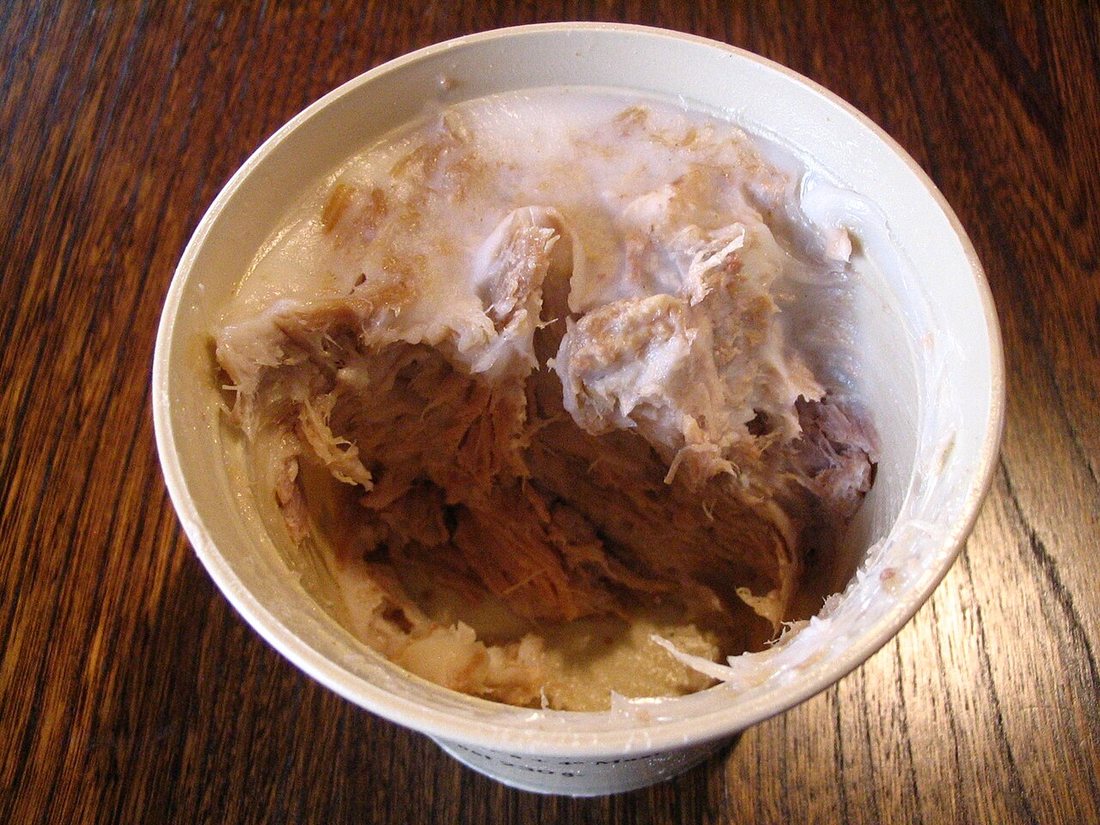
Rillettes and potted meats are the branch of the family that needs no mold, no forcemeat and no press. Meat is cooked slowly until it falls apart, shredded or pounded, packed tight into a pot, and sealed under its own fat or under butter. The method began as a way of keeping meat. The fat cap keeps out air, which slows drying and moldy spoilage. It does not make the pot safe from the organisms that matter most in a sealed, refrigerated meat. France’s 1993 listeriosis outbreak, which came from rillettes in unopened containers, is the case that proves it.
Rillettes: little strips
The word is a Touraine regional term. The TLFi traces it to Middle French rille, “a long strip of bacon” (rielle, 1480), a dialect form of reille, “plank, lath”, from Latin regula, “ruler, straight stick”. Rillettes and “ruler” share a root, and the name describes strips of pork belly.
The first citation the TLFi gives is Balzac, Le Lys dans la vallée (1836). His narrator, a schoolboy in Tours, remembers the midday meal: “Les célèbres rillettes et rillons de Tours formaient l’élément principal du repas … je n’avais jamais eu le bonheur de voir étendre pour moi cette brune confiture sur une tartine de pain.” The famous rillettes of Tours were the main thing at lunch, and he never had the luck of seeing “this brown jam” spread on bread for him. Balzac was from Tours. The phrase “brown pig jam” is also attributed to Rabelais, but both Wikipedias repeat it without a citation, so it is unconfirmed. French Wikipedia’s claim that rillettes were “born in the 15th century in Touraine” also has no source; the word rielle dated 1480 is not the same thing as the dish.
Tours and Le Mans
Two towns claim rillettes, and only one has protection.
| Rillettes de Tours | Rillettes du Mans | |
|---|---|---|
| Cooking | Uncovered, 5½–12 hours, round cast-iron pot | Braised covered |
| Result | Darker, golden-bronze, less viscous | Paler, more fibrous and creamy |
| Status | EU PGI since 15 November 2013 | None found |
The Tours PGI area is Indre-et-Loire plus bordering cantons, excluding the Sarthe, the department of Le Mans. Vouvray is the traditional wine. These specification details come from French Wikipedia’s summary, not from the register.
Le Mans is said to owe its fame to the railway. According to French Wikipedia, around 1910 a charcutier from Connerré, Albert Lhuissier, sold rillettes sandwiches to crews and passengers on the Paris–Brest line at the station stop, then jars to take home. No source beyond Wikipedia was found for the story.
Rillons
Rillons are the same cook with a different finish. French Wikipedia defines them as “cubes de viande de porc découennée”, cubes of pork with the rind removed, kept whole rather than shredded. The two were traditionally cooked together. Today rillons are usually cooked in pork fat alone and resemble pork confit. Shred the meat and it is rillettes; leave the cube and it is rillons.
A bought thing, even for Escoffier
Escoffier gives no recipe for either. Rillettes and rillons, he writes, “belong to the province of the pork-butcher, may be found on the market”, and are “served in their pots … always sent to the table very cold” (No. 378). Some of the “classic” preparations were bought-in items even in Escoffier’s kitchen.
The method
The general method is to season the meat, submerge it in fat and cook it slowly for four to ten hours, then rake it into shreds, blend it with the warm fat and pack it (en.wikipedia). Traditionally it is pork belly or shoulder, cubed and salted first. Two modern versions show the range:
- Confit style. Emma Macdonald (Great British Chefs) dry-salts 1 kg of pork belly for 24 hours, cooks it with 500 g back fat at 150 °C (300 °F) for 3–4 hours, shreds it and seals it under the fat.
- Simmered style. Camas Davis (Saveur) holds pork, fatback, white wine or cider, water and aromatics at a low simmer until the meat falls apart in a caramel-colored liquid, 4–4½ hours. The meat is bound with some of the fatty broth and capped with a thin layer of it. It is not PGI-compliant, which requires the Tours area and a cast-iron pot.
The keeping times these sources print differ widely, from Macdonald’s two weeks to Davis’s two months, which is one reason the safety section below matters.
Duck, goose and fish
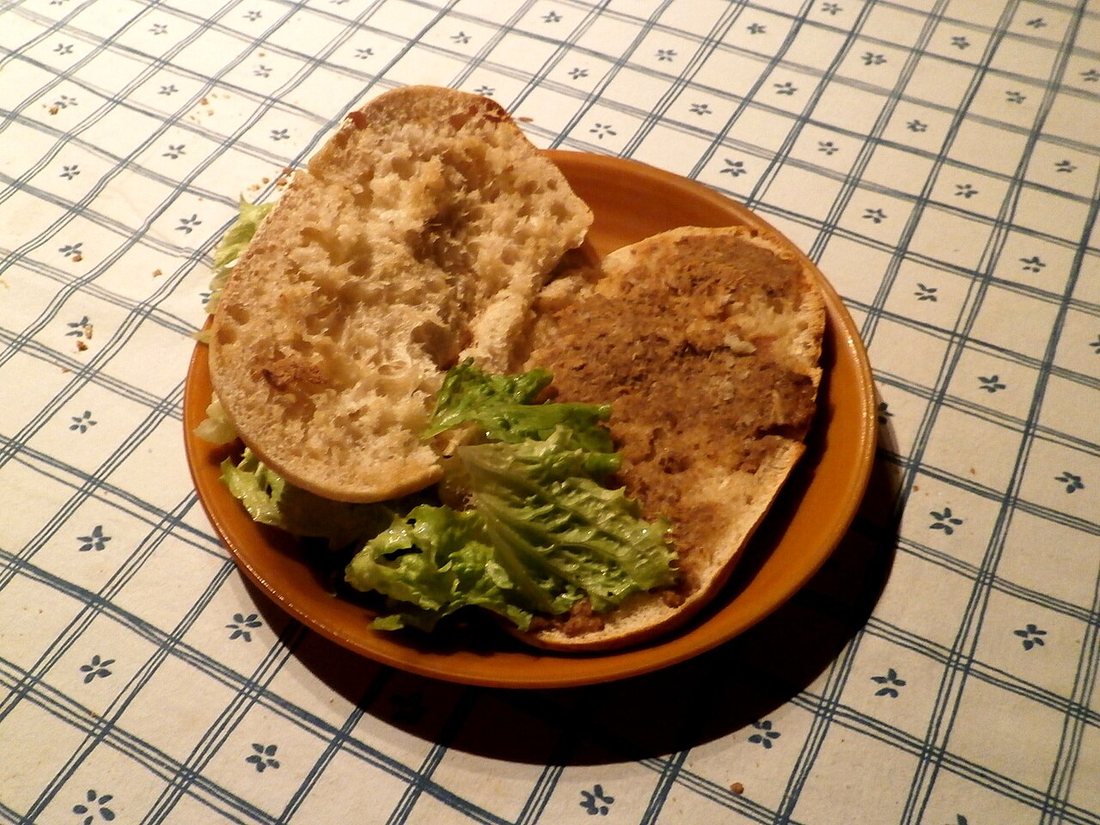
Rillettes are made from poultry, game and rabbit as well as pork (en.wikipedia). Duck and goose rillettes belong to the confit country of the French southwest. The collection’s duck version (Saveur) rubs duck legs with thyme, salt and ginger, braises them in stock, shreds the meat with Armagnac, parsley and orange zest, and seals it under melted duck fat.
Fish “rillettes” usually names a texture, not the method. Anchovy, tuna, pike and salmon versions exist (en.wikipedia). William Drabble’s salmon rillettes (Great British Chefs) keep a link to the fat: salmon is lightly cured, then poached in duck fat at 65 °C (149 °F) for 15–20 minutes. Anna Zepaltas’s version in the collection (Food & Wine) poaches the fish in court bouillon and binds it with butter and sour cream. Nothing is cooked in fat or sealed. That butter-bound flaked spread is the usual modern form.
British potted meats
English has had “potted” meat, “preserved in a pot”, since the 1640s (Etymonline). Hannah Glasse (1748) sets out the technique and, just as usefully, what went wrong with it.
- The seal. For potted pigeons or fowls, pour the clarified butter over the birds, “and let the Butter be near an Inch thick above the Birds”.
- The paste. For a cold tongue, beef or venison, pound it “in a Marble Mortar, with melted Butter, and two Anchovies, till the Meat is mellow and fine”, press it into pots and cover with clarified butter.
- The terrine by another name. A layered potted goose or turkey “will keep a great while, eats fine, and looks beautiful. When you cut it, it must be cut cross-ways down through, and looks very pretty.” It was sliced in cross-section like a terrine.
- The failure. Glasse prints a recipe “To save Potted Birds, that begin to be bad”: “I HAVE seen potted Birds which have come a great Way, and often smell so bad, that no body could bear the Smell for the Rankness of the Butter.” Her fix is to lift off the butter and plunge the birds in boiling water for half a minute. The butter seal failed often enough to need a recipe for rescuing it.
Mrs Beeton (1861) states the keeping rule outright. For potted beef, 2 lb of lean beef cooked 3½ hours in a closed jar standing in boiling water, then pounded with its gravy and clarified butter: “If much gravy is added to it, it will keep but a short time; on the contrary, if a large proportion of butter is used, it may be preserved for some time.” Water shortens the keeping time and fat lengthens it, the same logic as rillettes. Beeton also quotes an 1850s adulteration report on potted anchovies: “in six cases out of ten, the only portion of these preserved delicacies that contains anything indicative of anchovies, is the paper label”.
Potted shrimps
Beeton’s potted shrimps (No. 312) are 1 pint of shelled shrimps and ¼ lb butter with a blade of pounded mace, cayenne and a little nutmeg if liked. Heat the shrimps gradually in the butter, “but do not let it boil”. Pot them, and when cold “cover with melted butter, and carefully exclude the air.” The dish belongs to Lancashire and Morecambe Bay and is made with brown shrimp (Crangon crangon). The Ian Fleming connection (Scott’s, Mount Street) is an anecdote, not a documented fact. No protected status was found: potted shrimps do not appear on the list of UK protected food names consulted, and should not be described as a PGI without a primary check.
The collection’s version (Josh Eggleton, Great British Chefs) adds shallot, garlic and paprika and is served warm straight away. The traditional dish is chilled until the butter sets into a seal.
American potted meat and deviled ham
The William Underwood Company of Boston, founded in 1822, made the first canned deviled ham in 1868 and trademarked its devil logo in 1870. The company calls it “the oldest food trademark still in use in the United States”, which is the company’s own claim. In 1895–96 Underwood and MIT (Prescott and W. L. Underwood) worked out that spoilage spores die at 250 °F (121 °C) for 10 minutes in a retort, which laid scientific groundwork for canning. The canned “potted meat food product” is the industrial descendant of meat packed in a pot under fat. What makes it shelf-stable is the retort, not the fat.
Safety: what a fat cap does and does not do
- It keeps out air. That slows drying, oxidation and aerobic spoilage, which is all the old potting tradition asked of it.
- It is an anaerobic seal. Excluding air creates the conditions Clostridium botulinum needs, and its spores survive cooking at 100 °C (212 °F). Baldwin’s cook-chill limits for sealed, air-free packs exist because of cold-tolerant botulinum strains: below 2.5 °C (36.5 °F) for up to 90 days, below 3.3 °C (38 °F) for less than 31 days, below 5 °C (41 °F) for less than 10 days. Those limits apply to pasteurized food in a bag that is never opened, not to a crock that is dipped into.
- It does not stop Listeria. In France in 1993, 38 people fell ill between June and October, 31 of them in mother-and-newborn cases, and a particular brand of rillettes was the vehicle (odds ratio 18). “Microbiologic analysis of unopened plastic cans of rillettes confirmed” the link (J. Infect. Dis. 1998). The organism grows in the cold, after cooking, under the fat.
- Old keeping times are tradition, not tested practice. Michael Ruhlman writes that confit “can be kept in a cool dark cellar for two to three years”. That describes a practice that relied on heavy salting and cold cellars; the salt level it needed was not quantified in any source found, and no validated process supports it.
- Canned means commercially retorted. CDC tells pregnant women, newborns, people over 65 and the immunocompromised to avoid refrigerated pâtés and meat spreads, and to choose ones in sealed containers that need no refrigeration before opening. No tested home-canning process for pâté or rillettes could be confirmed.
The practical line: keep rillettes and potted meats refrigerated, and once a pot is opened, treat it like any cooked meat dish, which the FDA/FSIS chart gives 3–4 days. Macdonald’s rillettes say eat within 3 days of opening. More on Food Safety.
Recipes in the collection
- Pork Rillettes: Camas Davis, simmered
- Duck Rillettes
- Salmon Rillettes: Anna Zepaltas, butter-bound, a rillettes by texture
- Potted Shrimp with Mace Butter: Josh Eggleton
- Potted Meat and Crackers: the canned American descendant
- Chopped Chicken Liver: a schmaltz-bound cousin
Comments (0)