Michigan: A Soft-Wheat State
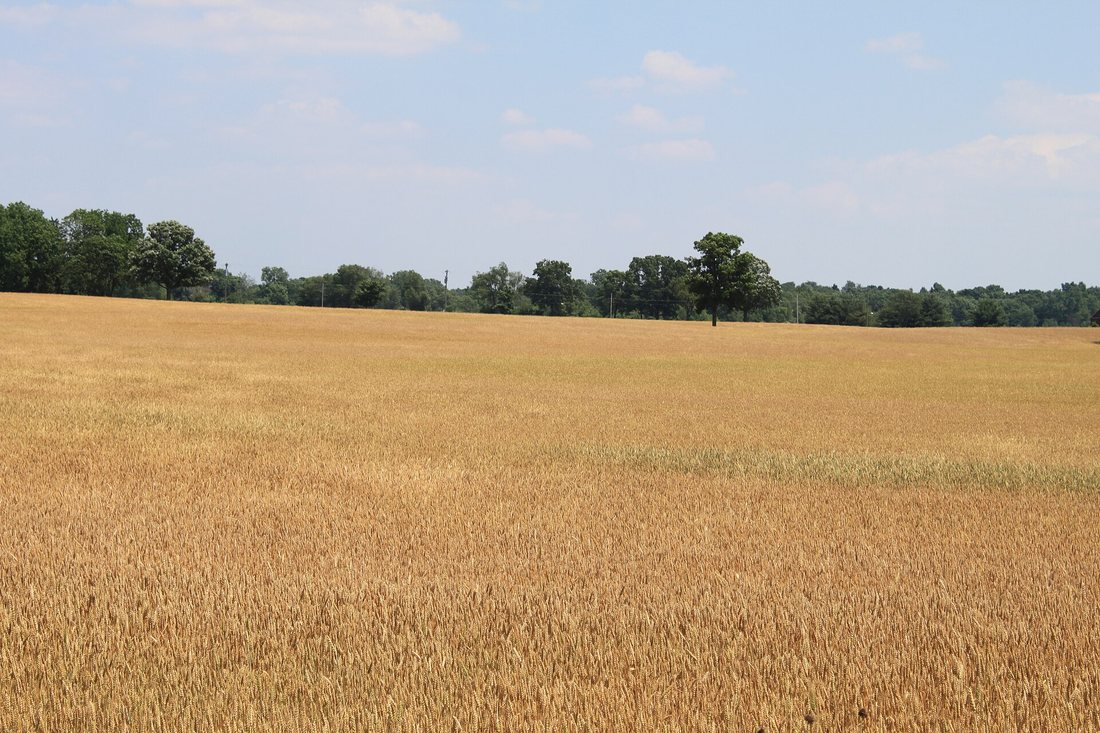
Michigan grows a great deal of wheat, and almost none of it is bread wheat. The state’s crop is soft winter wheat, and it goes into cookies, crackers, cake mixes and breakfast cereal. A Michigan kitchen’s bag of bread flour was almost certainly grown on the Plains or the Northern prairies.
What the state grows
USDA’s Small Grains 2025 Summary gives Michigan’s winter wheat for 2025 as 530,000 acres planted, 490,000 harvested, 90.0 bushels an acre and 44.1 million bushels. The yield was a state record. The previous two crops were 32.6 million bushels (2024) and 46.5 million (2023).
The class split is the important part. Of Michigan’s 2025 winter wheat, 70 per cent was soft red and 30 per cent soft white; hard red was zero, and there was no hard white at all. That comes to roughly 31 million bushels of soft red and 13 million of soft white. Michigan’s soft white alone was about 5.7 per cent of the whole US soft-white winter crop — and nearly all of the soft white grown east of the Rockies.
The Michigan Wheat Program counts nearly 8,000 wheat farmers. The state also grew about 1.5 million bushels of oats and 228,000 bushels of barley in 2025. Rye is not reported separately, and NASS publishes no Michigan figure for buckwheat or food corn.
Where it goes
Most Michigan wheat is “milled locally and baked into consumer foodstuffs in the Great Lakes region,” in the Michigan Wheat Program’s words. Its list of buyers reads like a breakfast table: Chelsea Milling (Jiffy), General Mills, Kellogg, King Milling, Knappen Milling, Kraft, Mennel, Mondelez (Nabisco), Post and Star of the West.
- King Milling, in West Michigan, is described as the state’s largest flour producer. Roughly 40 per cent of its wheat — the soft wheat for pastries and cookies — is Michigan-grown; the harder bread and pizza wheat comes from Kansas and the Dakotas.
- Star of the West has milled soft white winter wheat since 1870, for cookies, crackers, pastries and cereal flakes.
- Chelsea Milling, the maker of Jiffy mixes, stores its own wheat, mills it, and uses the flour in its mixes.
The through-line: Michigan’s wheat is the soft, low-protein kind that the Wheat Classes page assigns to cakes, cookies, crackers and pastry. The state’s contribution to American flour is tenderness, not chew.
Buying Michigan grain and flour
For a home baker or a would-be home miller, locally grown soft wheat is easy to find in Michigan and locally grown hard wheat is rare. Sources that sell to the public, checked on 30 September 2026:
| Seller | Where | What |
|---|---|---|
| Shady Side Farm | Ottawa County | Certified-organic heirloom einkorn and spelt — berries, stone-ground flour and bran — plus heirloom corn meal and grits; online shop |
| Country Life Natural Foods | Allegan County | Bulk wheat berries: hard white (organic), hard red winter, soft white (organic), spelt, Kamut, oat groats, hulled barley |
| Westwind Farm | Genesee County | Flour milled on the farm from certified-organic Michigan grain, several types and grades; CSA and seasonal pickup |
| Zingerman’s Bakehouse | Ann Arbor | Soft white whole-wheat flour milled from organic Michigan wheat grown in Tuscola County |
| Findlay’s Organics | Michigan | Organically grown Michigan soft red and soft white wheat berries in 25-lb bags |
Two further notes. Grand Traverse Culinary Oils & Flours, which sold stone-ground flour from northern-Michigan wheat — including hard red spring wheat from the Leelanau Peninsula, the one Michigan-grown bread wheat found — appears to have stopped trading: its website no longer resolves (checked 30 September 2026), and the site owner understands it has closed. It is listed here for the record, not as a place to buy. And Janie’s Mill, a stone mill in Illinois, sells its organic flours through several Michigan shops.
The honest picture for a Michigan home miller: Michigan berries will make superb pastry flour, cookie flour and soft whole-wheat flour. For yeast bread, the hard berries will mostly come from the Plains or the North. See Home Milling.
In this section: History · The science · Milling · Wheat classes · Reading the label · Heritage wheats · Michigan · Home milling · Rye, barley, oats · Corn, rice, starches · Buckwheat and small grains · Legume, nut, seed · Gluten-free · Safety and storage · Corrections
Comments (0)