Corrections: What the Research Overturned
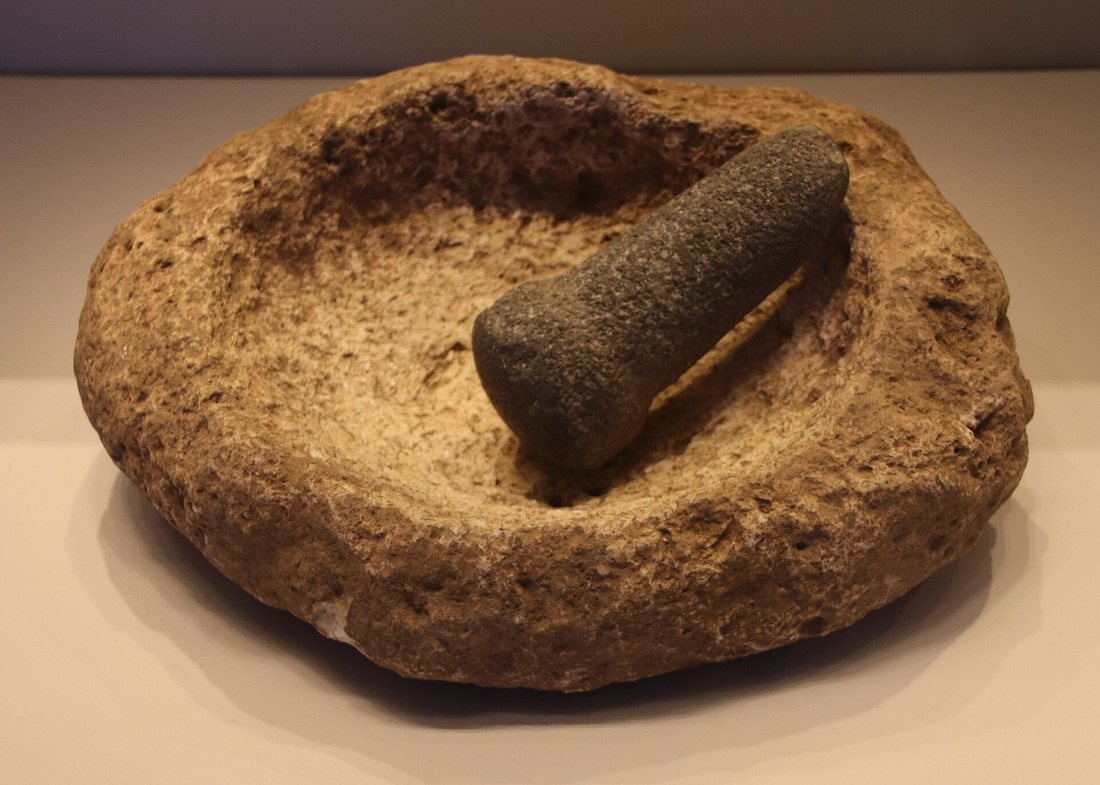
Flour is sold with more confident claims than almost any ingredient — about protein, purity, freshness and health. This page collects what the research for this section found: claims that are false, claims true only in a narrower form, and claims that could not be confirmed. None of the last group is stated as fact anywhere in the section.
False
| The claim | What the record shows | Where |
|---|---|---|
| Tipo 00 is a high-protein flour. | Italian law gives 00 the lowest protein minimum (9.00%) of the five soft-wheat types; it grades ash, not protein. | Reading the label |
| 00 means the finest grind. | The decree allows 00 to be granular (“granito”). | Reading the label |
| Bread, cake and all-purpose flour are legal grades. | US law has no standard for any of them; they are trade names. | Wheat classes |
| Ancient wheats have less gluten. | Common wheat had the lowest gluten in a direct comparison (Geisslitz 2019); ancient wheats differ in the ratio of gliadin to glutenin. | Heritage wheats |
| Modern wheat was bred to carry more gluten. | Sixty varieties from 1891–2010 grown side by side: gluten content constant (Pronin 2020). | Heritage wheats |
| Einkorn is safe for coeliacs. | A 60-day trial found it toxic to coeliac patients (Zanini 2015). | Heritage wheats |
| Stone-ground flour is more nutritious. | No compositional difference from fully recombined roller-milled flour (Carcea 2019, 2022); stone flour has more damaged starch. | Milling |
| Fresh flour loses 40% of its nutrients in a day and 90% in three. | No source exists. The one controlled study measured 24–50% vitamin E loss over 297 days. | Home milling |
| Heating flour to 160 °F makes it safe to eat raw. | E. coli in dry flour survived 60 minutes at 70 °C; the FDA says not to heat-treat flour at home. | Safety and storage |
| Baking flour at 350 °F for 5 minutes makes it safe. | Measured D-values give about a 3-log reduction, short of a 5-log kill step. | Safety and storage |
| Old flour is safe because bacteria die off. | Pathogenic E. coli survived at least nine months in flour at room temperature. | Safety and storage |
| Bleaching sterilises flour. | Bleaching is not a kill step. | Safety and storage |
| Weevils live in flour. | Weevils eat whole grain; flour pests are mostly flour beetles and meal moths. | Safety and storage |
| Agene bleach caused widespread nerve disease in people. | It caused fits in dogs; TIME reported “no bad effects on 20 human guinea pigs.” The 1949 ban was precautionary. | History |
| Potassium bromate is a bleaching agent. | It is a dough strengthener and does not whiten. | History |
| California listed bromate under Prop 65 in 1991. | The OEHHA list gives 1 January 1990. | History |
| The middlings purifier was invented in Minneapolis. | It was French (Perrigault, 1860), brought to Minneapolis in 1871. | History |
| Glutinous rice contains gluten. | ”Glutinous” means glue-like; the stickiness is amylopectin. | Corn, rice and starches |
| Buckwheat is a kind of wheat. | It is in the knotweed family, Polygonaceae. | Buckwheat |
| Rye is fine for coeliacs because it makes no gluten network. | For coeliac purposes rye counts as gluten (Codex). | Rye, barley, oats |
| Tiger nut is a nut. | It is a sedge tuber. | Legume, nut, seed |
True, but narrower
- “Humans made flour 30,000 years ago.” The starch on those stones was mostly cattail and fern root. The oldest grinding of wild cereal is Ohalo II, about 23,000 years ago. (History)
- “00 is pizza flour.” The Neapolitan rules allow 00 or 0; what they actually specify is dough strength and protein. (Reading the label)
- “Enrichment ended pellagra.” It did much of the work; so did the boll weevil, which pushed the South from cotton into food crops. (History)
- “Rye has to be sourdough.” Rye needs acid to slow its amylase; a commercial acidifier also works. (Rye, barley, oats)
- “Oats contain gluten.” Oat avenin troubles few coeliacs; the problem is contamination, which once ran to 1,807 ppm in a major brand. (Rye, barley, oats)
- “Soba is buckwheat noodles.” Dried soba with 30% or more buckwheat need not state its ratio, so a packet may be mostly wheat. (Buckwheat)
- “Bran cuts the gluten.” Bran weakens a loaf, but mostly by diluting the gluten, competing for water and interfering chemically — not by slicing. (Home milling)
- “Home-milled flour is more nutritious than store flour.” It gains fibre and minerals, and loses most of the folic acid added to enriched flour by law. (Home milling)
- “Stored wheat lasts thirty years.” In sealed, low-oxygen cans, yes (BYU). Not in a paper sack. (Home milling)
- “Cornflour thickens custard.” In Britain, where cornflour means cornstarch. (Corn, rice and starches)
- “Arrowroot” on the label. It is often tapioca. (Corn, rice and starches)
- “Naturally gluten-free flours are safe for coeliacs.” Nearly a third of those tested were at or above 20 ppm. (Gluten-free)
Legend, folklore, or not confirmed
- Mennonites brought Turkey Red wheat to Kansas in 1874. No 1870s evidence was found; the story first appears in print around 1927, and the large imports came in 1885–86. (Heritage wheats)
- A cow ate all but a few heads of David Fife’s first Red Fife. Absent from the Dictionary of Canadian Biography. (Heritage wheats)
- KAMUT came from 36 kernels in an Egyptian tomb. The brand’s origin story; not verified. (Heritage wheats)
- Ergot caused the Salem witch trials. A 1976 hypothesis, rebutted in Science the same year. (Rye, barley, oats)
- Ergot caused the Pont-Saint-Esprit poisoning of 1951. The majority view, but still contested. (Rye, barley, oats)
- Cortés banned amaranth on pain of death. No primary source was found. (Buckwheat)
- Farinata was invented after the Battle of Meloria in 1284. A legend without a documentary source. (Legume, nut, seed)
- Cool milling preserves nutrients. No study found at home-mill temperatures. (Home milling)
- Fresh-milled flour must rest two to three weeks — or must be used within the hour. The evidence is genuinely unsettled. (Home milling)
- Bromate is already banned in New York and Illinois. The Illinois bill died; the New York bill had no signature found. (History)
- Rotary querns were six to twelve times more efficient than saddle querns. No source found. (History)
In this section: History · The science · Milling · Wheat classes · Reading the label · Heritage wheats · Michigan · Home milling · Rye, barley, oats · Corn, rice, starches · Buckwheat and small grains · Legume, nut, seed · Gluten-free · Safety and storage · Corrections
Comments (0)