Peppers and Hot Sauce · 13 of 14
Africa, the Middle East and the Americas
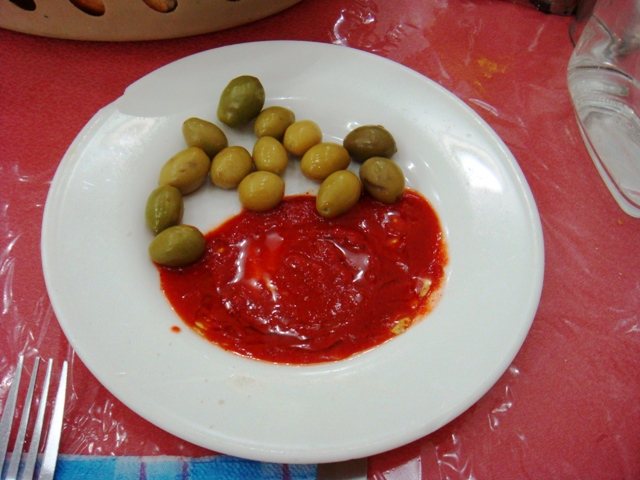
Outside Asia, the chile sauces of the world sort less by country than by what holds them together. Harissa and zhug are pounded pastes. Piri-piri is a chile-garlic sauce on an oil or acid base. Caribbean pepper sauce and Southern pepper vinegar are vinegar sauces. Salsa macha is dried chiles in oil. Valentina and Cholula are bottled vinegar sauces that never ferment. Each of those structures carries its own storage rule, and several of the best-known recipes in English get that rule wrong or leave it out.
The other recurring problem is origin. Two of the sauces on this page have origin stories repeated as fact that the evidence does not support, and one has an origin story that sounds like legend and turns out to be confirmed.
Harissa (Tunisia)
UNESCO. “Harissa, knowledge, skills and culinary and social practices” was inscribed by Tunisia on UNESCO’s Representative List in 2022 (17.COM, decision 17.COM 7.b.30), file no. 01710. A URL ending in 01719 circulates as the harissa file; that number belongs to Songkran.
UNESCO’s own description of the method is worth reading against any English recipe. The peppers are sun-dried, split, stalked and deseeded, washed, then ground and seasoned with salt, garlic and coriander, “using a pestle and mortar or a manual meat mincer.” The work is “usually prepared by women in a convivial and festive family or neighbourhood setting,” and the paste is stored in glass or pottery.
Caraway and cumin, which most English recipes treat as defining, do not appear in UNESCO’s description. That does not make them wrong, but it does mean caraway cannot be called essential on UNESCO’s authority.
The name comes from Arabic harasa, “to pound, to break into pieces,” and the pounding tool is the mehraz (Wikipedia). Cap Bon and Nabeul are reported as the heart of production. How chiles reached Tunisia is not settled; Wikipedia’s own hedge is “presumably during the Spanish occupation of Hafsid Tunisia between 1535 and 1574.”
The recipe in the collection is Diana Henry’s (BBC Good Food, 2019): toasted coriander, caraway and cumin; soaked dried guajillos and fresh red chiles; garlic, fresh coriander, lemon and olive oil, jarred under oil and kept chilled, up to two weeks. It is a good recipe and not a Tunisian one: Mexican guajillo stands in for Tunisian sun-dried peppers, fresh coriander and lemon are not in UNESCO’s description, salt appears in the method but not the ingredient list, and the optional chipotle paste has no quantity. No Tunisian-authored recipe was reached for this section.
Zhug (Yemen)
The name means “pounded.” The Yemeni Arabic sahawiq (سحاوق) comes from a root meaning “to pestle or crush” and is, as Wikipedia puts it, “semantically equivalent to pesto.” Zhug or s’khug is the Yemenite-Jewish and Israeli form; Kenji López-Alt also gives s’chug and s’rug. It is also called mabooj and bisbaas elsewhere on the Arabian Peninsula.
It comes in colors. In Yemen, by report: sahawiq akhdar (green), ahmar (red), bel-jiben (with cheese) and wazif (with dried baby sardines), and it is a main ingredient of the stew saltah. In Israel: skhug yarok (green), adom (red) and khum (brown, with tomato), and it is standard at falafel and shawarma stands. How zhug traveled to Israel was not sourced for this section and is left out.
The recipe is López-Alt’s (Serious Eats, 2016), pounded in a mortar: coriander, cumin, black pepper and optional cardamom; garlic, Thai bird chiles (or dried árbol) and salt to a paste; then parsley and cilantro a handful at a time, until no piece is larger than ⅛ inch (3 mm); then olive oil, pounded in to emulsify. He prefers bird chiles to “the more bitter, grassy flavor of the jalapeños that many recipes call for,” and notes that the salt “mainly acts as an abrasive.”
The storage figure contradicts itself. The recipe card says “refrigerator for several weeks”; the article text says “It should last up to a week in the fridge.” For a sauce of raw garlic and fresh herbs in oil, use the shorter figure, and keep it cold. Oil does not preserve it (see Safety).
Piri-piri and peri-peri
The word. Swahili pilipili means “pepper.” Variants include pili pili (Democratic Republic of the Congo), peri peri (Malawi, and in English through South Africa) and piri-piri (Portugal and Mozambique). The Oxford Dictionary of English, as cited by Wikipedia, traces it ultimately to the word for “pepper” in Ronga, a language of southern Mozambique. The popular gloss “pepper pepper” (as in a 2026 NYT recipe headnote) reads too much into a reduplicated word that itself means “pepper.”
The pepper is a C. frutescens cultivar, the “African bird’s eye,” descended from the malagueta. Like every chile, it is American in origin; a Food & Wine recipe notes that Brazilian malagueta and piri-piri “are often used interchangeably.”
The sauce’s origin is not established. The common claim, repeated in that same NYT headnote, is that peri-peri chicken “can trace its origins to Mozambique.” Wikipedia’s article states the evidence more carefully: “Given the lack of reliable sources that it was specifically mixed in Mozambique, it seems impossible to say more than the sauce was originally produced within the Portuguese Empire.” What can be said is Portuguese Empire, not Mozambique specifically. The core is chile and garlic on an oily or acidic base; whisky, citrus, bay and paprika are common additions.
Nando’s, the chain that carried peri-peri worldwide, was founded in 1987 in Rosettenville, Johannesburg, by the Portuguese-born Fernando Duarte and the South African Robert Brozin (Wikipedia).
The recipe is Kiano Moju’s peri peri sauce (NYT Cooking, 2026), a component of a roast-chicken dish: Fresno chiles, garlic, lemon zest and juice, oregano, smoked paprika, cayenne and olive oil, used as a marinade for 30 minutes at room temperature or up to 8 hours refrigerated before roasting at 450 °F (232 °C). Fresnos stand in for African bird’s eye, and the salt is given only in the method.
Caribbean Scotch bonnet pepper sauce
The Scotch bonnet is a C. chinense cultivar “named for its supposed resemblance to a Scottish tam o’ shanter bonnet,” also called Bonney pepper and Caribbean red pepper (Wikipedia). The species name is a misnomer explained on The Pepper.
Pepper sauce is a table institution. Korsha Wilson, writing in the New York Times (2024): “Throughout the English and French-speaking Caribbean, homemade pepper sauce in glass jars or plastic bottles are an important part of the tablescape… From island to island, and even household to household, the recipe varies, but Scotch bonnets… are a must.” Bajan pepper sauce is described as mustard-and-Scotch-bonnet based, and the mustard is the Barbados marker. No Barbados-specific or Jamaican-authored recipe was reached for this section.
The recipe is Lesley Enston’s, published with Wilson’s piece: 15 Scotch bonnets with seeds, optional seasoning peppers, a whole head of garlic, culantro (Eryngium foetidum, “not to be confused with cilantro”), cider vinegar, lime, whole-grain mustard, salt and ginger, processed until “still a touch chunky like a smoother chutney.” The source says to keep it in the refrigerator “to infinity.”
“To infinity” is not a shelf life. This is a raw, unheated sauce of garlic, herbs and vinegar with no measured acidity. Refrigerate it, discard it if it smells or looks off (the source’s own advice), and do not treat it as shelf-stable. The only tested route to a shelf-stable pepper sauce is a tested canning process (see Vinegar and Cooked Sauces). For a fermented Scotch bonnet or habanero sauce, see Fermented Hot Sauce.
Mexico: salsa macha, Valentina and Cholula
Salsa macha is dried chiles, garlic and salt in oil; the chiles may be de árbol, dried serrano, chipotle, pequín or morita, with peanuts and sesame optional. It is “possibly” from Veracruz, with dried serrano associated with Orizaba (Wikipedia). The name is disputed: Spanish Wikipedia derives it from macho, “por ser tan picante”; English Wikipedia offers that or machacada, “mashed.” Neither is well sourced. Rick Martínez calls it “almost like a chile crisp made with toasted Mexican dried chiles, nuts, seeds and herbs” (NYT), which is the right comparison; see Asia.
Martínez’s recipe (NYT, 2022) fries garlic and nuts in oil for 6–8 minutes, then ancho and árbol chiles for about 30 seconds, toasts sesame in the oil off the heat, and grinds everything together. Tejal Rao’s NYT version (2020) fries its chiles for about 8 minutes on low; the two disagree by a factor of sixteen. Martínez’s storage note (“lasts for months in the refrigerator”) appears only in the headnote; Rao’s says up to one month, refrigerated. The shorter figure is the safer one.
Valentina. The bottle is made by Salsas Tamazula, a family business started by Manuel Maciel Méndez; the date is given as 1960 in Guadalajara (Spanish Wikipedia) or “in the 1960s” (USA Today). The name sounds like a legend and is not one: Valentina is named for Valentina Ramírez Avitia, a teenage soldier who joined the Maderista forces in 1910 disguised as a man. A company spokesperson confirmed the tribute to USA Today in 2021. The label ingredients, per Spanish Wikipedia, are water, dried puya chiles, acetic acid, salt, spices and 0.1% sodium benzoate.
Cholula. The company says the original “features arbol and piquin peppers” from “a generations-old family recipe.” It is named after the city of Cholula, Puebla, but by Wikipedia’s account is made in Chapala, Jalisco; McCormick has owned it since 2020.
Tim Chin (Serious Eats) reports that Cholula, Valentina, Tapatío and Búfalo do not ferment their peppers. More on the American shelf is on The American Shelf.
Peru: ají amarillo and ají verde
Ají amarillo (“yellow chile,” also ají escabeche) is C. baccatum. It ripens deep golden-orange, is reported at about 30,000–50,000 SHU, and is fruity, usually compared to passion fruit and mango; dried, it is ají mirasol. It is used in ají de gallina, papa a la huancaína and lomo saltado. (Wikipedia.)
The green sauce in the collection is not an ají amarillo sauce. Andrea Lynn’s Serious Eats recipe (2010) is titled “Aji Amarillo (Green Peruvian Dipping Sauce),” which contradicts itself: it is the green ají verde of Peruvian-American rotisserie-chicken shops, built on two jalapeños, cilantro, cheese, garlic and mayonnaise, with a single tablespoon of ají amarillo paste. The collection lists it as ají verde. No Peruvian-authored ají amarillo or huacatay sauce was reached.
The American South: pepper vinegar
The simplest sauce on this page is a jar of peppers in vinegar. Virginia Willis: “Almost every diner and ‘meat and three’ establishment across the South has a jar of hot pepper vinegar on each and every table. A dash or so… on greens is a revelation.” Octavio Peña (Serious Eats, 2026) says the same of collards; its Asian cousins are noted on Asia. A documented origin or date for Southern pepper vinegar was not found.
Willis’s recipe slits 6–8 hot chiles (jalapeño, cayenne or banana), packs them into sterilized jars, pours over simmering cider vinegar, and refrigerates them 3 weeks before opening; it keeps up to a year refrigerated, and “the longer the mixture sits, the more potent it becomes.”
Recipes in the collection
- Harissa (Diana Henry) — chilled, up to two weeks; untested
- Zhug (Yemeni Green Chile Sauce) — Kenji López-Alt; refrigerate, up to a week; untested
- Peri-Peri Sauce (Kiano Moju) — untested
- Caribbean Scotch Bonnet Pepper Sauce — Lesley Enston, NYT; refrigerate; untested
- Salsa Macha (Rick Martínez) — refrigerate; untested
- Ají Verde (Peruvian Green Chile Sauce) — Andrea Lynn; untested
- Southern Pepper Vinegar (Virginia Willis) — refrigerated; untested
- Fermented Habanero Hot Sauce (Tim Chin) — a fermented counterpart to the Caribbean vinegar sauce; untested
- Jamaican Jerk Chicken
Comments (0)