Spices
Salt holds a sausage together and fat makes it worth eating, but spice is what tells you where the sausage is from. This is the page I’ve been looking forward to writing, because after forty years at the grinder I’ve come to believe something that sounds like an exaggeration until you test it: a single spice, sometimes, carries the entire nationality of a sausage. Get it right and the link reads unmistakably as a Nürnberger, or an Italian, or a Spanish chorizo. Get it wrong — reach for the wrong jar, or the right jar gone stale, or a translated recipe that quietly means a different plant than the word on the label — and the sausage lands nowhere. It tastes like a generic seasoned tube of meat, which is the saddest thing a sausage can be.
So this page is about the flavors that give a sausage its accent. I’ll go signature by signature — what marks a bratwurst, what marks Italian, what marks Spanish — and then I’ll get into the part that separates a good spice cabinet from a great one, which has nothing to do with which spices you own and everything to do with how fresh they are and how you treat them before they go in.
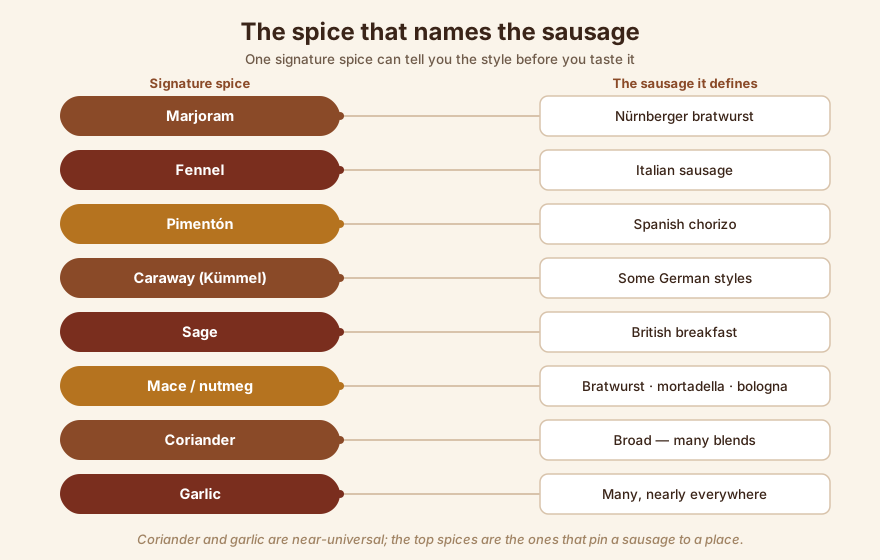
The regional signatures — one spice, one nationality
Here’s the principle before the list. Most of the spices in any given sausage are supporting cast — they round, they warm, they fill in. But in tradition after tradition, one aromatic does the identifying work. It’s the note your nose lands on first, and it’s the one that, pulled out, collapses the whole thing into anonymity. These are the ones worth knowing cold.
Marjoram — the whole personality of a Nürnberger
I’ll say this as strongly as I know how: marjoram is the Nürnberger bratwurst. Not a seasoning in it — the personality of it. Those little finger-length Nürnberger Rostbratwürste from Franconia are defined by marjoram the way Italian sausage is defined by fennel, and the association is so tight that in parts of Germany marjoram is nicknamed the sausage herb outright. The official body that protects the Nürnberger designation describes the sausage in its own words as marjoram-spiced. That’s not a food-blogger’s flourish; that’s the people who legally own the name telling you what makes it what it is.
Marjoram is warmer and sweeter than its cousin oregano — rounder, a little floral, less of that pizza-parlor bite. If you’ve only ever known oregano, marjoram will surprise you with how gentle and how particular it is. Use it fresh where you can, because like most soft herbs it fades fast dried. If you want to make a bratwurst that a German would recognize, marjoram is not optional and it is not substitutable. It’s the accent. For the whole story of how that German sausage tradition works, see the Germany history page — marjoram runs straight through it.
Fennel — the Italian signature
If marjoram owns Germany, fennel seed owns Italy. That sweet, faintly licorice, cool-in-the-back-of-the-mouth note is the single thing that makes an Italian sausage read as Italian, and it comes almost entirely from one compound — anethole, which makes up the great bulk of fennel’s aromatic oil and is the same thing that gives anise and star anise their character. Fennel is the keystone, not a garnish. Leave it out of a sweet or hot Italian sausage and the thing doesn’t taste like a milder Italian sausage — it flattens, it loses its address, it becomes pork with pepper. I’ve eaten “Italian sausage” at more than one restaurant that clearly skimped the fennel, and every time the dish underneath it was working overtime to make up for a sausage that had forgotten where it was born.
You’ll see fennel two ways in a good Italian link: some cracked or lightly crushed so you get little bursts of it, and some ground in for the background sweetness. I like both in the same batch. Whole seed you’ve toasted and cracked yourself beats pre-ground fennel by a mile — more on that below, because it’s the whole back half of this page. The Italian tradition it anchors is on the Italy history page.
Coriander — the broad, warm rounder
Coriander seed is the diplomat of the sausage spice cabinet — it shows up almost everywhere and picks a fight with nothing. It’s the seed of the cilantro plant, but toasted and ground it’s a different animal from the leaf entirely: warm, citrusy, a little sweet, no soapy edge. You’ll find it in bratwurst, in bockwurst, in the frankfurter and the American hot dog, in Polish sausage. It rarely stands up front as the signature the way marjoram or fennel does; instead it works behind them, rounding the pepper and knitting the other spices together. That’s a real job. A sausage seasoned with pepper and garlic and nothing else tastes sharp and one-dimensional; add a little coriander and it suddenly has a floor under it. Toast the whole seed in a dry pan until it smells nutty and you’ll understand why it’s in so many recipes.
⭐ Paprika and pimentón — the correction that matters most
This is the one I most want people to get right, because the common wisdom is not just incomplete, it’s actively wrong in a way that ruins sausages.
The wisdom says paprika is paprika — a red powder that adds color and mild sweetness, use whatever’s in the cabinet. That is false in two directions at once, and the differences are functional, not cosmetic.
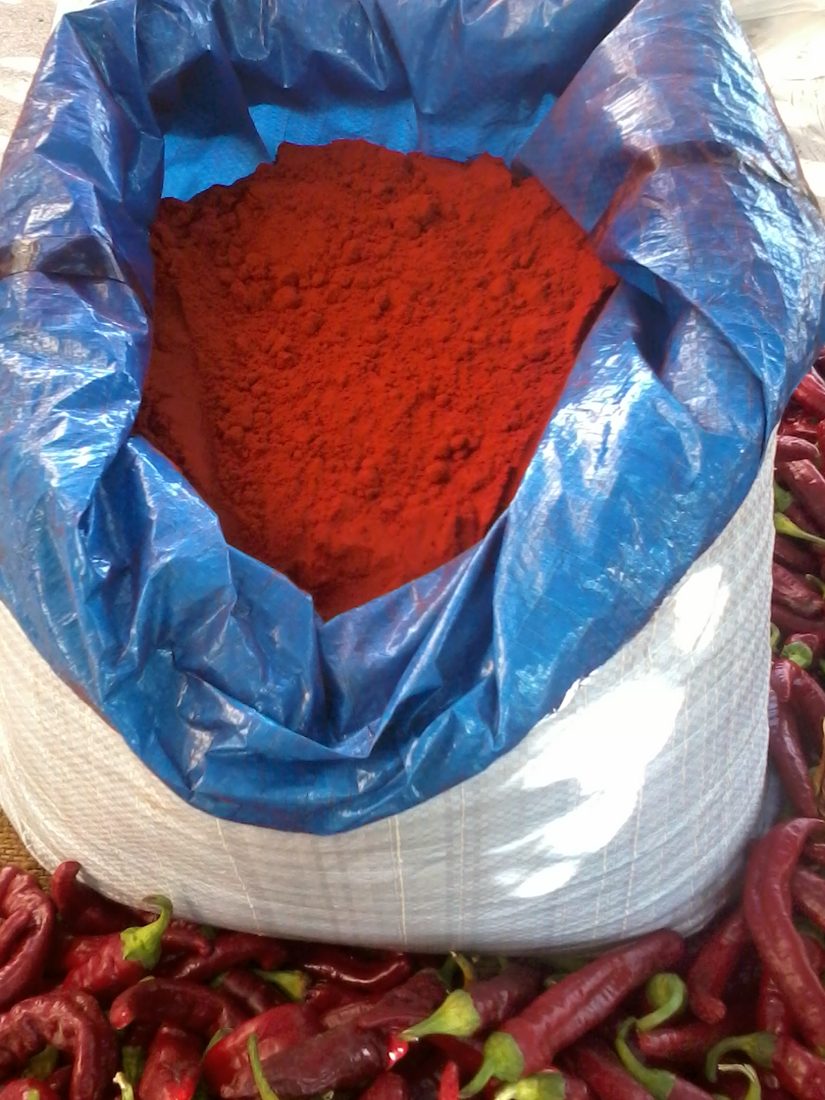
First: smoked Spanish pimentón is not merely a flavoring. It is a working antioxidant, and it does a real job in a curing sausage. Pimentón is loaded with carotenoids, and those compounds slow the oxidation of fat — the process that turns a dry sausage rancid and stale over the weeks it hangs. That’s not folklore or marketing; it’s measured chemistry, and it’s a big part of why traditional Spanish dry sausages carry so much of the stuff. It goes further than rancidity, too: peer-reviewed work on Spanish smoked paprika — especially the Pimentón de la Vera type — shows it helps suppress the molds that produce mycotoxins on the surface of dry-cured meat. So when a Spanish chorizo or a salchichón is red all the way through, that red is doing preservation work, not just looking the part. In a fermented, air-dried sausage that never sees a cook step, that matters.
Second, and this is the practical trap: Spanish pimentón and Hungarian paprika are not interchangeable. They are made differently and they do different things.
- Pimentón (Spanish) is traditionally oak-smoked as it dries, which is where that unmistakable smoky depth comes from. It’s sold as dulce (sweet), agridulce (bittersweet), and picante (hot). The smoke is the point.
- Hungarian paprika is traditionally air-dried, not smoked, and tends to be more pungent and more purely bright-sweet-pepper in character. The export-standard grade you’ll usually see is the édesnemes / Noble Sweet.
Swap one for the other and you change two things simultaneously — you add or remove the smoke, and you shift the color chemistry and the pungency. A Spanish chorizo made with Hungarian paprika isn’t a chorizo with a small substitution; it’s missing the smoke that defines it and missing the antioxidant behavior the tradition leans on. Going the other way, a Hungarian dish built on the clean pungency of its own paprika gets muddied by pimentón’s smoke. They are two different ingredients that happen to share a color. Keep both in the cabinet, labeled, and never reach past one for the other.
This ties into a bigger story about how paprika got to Spain in the first place and why the Spanish and French traditions diverged — see the Spain and Portugal history page — and pimentón shows up again in the German smoked tradition, which I get into on the Landjäger German-tradition page. One more thing I’ll only flag here and cover properly on the chiles page: the reason Spanish chorizo gets its heat and color from pimentón only, and never from added fresh chile, while Mexican chorizo is built the opposite way. That distinction is the spine of the whole chile discussion.
Sage — the breakfast and British note
Sage is the sound of breakfast. It’s the dominant herb in American breakfast sausage — that earthy, slightly camphor, almost pine-resin note that says morning, patty, cast-iron pan — and it runs through a lot of British fresh sausage too. It’s a strong, opinionated herb; a little goes a long way, and too much turns medicinal fast. I’ll add one correction from the neighboring Irish work, because it’s the kind of overstatement that spreads: you’ll read that “Irish sausage has no sage.” That’s false. It’s a matter of degree — in an Irish banger sage often sits at about equal weight with marjoram, one voice in a chorus rather than the soloist it is in American breakfast sausage. The difference between a breakfast link and a British banger isn’t sage-or-no-sage; it’s how loud the sage is allowed to sing.
Mace and nutmeg — the warm deli note
Here’s a pair most people don’t realize are the same tree. Nutmeg is the seed of Myristica fragrans; mace is the lacy red aril — the webbing — that wraps around that seed. Same fruit, two spices, and they are not the same flavor. Nutmeg is warmer, sweeter, nuttier — the note you know from eggnog and béchamel. Mace is more peppery, a little more cinnamon-like, and notably stronger when ground, so if you ever substitute mace for nutmeg, scale it down.
For sausage, mace is the classic choice, and it’s the secret behind that warm, faintly sweet “deli” perfume in bologna and mortadella. It’s also traditional in bratwurst. That whisper of warm spice you can never quite name in a good slice of mortadella — that’s mace. Nutmeg does similar work and the two overlap, but if you want the authentic savory bratwurst-and-bologna direction, reach for mace first and go easy.
⚠ Caraway — and the mistranslation that gets it wrong
This one has cost people real batches, and it’s worth stopping on because the error is baked right into the dictionaries.
Caraway is the seed of Carum carvi — the earthy, faintly minty, slightly bitter note you know from rye bread and sauerkraut and a lot of Central European sausage. In German, caraway is Kümmel.
Cumin is a different plant entirely — Cuminum cyminum — warm, sweaty, the backbone of Mexican and Middle Eastern cooking. In German, cumin is Kreuzkümmel (literally “cross-caraway”).
They’re botanical cousins, so the German names are cousins too, and English sources mistranslate them constantly. A translated German recipe calls for Kümmel, someone renders it “cumin,” and now a European sausage that wanted the rye-bread note gets a whiff of taco seasoning instead. Or the reverse: you’re reading about a German sausage, you know a little German, you see the word Kümmel, and you reach for cumin because it looks like cumin. Wrong plant, wrong sausage.
Burn it in: Kümmel = caraway. Kreuzkümmel = cumin. When a German or Austrian recipe says Kümmel, it wants caraway — the sauerkraut note — nearly every time. I keep both jars on the shelf and I keep them far apart, because the one time I don’t pay attention is the time I’ll grab the wrong one. Caraway also comes up in the smoked-sausage context over on the Landjäger German-tradition page, which is worth a look if you want to see where it belongs.
Garlic, pepper, and allspice — the backbone
The last three are the workhorses that show up nearly everywhere and rarely get top billing, but a sausage without them feels hollow.
Garlic is the near-universal savory backbone — Polish, Italian, Spanish, German, it’s in almost all of it. I have strong feelings about how you use it, and they get their own section below, but the short version is: fresh from the bulb, not powder, and they are genuinely different flavors, not a convenience swap.
Black and white pepper are the same berry at different stages, and they behave differently in sausage. Black pepper is fruity and pungent with visible flecks; white pepper is earthier, a touch barnyard, and used where you don’t want black specks showing — white sausages, bologna, fine emulsions where a clean pale surface is the point. Both get their pungency from piperine, which is a completely different sensation from chile heat (that’s capsaicin, a separate page). A white bratwurst wants white pepper for looks; a coarse country sausage wants black pepper for the fruit and the freckles.
Allspice is one berry — Pimenta dioica — that tastes like someone blended clove, nutmeg, and cinnamon and pressed it into a single seed. It’s the signature warm note in a lot of blood sausage, head cheese and souse, and Scandinavian and British sausages. A little reads as “old-world” and “wintery” without you being able to point at any one spice, which is exactly its charm.
Whole vs. ground vs. bloomed — freshness is chemistry, not fussiness
Now the part that actually separates a decent sausage from a great one, and it isn’t which spices you own. It’s their condition.
Here’s the mechanism, because once you understand it you’ll never go back. The flavor of a spice lives in volatile oils locked inside the intact seed or berry. As long as the seed is whole, those oils are sealed in and stable — a whole peppercorn or coriander seed holds its punch for a very long time. The moment you grind it, you tear the seed open and expose all that oil to air, and it starts to leave. Fast. Ground spice loses its aromatics over hours, then days, then months — and the pre-ground jar that’s been open on a warm shelf for two years has almost none of it left. Freshly ground spice can carry dramatically more aromatic compound than that tired pre-ground powder. This is measurable; it’s not a purist’s superstition.
So the rule follows directly:
- Buy whole, grind fresh. Whole coriander, whole fennel, whole peppercorns, whole nutmeg, whole allspice — buy them as seeds and berries and grind what you need for the batch you’re making today. A cheap blade grinder or a mortar and pestle pays for itself in flavor the first time you use it.
- Toast before you grind. Whole seeds — coriander and fennel especially — wake up in a dry pan over medium heat. Thirty seconds to a couple of minutes, just until they smell nutty and start to jump. Toasting drives off a little raw harshness and adds a roasted, Maillard depth you cannot get any other way. Then grind them warm.
- Bloom ground spice in fat. If a spice is already ground and going into something warm, blooming it — a quick minute in hot fat before the rest goes in — disperses those oils through the whole mixture so the flavor carries evenly instead of sitting in dry clumps. It’s a cheap, real upgrade borrowed straight from curry cooking.
None of this is exotic. It’s a pan, a grinder, and thirty extra seconds, and it’s the difference between a sausage that tastes bright and one that tastes dusty.
⭐ Freshness — my standard, and where it comes from
This is the standard I hold my own sausage to, and it’s the same argument I make everywhere on this site: fresh-ground beats the old jar every single time. Not because fresh is virtuous, but because of the volatile-oil chemistry I just laid out. A spice cabinet full of powders that have been open for years is a cabinet full of dust that used to be flavor.
Two specifics I’m stubborn about:
Fresh garlic straight from the bulb — never garlic powder. These are not the same ingredient with different convenience levels. Fresh garlic is pungent and allicin-forward and volatile — it hits sharp and mellows as it cooks. Powdered and granulated garlic is a different, toastier, milder, shelf-stable flavor. There’s nothing wrong with garlic powder in the abstract, but it will not make the sausage my grandfather’s kielbasa taught me to chase, and I don’t use it. I peel and crush real cloves. It’s more work and it’s not close.
Fresh herbs wherever the season allows. Marjoram, sage, parsley — fresh where I can get it, because the soft herbs lose the most in drying and lose it fastest. Dried has its place when fresh isn’t around, but I don’t pretend the two are equal.
Now, the honest part, because I’m not a zealot about it: I do buy some spice blends already mixed, and I buy them from P.S. Seasonings — they make good ones, and there’s no shame in a well-made blend for a batch where I’m not chasing a specific tradition. But I keep the powders minimal, and the fresh-ground / fresh-garlic / fresh-herb rule is the default I return to. This whole preference isn’t nostalgia — it’s grounded in exactly the volatile-oil chemistry above, which is the same argument I make at length on where the flavor went about why so much modern sausage tastes flat. And for where I actually buy the whole spices, bulk and fresh, see my sourcing page rather than making me re-argue it here.
The signature reference
Here’s the whole thing on one card — the spice, the sausage or region it defines, and where to read more. If you learn nothing else off this page, learn this table, because it’s the fastest way to make a sausage taste like it’s from somewhere.
| Spice | Marks / defines | Character | More |
|---|---|---|---|
| Marjoram | Nürnberger bratwurst (Germany) — the whole personality | Warm, sweet, floral; gentler than oregano | Germany |
| Fennel | Italian sausage — the keystone | Sweet, licorice-cool (anethole) | Italy |
| Coriander | Bratwurst, bockwurst, frankfurter, Polish — broad rounder | Warm, citrusy, sweet; supporting, not solo | — |
| Pimentón (smoked) | Spanish chorizo, salchichón — color, smoke, and antioxidant | Smoky, red; dulce / agridulce / picante | Spain & Portugal · Landjäger |
| Hungarian paprika | Hungarian cooking — not a pimentón swap | Air-dried, unsmoked, more pungent | Spain & Portugal |
| Sage | British & American breakfast sausage | Earthy, camphoraceous; loud in breakfast, softer in Irish | — |
| Mace | Bologna, mortadella, bratwurst — the “deli” note | Peppery, cinnamon-like; stronger than nutmeg | — |
| Nutmeg | Bratwurst and finer sausages | Warm, sweet, nutty (same tree as mace) | — |
| Caraway (Kümmel) | German / Austrian sausage; kraut | Earthy, rye-bread — ⚠ not cumin | Landjäger |
| Garlic | Near-universal savory backbone | Fresh = pungent/sharp; powder is a different flavor | Sourcing |
| Black / white pepper | Universal — white where specks aren’t wanted | Fruity-pungent (piperine); white earthier | — |
| Allspice | Blood sausage, head cheese, Scandinavian/British | Clove + nutmeg + cinnamon in one berry | — |
That’s the map. Marjoram makes it German, fennel makes it Italian, pimentón makes it Spanish — and the freshness of every one of them, ground the day you use it, is what makes it taste alive instead of like the memory of a spice. Keep the signatures straight, keep the Kümmel and the Kreuzkümmel apart, keep the pimentón and the Hungarian paprika in separate jars, and grind everything fresh. That’s most of the flavor battle, and it’s won at the cabinet before you ever touch the grinder.
Next: the chiles — heat, color, and the line that separates Mexican chorizo from Spanish. Or back to Sausage Ingredients.
Comments (0)