Chiles
I ate chorizo constantly the years I spent in Mexico — from a street cart, from a market comal, crumbled into eggs at a fonda before the sun was properly up. When I came back to the States I went looking for it in grocery cases and could not find the thing I remembered. So I built my own. That’s how I learned that a chile is not a garnish you throw at a sausage for heat. In the sausages I care about most, the chile is the sausage: it’s the color, the body, the perfume, and yes, the burn. Pull the chiles out of a Mexican chorizo and you don’t have a milder chorizo — you have a gray, sad pork crumble that tastes of nothing.
This page is about heat, and where it comes from. It’s also about a distinction I got wrong for years and see everyone else get wrong too: Mexican chorizo and Spanish chorizo are not two versions of one sausage. They are different animals that share a name, and the difference lives right here, in the chiles. Let me take the whole thing apart.
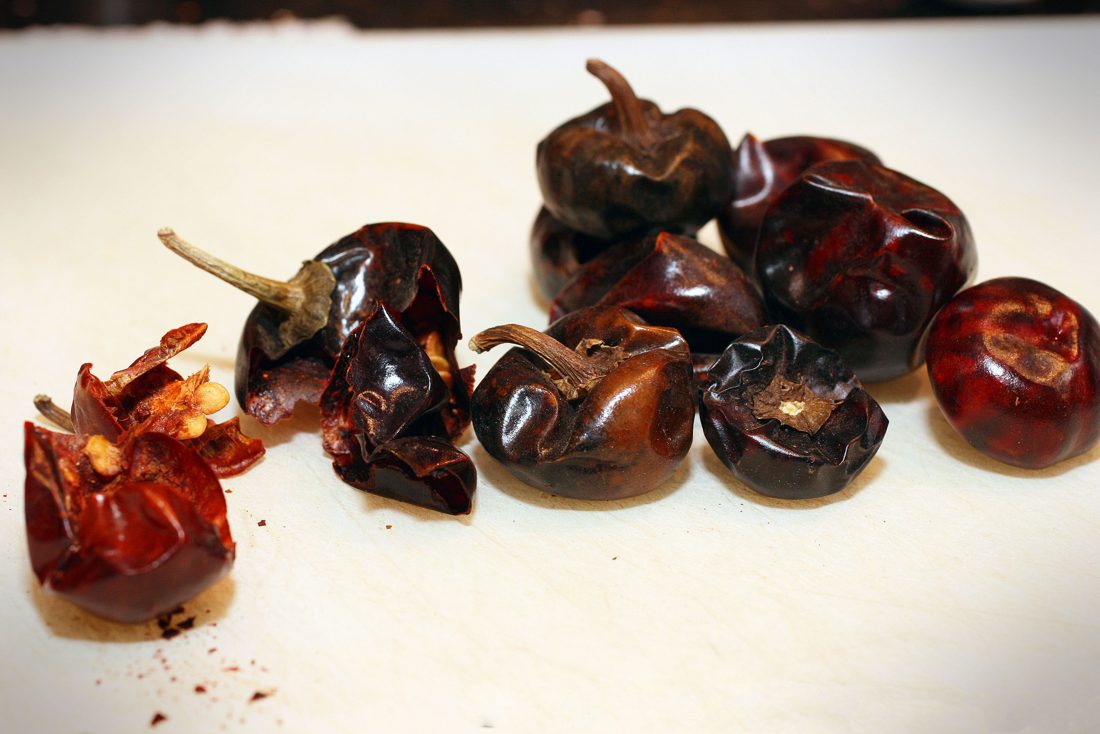
Fresh versus dried — what drying actually does
A fresh chile — a poblano off the plant, a jalapeño, a serrano — is mostly water. It brings bright, green, grassy heat and a lot of moisture. That’s wonderful in a salsa or a pot of something you’re going to eat that afternoon. It is usually the wrong thing for a sausage, because you’re introducing water and a raw, vegetal edge into a matrix you’ve worked hard to balance.
Drying changes the chile completely, and this is the part worth understanding. As the fruit dries, its sugars concentrate and the flavor deepens and turns. That fresh green note gives way to notes of raisin, prune, dried cherry, coffee, leather, tobacco, even a little chocolate depending on the variety. The chile stops being a vegetable and becomes something closer to a spice — a concentrated paste base you can toast, soak, and blend. A poblano is a mild, pleasant green pepper; dried, it becomes an ancho, and it tastes like dried fruit and earth. Same fruit, and yet you’d never guess they were related from a blind taste.
Here is the fact people get backwards: drying does not take the heat out. Capsaicin — the compound that makes chiles hot — is not water-soluble and it survives drying intact. So a dried chile keeps its burn. Drying changes the flavor profile dramatically, but it doesn’t fundamentally soften the fire. A dried chile can be every bit as hot as its fresh self, sometimes it reads hotter because the whole thing has been concentrated. When I want deep, brooding, layered heat in a sausage, I reach for dried nearly every time.
Capsaicin and the Scoville scale, briefly
The heat itself is one family of compounds — capsaicin and its relatives, the capsaicinoids — concentrated mostly in the pale internal membranes and veins of the pod, not, as a lot of people assume, in the seeds. The seeds just sit against the hot part and pick some up.
Heat is measured in Scoville Heat Units (SHU), a scale that tracks capsaicin concentration. You don’t need to memorize numbers, but a rough ladder helps you reason about a build. Here’s where the sausage-relevant chiles fall:
| Chile | Rough SHU | Character |
|---|---|---|
| Ancho (dried poblano) | ~1,000–1,500 | Raisin, coffee, earthy-sweet; body and color, little heat |
| Pasilla (dried chilaca) | ~1,000–4,000 | Earthy, herbaceous, raisiny |
| Guajillo (dried mirasol) | ~2,500–5,000 | Bright, tangy, almost cranberry; clean moderate heat |
| Chipotle (smoked jalapeño) | ~2,500–8,000 | Smoke plus heat — the smoke amplifies the perceived burn beyond the number |
| Cayenne | ~30,000–50,000 | Straight, clean heat — the workhorse |
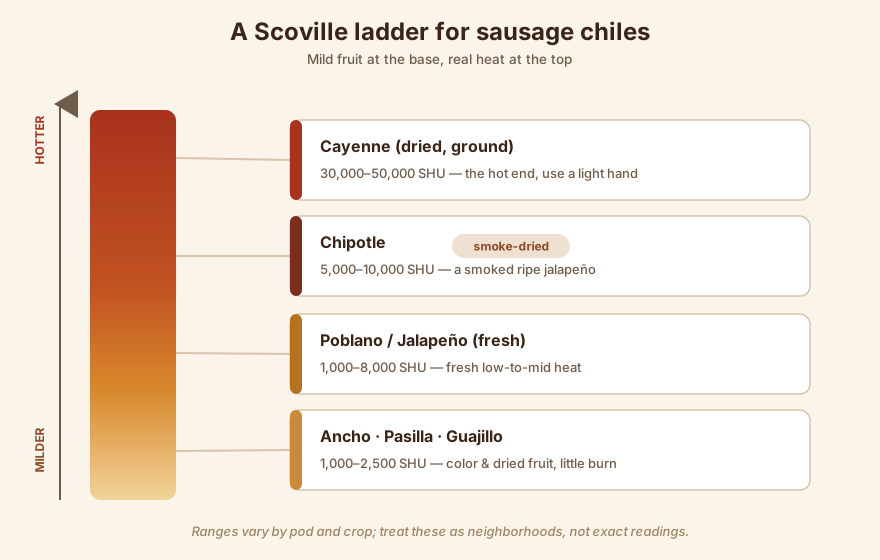
Notice how far apart the bottom and the top of that table sit. Ancho at ~1,200 and cayenne at ~40,000 are not “a little different” — cayenne is more than thirty times hotter. That spread is exactly why you build a chile-driven sausage in layers: mild chiles for body and color, a hotter one for the actual fire, in whatever proportion suits you.
The line that organizes everything: Mexican versus Spanish
Here is the correction, and it’s the reason this page exists. I’ll cross-reference the family tree and the Spain and Portugal history because both make the same point from their own angle, but let me state it flat:
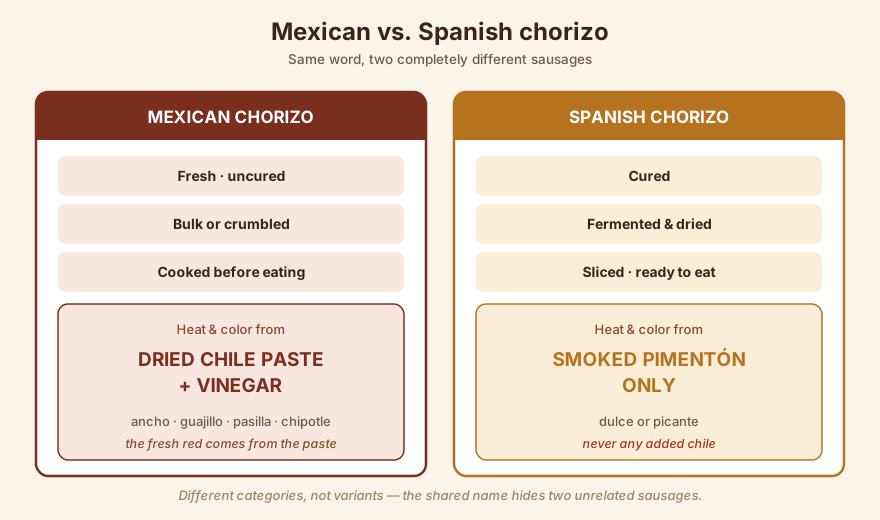
Mexican chorizo gets its heat and its color from fresh and dried CHILES. Spanish chorizo gets its heat and its color ONLY from pimentón — smoked paprika — and never from added chile.
These are not two grades of the same product. They belong to different categories of sausage entirely.
Mexican chorizo is built on a wet chile paste. You toast and soak dried anchos, guajillos, pasillas — sometimes a chipotle or two for smoke — blend them smooth, and cut the paste with vinegar. That vinegar acidulates the mix and helps the fat emulsify. The result is a fresh, raw, uncured, perishable sausage. It’s often sold and used in bulk — no casing at all — crumbled into a pan and cooked hard before you eat it, rendering out that brick-red fat that stains everything it touches. The heat and the color are the chiles, full stop.
Spanish chorizo is a different creature. It’s cured and fermented and air-dried, like a salami — firm, sliceable, frequently ready to eat straight off the board with no cooking at all. Its deep red color, its whiff of smoke, and its heat (in the picante grade, roughly 4,000–8,000 SHU) all come from one ingredient: pimentón, Spanish smoked paprika, oak-smoked and ground. Adding fresh or dried chile to a Spanish chorizo would be off-tradition and beside the point — the pimentón is the chile, already dried, smoked, and milled. The paprika is doing the whole job.
And pimentón isn’t just there for heat and color, which is the deeper reason it’s non-negotiable in that tradition. In a dry-cured sausage that’s going to hang for weeks, the smoked paprika is genuinely functional — it’s an antioxidant that slows the fat from going rancid over the cure, and it even helps hold mold and its toxins in check on the surface. I go into that on the spices page, because it’s the clearest example of a “flavoring” that’s actually load-bearing. For our purposes here: the heat in a hot Spanish chorizo is picante pimentón, not chile. Reach for a bag of ground cayenne to “spice up” a Spanish chorizo and you’ve made something else.
So when a recipe or a deli case blurs the two — “chorizo” as if it were one thing with a spice dial — it’s flattening a real distinction. One is fresh, chile-based, and cooked; the other is cured, pimentón-based, and sliced. Different categories. Not variants.
The chiles that matter for sausage
You can go a long way with a small shelf of dried chiles. These are the ones I keep, and where each belongs.
Ancho — the dried poblano, and the foundation of Mexican chorizo. It’s barely hot (~1,000–1,500 SHU), which is the point: ancho is there for body and color and sweetness, not fire. It brings that raisin-and-coffee depth and the dark red that makes chorizo look like chorizo. Think of it as the base coat.
Guajillo — the dried mirasol, and my other workhorse in a chorizo paste. A little hotter than ancho, bright and tangy, with a note I can only describe as cranberry. Where ancho is deep and sweet, guajillo is lively and clean. Ancho and guajillo together, roughly two-to-one, is a chorizo base you can build a lot on.
Pasilla — the dried chilaca. Earthy, herbaceous, raisiny, moderate heat. It rounds out the ancho-guajillo pair and adds a darker, more savory edge. The classic Mexican “holy trinity” of dried chiles is exactly these three.
Chipotle — a smoked, dried jalapeño, and a two-for-one ingredient. It brings real heat (its number runs up toward 8,000 SHU, and the smoke makes it read hotter than that), and it brings smoke — which is why a little chipotle in a chorizo paste gives you a campfire depth you can’t get any other way. Use it as a seasoning within the base, not as the whole base; a couple of chipotles will dominate a batch fast.
Cayenne — and now we leave Mexico entirely. Cayenne is straight, clean heat, ~30,000–50,000 SHU, and it’s the fire in Cajun andouille and a lot of American hot sausage. This is a different job from the Mexican chiles: cayenne isn’t there for color or fruit or smoke, it’s there to burn, and it does it cleanly without changing much else about the flavor. When a Louisiana sausage bites you, that’s usually cayenne (often alongside black and white pepper — but pepper’s pungency is piperine, a different compound from capsaicin and a different quality of heat). Worth keeping the two mental categories separate: the Mexican dried chiles are flavor-and-color that happen to carry some heat; cayenne is heat that happens to be red.
A word on form, because it changes how you dose. Ground cayenne is potent and even — a level teaspoon per couple of pounds of meat is already a noticeable kick, and because it’s a fine powder it distributes fast and blooms in fat easily. A whole dried chile you toast and soak is a different tool: you’re building a paste, not seasoning by the spoonful, and the heat comes bundled with all that fruit and color. That’s why a chorizo starts with whole ancho and guajillo pods while a Cajun sausage reaches for the powder jar — one wants the whole fruit, the other wants concentrated fire it can measure. Neither is a substitute for the other, and you can’t get chorizo’s color out of a cayenne jar or andouille’s clean heat out of an ancho.
My own Mexican chorizo
I’ve said it and it’s the truth: I ate chorizo constantly in Mexico, found good chorizo nearly impossible to buy once I was back in the States, and so I make my own. It’s the fresh, chile-paste, vinegar-cut, crumble-and-cook style — the Mexican one — not the cured Spanish kind. The recipe’s in the collection: my chorizo.
What I’ll say here, because it’s the whole argument of this page in one sausage: the heat and that unmistakable brick-red color come from the chiles and nothing else. No paprika standing in, no red food coloring, no shortcut. Toasted and soaked dried chiles, blended to a paste, vinegar to brighten and help the emulsion, into the pork. When people who’ve only had the commercial tube stuff taste a real one, the thing they notice first isn’t the heat — it’s how deep it is, how much is going on besides hot. That depth is the chiles doing their real work.
The vinegar deserves a mention while I’m here, because it’s not just for flavor. Mexican chorizo is a raw, uncured, perishable sausage — there’s no nitrite cure, no long ferment doing preservation. The acid from the vinegar lowers the pH, which helps a little on the safety side and, more importantly to the eating, tightens and brightens the whole thing so the pork doesn’t read flat under all that chile. It also helps the fat emulsify into the paste rather than weeping out in the pan. Skimp on it and the sausage turns dull and greasy; that tang is part of the identity, not an afterthought. This is another line between the two chorizos — the Spanish one gets its preservation and its tang from the cure and the ferment, so it doesn’t need the vinegar the fresh Mexican one leans on.
Working with chiles
However you use them, dried chiles reward a little technique. Here’s how I handle them.
Toast first. Wipe the dried pods clean, pull the stems, and give them a short turn in a dry skillet or comal over medium heat — thirty seconds a side, pressing them flat, until they puff slightly and go fragrant. This wakes up the oils and adds a roasted depth, the same way toasting whole spices does before you grind them. Don’t let them scorch — a burnt chile turns acrid and bitter, and there’s no recovering the batch once that bitterness is in there. You’re looking for aromatic and pliable, not blackened.
Then rehydrate. Cover the toasted chiles with hot (not boiling) water and let them steep fifteen to thirty minutes until they’re soft and leathery-supple. Weigh them down with a small plate if they bob up. Save some of that soaking liquid — it’s flavorful, and you’ll want a little to loosen the paste when you blend. Taste it first, though: some chiles throw a bitter soak, and if yours does, use fresh water in the blend instead. Blend the softened chiles smooth, adding just enough liquid to get a thick paste.
Blooming is the fat-side version of the same idea. If you’re working with ground chile — cayenne, ground ancho, or pimentón — warming it briefly in a little fat before it joins the batch disperses those oils and spreads the flavor and color through the whole mix rather than leaving it clumped. A minute is plenty. It’s a small step that pays off.
Controlling the heat: seeds and veins. The fire lives in the pale internal membranes and veins, not really in the seeds — the seeds just carry heat by contact. So if you want the flavor and color of a chile with less burn, split the pods after toasting and scrape out the veins and seeds before you soak them. To push heat up, leave them in, or add a hotter chile (a chipotle, a pinch of cayenne) rather than piling on more of a mild one — you’ll only muddy the flavor trying to get fire out of ancho. Build heat with a hot chile and body with a mild one; don’t ask one chile to do both jobs.
Taste as you go, and remember it comes up in the pan. A chorizo tastes different raw than it does cooked — the chiles mellow and marry, the vinegar’s edge softens, the heat integrates. Fry off a little test patty the way you would to check seasoning on any sausage, and judge the heat from that, not from the raw mix. It’s easy to underestimate a chile paste cold and overcorrect. Build a hair under where you think you want it; the pan will bring it home.
That’s the heart of it. A chile isn’t a heat knob you turn — it’s a flavor, a color, and a fire braided together, and drying, toasting, and soaking are how you get all three out of it and into the meat. Get comfortable with the dried-chile trio and a couple of hotter friends, keep the Mexican-and-Spanish line straight in your head, and you can build the whole red-sausage world.
Back to the Sausage program index for the rest.
Next in the ingredients set: blood — the one “spice” that sets by heat instead of dissolving, and why it breaks every rule the others follow.
Comments (0)