Blood
Of all the things that go into a sausage, blood is the one that stops an American cook cold. Not because it’s hard to work with — it’s genuinely easier than an emulsion and more forgiving than a fermented salami — but because most people in this country have never once been asked to think of it as an ingredient. It’s the part of the world’s sausage America mostly gave up. I’ve written about why we gave it up, and about the whole blood-liver-head branch it belongs to, on the blood and offal page. This page is narrower and more practical: blood as a material you buy, keep, and build with. What it is, how you stop it turning to lumps in the bucket, why it sets the way it does, and how not to poison anyone with it.
I’ve made both black and white puddings, so I’ve handled the raw article on my own bench. The blood came frozen, and I’ll get to where. First, what you’re actually working with.
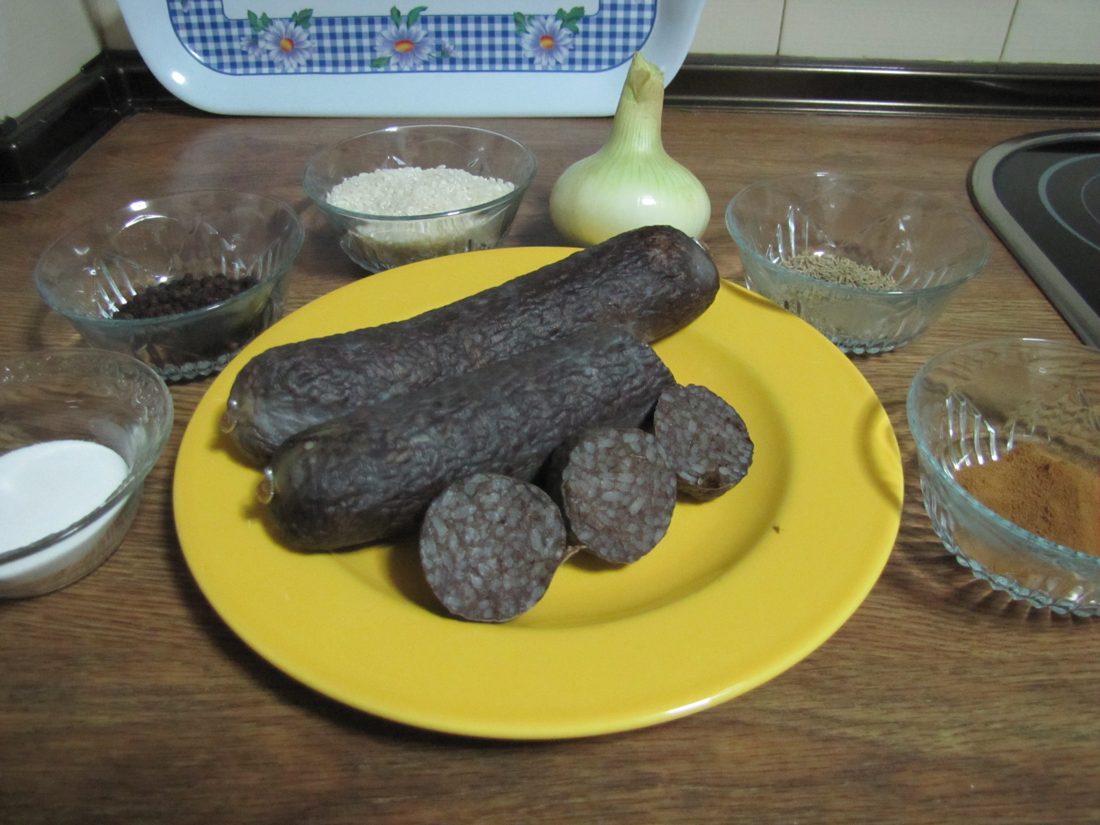
What blood brings
Strip away the squeamishness and blood is a functional ingredient with a specific job description, the same way salt or fat has one. Four things it puts on the plate:
Color. The obvious one. Blood is what turns a pudding that near-black, glossy brown. That color is hemoglobin — the same iron-carrying protein that makes blood red — going dark as it cooks and its iron oxidizes. Nothing else in the sausage kitchen does it. You cannot fake blood color with caramel or cocoa and have it read right; people have tried, and it always looks like what it is.
Iron, and a lot of it. Blood is one of the most iron-dense foods there is, and it’s heme iron — the form the body absorbs most readily, bound up in that same hemoglobin. This is real nutrition, not marketing, though I’d steer you away from the “black pudding is a superfood” nonsense (a retailer’s PR stunt, which I take apart on the black pudding page). The iron is genuine. It just arrives packaged with saturated fat and salt, like everything good does.
Richness and a particular mineral flavor. Blood tastes faintly sweet and distinctly metallic-mineral, the way a rare steak’s juices or a good liver does — because it’s the same iron doing it. In a finished pudding that reads as depth and savor rather than “blood,” but it’s the throughline of flavor that ties the whole blood-sausage family together and separates it from any meat sausage.
The set. This is the big one, and it’s what makes blood an ingredient and not just a coloring. Blood builds structure. It’s what holds a black pudding together into a sliceable loaf, and it does it by a mechanism completely unlike the one that holds a bratwurst together. That deserves its own section, below — but understand up front that when you add blood to a sausage, you’re not garnishing it. You’re adding the thing that will set it.
Getting it, and keeping it from clotting
Here’s the property that governs everything about handling blood: fresh blood clots within minutes of leaving the animal. Fibrin — a stringy protein that’s dissolved in circulating blood — comes out of solution the moment blood is still, and it laces the whole mass into a jelly full of rubbery clots. Left alone, a bucket of fresh blood becomes a bucket of useless dark gelatin studded with lumps. You cannot mix that into a sausage.
So fresh blood has to be defibrinated. The technique is exactly what it sounds like from the problem: you catch the blood clean, and you stir it continuously while it cools — whisk, hand, a bundle of clean twigs, whatever — and as you stir, the fibrin coming out of solution wraps itself around the tool in stringy ropes instead of setting the whole mass. You pull those ropes out, keep stirring until no more form, then strain and chill hard. Defibrinated blood stays liquid and pourable, which is what you need. This is a job for the moment of slaughter, done by whoever collects the blood — which is one more reason blood sausage was historically a killing-day, all-hands affair. Miss the window and there’s no recovering it.
Most cooks, me included, will never defibrinate blood at the source, because most of us aren’t standing there when the animal is bled. Which brings up the two forms you’ll actually meet:
Dried blood powder is what the commercial world runs on. Spray-dried blood — often sold as “blood powder” or, on ingredient labels, “hemoglobin powder” — reconstituted with water back to a usable liquid. It’s shelf-stable, it’s consistent, and it’s what most of the black pudding in a supermarket is actually made from, usually imported. It’s not a scandal; it’s a shelf-life answer. But it does mean a home cook working from real frozen blood is, on that one axis, being more traditional than the factory. Powder is a perfectly legitimate option and it dodges the whole clotting problem, because it was defibrinated before it was ever dried.
Frozen blood is the other route, and it’s the one I use. Mine came frozen from a market near the MSU campus that I love shopping at — the kind of place with a freezer case full of things no chain grocery in Michigan would stock, sitting there for almost nothing. Asian and Latino markets are the reliable source; online Asian grocers ship it frozen; a butcher who slaughters will often set some aside with a week’s notice if you ask like someone who’s going to cook it rather than someone running a dare. Frozen blood was defibrinated and strained before freezing, so it thaws to a usable liquid — with one catch I’ll come back to under handling, because thawed blood always throws fresh clots and you have to deal with them.
Whichever form you use, remember the governing fact: blood is highly perishable. It is, functionally, culture broth — nutritious, warm-loving, a superb place for bacteria to grow. Source it fresh and very cold, use it fast, or keep it frozen until the day. This isn’t fussiness. It’s the single real hazard of the ingredient, and I’ll spend a whole section on it.
⭐ The bind is not a myosin bind — and that changes everything
This is the fact I most want you to walk away with, because it’s the one nearly every explanation of blood sausage skips, and getting it wrong makes the whole product mysterious instead of simple.
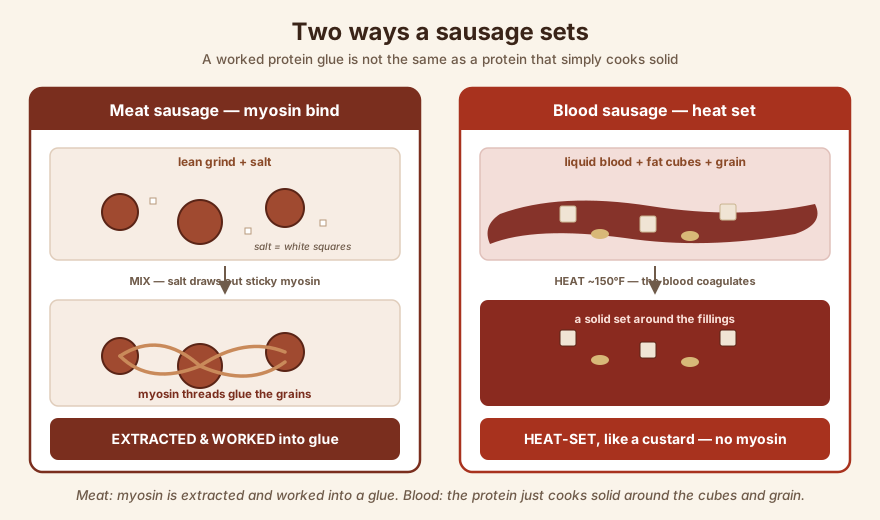
A meat sausage — a bratwurst, a kielbasa, a hot dog — is held together by a protein network you build. You work salt into cold lean meat until it dissolves out the muscle protein myosin, which turns sticky and tacky and coats every particle; that extracted, tacky myosin is the glue, the “primary bind,” and when the sausage cooks it sets into a cohesive gel. No salt, no dissolved myosin, no bind — just a crumbly tube of mince. That’s the mechanism the salt page is built around, and it governs every meat sausage there is.
A blood sausage does none of that. There’s no lean meat to extract myosin from — in a pure blood pudding there may be no muscle meat at all. The set comes from a completely different event:
Blood proteins coagulate with heat. Hemoglobin and the serum proteins in blood set the way an egg white sets — a one-way, temperature-triggered change. Warm the blood past a certain point and its proteins lock up into a solid gel, and that’s the bind. It isn’t a network you develop by mixing; it’s a phase change you trigger by cooking. You don’t work a blood pudding until it turns tacky. There’s nothing to develop. You mix it cold, you get it into its form, and then heat does the binding for you.
That single difference cascades into everything. A blood sausage is assembled from three things rather than worked into one:
- Blood, which coagulates and sets — the matrix, triggered by heat.
- Hard fat, diced on purpose — the white cubes you see in a black pudding slice are structural. They’re cut at around 6 mm and never ground, because they need to sit in the coagulated matrix as discrete solid inclusions that keep it from setting into a dense brick. Grind that fat and you lose both the look and the texture.
- A grain or starch matrix — the oats, barley, or rice from the binders and extenders — that absorbs and holds water and gives the coagulating blood protein something to grip. In this branch that grain isn’t cheap filler; it’s load-bearing. Pull the oats out of a black pudding and you don’t get a purer pudding, you get a puddle.
So the entire troubleshooting vocabulary of meat sausage is useless here. There’s no primary bind to fail, no patty test to run, no fat smear to fear. The enemy isn’t a warm grind — it’s overheating the blood. Push the coagulation past a gentle set and the blood doesn’t set, it curdles: it breaks into grains suspended in weeping liquid, and no later step undoes that. The one crossover failure is temperature of inclusion — stir hot cooked onion into cold blood and you begin coagulating it right there in the mixing bowl, and you get grainy pudding before it ever sees the oven. I’ve done exactly that. I blamed the blood for a while before I understood it was me putting hot onion into it.
This is consistent with what I say on the black pudding and the blood-and-offal pages, and I’m repeating it here because it belongs to the ingredient, not to any one recipe: blood is a heat-set binder. Treat it like one and it’s dead simple. Treat it like myosin and you’ll be confused every step of the way.
There’s one practitioner note on the raw material worth carrying with you, because it changes how a formula behaves: pork blood sets moist, beef blood sets crumbly and dry. Hank Shaw puts it plainly and it matches everything I’ve seen — it’s why a beef-blood pudding like Clonakilty has that characteristically crumbly slice. If you ever swap beef blood into a formula written for pork, expect a drier result and raise the fat a little to compensate.
Safety and handling — the real hazard is the blood itself
Everything dangerous about a blood sausage lives in the raw blood, not in some exotic step. Blood spoils fast, and the discipline for keeping it safe is short and non-negotiable:
- Keep it cold — below about 35 °F, throughout. From the moment it thaws to the moment it goes into heat, blood should be as cold as you can keep it without freezing. It’s a bacterial growth medium; cold is the whole defense.
- Strain it after thawing. Thawed blood always throws fresh clots, and those clots give a genuinely unpleasant grainy texture in the finished pudding. Pass it through a fine sieve every time. This is the step I skipped on my first pudding, and regretted.
- Never refreeze thawed blood. Once it’s thawed, it’s on the clock. Use it.
- Never boil it. This is both a quality rule and a doneness rule. Blood curdles above a gentle poach — split into grains and weeping liquid, unrecoverably. You want a slow, gentle heat: a water bath that never bubbles, a poach held around 170 °F, not a simmer and absolutely not a boil. “Never boil” is the single most common blood-sausage failure and the easiest to avoid.
- But do cook it through — to 160 °F / 72 °C internal. Gentle does not mean underdone. Blood must reach a safe internal temperature like any other perishable raw animal product; you’re threading the needle between “hot enough to be safe and set” and “so hot it curdles.” A water bath around 160–170 °F, given time, brings the center to a safe 160 °F without ever curdling the blood. Never eat blood raw.
On the legal side I’ll be straight about the limits of what I’ve verified, same as on the sister pages: pig blood is legal to buy and sell as food in the US, and food-purpose blood should come from an inspected source. I have not located the specific FSIS regulation governing edible blood collection for retail, and I have not verified state rules including Michigan’s, which is the one that would actually apply to me. The handling principles above are sound and are the part that keeps you safe. If you’re doing anything beyond cooking for yourself, call your state ag department rather than trusting any food blog, this one included.
One ingredient, many national forms
The thing I find genuinely striking about blood is how many traditions landed on it independently, and how differently each one built around it. Same ingredient, same heat-set bind, wildly different sausages — and the axis that separates them is mostly how much grain goes in, and what the fat and aromatics are doing. The deeper survey lives on the blood and offal page; here’s the shape of the family as it bears on the ingredient.
- Black pudding (Ireland, Britain) is the grain-heaviest branch — packed with pinhead oatmeal or barley, pepper-forward, sliced and fried. It’s the one form most likely to be within an American cook’s reach, and it has its own deep treatment, myths and all.
- Boudin noir (France) sits at the opposite pole — little or no cereal, often enriched with cream and sometimes apple or onion cooked down soft, so the texture is smooth and almost spreadable when warm. Put it next to a slice of Irish pudding and they read as unrelated products built from the same primary ingredient.
- Morcilla (Spain) — the Burgos version especially — is built on rice, onion, pork fat, and blood, with no meat at all by design. The rice load is the definition, not an economy. It’s the case that proves grain in this branch is structure, not filler.
- Blutwurst (Germany) tends to set diced cooked meat or rind into the coagulated matrix — a chunkier, meatier reading of the same idea, often with barley or with no grain at all.
And that’s before Korea’s soondae, Mexico’s moronga, Poland’s kaszanka, the Philippines’ dinuguan (which skips the casing entirely and uses blood as a sauce). One ingredient, a dozen countries, no single “right” way to use it — which is exactly what you’d expect of a material that every pig-raising culture had to solve for, under the same clock, from the same finite animal.
If you want to see where blood sits among all twelve sausage classes, that’s the Sausage landing. And in the collection you can pull up the blood sausages I keep — morcilla and the rest of the blood family — including the loaf-pan black pudding I keep coming back to.
Part of Sausage Ingredients, and one branch of the whole craft at Sausage. Next: the casings — what actually holds all of this in, from hog gut to collagen to fibrous, and what each one does to the eating.
Comments (0)