The German Tradition
Landjäger is my favorite of the German sausages, so let me say the first honest thing right away: calling it German is only about two-thirds true. I’ve spent forty years around sausage and a fair amount of time in the places these things come from, and the more you look at Landjäger, the less it belongs to any one country. It belongs to a mountain. It belongs to an old, shared, German-speaking Alpine world that doesn’t line up with the borders on a modern map.
This page is where I lay out the heritage — the geography, the name, the tradition, and the surprising amount of it that turns out to be folklore dressed up as fact. I love this sausage enough to want the real story, not the gift-shop version. And the real story is more interesting than the myths anyway.
If you want to know what Landjäger physically is — the flat pressed pairs, the family it belongs to — that’s what it is. If you want to stand at a bench and make it, that’s the craft and making your own. This page is the where and the why-it’s-called-that.
It’s Alpine, not just German
Every American write-up I’ve ever read opens with “Landjäger is a German sausage” and stops there. That’s the single most common thing people get wrong about it. Landjäger is an Alemannic and Alpine specialty — traditional across a contiguous band of German-speaking country that runs from southwest Germany down into Switzerland, Austria, South Tyrol, and across the Rhine into Alsace. Southern Germany is the biggest slice of that territory. It is not the whole pie.
Here’s the actual range:
| Where | What they call it / how it shows up | Notes |
|---|---|---|
| Baden-Württemberg — Swabia (Schwaben) + the Black Forest (Schwarzwald) | Landjäger; Schwarzwälder Landjäger for the Black Forest style | Core traditional territory. The state’s own food authority calls it a raw-sausage specialty of the Swabian and Black Forest regions. Black Forest style is smoked over fir and spruce. |
| Bavaria | Landjäger | Traditional and commercially strong; the German brands most Americans see (Bavarian Meats and the like) come out of this world. |
| German-speaking Switzerland | Landjäger | A genuine, well-known Swiss product — eastern-Swiss Alemannic, not a German import. The name reached French-speaking Switzerland only around the 1930s. |
| Austria & South Tyrol | Landjäger; kin to the Austrian Kantwurst | Same flattened, fermented, pressed idea; the Kantwurst is a close cousin. |
| Alsace / eastern France | Gendarme | The same smoked, air-cured flat sausage under a French name — and that name is a clue we’ll come back to. |
The one-line version I trust: traditionally made in southern Germany, Austria, South Tyrol, Switzerland, and Alsace. Not owned by one country. Eaten all across the Alpine region.
I want to sit on the Swiss point for a second, because it’s the part people find hardest to believe. Landjäger is not “also made in Switzerland” as some afterthought. The single best scholarly source on where the name comes from is a Swiss dictionary. Swiss producers treat it as an eastern-Swiss regional specialty that spread westward over the twentieth century. In German-speaking Switzerland it’s an everyday thing — the kind of sausage that gets advertised two-for-one in the grocery flyer, not something exotic.
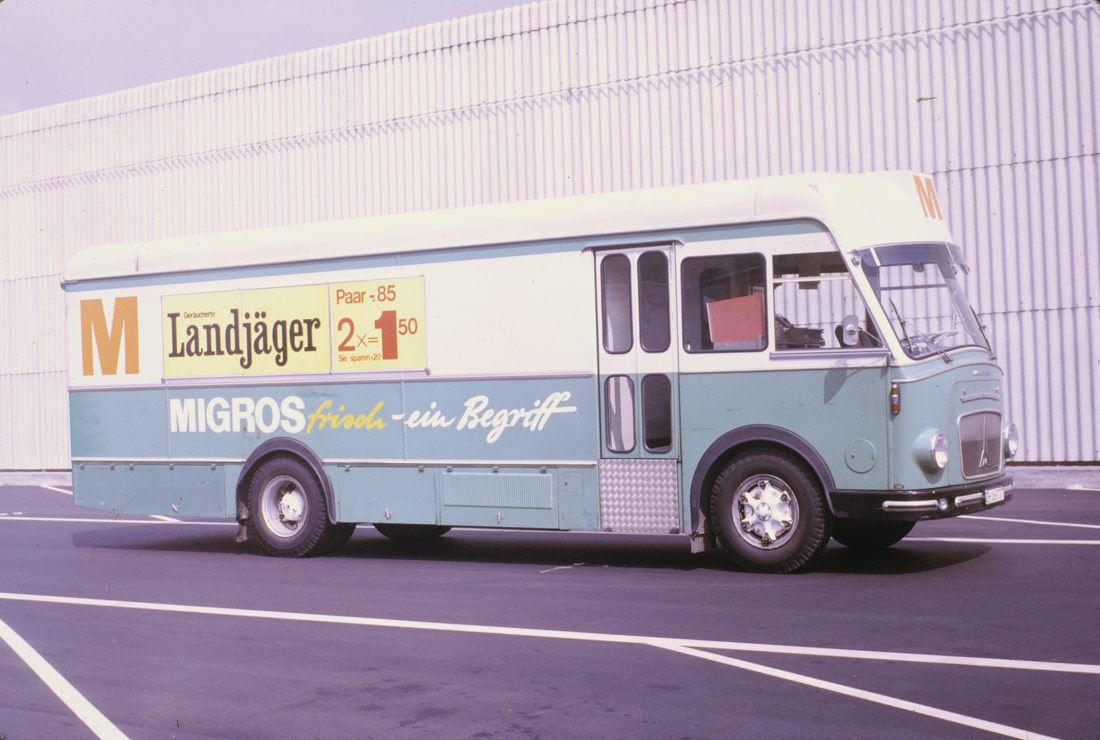
So: mostly German by volume, yes. But equally Swiss, and broadly Alpine, and that matters — because the moment you understand Landjäger as an Alemannic food rather than a German one, the rest of the story falls into place. The name comes from Swiss dialect. The geography follows the mountains. The whole thing predates the countries it supposedly belongs to.
The name — three stories, and I can’t prove any of them
Now the good part. The centerpiece of the whole Landjäger story is its name, and the name is a genuine mystery. There are three competing explanations. Every source you’ll find picks one and states it like gospel. The honest answer is that the etymology is contested and none of the three is proven — and knowing why is a lot more satisfying than swallowing whichever version came up first in a search.
Let me lay them out one at a time.
Story one: Land + Jäger, the “country hunter”
This is the one everybody leads with. Land means country or land; Jäger means hunter. Put them together and you get “country hunter,” and the story writes itself: a sausage small and hard and shelf-stable enough to drop in your coat pocket and carry out hiking, fishing, or hunting on a cold day — thus, hunters named it.
It’s a lovely story. It’s also, almost certainly, folk etymology — a tale built backward from the finished word rather than any record of the word being coined. The literal translation is real German; I’m not disputing that Landjäger can be read as “country hunter.” What I’m telling you is that the leap from “the word can mean that” to “hunters named it because they carried it” has no documentation behind it. It’s the romantic version. Hank Shaw states it flatly — small enough to fit a coat pocket, “thus the name” — and I love his work, but that line is circular: it uses the folk reading of the word to explain the shape, and the shape to explain the word. Charming. Not evidence.
Story two: lang tige(n), “long-cured”
Here’s the version almost nobody in America has heard, and it’s the best-sourced one. The Schweizerisches Idiotikon — the great historical dictionary of Swiss German, the most authoritative source in this whole conversation — records that the name may derive from a dialect expression, lang tige(n), meaning “smoked for a long time” or “air-cured for a long time,” later reshaped by folk etymology into the familiar Land-Jäger.
Sit with that, because it changes everything. If the Idiotikon is right, the “hunter” was never in the picture at all. The older layer of the word doesn’t describe who carried the sausage — it describes how the sausage is made. Long-cured. The “country hunter” spelling would then be a later cleanup, ordinary people hearing an old dialect phrase they no longer understood and reshaping it into two words that at least looked like German they knew.
The Idiotikon offers this cautiously — “possibly,” not “definitely.” So I won’t oversell it either. But it’s the most credible account on the table, it comes from the most credible source, and it’s the one the popular story completely erases. That alone makes it worth foregrounding: the name may simply mean long-cured, and the hunter is a ghost.
Story three: the Landjäger who wore a uniform
There’s a third reading, and this one rests on something absolutely real. “Landjäger” was a genuine historical office — a rural policeman. From the late 1700s into the twentieth century, across Prussia, Bavaria, Württemberg, Baden, Austria, and Switzerland, Landjäger was the word for the mounted country gendarme who kept order out in the rural districts, often an ex-soldier, frequently on horseback. Whole semi-military corps were founded state by state on the French gendarmerie model in the early 1800s. In some Swiss cantons the Landjäger corps persisted well into the twentieth century.
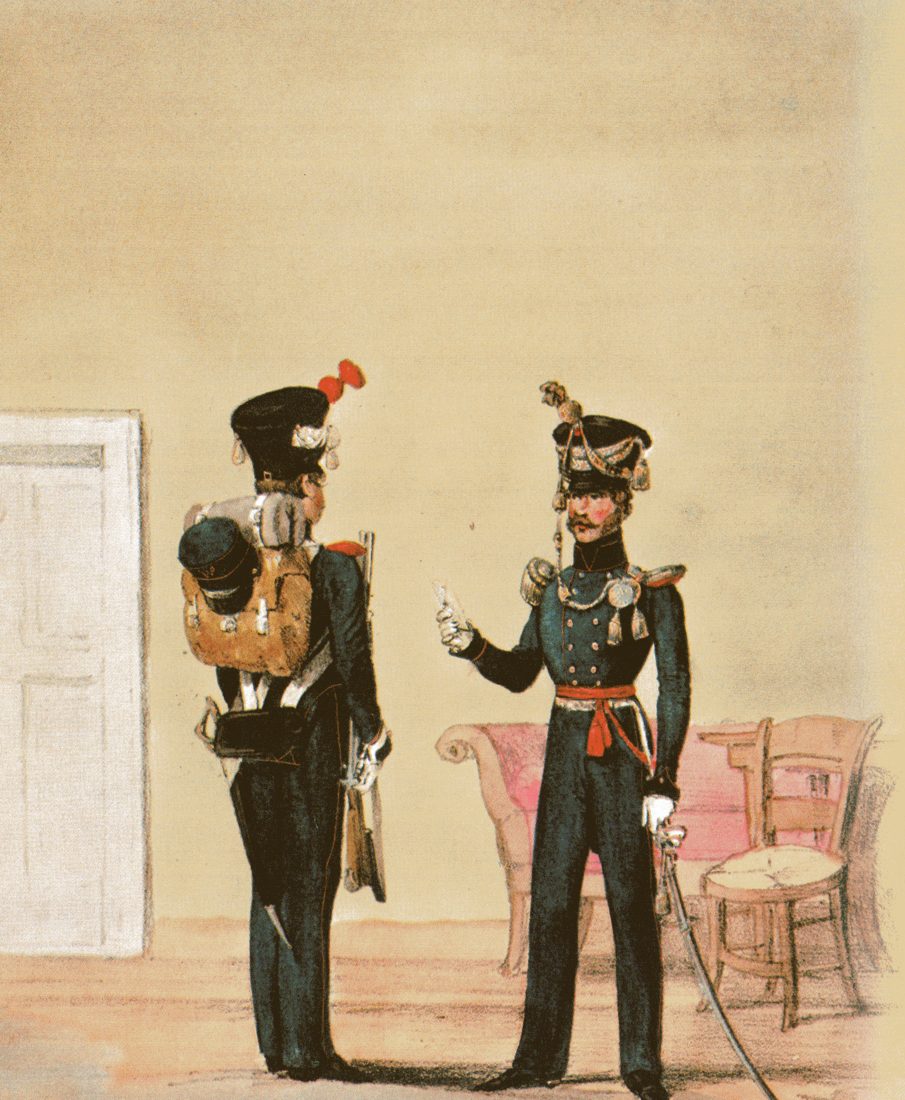
That office is not in doubt. What’s in doubt is whether the sausage was named after the policeman. The usual telling is a joke: the dried sausage is stiff, hard, and reddish, like a uniformed officer standing at attention — so people supposedly named the stiff little sausage after the stiff little gendarme. Both the Idiotikon and Swiss producers call this exactly what it is: speculation. A charming maybe. Not a documented coining.
But there’s one piece of real corroboration for the police reading, and it’s the best single clue in the whole puzzle: in Alsace and in French, this same sausage is called Gendarme — French for the rural policeman. That’s not nothing. It means that by the time the name crossed the language border, French speakers heard “Landjäger” and understood it as policeman, not hunter — and they translated the policeman. So the “country-cop” reading was clearly the dominant folk understanding at some point, dominant enough to get translated into a whole other language. That doesn’t prove the sausage was originally named for the office. It proves the office was what people thought of when they heard the word. Which may itself be a second layer of folk etymology sitting on top of the first.
My verdict on the name
So where does that leave us? With honesty, which is the only place worth being:
- Documented: the literal German meaning of the two words; the real historical police office; the French synonym Gendarme; and the Idiotikon’s cautious lang tige(n) hypothesis.
- Folklore, unproven: that hunters named it; that police named it. Both are stories built on top of the finished word, not evidence of anyone coining it.
I’m not going to hand you one answer, because the sources don’t have one. My honest read, weighing them: the “hunter” story is almost certainly a later folk reshaping; the lang tige(n) / “long-cured” derivation is the strongest scholarly candidate; and the “country-policeman” reading — backed by the very real office and the French Gendarme — is a genuine possibility that may itself be secondary. Three layers, contested, and anyone who tells you flatly which is correct is telling you more than the evidence knows.
And while I’m clearing the ground, let me knock down three things you’ll read that are not true, or at least not supportable:
- “Napoleon’s soldiers carried it.” Not found in any reliable source. It’s the kind of thing that sounds right and traces to nothing. The generic “soldier’s food because it keeps without a fridge” reputation is fair and well attested — but no specific army, no named campaign. Don’t repeat the Napoleon line.
- “One of the oldest sausages in the world.” Unsupported. There’s no primary evidence for any such superlative, and I’d treat it the way I treat every “oldest sausage” claim, which is with a raised eyebrow.
- “It traces to the early 1700s.” This one’s a real conflict. Some blogs say 1700s Switzerland and Germany with no citation; more careful sources put its emergence in the nineteenth century, which fits the timeline of the gendarmerie office and the Gendarme naming perfectly. No reliable primary date surfaced either way. The safest and most honest framing is this: Landjäger is a nineteenth-century name over an older Alemannic dry-sausage practice. The technique — pressed, fermented, air-dried keeping sausage — is genuinely old. The name is younger than people think. Don’t nail it to 1700-anything without a source you can point to.
No protected name — and why that actually matters
Here’s a fact that does more work than it looks like it should: Landjäger has no protected designation of origin. Anywhere.
I checked this against the official Swiss PDO-PGI register, because if any Landjäger were protected it would be a Swiss one. Switzerland protects plenty of meat products — Bündnerfleisch, Boutefas, Saucisson vaudois, Glarner Kalberwurst, the Appenzeller sausages, and more, each with its AOP or IGP seal. Landjäger is not among them. There’s no EU PDO, PGI, or TSG for it either. The name is generic and legally unprotected. Anyone, anywhere, can print “Landjäger” on any sausage they like.
That sounds like a dry regulatory footnote. It’s actually the factual backbone of the entire artisan-versus-commodity problem, and it’s the reason a genuine Black Forest pair and an industrial gas-station snack stick can legally wear the exact same word. Contrast it with Bündnerfleisch or Prosciutto di Parma: those names are fences. Cross the fence — wrong region, wrong method — and you legally cannot use the word. “Landjäger” is a name with no fence around it. It guarantees nothing about method, meat, region, or whether the thing was ever fermented and dried at all.
I’ve written the whole argument about what the modern food economy did to the real version over on why it’s different today — that’s where my thesis lives, and it’s a big part of why I make my own. But the regulatory fact belongs here, in the heritage story, because it’s load-bearing: the tradition is real and specific, and the law does absolutely nothing to defend it. The word is a hand-me-down anyone can wear. That’s not a complaint about Germany or Switzerland — it’s just the reality you have to know before you can tell a real Landjäger from a tube of spiced commodity meat with a heritage name stamped on the film.
The build and the spice signature
I’m keeping the deep method — cure math, ferment, degree-hours, the safety you cannot get wrong — over on the craft, where it belongs. Here I just want to give you the tradition of it: what goes in, and where the sources genuinely disagree.
The meat block
Traditional Landjäger is a beef-and-pork sausage with added pork back fat so it doesn’t dry out too hard. That much everyone agrees on. The ratio is where it splits — and the split is real regional and maker variation, not one correct number somebody got wrong:
| Source / tradition | Beef : pork | Character |
|---|---|---|
| English Wikipedia’s summary | ”roughly equal” beef and pork | Balanced |
| Marianski’s reference formula | pork-forward, about 70% pork / 30% lean beef | Pork-forward, beef for bite and color |
| German regional descriptions | ”lean beef and/or pork” | Varies by shop |
What’s constant across all of them is the beef presence — beef gives Landjäger its bite and its deeper color, and it’s what sets it apart from all-pork dry sausages. Whether a given maker runs it half-and-half or pork-forward is a regional and personal call. Treat “70/30” as a traditional target, not the one.
The supporting cast is standard raw-cured-sausage grammar. Dextrose goes in to feed the fermentation — the bacteria convert that sugar to lactic acid, which is where the tang and the first safety hurdle both come from. The cure is Cure #2 (nitrite plus a nitrate reservoir), because this is a raw sausage that hangs and dries for weeks and needs that slow-release nitrate the whole time. That’s the correct choice for the traditional raw article, and it’s a different choice from the cooked American home version — a distinction I take apart properly on the craft page.
The spice signature — and the caraway question
Now the spice, which is where I have to slow down, because there’s a genuinely contested ingredient here and a translation trap sitting right under it.
The uncontested part:
| Spice | Standing |
|---|---|
| Black / white pepper | Universal. Every formula. |
| Coriander seed | Widely cited as traditional (Wikipedia, the Baden-Württemberg food authority, Hank Shaw). |
| Garlic | Widely cited as traditional (same sources). |
Then there’s caraway — German Kümmel — and this is where people go to war. You’ll read that caraway is the defining traditional Landjäger spice, and you’ll read that caraway is a myth that doesn’t belong. Both statements are overstated. Here’s the truth as best I can pin it:
- For caraway: Wikipedia lists it. And crucially, the Baden-Württemberg regional food authority — the people whose job is to define what the Swabian and Black Forest tradition actually is — names coriander, caraway, and garlic together as the regional spices. So in the core German Swabian / Black Forest style, caraway is genuinely part of the signature. Not a myth. Regionally traditional, from the most authoritative regional source there is.
- Against caraway: Marianski’s widely-copied reference formula uses cumin and nutmeg and contains no caraway, no coriander, and no garlic at all. A respected formula, and it omits the whole regional trio.
So the honest verdict is: caraway is regionally traditional but not universal. It’s a signature of the German core style, absent from other respectable formulas. Present it as a regional marker, not a hard rule — and definitely not as either “the” traditional spice or a “myth.”
Now the trap, because it explains a chunk of the disagreement. In German:
- Kümmel = caraway
- Kreuzkümmel = cumin
Those are two completely different spices, and English sources mistranslate one for the other constantly. Some of the “caraway versus cumin” fight in English-language Landjäger writing isn’t a real recipe dispute at all — it’s a translation artifact, somebody rendering Kümmel as “cumin” or Kreuzkümmel as “caraway” and muddying the record. When you see a source insist on one against the other, the first question to ask is whether they translated the German correctly. A surprising amount of the “disagreement” evaporates once you do.
What I do about it — make both
Here’s my answer to a debate that doesn’t have a winner: I make both. A batch on the Swabian side — pepper, coriander, caraway, garlic — and a batch on the Marianski side, cumin and nutmeg and none of that trio. Same meat, same fat, same cure, same chamber. Only the spice changes, so whatever you taste is genuinely the spice and not some other variable sneaking in.
Then I put them out side by side and ask people which one they like. It’s the most useful thing I do with a batch, and it’s a good time. Nobody stays neutral for long once there are two sticks in front of them and somebody asks the question.
They’re also what goes in my pocket when I leave the house — both of them, one of each, hunting, hiking, kayaking, sitting in a blind in the cold. That’s what this sausage was for, and honestly it’s the best tasting panel there is: hour four, sitting on a rock somewhere, no plate, no palate cleanser, just which one you reach for again.
And the verdict after all that? Most people like both. Very few pick a side and stick to it — they eat one, then the other, then go back for whichever was closer. What they do ask, without fail, is whether I can make them a batch of each. Every time. Lol. So the honest conclusion of my own side-by-side is the same as the honest conclusion of the sources: it isn’t caraway versus cumin, it’s two real traditions, and there’s no rule saying you only get to make one of them.
What makes the real thing the real thing
Pull all of it together and you can finally say cleanly what separates a genuine Landjäger from the snack stick wearing its name — and every one of these is a sourceable, defensible difference, not just my preference talking.
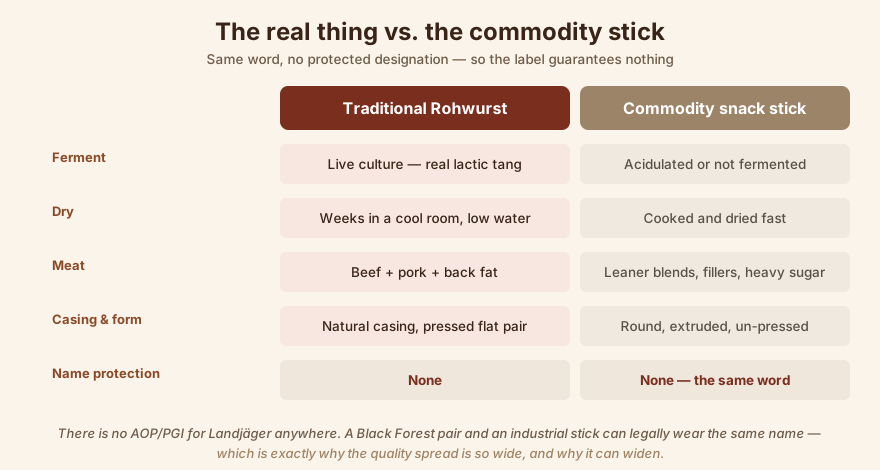
It’s genuinely fermented. This surprises people, and it’s the thing I most want you to take away: real Landjäger is a fermented sausage. Live lactic-acid bacteria drop its pH and give it that sour, tangy backbone. Most folks meet Landjäger as a “meat stick” and never guess there’s a real ferment underneath. Mass-market snack sticks are frequently acidulated with chemical acid or not soured at all — the tang is faked or absent, and the flavor is flatter for it.
It’s genuinely dried. The real article loses serious weight over weeks in a cool, dry room — that slow drop in water activity is what makes it shelf-stable, the same preservation engineering that let farm and vineyard workers carry it into the field. Many commodity meat sticks are cooked and dried fast to a stable stick without the slow cure. Different texture, different keeping mechanism, different animal entirely.
It’s beef-forward, honest meat. Traditional builds are real beef and pork with real pork fat. The commodity end leans on fillers, heavy sugar and spice, and “zero-sugar, keto, high-protein” marketing to sell a fundamentally different product.
It has natural-casing snap and the pressed flat pair. The traditional board-pressed pair in natural casing gives the characteristic bite and that unmistakable flat, angular shape. Commodity sticks are round, extruded into collagen, and never pressed. (The form and why it’s pressed into pairs is its own story — that’s what it is.)
And the name protects none of it. This is where the earlier fact comes home to roost. Because there’s no PDO or PGI, the word “Landjäger” on a package guarantees nothing — it spans the genuine artisan Black Forest pair and the industrial snack stick with equal legal blessing. The regulatory gap is the quality spread. It’s the reason the gap exists and the reason it can keep widening.
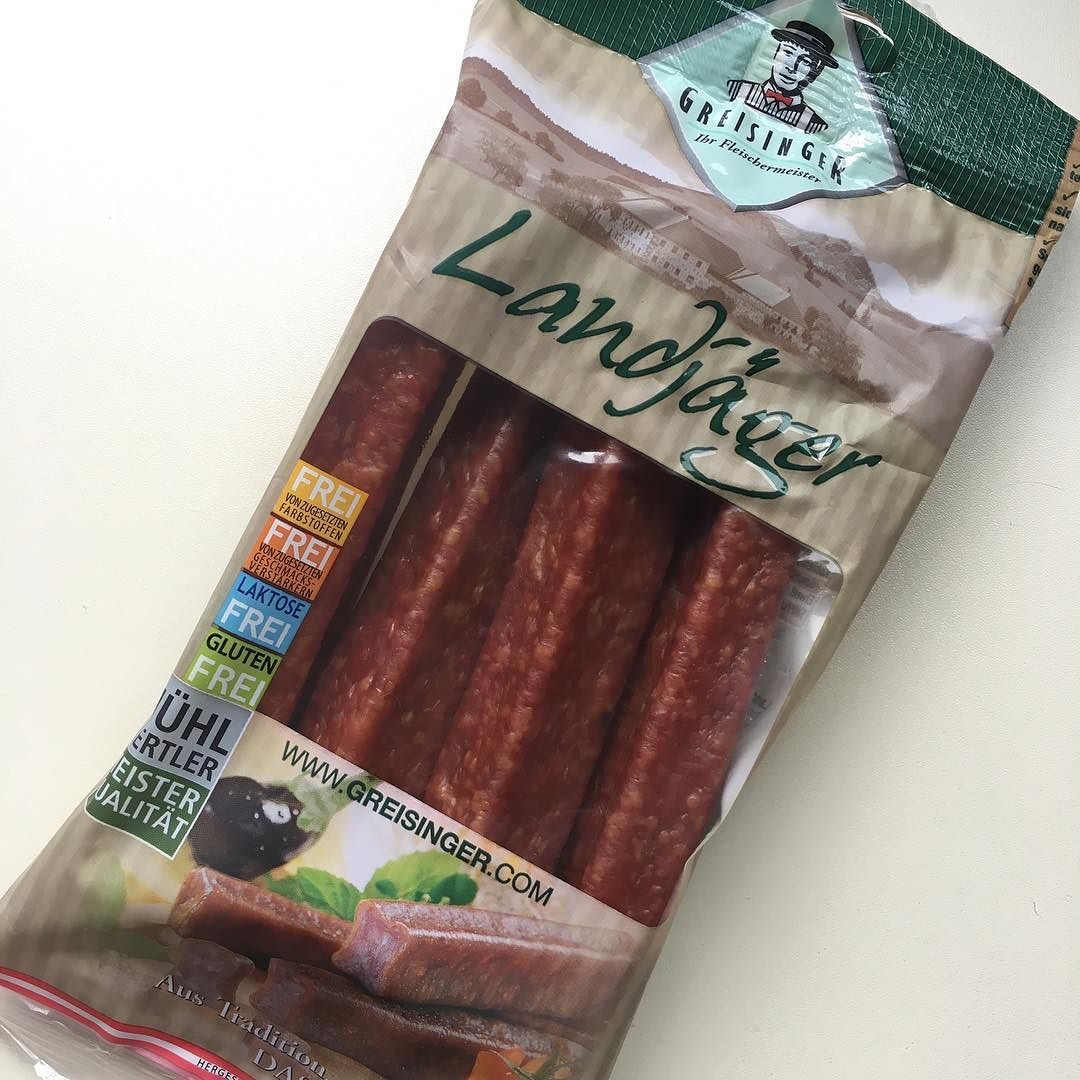
That’s the tradition: a mountain food, not just a German one; a name with three stories and no proof; a technique genuinely old under a name younger than people think; and a word the law leaves completely undefended. Knowing all that is exactly what makes me want to make the real one with my own hands — which is the next part of the story.
For the raw materials, the two very different ways people build this sausage, the cure, the ferment, the press, the smoke, and the safety you can’t get wrong, go to the craft. For the deeper German-sausage context, there’s the Old World, Germany. And if you’d like to see what’s already in my collection, here’s every Landjäger I’ve got.
Part of the Landjäger deep dive — one sausage, all the way down. Next: why I make my own, then the craft. Back to the sausage program.
Comments (0)