Coffee · 11 of 21
Water: The Other 98 Percent
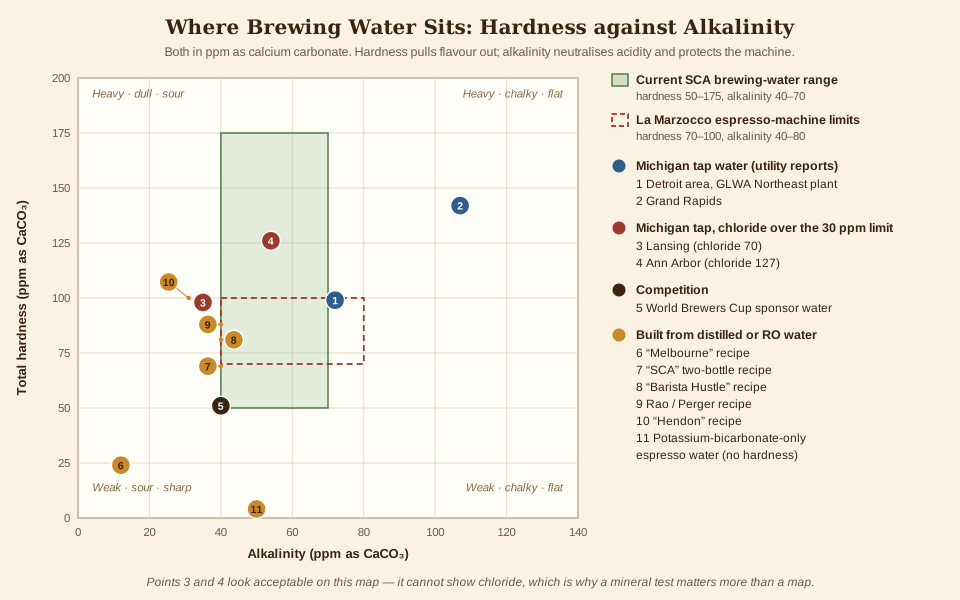
A cup of coffee is 98 to 99 percent water, and I want two things from that water. In the shop, I want the cup a customer gets in February to taste like the one they got in August — tight consistency, cup to cup, day to day, year to year. And I want to be able to tell that same customer, in two minutes at the counter, how to get close to it at home with a bag of our beans.
I haven’t built the shop’s water system yet. This page is the homework for it: what the standards actually say, what people who compete with coffee do, how to start from reverse-osmosis water and build it back up, what Michigan tap water looks like, and what the equipment costs. Wherever a number appears, the source is linked beside it. Where a common claim turned out not to have a source, the page says so.
Two numbers do most of the work
Water chemistry for coffee comes down to two properties, both reported in the same unit — parts per million “as calcium carbonate” (ppm as CaCO₃).
Hardness is dissolved calcium and magnesium. These are the minerals that take part in extraction; too little and the cup is thin and sharp, too much and it is heavy and dull.
Alkalinity is the water’s capacity to neutralise acid — in practice, its bicarbonate. The research group behind the SCA’s water chart defines it as “the amount of acid that has to be added to a water sample to decrease pH to 4.3,” and states the effect on taste in one line: “The higher the alkalinity the lower the perceived acidity” (SCAE Water Chart, pp. 6 and 12). Coffee’s brightness is acid. Alkalinity is what flattens it.
Those two are the axes of the chart above, and the four corners are labelled the way that report labels them: low hardness with low alkalinity tastes weak, sour, sharp; high with high tastes heavy, chalky, flat.
The same report says which of the two matters more: “Total hardness has less of an impact than alkalinity” (p. 14). If only one number gets managed, it should be alkalinity.
Everything else is a pass/fail check rather than a dial:
- Chlorine and chloramine — must be gone. They “can impart a strongly unpleasant flavour in the resulting brew even at concentrations which are not perceivable in the water itself” (SCAE, p. 1).
- Chloride — a different thing from chlorine. It does not hurt the cup at normal levels; it pits stainless-steel boilers. More on this below, because in parts of Michigan it decides the whole system.
- pH — follows from the others. Between 6 and 8 is fine.
Converting units
Water reports use several units for the same thing. These factors are from the conversion table in the SCAE Water Chart (p. 8):
| To get ppm as CaCO₃ from… | multiply by |
|---|---|
| grains per gallon (gpg) | 17.12 |
| German degrees (°dH, dGH, dKH) | 17.85 |
| mg/L of calcium | 2.497 |
| mg/L of magnesium | 4.118 |
| mg/L of bicarbonate | 0.8202 |
The U.S. Geological Survey’s everyday labels: up to 60 ppm is soft, 61–120 moderately hard, 121–180 hard, over 180 very hard (USGS).
”The SCA standard” is three documents with three sets of numbers
Most of the internet quotes one water standard. There are three, and the number most often repeated is from the oldest.
| 2009 SCAA standard | 2016 SCAE Water Chart | Current, per SCA Standard 310-2021 | |
|---|---|---|---|
| Hardness | calcium hardness 68 mg/L (range 17–85) | total hardness 50–175 ppm as CaCO₃ | calcium hardness 50–175 ppm as CaCO₃ |
| Alkalinity | 40 mg/L, “at or near” | 40–75 ppm as CaCO₃ | 40–70 ppm as CaCO₃ |
| pH | 7.0 (6.5–7.5) | 6.5–8 | 6–8 |
| Dissolved solids | 150 mg/L (75–250) | no target | not stated |
| Sodium | 10 mg/L | not stated | not stated |
| Chlorine | 0 | none | none |
Sources: the 2009 SCAA table (a third-party copy; the original address no longer resolves), the SCAE Water Chart, and SCA Standard 310-2021, section 7.1.4, which describes “the current SCA Water standard” as “calcium hardness equivalent to 50 to 175 ppm CaCO3, alkalinity equivalent to 40 to 70 ppm CaCO3, and pH of 6 to 8.”
Three things follow.
The “150 ppm TDS” target is the 2009 number. The later documents dropped a dissolved-solids target, and the Water Chart says why: conductivity “does not contain any information on what the TDS is actually made up of” (p. 8).
The alkalinity floor is about the machine, not the cup. “The risk of corrosion can be kept low if alkalinity is at least 40 ppm CaCO3 at pH 6–8” (SCAE, p. 1). Filter coffee can go lower; the same report notes that “brewed coffee needs less alkalinity for an optimum extraction since much more water is used” (p. 14).
Correction to this site’s own brewing page. Brew Methods used to say to “target roughly 50–150 ppm TDS … around where the SCA’s water guidance sits.” That matched neither the old standard (75–250) nor the current one, which has no such target. The brewing and espresso pages were corrected on 2 October 2026 and now point here.
The SCA’s 2018 Water Quality Handbook is sold, not posted, so nothing here is quoted from it directly.
Is magnesium really better than calcium?
The claim that magnesium “extracts more flavor” traces to one paper: Hendon, Colonna-Dashwood and Colonna-Dashwood, “The Role of Dissolved Cations in Coffee Extraction” (Journal of Agricultural and Food Chemistry, 2014). It is worth knowing what that paper is.
It is a computer calculation, not a brewing experiment. The authors computed how strongly sodium, magnesium and calcium ions bind seven coffee compounds. Magnesium bound most strongly “in all cases.” But the paper’s own conclusion on flavour is modest: “both Ca2+ and Mg2+ do a comparable job, with Mg2+ having the added feature of preventing scale formation,” and “the macroscopic effects of this would be better probed experimentally.” It also says, plainly, that “there is not one particular composition of water that produces consistently flavorsome extractions from all roasted coffee.”
Then people tried the experiment:
- The Swiss group that wrote the SCA’s Water Chart reported: “In our own test series we could not verify this effect by means of a coffee refractometer, though a clear impact on flavour balance and aroma was detected” (SCAE, p. 12).
- A 2024 study from Umeå University added magnesium and calcium salts before and after brewing and measured the acids directly. Its finding: “dissolved magnesium and calcium chloride salts did not affect the extraction of the acids” — extraction “proceeds independent of the water composition,” and what the minerals change may happen in the cup afterwards (Bratthäll, Figueira and Nording, Heliyon, 2024). The authors note their own limits: a dark roast, and no bicarbonate in the test.
So: the kind of hardness mineral may shift flavour balance, and magnesium has a real practical advantage — it does not form scale the way calcium does. But “magnesium extracts more” as an established brewing fact is not supported by the experiments run so far.
Why not just use pure RO or distilled water?
Because it fails on both counts.
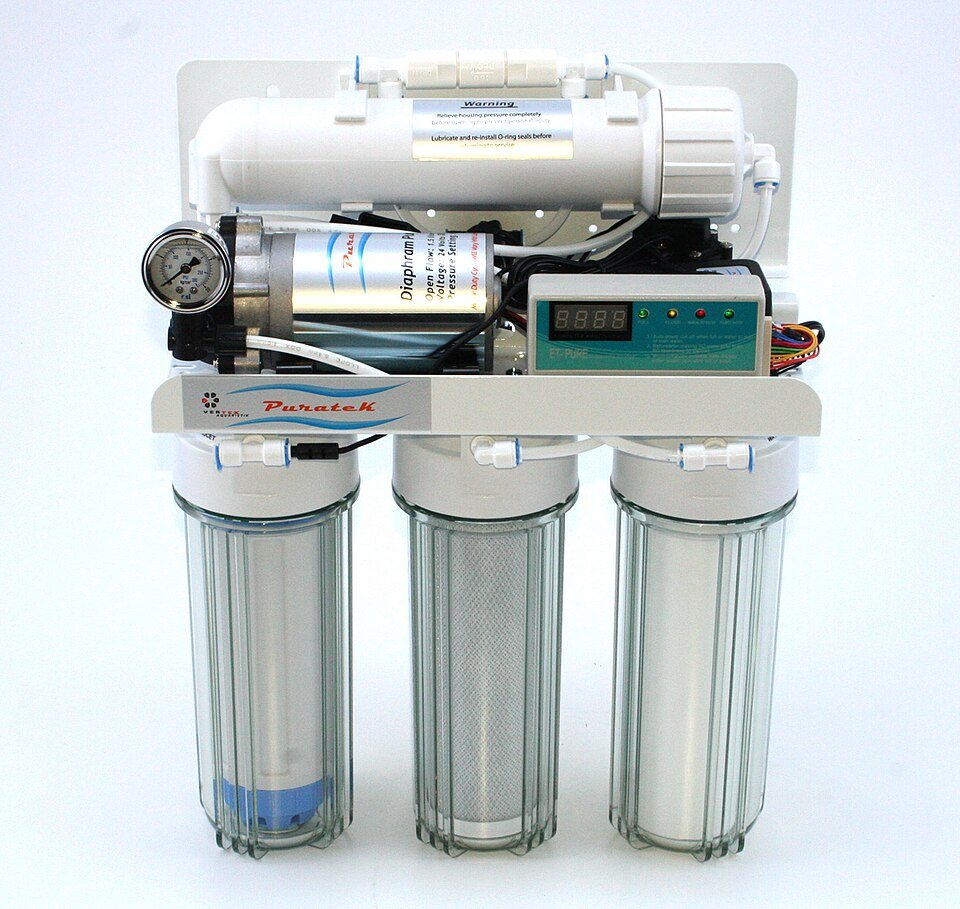
In the cup. With hardness under about 70 ppm, La Marzocco’s water guide describes “flat body, low aromatics, little or no crema”; with dissolved solids under 90, “weak body, tart taste” (Understanding Water).
In the machine. Water with almost nothing in it picks up carbon dioxide from the air and turns acidic. The Water Chart’s authors “strongly advise against using a water with such a low alkalinity for espresso machines” because it “could make this water acidic (pH < 6) and cause corrosion” (p. 14). La Marzocco says such water “becomes aggressive against espresso equipment’s materials,” and that on its home machines water that is too pure “will not be recognised by the machine” at all — the level sensor needs some conductivity to work.
There is one honest counter-example. The 2016 World Brewers Cup champion, Tetsu Kasuya, described brewing with “a pure water that is 0.33 ppm” (Kurasu). That was a hand-poured filter coffee, made once, with a kettle. Nobody runs it through a boiler.
Reverse osmosis is the right first step when the tap water is a problem. It is never the last one.
Chlorine, chloramine, and why the difference matters in Michigan
Utilities disinfect with either chlorine or chloramine (chlorine bound to ammonia). Both have to come out.
Chlorine is easy: the Water Chart says it “can be easily addressed by active carbon filtration” (p. 11). Chloramine is slower. The Water Quality Association explains that “activated carbon does not adsorb chloramines but rather removes them through its ability to act as a catalyst,” that “a bed contact time of 10 minutes or greater can be required,” and that newer catalytic carbons were developed for the job (WQA fact sheet).
That matters here because Lansing and Ann Arbor both use chloramine, while Grand Rapids and the Detroit-area system checked for this page use free chlorine (see the table below). A basic carbon cartridge sized for chlorine can let chloramine through.
What a TDS meter can and cannot tell you
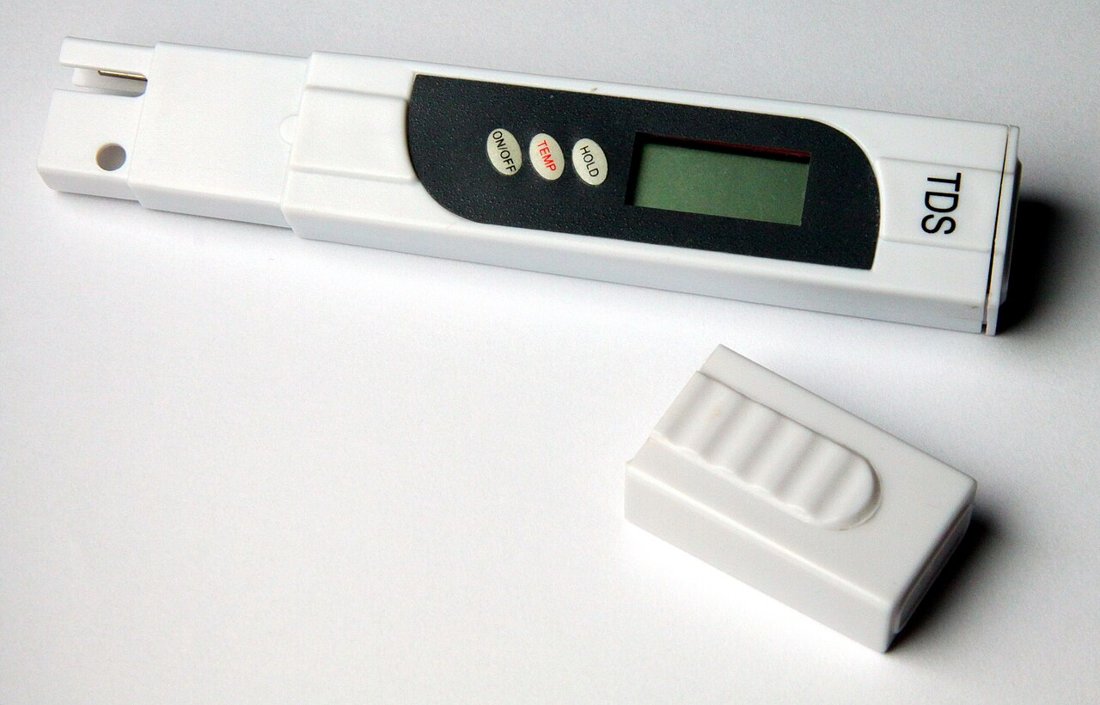
The pen-style “TDS meter” measures electrical conductivity and multiplies by an assumed factor. The Water Chart puts the typical error at ”+/-30% (and in rare cases over 50% error)” (p. 31), and it cannot tell hardness from alkalinity from salt.
What it is good for is exactly the thing a shop needs: the same report calls conductivity “very useful for checking for the stability of the tap water as well as the treated water” (p. 8). It will not tell you what your water is. It will tell you, in ten seconds, that it has changed.
Michigan tap water, from the utilities’ own reports
Michigan cities draw from very different sources — the Great Lakes, rivers, and groundwater — and the numbers show it. All figures are as reported by each utility; hardness and alkalinity are ppm as CaCO₃.
| System (source) | Hardness | Alkalinity | Chloride | Sodium | Disinfectant |
|---|---|---|---|---|---|
| Detroit area — Great Lakes Water Authority, Northeast plant (Detroit River) | 99 (88–108) | 72 (60–80) | 10.6 mg/L | 4.6 mg/L | chlorine |
| Grand Rapids (Lake Michigan) | 142 (126–164) | 107 (101–119) | 17 mg/L | 14 mg/L | chlorine |
| Lansing Board of Water & Light (wells, lime-softened) | 98 (86–130) | 35 (31–51) | 70 mg/L (50–100) | 84–110 mg/L | chloramine |
| Ann Arbor (Huron River plus wells) | 126 (74–180) | 54 (35–104) | 127 mg/L (99–170) | 71 mg/L | chloramine |
Sources: the Great Lakes Water Authority’s 2024 mineral analysis as published in Clinton Township’s water quality report; Grand Rapids’ 2025 average water analysis; the Lansing Board of Water & Light 2023 report; and Ann Arbor’s 2025 report. Only one of the Great Lakes Water Authority’s plants was checked. Kalamazoo’s reports do not list hardness; a 2016 local news report put it at “about 20 grains of hardness per gallon,” roughly 340 ppm.
Read against the chart at the top of this page:
- The Detroit-area water is nearly on target as delivered. Carbon filtration would be most of the job.
- Grand Rapids is too hard and too alkaline, but low in chloride. It needs alkalinity taken down.
- Lansing and Ann Arbor look fine on the chart and are not. Their chloride is 70 to 127 mg/L, against espresso-machine limits of 15 to 30. La Marzocco is blunt about the remedy: “CHLORIDES CAN ONLY BE REMOVED BY REVERSE OSMOSIS” (Understanding Water).
The water also moves during the year. Ann Arbor’s hardness ranged from 74 to 180 within a single reporting year. Lansing’s report says results “can vary depending on the wells that are in use, the time of the year,” and run toward the high end “during high demand periods in the summer months.” And chloride in the lakes themselves is rising: Lake Michigan went from 1–2 mg/L in the 1800s to more than 15 mg/L in 2020, with road salt a main contributor (Eos).
Getting your own water tested
A utility report describes the plant, not your tap, and a well has no report at all. Michigan’s state drinking water laboratory in Lansing will run a full mineral panel. On the fee schedule effective July 2024, the “Complete Minerals” test — alkalinity, chloride, calcium, magnesium, sodium, hardness, pH, conductivity and more — was $104; a partial chemistry panel was $18, and alkalinity alone $16 (EGLE fee schedule, as hosted by the Barry-Eaton District Health Department). The form says to call ahead before dropping off samples and that fees change annually; a newer schedule exists that could not be opened for this page, so confirm the price. Local health departments hand out the sample kits.
What competitors use
The rules
At the World Brewers Cup, the answer depends on the round. The 2026 rules say: “Competitors must utilize the water provided by the competition for Compulsory Service, but competitors may utilize their own brew water for Open Service.” In the compulsory round the sponsor water is used “with no additions.”
That sponsor water has a published target: 85 mg/L dissolved solids (range 50–125), calcium hardness 51 mg/L, alkalinity 40 mg/L, pH 7.0, sodium 10 mg/L. It is point 5 on the chart — softer than most café water, at the bottom edge of the SCA range.
A competitor who brings water has to bring a kettle too, and the water can be checked: the organisers “may request a sample of the water of a competitor for lab analysis on composition and additives,” and the head judge tastes it “to verify that the water does not contain any flavors or characteristics not typical of clean potable water.”
The World Barista Championship (espresso) is different. Its 2026 rules contain no water specification and no bring-your-own clause; competitors use the sponsored machine as plumbed and “may not change, adjust, or replace any element, setting, or component” of it.
What named competitors have said
Only what a source actually states:
| Who | What they said they used | Source |
|---|---|---|
| George Jinyang Peng, 2025 World Brewers Cup champion | ”mineral water with a TDS of 40PPM” | Sprudge |
| Martin Wölfl, 2024 champion | a blend of three Apax Lab mineral concentrates — 1 g, 1.5 g and 1.5 g per litre | Apax Lab (the maker’s own page) |
| Nicole Battefeld-Montgomery, 11th in 2022 | a very soft bottled water rebuilt to “a total ppm of 105” with magnesium chloride, calcium chloride and a bicarbonate buffer | her own write-up |
| Tetsu Kasuya, 2016 champion | near-pure water, “0.33 ppm” | Kurasu |
The pattern is not a recipe. It is that competition filter water runs soft — roughly 40 to 105 ppm — and is built from scratch on purified water so that it is identical every time. No espresso champion’s water statement could be found.
The products
- Third Wave Water — a mineral stick dissolved in a gallon of distilled or RO water; $18 for twelve. The maker lists ingredients but not weights. The Classic profile is magnesium sulfate, calcium citrate and sodium chloride, for about 150 mg/L dissolved solids and 40 mg/L alkalinity; the Espresso Machine profile swaps the sodium chloride for potassium bicarbonate (ingredients).
- Lotus Water drops — four dropper bottles (calcium chloride, magnesium chloride, sodium bicarbonate, potassium bicarbonate), so hardness and alkalinity can be set separately. Scott Rao’s dosing notes: in 450 ml, one drop of a hardness bottle adds 10 ppm and one drop of a buffer bottle adds 5 ppm.
- Apax Lab — liquid concentrates sold by flavour effect rather than by mineral, dosed at 3 to 4 grams per litre (user guide). The maker does not publish ion concentrations.
One caution applies to the drop products. Their hardness comes from chloride salts, and an enthusiast guide notes that such concentrates “use chlorides which can be very corrosive and so are not usually recomended for espresso machines” (Espresso Aficionados). Fine for a kettle. Not for a boiler.
Starting from RO and doctoring it up
Yes — this is exactly what competitors do, and it is the most repeatable water there is, because the starting point is always nothing.
What to add: five salts, two jobs
RO water needs two things put back: something for hardness and something for alkalinity. Every recipe, packet and cartridge on this page is a choice from the same short list.
| Salt | Adds | For and against |
|---|---|---|
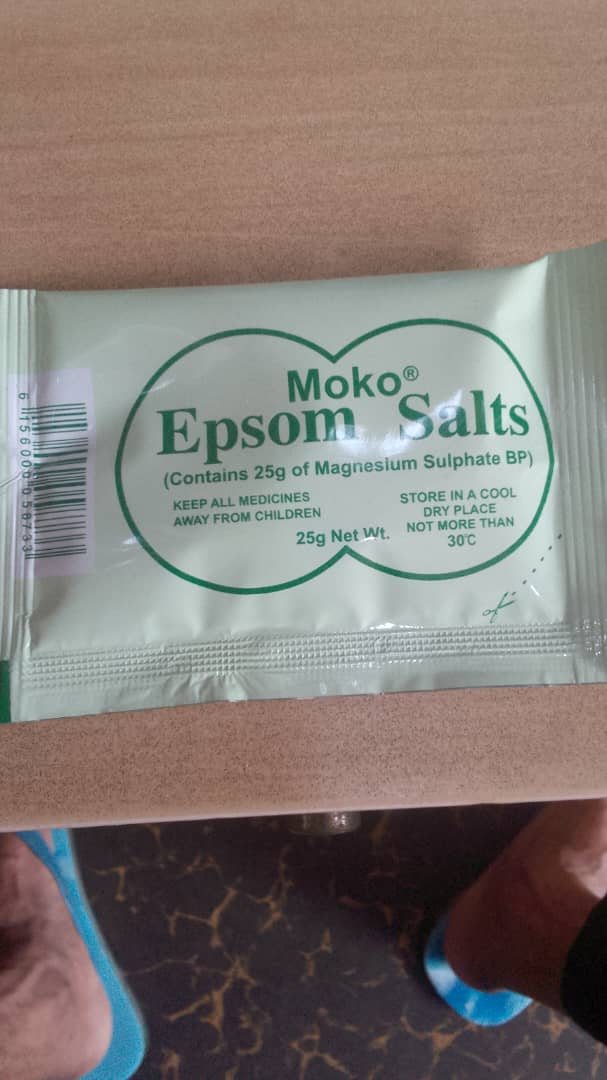
| Epsom salt (magnesium sulfate heptahydrate) | hardness, as magnesium | Dissolves easily, sold food-grade, forms no scale, adds no chloride. The default. |
| Baking soda (sodium bicarbonate) | alkalinity | Cheap and in every kitchen. Adds a little sodium. |
| Potassium bicarbonate | alkalinity | The no-sodium alternative; use 1.19 times the weight of baking soda. One guide calls it “more flavour transparent” while noting it “adds a distinct metallic taste” (Espresso Aficionados) — taste it before committing. |
| Calcium chloride, magnesium chloride | hardness | What the drop products and several competition recipes use. Both bring chloride, which “is to be strictly avoided in an espresso machine because chloride is corrosive to copper, brass, even stainless steel” (Home-Barista). Kettle and filter coffee only. |
| Calcium citrate | hardness, as calcium | The calcium source in Third Wave Water. Sparingly soluble, so awkward to mix at home. |
Left off on purpose: gypsum (calcium sulfate). The same source notes that “magnesium sulfate is nicely soluble, calcium sulfate (gypsum) is not,” and that its deposits “don’t even dissolve well in descaling solution.”
So the plain answer to what do I add to RO water is Epsom salt and baking soda — or Epsom salt and potassium bicarbonate — in the amounts below. Calcium is optional: the 2014 paper that started the magnesium argument called the two “comparable” for flavour, and leaving calcium out is what keeps the water from scaling.
For anyone building a bench of single-salt stocks, one supplier publishes concentrates sized so that 1 ml in 1 litre adds 10 ppm: per 500 ml of distilled water, 12.3 g Epsom salt, 8.4 g baking soda, 10.0 g potassium bicarbonate, 5.6 g anhydrous calcium chloride or 10.2 g magnesium chloride hexahydrate (Nucleus Coffee).
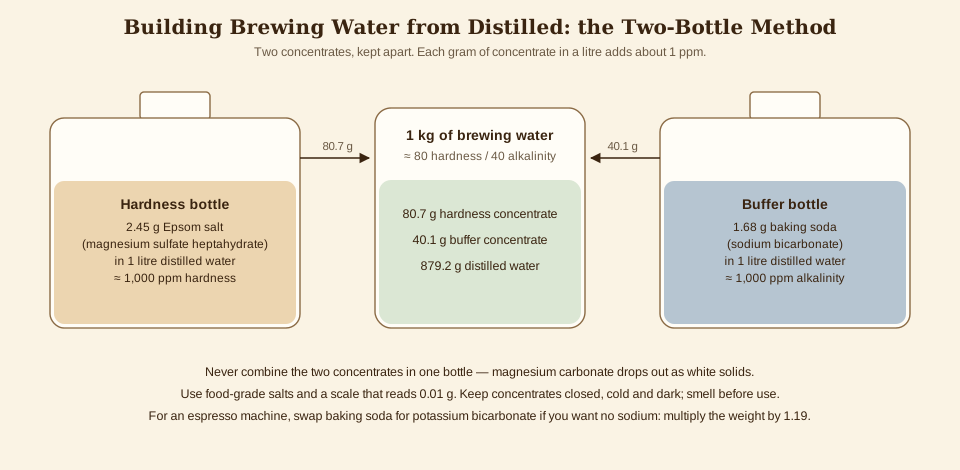
The two-bottle method
Make two concentrates in distilled water and keep them separate:
- Hardness: 2.45 g Epsom salt (magnesium sulfate heptahydrate) in 1 litre.
- Buffer: 1.68 g baking soda (sodium bicarbonate) in 1 litre.
Each is about 1,000 ppm as CaCO₃, so each gram of concentrate in a litre of water adds about 1 ppm. This scheme was popularised by Barista Hustle; its own page is behind a paywall, so the figures here are taken from a Home-Barista moderator’s description (“The BH buffer used 1.68g of sodium bicarb per liter … each gram of concentrate added to a liter of water adds 1 ppm” — thread) and from Jonathan Gagné’s independently published versions, and checked by arithmetic from the molecular weights.
Recipes, as grams of each concentrate made up to 1 kg with distilled water:
| Recipe | Buffer | Hardness | Distilled water | Result (hardness / alkalinity) |
|---|---|---|---|---|
| “Melbourne” | 11.5 g | 23.7 g | 964.8 g | about 24 / 12 |
| ”SCA” | 40.1 g | 68.6 g | 891.3 g | about 69 / 40 |
| ”Barista Hustle” | 40.1 g | 80.7 g | 879.2 g | about 81 / 40 |
| ”Hendon” | 30.8 g | 99.9 g | 869.3 g | about 100 / 31 |
The gram weights are from a secondary reproduction of the Barista Hustle table. The result column is derived from the 1-gram-equals-1-ppm relation, not quoted.
Rules that matter:
- Never mix the two concentrates in one bottle. Magnesium carbonate precipitates out; as the Home-Barista moderator puts it, “for concentrate bottles you gotta keep em separated” (thread).
- Buy food-grade salts. Gagné: “Always buy food-grade ingredients, not the pharmacy-grade or lab-grade ones” (Coffee ad Astra).
- Treat it as food. The same source keeps concentrates “tightly closed in the fridge” and warns that mixed water “will turn bad after approximately a week out of the fridge, or a month in the fridge.” Smell it before use.
Skipping the concentrates
For a gallon at a time, dose the dry salts directly. Per US gallon of distilled water: 0.65 g Epsom salt gives about 70 ppm hardness, and 0.25 g baking soda (or 0.30 g potassium bicarbonate) gives about 40 ppm alkalinity (Home-Barista). That needs a scale reading to 0.01 g.
The recipe one author prefers
Jonathan Gagné, an astrophysicist who tests brewing water blind, lists eleven recipes and says of the one attributed to Scott Rao and Matt Perger: “So far this is my favorite recipe from blind testing.” It uses five salts for a result near 88 hardness and 40 alkalinity (Coffee ad Astra). It includes magnesium and calcium chlorides, so it is a filter-coffee recipe. Rao’s own stated preference is “an alkalinity level of 30—40ppm,” with the caveat that on hardness “there is little consensus on the optimal level” (Scott Rao).
For an espresso machine: leave the chloride out
Espresso machine makers publish water limits, and chloride is the one that rules out most hobby recipes:
| Maker | Hardness | Alkalinity | Chloride limit | Source |
|---|---|---|---|---|
| La Marzocco | 70–100 ppm | 40–80 ppm | 30 ppm | specification |
| Synesso | under 85 ppm | under 100 ppm | 15 ppm | owner’s manual, p. 7 |
| Slayer | 2–6 grains (about 34–103 ppm) | 40–100 mg/L | under 30 ppm | manual, p. 7 |
La Marzocco’s reason: “chlorides cause severe phenomenon of pitting corrosion, particularly in stainless steel.” One of its regional guides gives the limit as 50 rather than 30; the stricter figure is the one on its U.S. specification sheet.
Two espresso-safe approaches:
- The two-bottle recipe above, as written. Epsom salt is a sulfate and baking soda a bicarbonate; neither adds chloride. To avoid sodium, substitute potassium bicarbonate at 1.19 times the weight (Espresso Aficionados).
- Potassium bicarbonate only. A well-known recipe from the Home-Barista forum, named for the late chemist Robert Pavlis, is “simply 100 mg of potassium bicarbonate … per liter of water” — 50 ppm alkalinity and no hardness at all — or 0.38 g per US gallon (thread). With no calcium there is nothing to form scale, and it is “completely free of chlorides, sulfates, or other ions that might be a corrosion concern.” It is point 11 on the chart: outside the SCA box on purpose, trading some cup character for a machine that never needs descaling. One warning — the first post of the thread on mixing it contains a tenfold error (10 g where 1.0 g is meant), corrected further down by the moderator.
Already running a well through RO?
That is a sound first half. A private well has no utility report, well water in much of Michigan is hard, and RO is the one treatment that also strips chloride. What is missing is the second half: straight RO water is the too-pure water described above, flat in the cup and corrosive in a boiler.
Three steps close the gap:
- Test both ends. Send the raw well water and the RO output to the state lab (above). The raw result says what the membrane is up against; the RO result says what is left over, which is the starting point for any recipe.
- Check the membrane. A working unit removes about nine-tenths of what goes in — “if you are putting in 300 ppm water it should be coming out less than 30 ppm” (Home-Barista). A pen meter on the feed and the output shows this in a minute.
- Put minerals back with any of the methods in this section, counting whatever hardness and alkalinity the lab found still in the RO water. The shortest version: per US gallon of RO water, 0.65 g Epsom salt and 0.25 g baking soda, for roughly 70 hardness and 40 alkalinity.
If a softener sits ahead of the RO unit, nothing changes: the softener’s sodium is among the things the membrane removes.
One regulatory point for a business rather than a kitchen. In Michigan, a business serving the public from its own well is a public water supply in law. Kalamazoo County’s health department defines it this way: “A Type II Noncommunity Water Supply system is a privately owned water system that provides drinking water to 25 or more persons at least 60 days per year,” and gives “motels, restaurants and campgrounds” as examples (Kalamazoo County). The county health department administers the programme for the state, and it comes with its own sampling requirements. A coffee shop on a well should start that conversation before buying equipment.
Blending instead of dosing
If the tap water is decent apart from being too alkaline, blending RO water with filtered tap water works. Rao’s worked example: tap at 60 ppm alkalinity, RO output at 6; “if you use 55% RO + 45% blending water, the result will be: .556 + .4560 = 3.3 + 27 = 30.3” (Scott Rao). The weakness for a shop is in the arithmetic: the result depends on the tap water, so when the tap moves, the blend moves with it.
The shop: a system that does not drift
The goal is that the water reaching the grinder side of the bar is the same in every season. That rules options in and out.
| Option | What it does | Why it fits or fails here |
|---|---|---|
| Carbon filter only | Removes chlorine, taste, odour | Fine where the tap is already in range and stable. The output follows every swing in the supply. |
| Sodium softener | Swaps calcium and magnesium for sodium | Stops scale, but removes the hardness coffee needs and leaves chloride untouched. La Marzocco “recommends caution”; BUNN says water “should never be artificially softened” (Coffee Basics). |
| Decarbonising cartridge with bypass | Removes carbonate hardness; a dial sets how much | One cartridge, no drain, no power. Still tracks the tap, does nothing about chloride, and capacity drops quickly as hardness rises. |
| Reverse osmosis with a blend valve | Strips nearly everything, then bleeds some filtered tap back in | Removes chloride. The blend-back brings some variation back with it. |
| Reverse osmosis with fixed remineralisation | Strips nearly everything, then adds a fixed mineral dose | The only option whose output does not depend on the tap. Costs more, wastes some water, has more parts to service. |
For year-to-year consistency the last row is the one. An RO system with a plain blend valve is explicitly variable; the spec sheet for one says its output “will vary based on tap water TDS, RO percent rejection and desired blend water TDS.”
Equipment, with the makers’ own numbers
Prices are retail listings seen in October 2026 and will move.
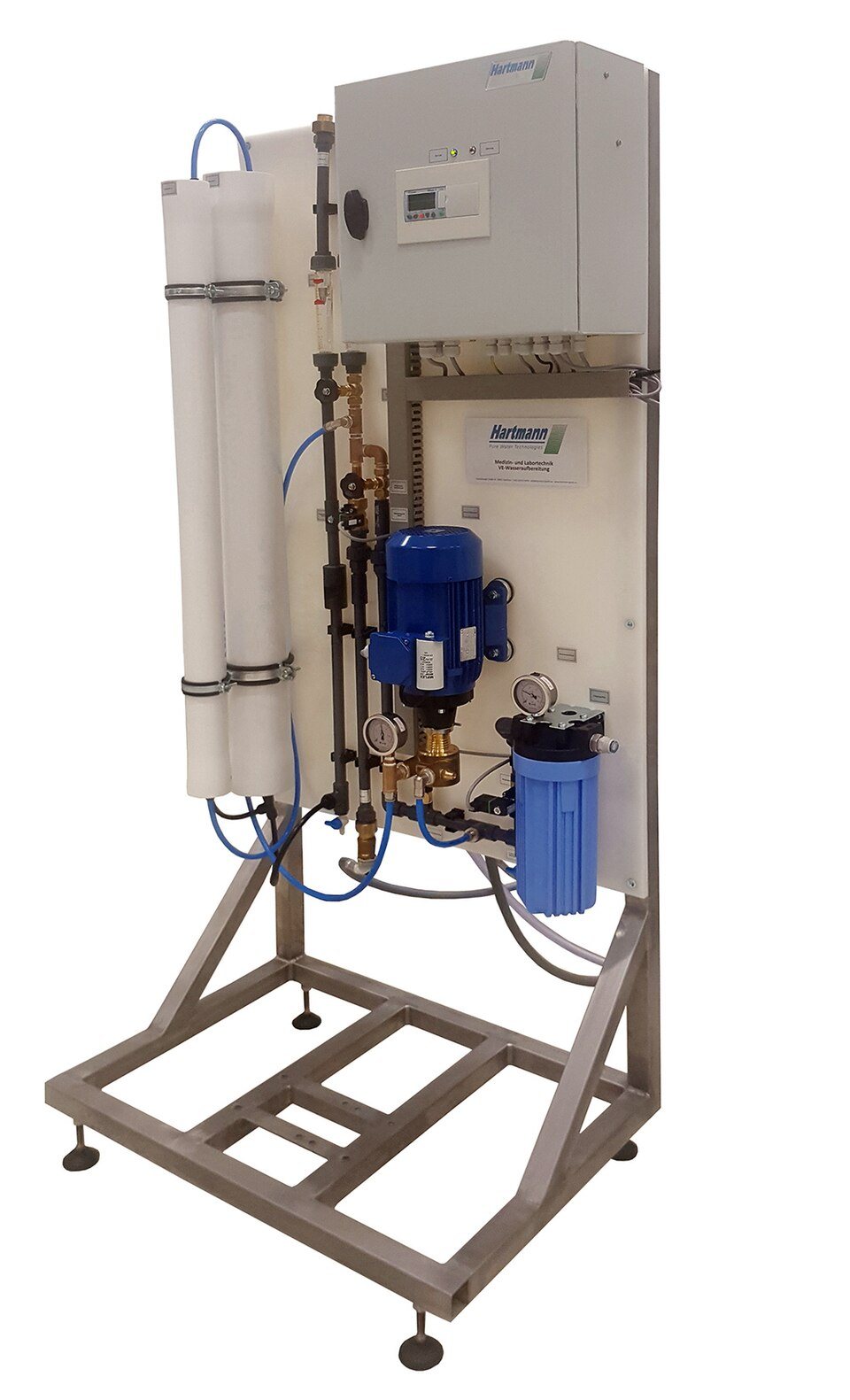
| System | Output | How minerals go back | Service interval | Price seen |
|---|---|---|---|---|
| Pentair Everpure Conserv 75E | about 50 gallons a day | calcite feeder and blend valve | all cartridges yearly | $2,139 |
| Pentair Everpure MRS-600HE | 600 gallons a day; 78% recovery | tap-water blend | filters 6 months, membranes yearly | $4,830 |
| OptiPure BWS175 | 175 gallons a day | mineral-addition cartridge, then blend valve | filters and mineral cartridge 6 months, membrane 18 | $2,122–$2,563 |
| BWT bestbarista ROC Coffee | 120 litres an hour; about 50% recovery | fixed remineralisation, magnesium-led | cartridge 6–12 months, membrane 12–24 | not found |
The retailer listing the OptiPure notes it “has been replaced by the Pentair / Everpure EZ-RO 200,” so check what is current before ordering.
Where the tap is merely too alkaline, the cartridge route is cheaper. The BWT bestmax PREMIUM exchanges calcium for magnesium; cartridges were listed at $139 to $499 by size. The Pentair Everpure Claris and Brita PURITY C Quell ST are decarbonising cartridges with an adjustable bypass. Capacity falls fast on hard water: the largest Claris is rated for 4,980 gallons at 125 ppm carbonate hardness and 2,910 at 179 ppm (Claris manual).
How a fixed mineral dose is actually added
“Fixed” is the point: the same amount of the same minerals into the same amount of stripped water, whatever the tap is doing. There are three ways to get there, and they are not equally fixed.
1. Batch dosing — the most exact, and it needs no plumbing. Fill a food-grade container with RO or distilled water, add a weighed dose, mix. Nothing in the result depends on flow, pressure or cartridge age.
| Batch | Epsom salt | Baking soda | Result |
|---|---|---|---|
| 1 US gallon | 0.65 g | 0.25 g | about 70 hardness / 40 alkalinity |
| 5 US gallons | 3.25 g | 1.25 g | the same |
| 20 litres | 3.4 g | 1.3 g | the same |
The one-gallon row is from Home-Barista; the other two are that row scaled. Weighing three grams accurately is easier than weighing a quarter of a gram, which is an argument for mixing five gallons at a time, or for dosing from the two concentrates by the gram. A packet does the same job with no scale: Third Wave Water sells its sticks in a five-gallon size as well as one-gallon and two-litre.
This is the method that suits a market stall or a cart, where the water is carried in. It is also how competitors do it.
2. A mineral cartridge after the RO membrane. This is what the plumbed café systems in the table above do. The OptiPure passes RO water through a “mineral-addition cartridge” and then a “precision blend valve,” with a dissolved-solids monitor on the output (spec sheet). The Pentair Conserv 75E uses a “Calcite Feeder and blending valve” (spec sheet) — calcite is calcium carbonate, so it adds hardness and alkalinity together. BWT’s unit has a fixed remineralisation stage “focussing on Magnesium and Silicate” and claims to work “completely independent of local water quality” (datasheet); that is the maker’s claim, with no independent test found.
A cartridge is fixed by design, not by weight. It dissolves as water passes, so the dose can drift as the cartridge is used up — which is what the weekly hardness and alkalinity test is for. Where the system finishes with a blend valve, some tap water is coming back in, and with it some of the tap’s variation.
3. A metering pump injecting concentrate into the RO line. This is the industrial method, proportional to flow. No coffee-specific product page for one could be confirmed for this page, so it is named here and not recommended.
For a shop that wants the tightest control at the lowest cost, the honest ranking is: batch dosing first, a mineral cartridge with a weekly test second.
If the shop is on city water with chlorine
Work through it in this order.
- Find out which disinfectant. The utility’s annual report says whether it is chlorine or chloramine. Chlorine comes out with ordinary activated carbon. Chloramine needs catalytic carbon and more contact time (above).
- Get the mineral numbers. Hardness, alkalinity and chloride are often not in the annual report; ask the utility for its mineral analysis, and send one sample from the shop’s own tap to the lab.
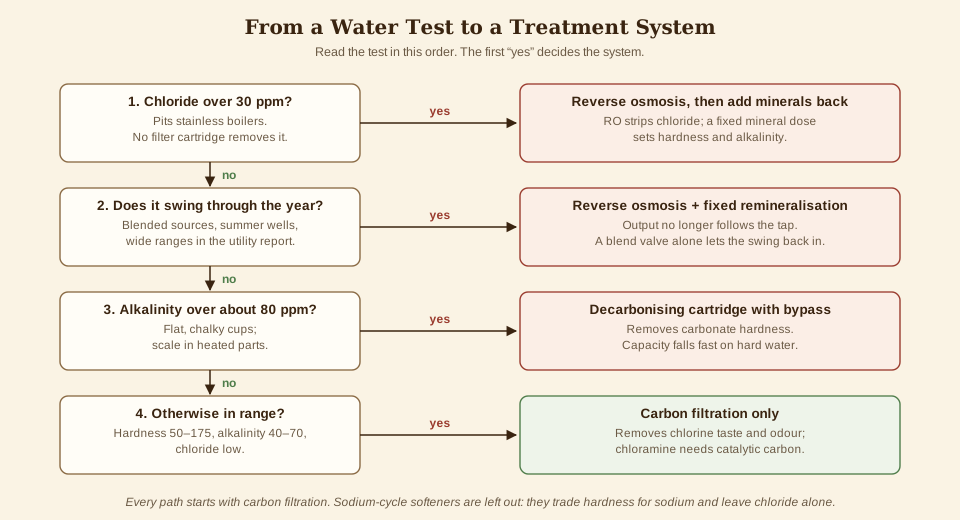
- Read the result against the decision chart.
- Hardness 50–175, alkalinity 40–70, chloride under 30, and steady through the year: carbon filtration is the whole system. The Detroit-area water in the table above is this case.
- Alkalinity well above 70, chloride low: carbon plus a decarbonising cartridge, or RO. Grand Rapids is this case.
- Chloride above the machine maker’s limit, or numbers that swing by season: carbon, then RO, then a fixed mineral dose. Lansing and Ann Arbor are this case.
- Check the carbon is doing its job. La Marzocco’s limit after treatment is 0.05 ppm free chlorine and 0.1 ppm total (specification); the company ships test kits with its machines for testing before and after the filter. Carbon is used up by the chlorine it removes, so a cartridge that tested clean in January can be letting chlorine through by summer.
City water has one real advantage over a well: it is already an approved source under the food code, with the utility doing the safety testing.
On wasted water. Home RO units can send “five gallons or more of reject water for every gallon” to the drain, per the EPA. The commercial units above claim 50 to 80 percent recovery — closer to one gallon wasted for every one to four made.
La Marzocco publishes a water calculator that takes a test result and recommends a treatment type. It was not run for this page.
Scale, in one paragraph
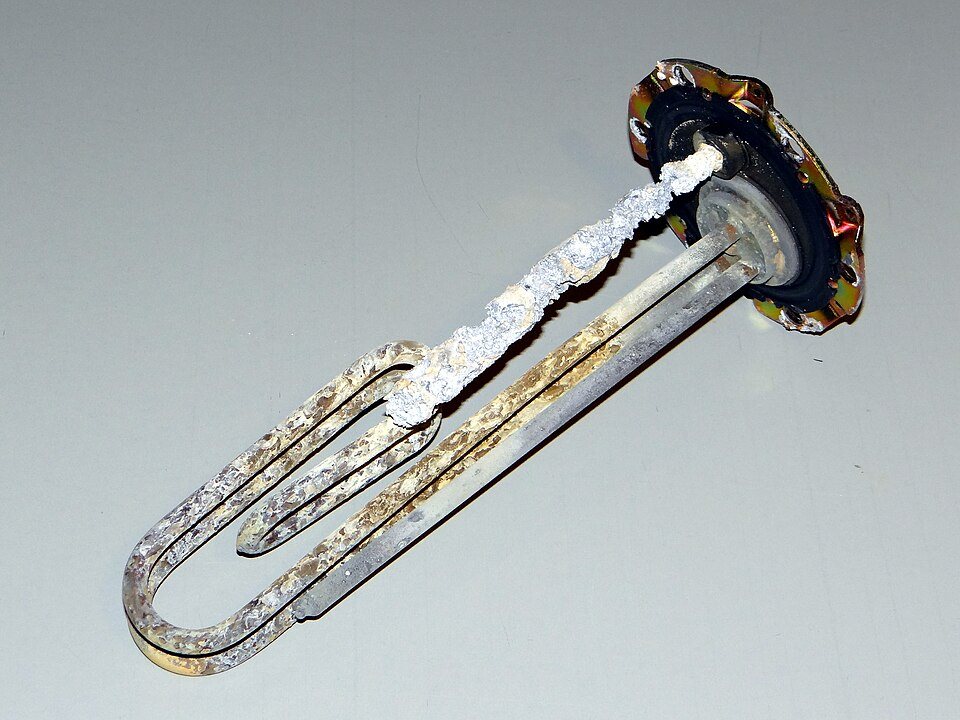
Whether water deposits scale depends on calcium, alkalinity, pH and temperature together, summarised by the Langelier index: positive means it tends to deposit, negative means it tends to dissolve metal. Heat pushes it positive, which is why water that is stable in the pipe scales in a boiler. The Water Chart turns this into a quantity: at 100 drinks a day, water on its three scale lines leaves “110g, 365g and 730g of scale that can form per year” (p. 12).
Keeping it the same: a routine
No filter maker or standards body publishes a testing schedule for cafés — none could be found. What follows is this page’s own recommendation, built from what each tool can measure.
| When | What | With |
|---|---|---|
| Every morning | Conductivity of the treated water, written down | A pen conductivity meter. It will not tell you what the water is; it will show the day it changes. |
| Weekly | Total hardness and alkalinity of the treated water | Drop-titration kits. The Hach 5-B hardness kit resolves 1 grain per gallon (17 ppm) per drop, which is coarse; alkalinity wants a finer kit. |
| Monthly | The same tests on the incoming tap | Tells you how hard the system is working and warns of a source change. |
| On the maker’s schedule | Cartridges and membranes | By gallons or months, whichever comes first — and sooner if the weekly numbers move. |
| Yearly, and after any change | A lab mineral panel on both tap and treated water | The state lab, above. This is the only test that sees chloride. |
The log is the point. A number that drifts for three weeks is a cartridge near the end of its life; a number that jumps overnight is the utility changing sources.
Rules a food business has to meet
Reported from the FDA Food Code (2022): drinking water must come “from an APPROVED source” (5-101.11); a filter must be “made of SAFE MATERIALS” (5-201.11); a water conditioning device must be “located to facilitate disassembly for periodic servicing and cleaning” (5-204.13) and serviced on the manufacturer’s schedule (5-205.13); and plumbing must prevent backflow, with an air gap of “at least twice the diameter of the water supply inlet” and never under one inch (5-202.13). That last one governs how an RO drain line is connected.
Two cautions. Michigan adopted a modified 2009 edition of the Food Code, according to the state’s plan review manual of 2013, so the section numbers above should be checked against the Michigan text; whether a newer edition has since been adopted could not be confirmed. And the Food Code says nothing about adding minerals back to water. Raise the treatment system with the local health department at plan review rather than assume.
At home, with our beans
What to tell a customer, from least effort to most. Each step up buys consistency.
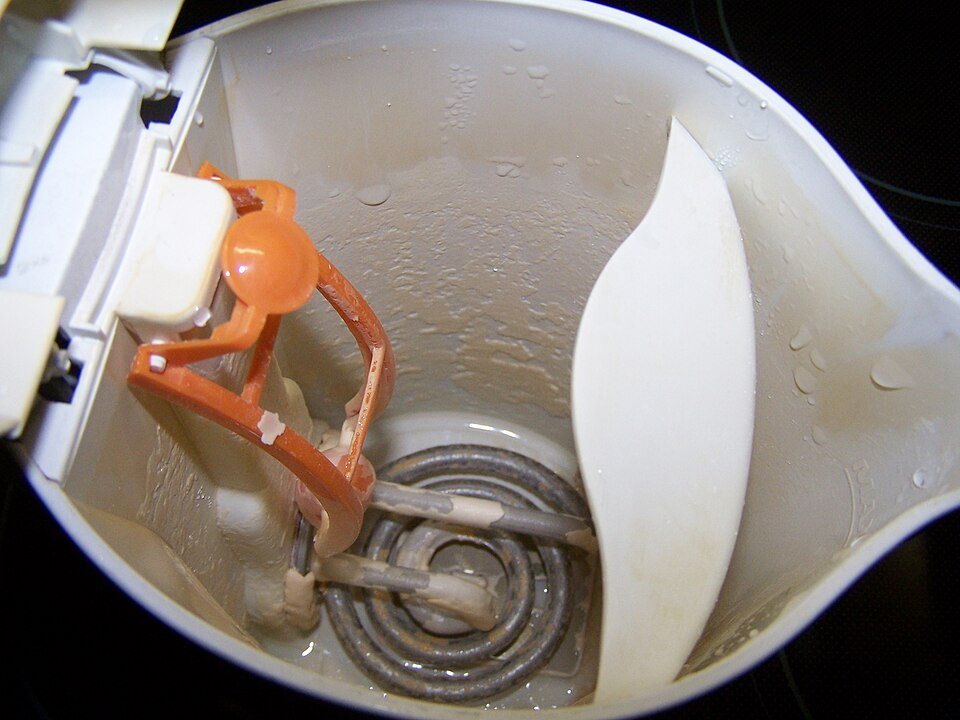
1. Filtered tap water. A carbon pitcher takes out chlorine taste, which is the most common fault. It does not reliably change hardness: an independent testing lab notes that U.S. Brita pitchers are “not certified to remove calcium and magnesium” (Tap Score). If the tap is moderate to begin with, this is enough.
2. Look up your water. Every public water supplier sends an annual report “by July 1” (EPA). Many reports omit hardness and alkalinity — Grand Rapids and Kalamazoo publish those in a separate mineral analysis — so it may take a phone call. Hardness between about 50 and 175 ppm and alkalinity near 40 to 70 means leave it alone.
3. If the water is hard, a pitcher that reduces it. The BWT magnesium pitcher swaps calcium for magnesium. The Peak Water pitcher, designed by the co-author of the 2014 magnesium paper, has a dial that sets how much bicarbonate comes out.
4. Bottled spring water — but read the label. The same brand can be several different waters. Crystal Geyser publishes an analysis for each bottling plant, and they span a factor of ten:
| Crystal Geyser plant | Hardness | Alkalinity | Dissolved solids |
|---|---|---|---|
| Moultonborough, NH | 6 | 5 | 21 |
| Salem, SC | 20 | 22 | 53 |
| Mt. Shasta, CA | 36 | 56 | 100 |
| Olancha, CA | 57 | 65 | 160 |
| Norman, AR | 85 | 82 | 110 |
| Benton, TN | 110 | 100 | 120 |
| Johnstown, NY | 170 | 140 | 230 |
All values mg/L from the maker’s 2026 reports; the plant is printed on the bottle. Among others checked: Poland Spring reports hardness of 14 to 38 across its Maine sources, which is very soft; Volvic lists calcium 13, magnesium 9 and bicarbonate 80 mg/L. “Purified” and distilled store brands are close to nothing and need minerals added.
5. Distilled water plus a mineral packet. A gallon of distilled water and one Third Wave Water stick. It costs more per cup than anything above and is the same every time, anywhere in the country.
6. Distilled water plus your own minerals. The two-bottle method above. A few dollars of Epsom salt and baking soda makes years of brewing water.
One thing to say out loud at the counter: a filter that strips everything is not an upgrade. ZeroWater pitchers take water to about zero dissolved solids — the maker says to change the filter when its meter reads “006 or above” (Culligan) — and water like that makes flat coffee until minerals go back in.
For the kettle: scale is the hardness leaving the water. The manual for one popular pour-over kettle says only to “use a scale/lime remover and follow its manufacturer’s directions” (Fellow Stagg EKG).
What this page could not confirm
- The SCA’s 2018 Water Quality Handbook was not opened from an official copy.
- Barista Hustle’s own recipe page is behind a paywall; its recipes are reported from secondary sources and checked by arithmetic.
- No espresso champion’s water is on record in the champion’s own words.
- No café testing schedule is published; the routine above is this page’s own.
- Michigan’s current Food Code edition, the state’s certified-laboratory list and the newest state lab fee schedule were not available online in October 2026.
- Whether a standard U.S. carbon pitcher softens water is disputed between two sources; this page takes the testing lab’s position that it is not certified to.
- A manufacturer statement that pure water defeats a boiler’s auto-fill probe was not found. The confirmed statement concerns the reservoir sensor on home machines.
For the brewing variables water interacts with, see Brew Methods and Espresso. For the machine and the menu, see the coffee program.
Comments (0)