Coffee · 17 of 21
Cupping: How Coffee Is Tasted, and How to Run a Tasting Yourself
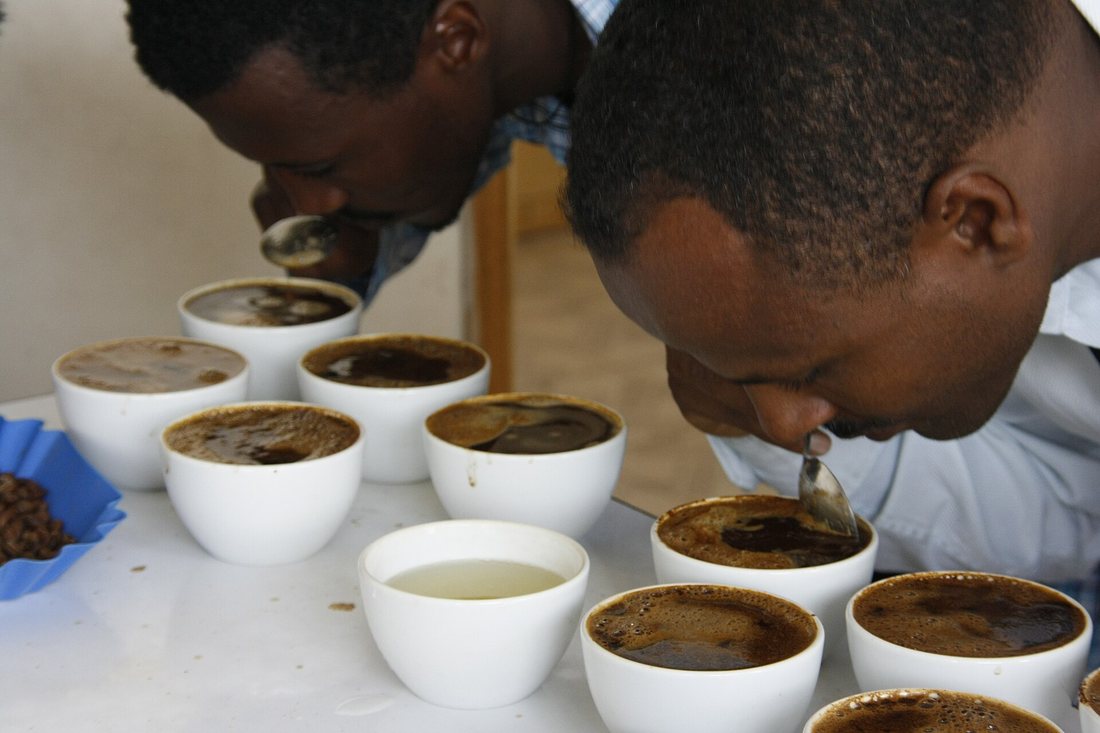
Every bag of good coffee I’ve bought was tasted before anyone roasted it for sale — not brewed the way I brew it at home, but cupped: ground into identical bowls, steeped, sniffed, broken, skimmed and slurped off a spoon. I haven’t sat at a cupping table yet. It’s high on my list, both going to one and putting one on for friends, so this page is what I wanted to know before doing either: what cupping actually is, how the professionals do it (with the real numbers), where a regular person can go to try one, and how to run your own.
One warning up front. The cupping protocol most of the internet describes was retired in 2023–24. The Specialty Coffee Association replaced it with a new system, and the old “80 points means specialty” line isn’t in the new one. I’ll give both, because nearly every guide you’ll find still quotes the old numbers.
What cupping is, and why the trade does it
The SCA’s own definition: “a method for the sensory assessment of coffee, which involves tasting several cups per coffee sample, using a different set of coffee beans for each cup, which is ground and brewed independently.”
That last clause is the whole trick. Every cup gets its own beans, ground and brewed separately. If one defective bean is in the lot, it shows up in one cup and not the others — which is exactly how a buyer catches a lot that isn’t consistent. Brewing a single pot would average the problem away.
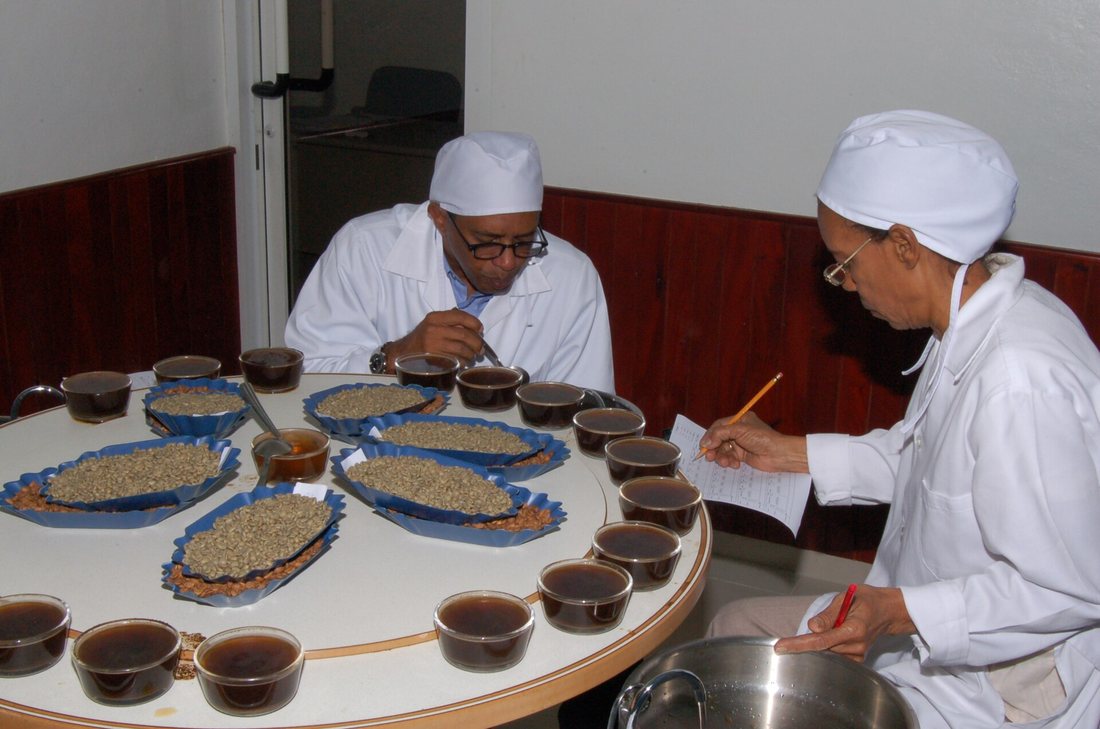
The trade cups for money reasons first. The SCA calls cupping “a technique designed to assess green coffee lots,” and William Ukers said the same thing in 1922: “Both buyers and sellers use the cup test, the former to determine the merits of the coffee he is buying, and the latter to ascertain the proper value.” Roasters also cup constantly for quality control, though the SCA is careful to say that fast, many-sample QC cupping “is outside the scope” of its protocol — the standard is a slow, thorough appraisal, and the daily roastery version is a working adaptation of it. Competitions cup too: the Cup of Excellence scores each coffee many times over six rounds, and a coffee needs 87 or more to win.
It’s older than you’d think
I assumed cupping was a modern specialty-coffee ritual. It isn’t. Ukers’s All About Coffee (1922) says that before 1900 American coffee was judged “simply by the appearance of the green or of the roasted bean,” but that by his day “every progressive coffee buyer has his sample-roasting and testing outfit.” His description is recognisably what happens today: a “blind cup test” and an “open test,” doses “carefully weighed,” and a crust that the taster sniffs before it breaks — “the wet-smell, or crust, test.” He even has the revolving table, the silver spoons and a waist-high brass spittoon, and the rule that “the expert never swallows the liquor.” (The popular claim that Hills Bros. of San Francisco made cupping an industry standard is uncited on Wikipedia, and nothing else in print backs it.)
The formal, published SCAA Cupping Protocol dates from 2004 — the same year the Coffee Quality Institute launched its Q Grader programme — and was last revised in December 2015. In 2016 UC Davis and the SCAA rebuilt the famous Coffee Taster’s Flavor Wheel from World Coffee Research’s sensory lexicon, which now lists 110 attributes.
The flavor wheel
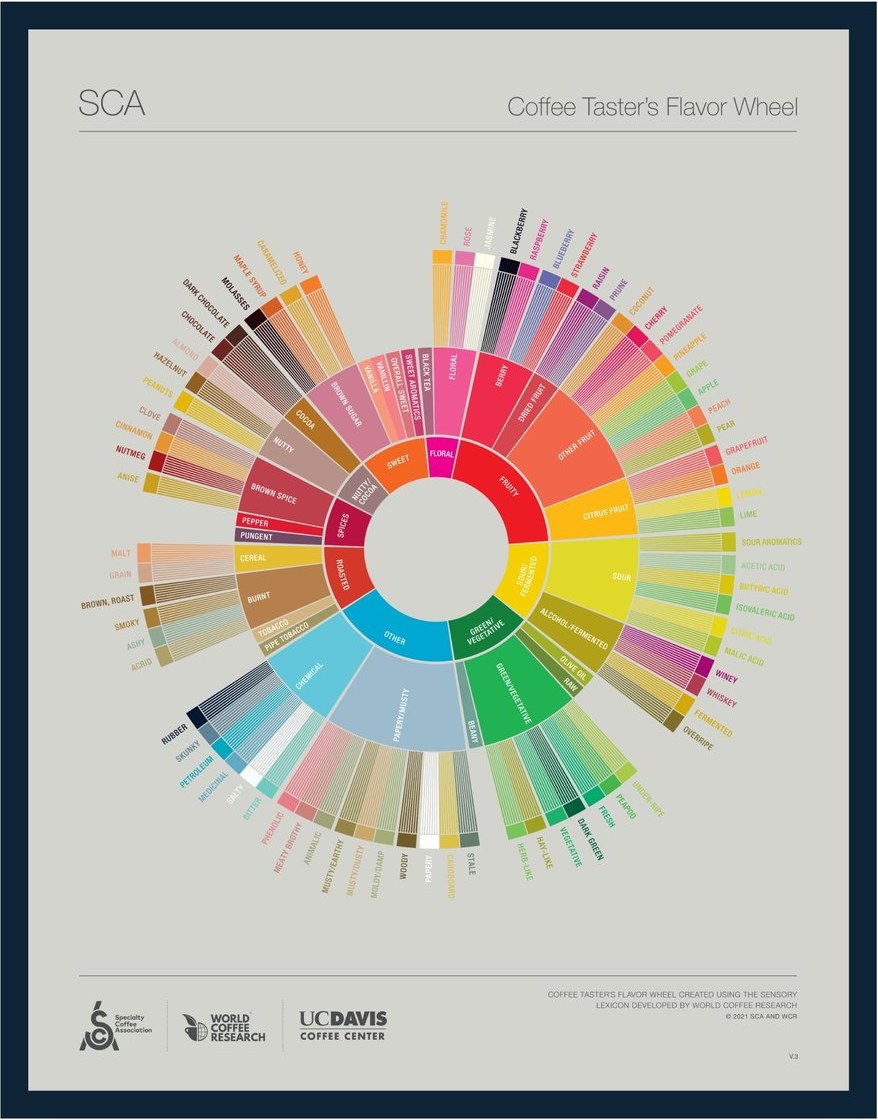
How to use the wheel. It is a vocabulary, not a score sheet. Taste the coffee, then start in the centre and pick the family that fits: fruity, floral, sweet, nutty or cocoa, spices, roasted, green or vegetative, sour or fermented, or “other,” where the faults live. Move one ring out only if you can: “fruity” may become “berry” or “citrus fruit,” and “berry” may become “blueberry.” Stopping at the middle ring is a real answer. The words on the rim each have a reference in the lexicon, a named food or product a taster can smell to learn what the word means, which is how two people in different countries come to mean the same thing by “blackberry.”
The protocol, with the real numbers
Here’s what the standard actually specifies. Where the old (2015) and new (2024) versions differ, both are given. The current one is SCA Standard 102-2024, Sample Preparation and Tasting Mechanics; the others in the series are on the SCA’s standards page.
| Step | The number |
|---|---|
| Roast | One agreed “cupping roast” for every sample: a reading of 63 on the Agtron Gourmet scale, measured on ground coffee. That is a roast-color measurement on which higher numbers are lighter; the new standard says it is roughly tile #65 of the trade’s eight color tiles and calls it “medium,” where the old protocol called the same 63 “light to light-medium” and tile #55. Agtron numbers and color tiles explains the scale and the tiles. The old protocol also required 8–12 minutes of roast time; the new one drops the window and just says avoid a scorched, baked or underdeveloped roast. |
| Rest | 8–24 hours after roasting. |
| Ratio | 8.25 g of coffee per 150 mL of cup volume, measured to the rim — about 1:18 (all the ratios, side by side). A 200 mL bowl takes 11.0 g; a 250 mL bowl 13.75 g. Dose to ±0.2 g. |
| Grind | Slightly coarser than drip: 70–75 % should pass a US No. 20 sieve (850 microns). Grind each cup separately, and purge the grinder with a little of each new coffee first. |
| Water | 93 °C (200 °F), ± 3, poured to the rim. Clean water with no chlorine — the new spec gives calcium hardness 50–175 ppm and pH 6–8; the old one said “not distilled or softened.” |
| Cups | Identical glass or ceramic, 200–350 mL, 75–90 mm across the top. Five cups per coffee, and usually 3–6 coffees per session, never more than 6. |
| Timing | Leave the crust alone 3–5 minutes, break it, skim, then start tasting at about 70 °C — roughly 8–10 minutes after the pour — and keep tasting as it cools. |
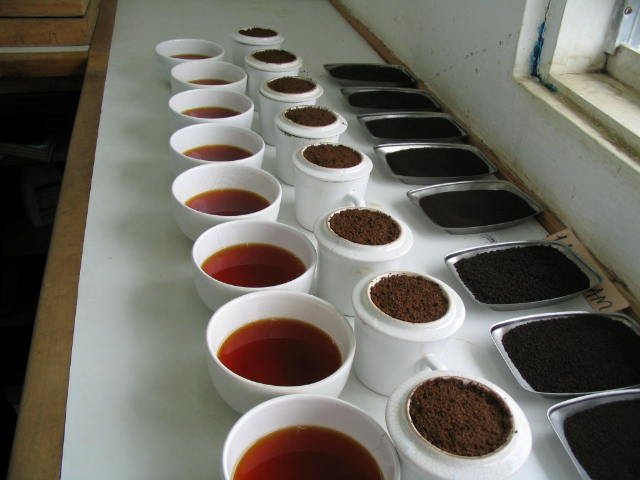
The session, step by step
- Fragrance. Sniff the dry grounds in each cup, as soon as they’re ground.
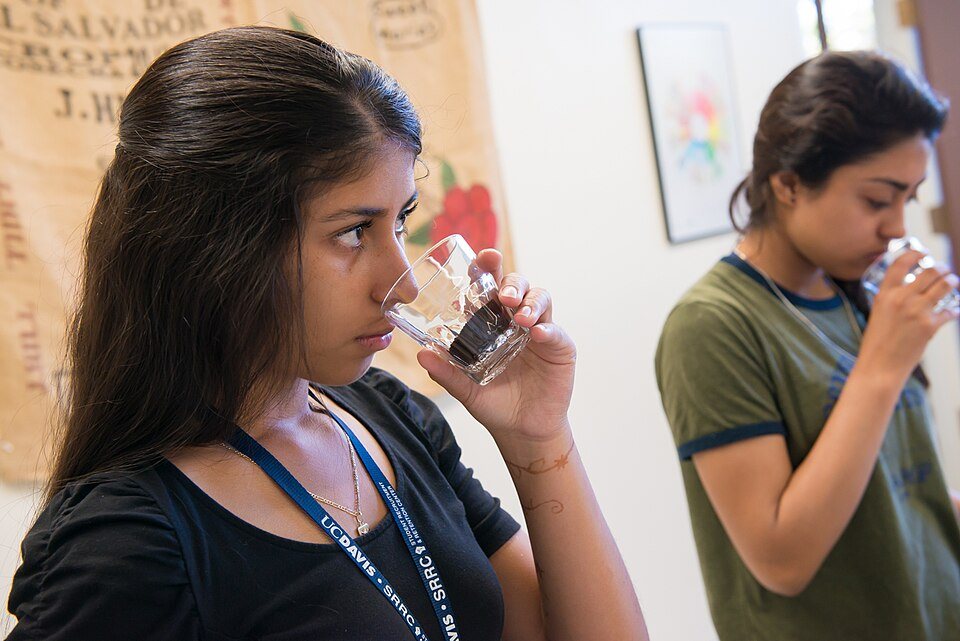
- Pour and wait. Pour 93 °C water to the rim, a little turbulently. A crust of grounds forms on top. Smell it, and leave it undisturbed for 3–5 minutes.
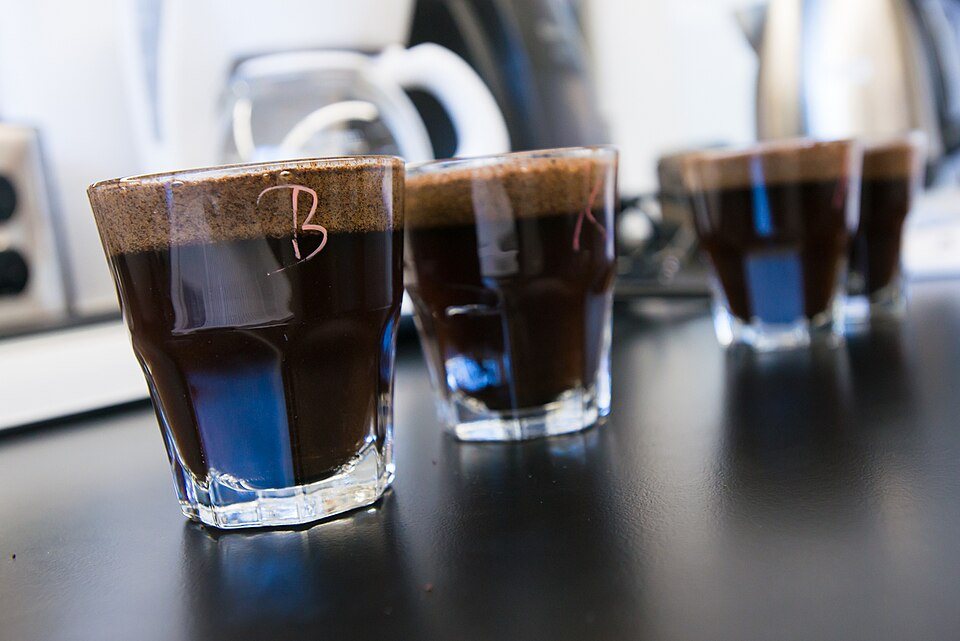
- Break the crust. Stir it about three times with a spoon, with your nose right over the cup, sniffing the vapour it releases. That burst of aroma is “the break.”
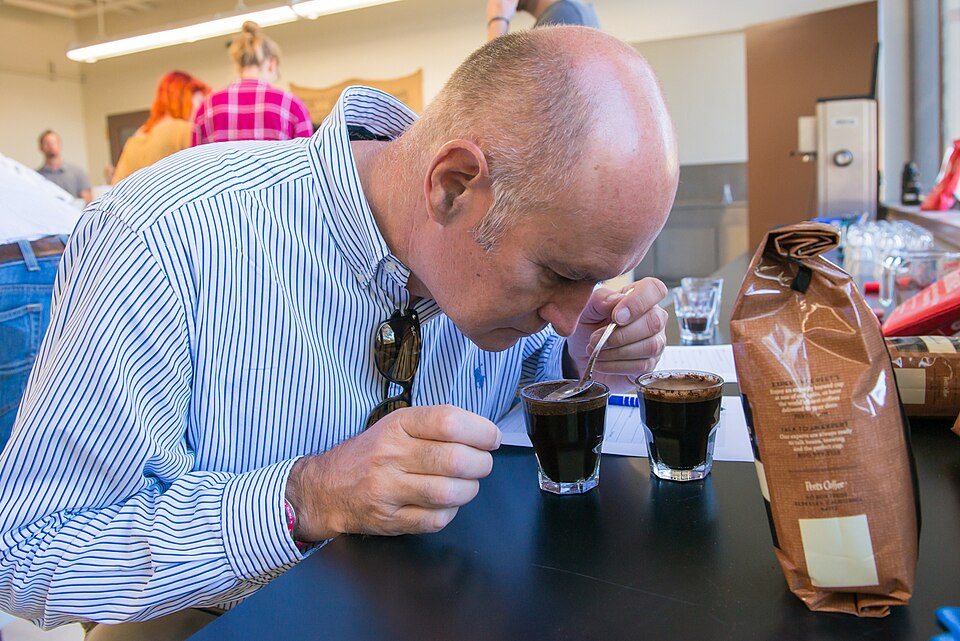
- Skim. Lift off the floating grounds and foam with one or two spoons.
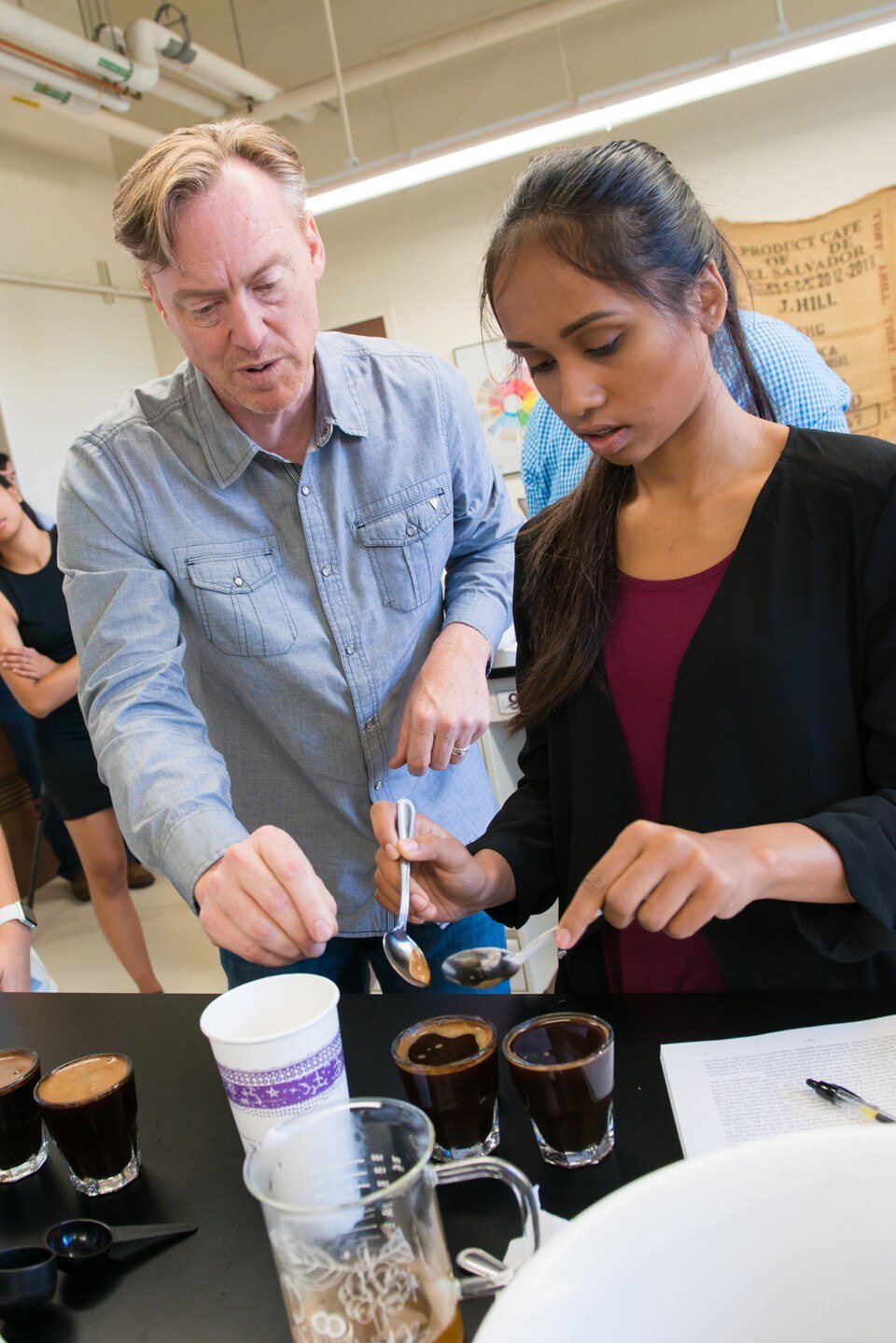
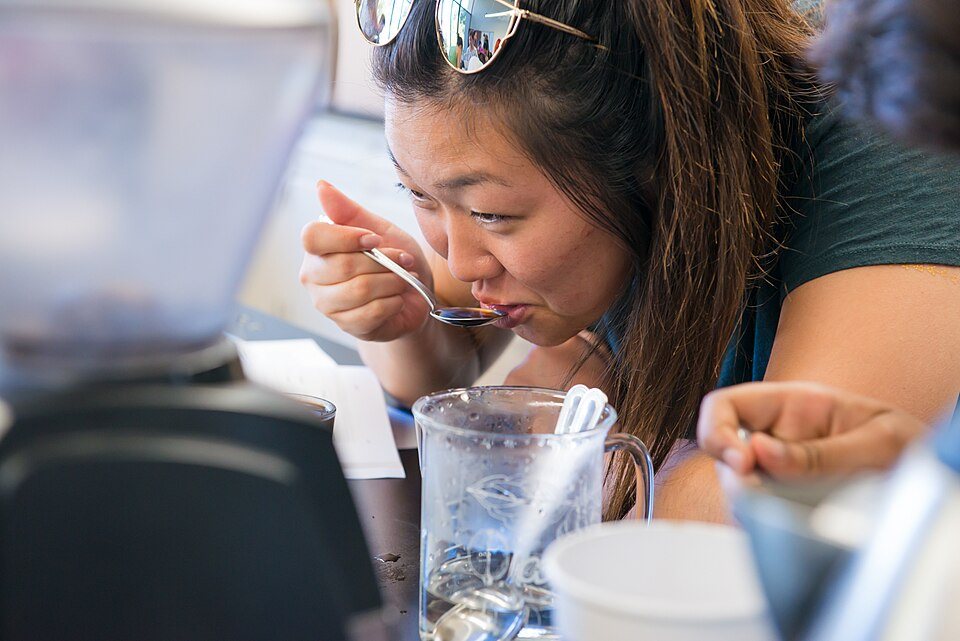
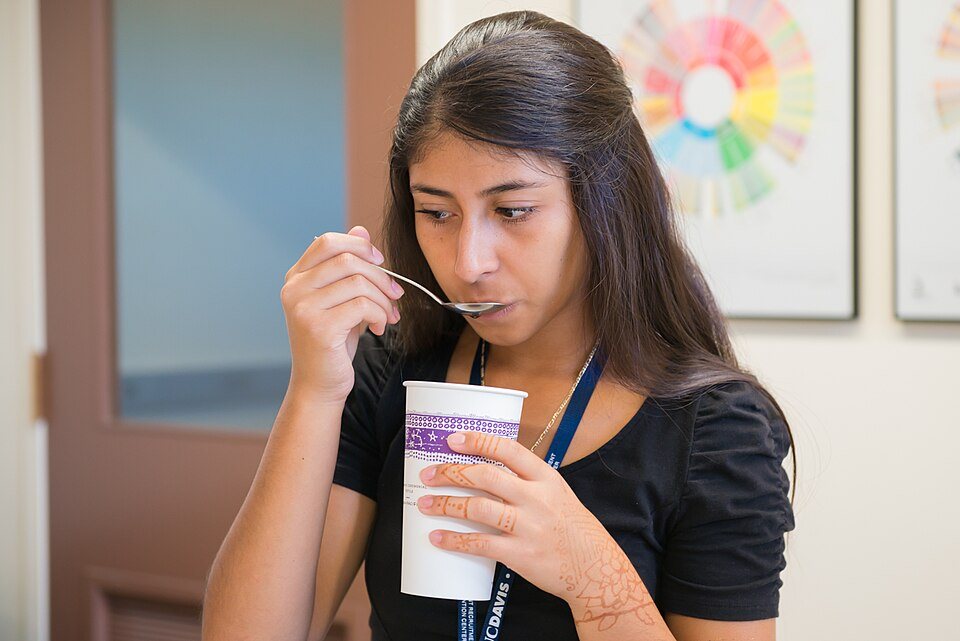
- Taste. When the coffee’s down to about 70 °C, take a spoonful and slurp it hard, spraying it across your tongue and palate. Do at least three rounds as it cools below body temperature — coffee reveals different things hot, warm and cool. The old protocol laid it out neatly: flavour and aftertaste first, while it’s hot and the aromas are strongest; acidity, body and balance as it drops toward 140 °F; sweetness, uniformity and clean cup below 100 °F.
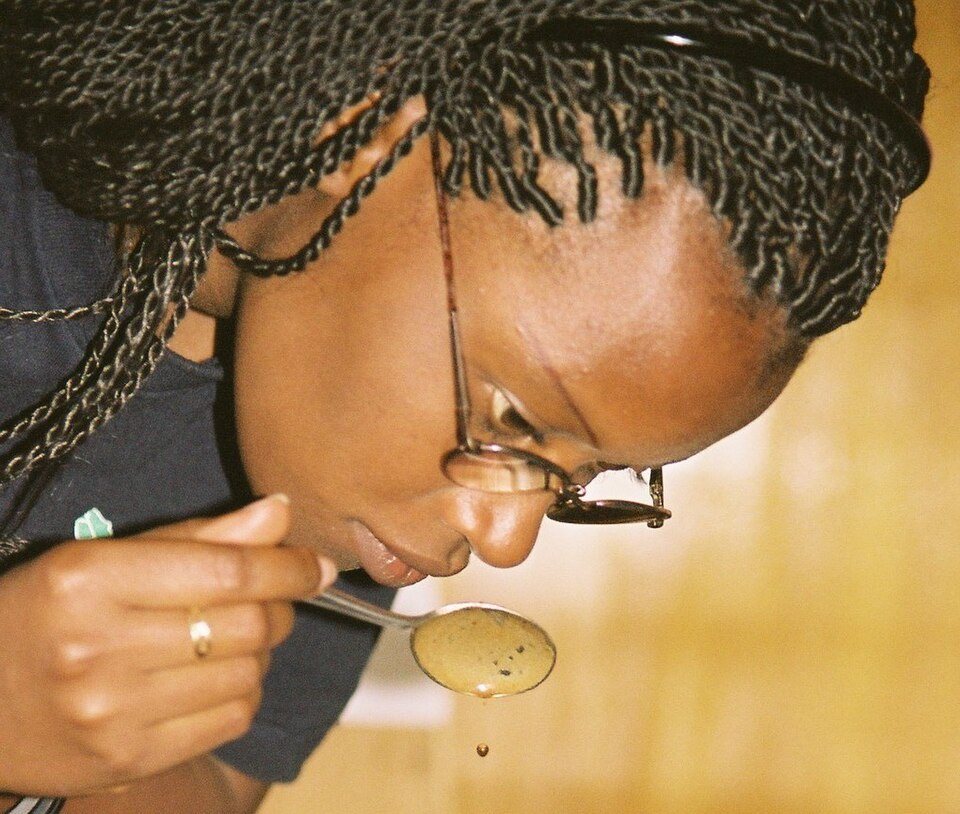
- Rinse your spoon in hot water before it goes into any other cup.
Two things everybody gets told that aren’t quite true:
- You don’t have to spit. The current standard says the coffee “should” be ejected, and gives the reason: “to avoid swallowing too much caffeine.” The 2015 protocol said coffee may be “expectorated or swallowed.” When you’re tasting thirty spoonfuls, you’ll want to spit — but it’s about the caffeine, not a rule of taste.
- The slurp spreads the coffee over your whole mouth and carries its aroma up the back of your nose. That’s what the SCA says it’s for. Plenty of guides go further and talk about “aerosolising” the coffee; nobody appears to have measured that, so I won’t claim it.
How it’s scored — the old way
The 2004/2015 form scored ten attributes: fragrance/aroma, flavour, aftertaste, acidity, body, balance, uniformity, clean cup, sweetness and overall, with deductions for defects. Seven of them are rated from 6 to 10 in quarter-point steps (6 is “Good,” 9 “Outstanding”); uniformity, clean cup and sweetness score 2 points per cup across five cups. The total is out of 100:
- 90–100 Outstanding
- 85–89.99 Excellent
- 80–84.99 Very Good — “specialty”
- Below 80 below specialty grade
A detail I like: the form kept intensity separate from quality. A low-acid Sumatra could score just as high on acidity as a bright Kenya, because the score is how good the acidity is, not how much of it there is.
How it’s scored now — the Coffee Value Assessment
In April 2023 the SCA launched the Coffee Value Assessment (CVA), and its standards, published in September–October 2024, supersede “SCA Cupping Protocol (2004 and any later editions).” The big change is that one test became two:
- A descriptive form records what’s there — intensity on 0–15 scales for fragrance, aroma, flavour, aftertaste, acidity, sweetness and mouthfeel, plus up to five tick-box flavour descriptors from the wheel and up to two main tastes. It doesn’t say whether you like it.
- An affective form records how much you like it — eight sections on a 9-point scale, from 1 (“extremely low”) through 5 (“neither high nor low”) to 9 (“extremely high”).
Other changes: balance and clean cup are gone as separate boxes, body is now “mouthfeel,” and only three things count as defects — potato, moldy and phenolic — which the taster must name. A cup that’s merely weaker because of a brewing error no longer counts against uniformity.
The math surprised me. If every one of the eight affective sections gets a 9, the coffee scores 100. If every section gets a 5 — perfectly neutral — it scores 79, one point under the old specialty line. And neither new standard prints an 80-point threshold at all; “specialty” is now defined as a coffee “recognized for its distinctive attributes” with “significant extra value in the marketplace.” A 2026 study in Food Research International found old and new scores “not numerically interchangeable,” so an 86 on the new form is not the same as an 86 on the old one. When a bag brags about its score, it’s worth knowing which system it came from.
Where you can go to one
Public cuppings at roasters. This is the easiest way in, and often free. The best-known is Counter Culture Coffee’s “Tasting at Ten” — every Friday at 10 a.m. at its training centres, “all are welcome, no experience necessary,” and they’ve been doing it for nearly thirty years. For Michigan folks the closest centre is Chicago (177 North Ada Street); the others are on the coasts and across the South, and all of them are on its training centres page.
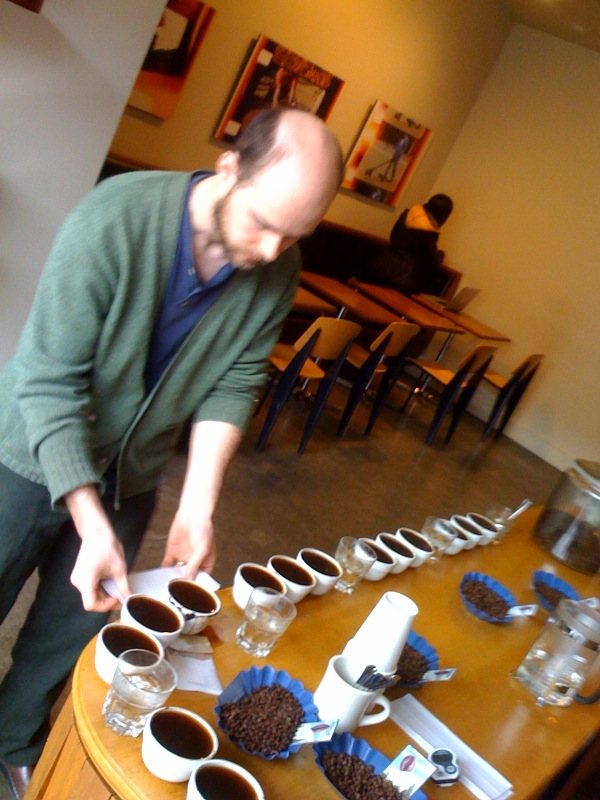
Closer to home, the one real cupping listed in Michigan on 30 September 2026 was Dessert Oasis Coffee Roasters in Ferndale, running a “Palate, Sensory, & Cupping” session on Saturday, 10 October 2026, noon to 2 p.m. — it’s the one I’m eyeing. Stovetop Coffee Roasters in Holland has run a $20 roastery tour that ends with a cupping in its QC lab, though that listing was showing as cancelled. Events like these come and go, so here’s how I’d find the current ones:
- Search Eventbrite for “coffee cupping” plus your state or city. This search is the Michigan one.
- Check your local roasters’ classes, events or visit pages, and just ask — many roasters cup every week and will let a curious customer sit in.
- The words to look for are cupping, public cupping, comparative tasting and QC lab.
Michigan roasters to check. Being on this list does not mean a roaster offers a tour or a cupping today; the list is where to look and whom to ask. Where a roaster’s site doesn’t print its town, I’ve left the town off.
| Roaster | Where | Website |
|---|---|---|
| Foster Coffee Co. | Owosso and East Lansing | fostercoffee.co |
| The Fresh Grinds | Lansing | thefreshgrinds.com |
| Blue Owl Coffee | Lansing | blueowlcoffee.net |
| Strange Matter Coffee | Lansing | strangemattercoffee.com |
| Higher Grounds Trading Co. | Traverse City | highergroundstrading.com |
| Mundos Roasting & Co. | Traverse City | mundosroastingco.com |
| Owl Eye Coffee | owleyecoffee.com | |
| Chunky Bear Coffee Roasters | Cadillac | chunkybearcoffeeroasters.com |
| Schuil Coffee | Grand Rapids | schuilcoffee.com |
| Madcap Coffee | madcapcoffee.com; its classes and tours page is the one to watch | |
| Ferris Coffee & Nut | ferriscoffee.com | |
| Stovetop Coffee Roasters | Grand Rapids and Holland | stovetoproasters.com |
| Uncommon Coffee Roasters | Saugatuck and Douglas | uncommoncoffeeroasters.com |
| Aldea Coffee | aldeacoffee.com | |
| Great Lakes Coffee Roasting Co. | greatlakescoffee.com | |
| Dessert Oasis Coffee Roasters | Ferndale | Its events are listed on Eventbrite, linked above |
Trade shows. The SCA’s big North American show is now World of Coffee USA (it replaced the Specialty Coffee Expo), which will be in New Orleans in 2027 with dedicated cupping rooms; attendee registration opens in January 2027. Whether non-trade visitors can buy a pass is not stated, so check before you plan a trip around it.
Courses, if you get hooked. The Q Grader licence is the professional’s certification: six consecutive days, nine exams (eight practical, one written), renewed every three years. The Coffee Quality Institute ran it from 2004 and licensed it to the SCA in 2025, so the SCA is where to look now. It’s aimed at people already working in coffee, and the SCA page doesn’t list a price. Cup of Excellence runs four-day sensory trainings open to “enthusiasts” as well as the trade; the next section has the details.
Cup of Excellence
Cup of Excellence is cupping used as a competition, and it is the reason a bag of coffee can carry a farm’s name. It has run since 1999, country by country, under a US non-profit, the Alliance for Coffee Excellence. Its own account is that “farmer and regional identification on a bag of coffee is a direct result of the competition.”
How a coffee wins. Every lot entered in a country’s competition is cupped blind, six times over, by two juries. The steps are in its rules:
| Round | Who cups | What goes forward |
|---|---|---|
| 1, pre-selection | The national jury, cuppers from the producing country | Lots scoring 86 or more, to a limit of 150 |
| 2 | National jury | 86 or more, to a limit of 90 |
| 3 | National jury | 86 or more, to a limit of 40 |
| 4 | The international jury, buyers and roasters from importing countries | The 40 are scored again |
| 5 | International jury | Up to 30 lots scoring 87 or more are the winners |
| 6 | International jury | The top ten are cupped once more for their final order |
A lot has to score 87 in the final round to carry the Cup of Excellence name. Lots above 90 get a Presidential Award. Lots between 85 and 86.99, or outside the top 30, can be sold as “National Winners.”
The auction. About six weeks after the international jury meets, the winning lots are sold in an online auction. Bidding is open only to members of the Alliance, and a three-minute clock restarts with every bid. Membership starts at $350 a year; members can buy a sample set first, 200 grams of green coffee from every lot, to roast and cup before bidding. The organisation’s FAQ does not say what share of the auction price reaches the farmer.
Where it runs. The schedule on its home page in October 2026 was still the 2025 one: Nicaragua, Mexico, Honduras, Costa Rica, Guatemala, Thailand, El Salvador, Taiwan, Peru and Brazil. Results by country and year are public, and a roaster selling a winning lot will say so on the bag.
How an outsider gets in.
- Drink one. Roasters who buy at auction sell the coffee in small bags. The results pages name the winning farms, which is what to search for.
- Take the course. The Sensory Education Training is four days with a competition head judge: cuppings of coffees that scored 90 and above, cuppings of real defects, and workshops on acidity. It is open to “roasters, retailers, coffee producers, importers, exporters, and enthusiasts.” The price is $1,649, or $1,319 for members. No United States course was listed in October 2026; the ones on the calendar were in China, Vietnam and Japan.
- Sit at the table. A member company can apply to send an observer to an international jury week. An observer cups every round with the jury, but the scores don’t count, and pays their own room and board. Observers who do well can apply to be jurors.
How to put one on yourself
This is the part I’m most excited to try. You don’t need a lab — just the right few pieces of kit and a bit of discipline.
What you need
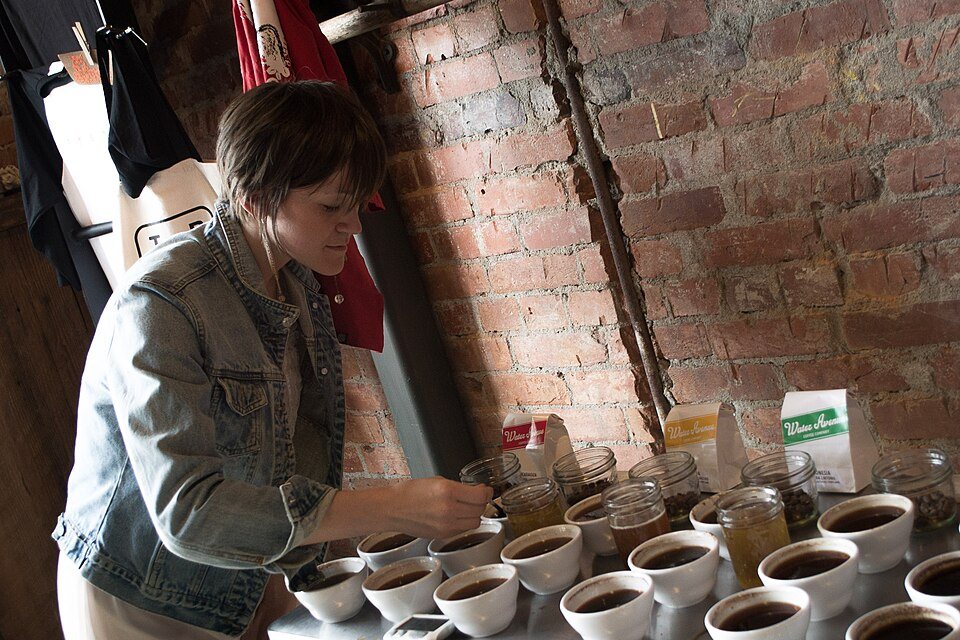
- Cups or bowls, all the same. 200–350 mL, glass or ceramic. Five per coffee if you want to be proper; three is fine for a friendly tasting.
- A scale that reads to 0.1 g.
- A burr grinder you can purge between coffees.
- A kettle and a thermometer — aim for 93 °C. One roastery QC pro recommends a spouted kettle over a gooseneck, because the thin gooseneck stream loses heat on the way down.
- Round, deep spoons (proper cupping spoons, or soup spoons), one per person, plus a cup of hot rinse water for each.
- A spit cup for everyone, a timer, towels, pencils, and printed tasting notes or a flavour wheel.
- Room. Royal Coffee’s Chris Kornman puts “plenty of surface area” on his list, and he’s right: five bowls per coffee eats a table fast.
Prices move too fast to print a budget here — but most of this is kitchen gear you probably already own, apart from the spoons and maybe the scale.
What to taste
Two to four coffees is plenty for a first go; the standard caps a session at six. The pros cup green coffee roasted to the same light cupping roast, which you can’t easily do at home — so a home cupping of store-bought roasted coffee also compares the roasters’ choices, not just the beans. That’s completely fine (the SCA’s descriptive standard says roasted coffee “may be assessed” this way), as long as you say so out loud at the table.
Good pairings that teach something:
- Two origins, same roast level — say, a washed Ethiopian and a Brazilian natural — to taste what place and process do.
- One coffee, two processes (washed vs natural) from the same farm, if a roaster sells both.
- One coffee, two roasts, to taste what roasting does to it.
Running it
- Before anyone arrives, fill one of your bowls to the rim with water on the scale to find its volume, and work out the dose at 5.5 g per 100 mL (the same ratio as the standard’s 8.25 g per 150 mL; the ratios page has it for common bowl sizes). Weigh out each cup’s beans separately. If you want it blind, have someone else number the bottoms of the bowls and keep the key.
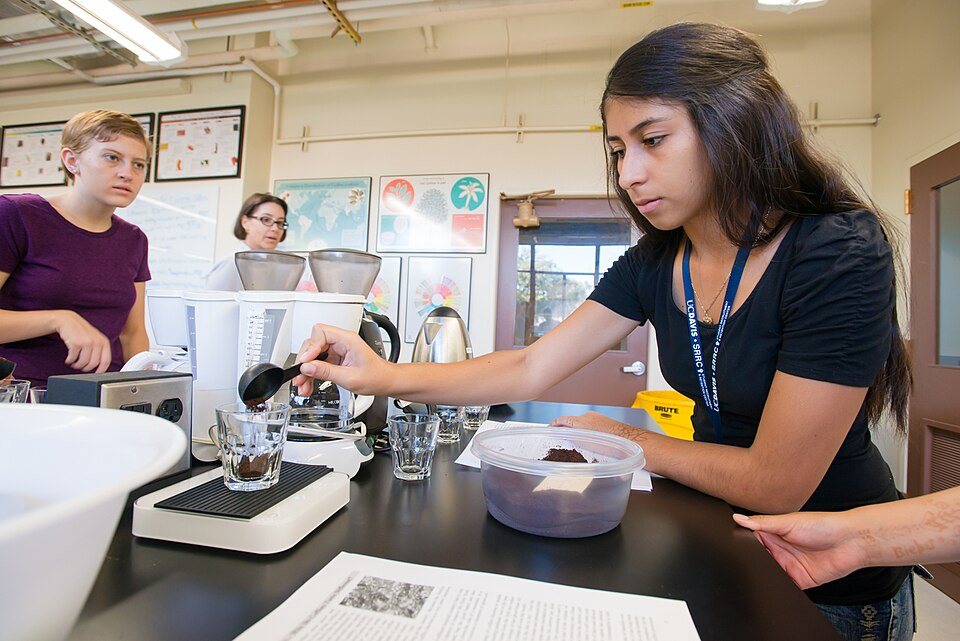
- Grind cup by cup, purging the grinder with a little of each new coffee first, and try to pour within 15 minutes of grinding. Line each coffee’s cups up in a row.
- Smell the dry grounds, walking round the table — the table stays put and people move.
- Pour 93 °C water to the rim, cup by cup, in order, and start the timer.
- At 3–5 minutes, break the crust — three stirs, nose down — in the same order you poured, so every cup steeps the same time.
- Skim off the grounds and foam.
- Wait till it’s about 70 °C (8–10 minutes after the pour), then slurp, rinsing your spoon between every bowl. Go round several times as it cools.
- Keep quiet till everyone’s scored. Talking about notes mid-cupping is the classic beginner mistake — one loud “blueberry!” and everyone tastes blueberry. Then compare notes, and if it was blind, reveal the coffees.
A simple way to score — my suggestion, borrowed from the logic of the new SCA forms rather than an official sheet. For each coffee, write:
- What it tastes like: one to three words from the inner ring of the flavour wheel, and low/medium/high for acidity, sweetness and mouthfeel.
- How much you like it: a single number from 1 to 9.
Keeping “describe” and “like” separate is the whole point of the new system, and it’s easy for beginners. If you want a proper number, the SCA has an online affective score calculator.
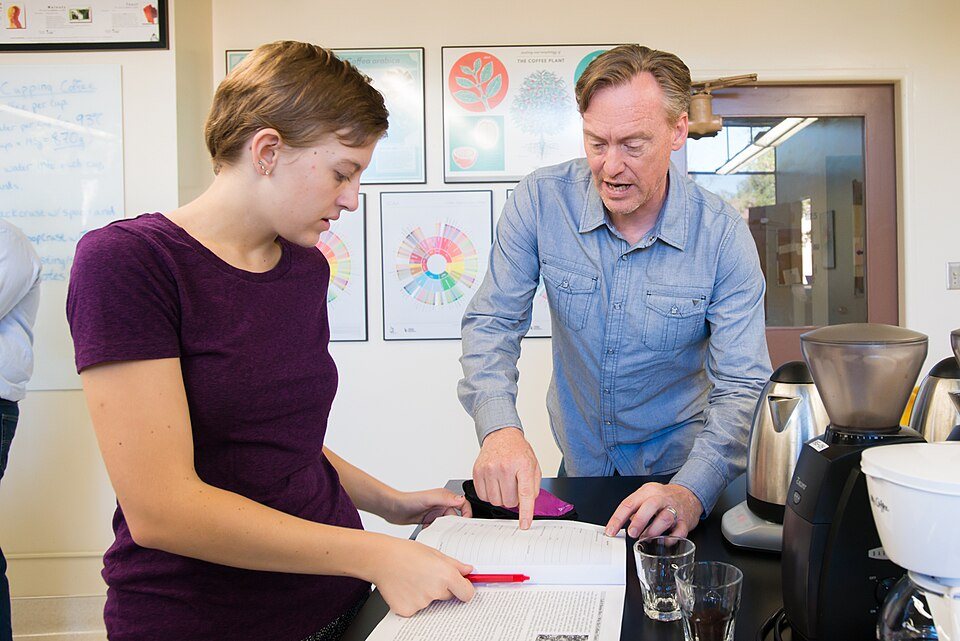
For a party, share safely. The standard has a “sanitary” variant that’s perfect at home: give each coffee its own serving spoon that moves a little coffee into each person’s own small cup, so nobody’s mouth-spoon goes back into a shared bowl.
Mistakes to avoid
- Short-filling the cups — the dose is calculated to the rim, so fill to the rim.
- Skipping the grinder purge, so the last coffee’s grounds end up in the next one.
- Stirring up the settled grounds while skimming.
- Grinding too early.
- Calling every off-note a “defect.” In the new system there are only three.
- Swallowing everything. By coffee four you’ll understand the spit cup.
Where to go from here
Cupping is the tasting half of roasting — it’s how every roast defect gets caught — and the bean and place differences it reveals are on the bean and origins. If you’d like to cup coffee where it grows, that’s on coffee travel. For tastings that are not cuppings, see Hosting a Tasting; for the competition circuit, Competitions; and for classes and trade shows, Where to Learn.
Comments (0)