Europe: Oatcakes, Lefse, Crispbread and Piadina
Europe’s flatbreads fall into two groups. In the north, where wheat grew poorly, flatbreads were made from oats, barley and rye and were built to keep for months. Around the Mediterranean, they are wheat and chickpea breads baked on terracotta or in wood ovens, many of them now protected by name.
Scotland: oatcakes and the girdle
Samuel Johnson’s dictionary famously defined oats as a grain that “in England is generally given to horses, but in Scotland supports the people.” The Scottish oatcake — oatmeal, salt, water and usually some fat — is the bread that line describes.
The earliest detailed account is a field ration. Jean Froissart, describing Scottish raiders in England in 1327, wrote that each carried “a broad plate of metal” under his saddle and “a little bag of oatmeal” behind it, and made “a thin cake, like a cracknel or biscuit” over the fire. That plate became the girdle, a round iron plate with a hooped handle. In 1725 the girdle-smiths of Culross claimed “the sole and exclusive privilege of making girdles … for the service of all Scotland.”
A round oatcake was cut into quarters called farls — Scots for “a fourth part,” first recorded in 1706. The Ulster soda farl and potato farl took over the word. The collection has Soda Farls and Potato Farls (Fadge).
The Staffordshire oatcake, from the Potteries around Stoke-on-Trent, is a different thing: a soft, yeasted pancake of oatmeal and wheat flour, cooked on a griddle and once sold from house windows. The story that it copies chapatis brought home by soldiers from India has no known source.
The collection has Scottish Oatcakes, baked in the oven, and Girdle Oatcakes (Scottish Oatcakes on the Griddle), cooked on one side only on the iron, as Meg Dods described in 1862.
Norway: flatbrød and lefse
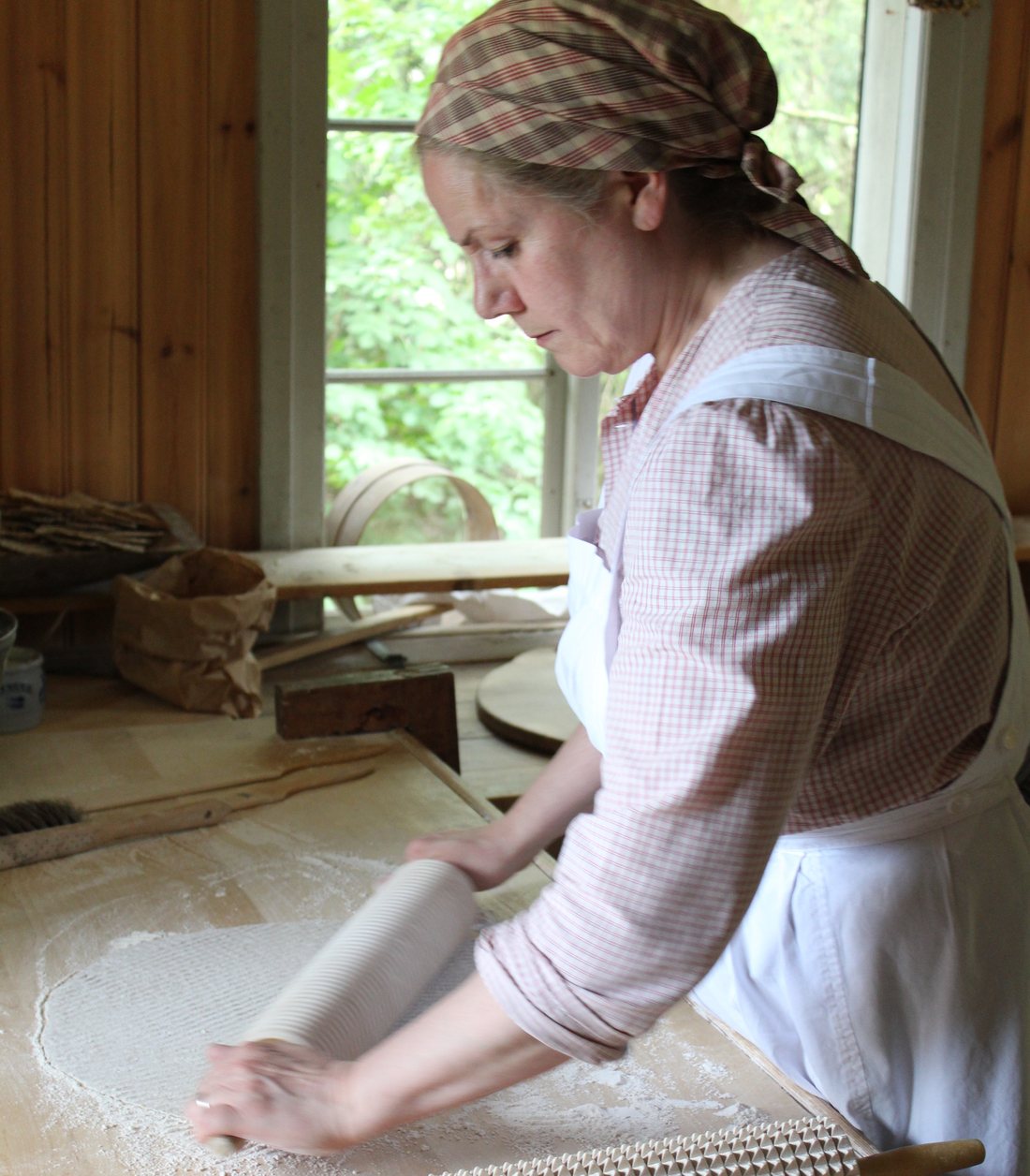
Flatbrød is an unleavened bread of barley, oats or rye, rolled to about a millimetre and baked dry on a stone or iron plate. It keeps for over a year. The word first appears in a 1519 account book of Bergenhus castle, recording shipments from the fjord districts. Wheat came into it only in the late 1800s.
Lefse today usually means a soft potato flatbread, rolled huge and thin and cooked on a takke, a round iron griddle. But the old oat lefse was a keeping bread too: stored in barrels and soaked before eating. Travelling baking women went from farm to farm to make it. (Most of these Norwegian details rest on single sources.)
The new collection recipes are Norwegian Flatbrød and Potato Lefse.
Sweden: knäckebröd
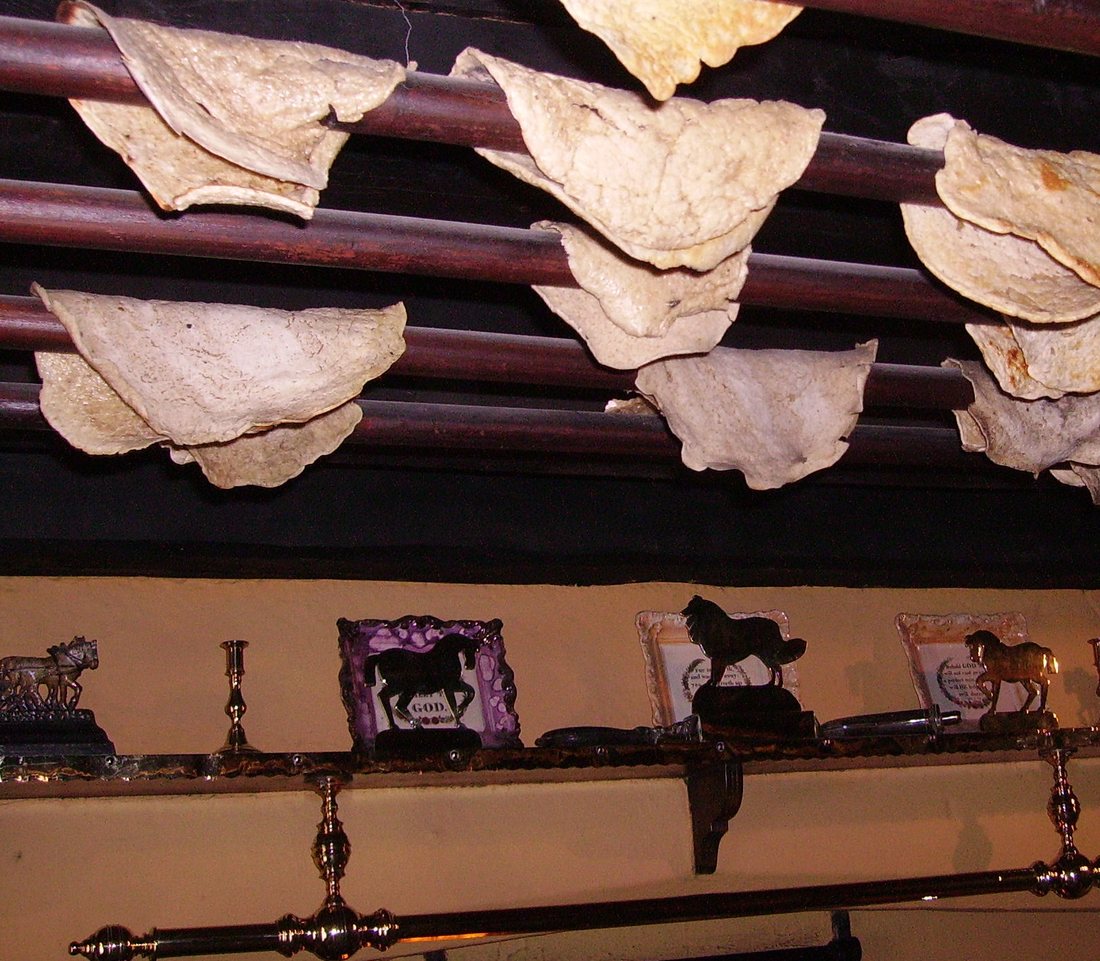
Swedish knäckebröd is a rye crispbread with less than 10% moisture. The hole in the middle was for hanging the rounds on poles under the ceiling, where they dried and stayed out of reach of rats. It was baked only about twice a year — after the harvest and again in spring. (The claim that it has been baked “since the sixth century” appears without evidence and is best ignored.)
Commercial bakeries appeared after trade was freed in 1846. Today knäckebröd is in about 85% of Swedish households.
The new collection recipe is Knäckebröd (Swedish Crispbread).
Finland: rieska
Rieska is a thin, unleavened Finnish bread of barley, oats or potato, often with some wheat, traditionally baked in a wood oven — though in parts of south-eastern Finland thicker fermented barley loaves also go by the name. The collection’s Perunarieska (Finnish Potato Flatbread) is the Martha Organisation’s: mashed potato, an egg and barley flour, patted thin and baked hot.
Italy: breads named for their tools
Several Italian flatbreads are named after what they cook on:
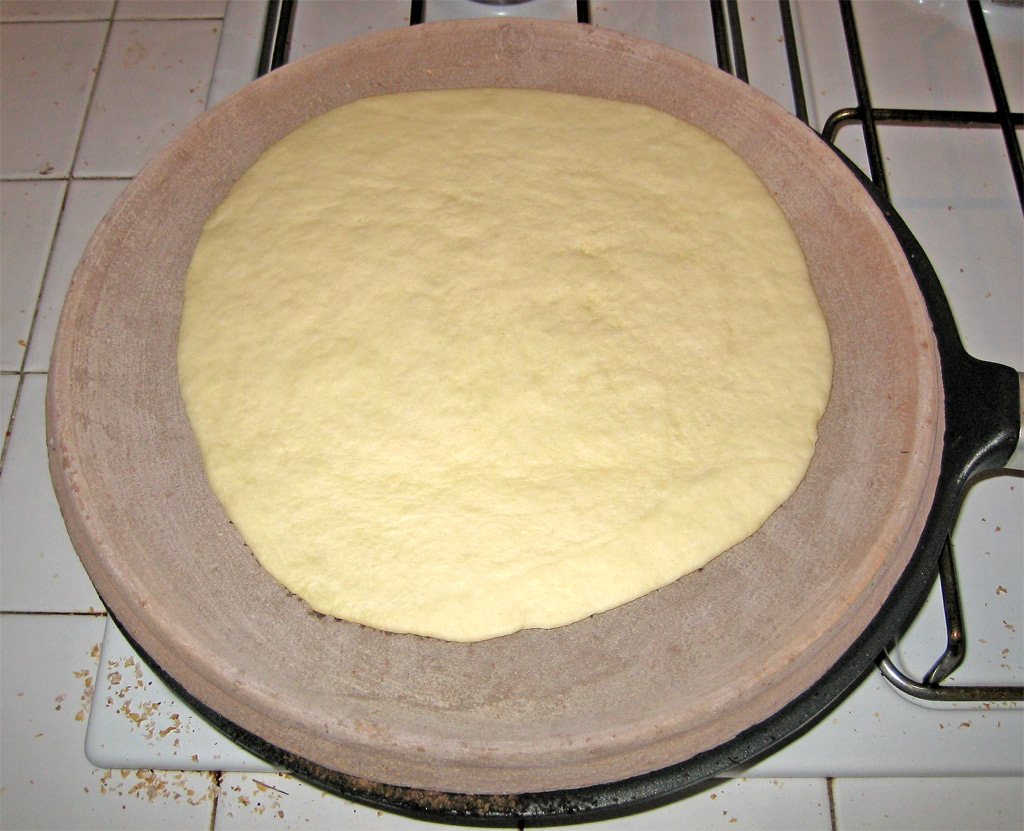
- Piadina of Romagna — flour, water, lard or olive oil, salt and a little raising agent — was protected as an IGP in 2014. It is traditionally cooked on a terracotta testo made by artisans at Montetiffi; today, cast iron or stone. A Romagna description of 1371 mentions a bread of flour, water and salt that could be made with milk and lard. The Rimini style is thinner, 2–3 mm, and folds. The new collection recipe is Piadina.
- Tigelle from the Modena Apennines were originally baked between terracotta discs called tigelle; the name moved from the disc to the bread. They are eaten with cunza, lard pounded with garlic and rosemary.
- Focaccia and French fougasse both come from Latin focus, “hearth.” Focaccia rises again after shaping. But Focaccia di Recco, an IGP from Liguria, is unleavened: two very thin sheets of dough around soft cheese.
- Farinata is a batter of chickpea flour, water and olive oil, baked about 4 mm thick in copper pans in a wood oven. It is socca in Nice and fainá in Argentina and Uruguay, brought by Ligurian immigrants. Its first record is a Genoese decree of 1447 regulating the oil used to make it; the story that it was invented after the naval Battle of Meloria in 1284 is legend. The collection has Socca (Chickpea Flatbread).
Alsace: flammkuchen
Flammkuchen (tarte flambée) began, the story goes, as leftover bread dough spread thin, topped with curdled milk and baked for two or three minutes in the wood oven while it was still too hot for loaves — so that the edges blackened in the flames. It entered Strasbourg restaurants only in the late 1960s, after pizzerias had become popular (a single-source claim). The collection has Flammkuchen.
Flatbreads: What a flatbread is · The history · The science · Ovens and griddles · The Middle East · South Asia · The Americas · Europe · Africa and East Asia · Making them at home · Corrections · ← Breads
Comments (0)