Corrections: What Is Commonly Got Wrong
Flatbreads attract confident stories. These are the ones the sources do not support, or support only in part.
”The oldest bread is 14,400 years old”
Partly right. The charred remains from Shubayqa 1 in Jordan date to 14,400–14,200 years ago. But they are crumbs a few millimetres across, partly made from club-rush tubers as well as wild cereals, and the authors say bread was “probably not routinely consumed.” It was not yet a staple. See the history.
”Flatbread means unleavened bread”
Wrong. Naan, pita, focaccia, sangak and barbari all rise. A survey of 143 Mediterranean flatbreads found only 18.6% unleavened.
”Lavash is unleavened”
Too simple. The Armenian UNESCO file describes flour and water, but Encyclopaedia Iranica says Iranian lavash is “a more or less leavened dough."
"A pita puffs from steam”
Incomplete. A leavened pita puffs from carbon dioxide, steam and air worked in during kneading, all expanding at once. Steam alone is the story only for unleavened breads such as roti.
”Pita has always had a pocket”
Not documented. No record of the two-layer pocket pita has been found in ancient texts or medieval Arab cookbooks (Perry and Marks, as cited). In Greece, pita is the pocketless bread.
”Lime frees the niacin in corn”
At best half the story. Lime-cooking actually destroys 28–36% of corn’s niacin, and why nixtamalized corn prevents pellagra is, in the FAO’s words, “extensively debated.” The outcome is not in doubt; the mechanism is.
”Masarepa and masa harina are the same”
Wrong. Masarepa is cooked, dried corn flour, not nixtamalized. Masa harina is nixtamalized. They do not substitute.
”The flour tortilla comes from Sonora”
Contested. Wheat was grown mostly in central Mexico until the twentieth century, and an 1845 cookbook of mainly central Mexican recipes already has a flour tortilla. The Sonora story is unproven, not disproven.
”Journey cake”
Folk etymology. “Johnny-cake” is recorded in 1739; “journey cake” only in 1775.
”Frybread was invented at Bosque Redondo in 1864”
Tradition, not record. The Long Walk, the rations and the deaths of about 2,000 Diné at Hwéeldi are documented. No document from the 1860s records frybread; its origin there is carried in Diné family tradition.
”The 18-minute rule”
A walking distance. The Talmud times leavening by how long it takes to walk a mil; later Jewish law set that at 18 minutes. The same law says dough being worked does not leaven.
”The tabun is an ancient oven”
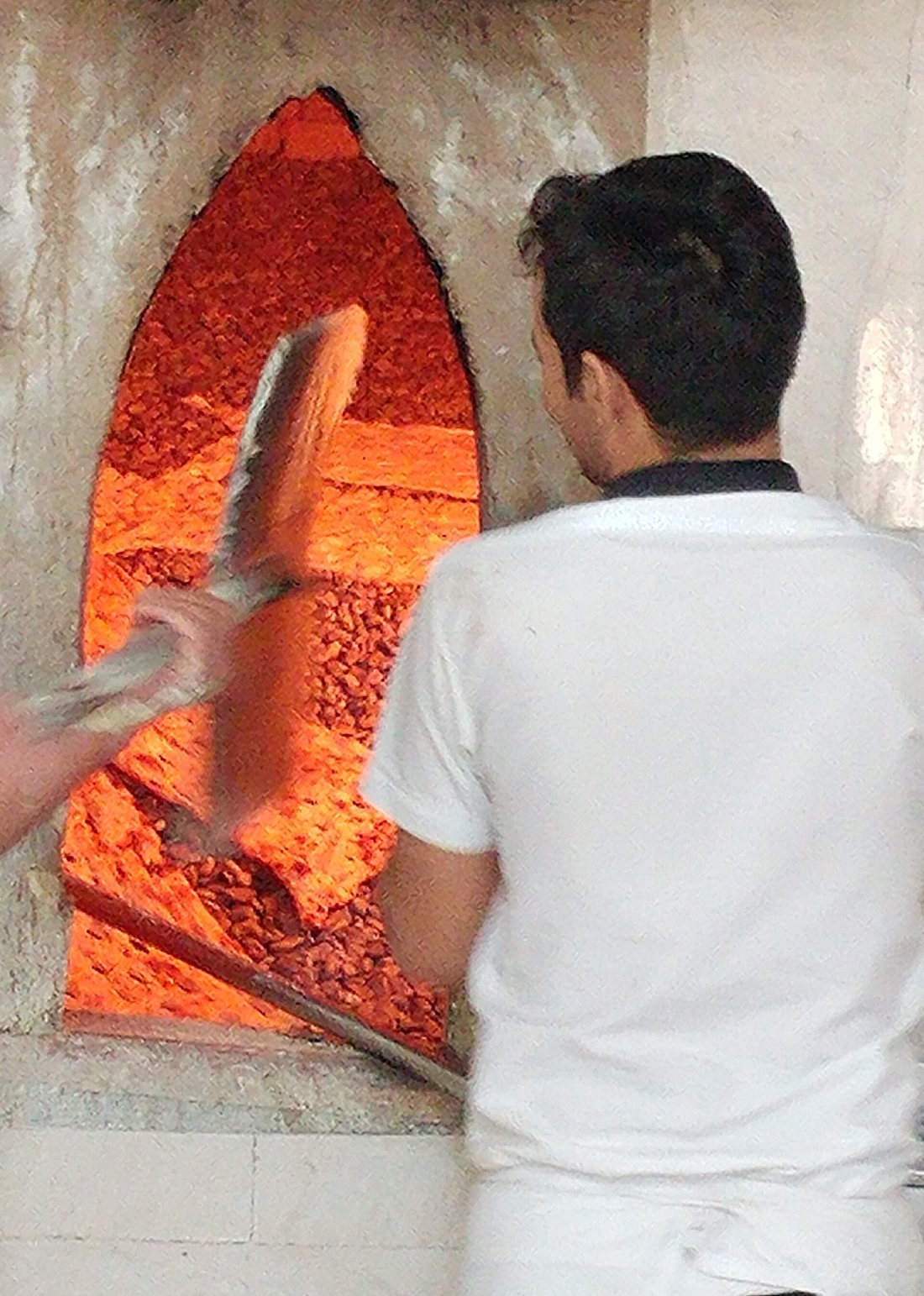
Probably not. The word is first attested in tenth-century Palestine, and the oven probably arrived after the Arab conquest.
”Naan is the Indian bread”
Misleading. Naan needs a tandoor; tandoor cooking spread widely only after 1947. In most Indian homes the everyday bread is roti.
”Paratha is ancient”
Contested by India’s own food historians. Pushpesh Pant: “there is no evidence of paratha in Ancient India."
"Injera is 2,000 years old”
Folklore. The “100 BC” date comes from unpublished sources. The oldest hard evidence is Aksumite griddles of the fifth or sixth century AD.
”The Dutch patent office voided the teff patent”
Wrong court. It was the District Court of The Hague, in November 2018.
”Emperor Ling loved flatbread”
Misread. The Book of the Later Han says he loved hu fan, “foreign food,” as part of a fashion for foreign things that the historian recorded as an omen.
”Farinata was invented after the Battle of Meloria, 1284”
Legend. Its first record is a Genoese decree of 1447.
”Lahmacun is Turkish (or Armenian) pizza”
Neither. It has no cheese and no tomato sauce, and its name is Arabic, “meat with dough."
"Knäckebröd has been baked since the sixth century”
No evidence. The claim circulates without a source.
”The Staffordshire oatcake is a soldier’s chapati”
No source found. The Staffordshire oatcake is a yeasted oat-and-wheat griddle pancake dating from at least the nineteenth century; the India story is unsupported.
Flatbreads: What a flatbread is · The history · The science · Ovens and griddles · The Middle East · South Asia · The Americas · Europe · Africa and East Asia · Making them at home · Corrections · ← Breads
Comments (0)