Around Asia
Once I knew China boiled peanuts, the obvious question was how far it went. The answer is: most of the way around the world, and in several places it is doing exactly what it does in South Carolina — a seasonal roadside food, sold hot, in a bag, by the side of a road.
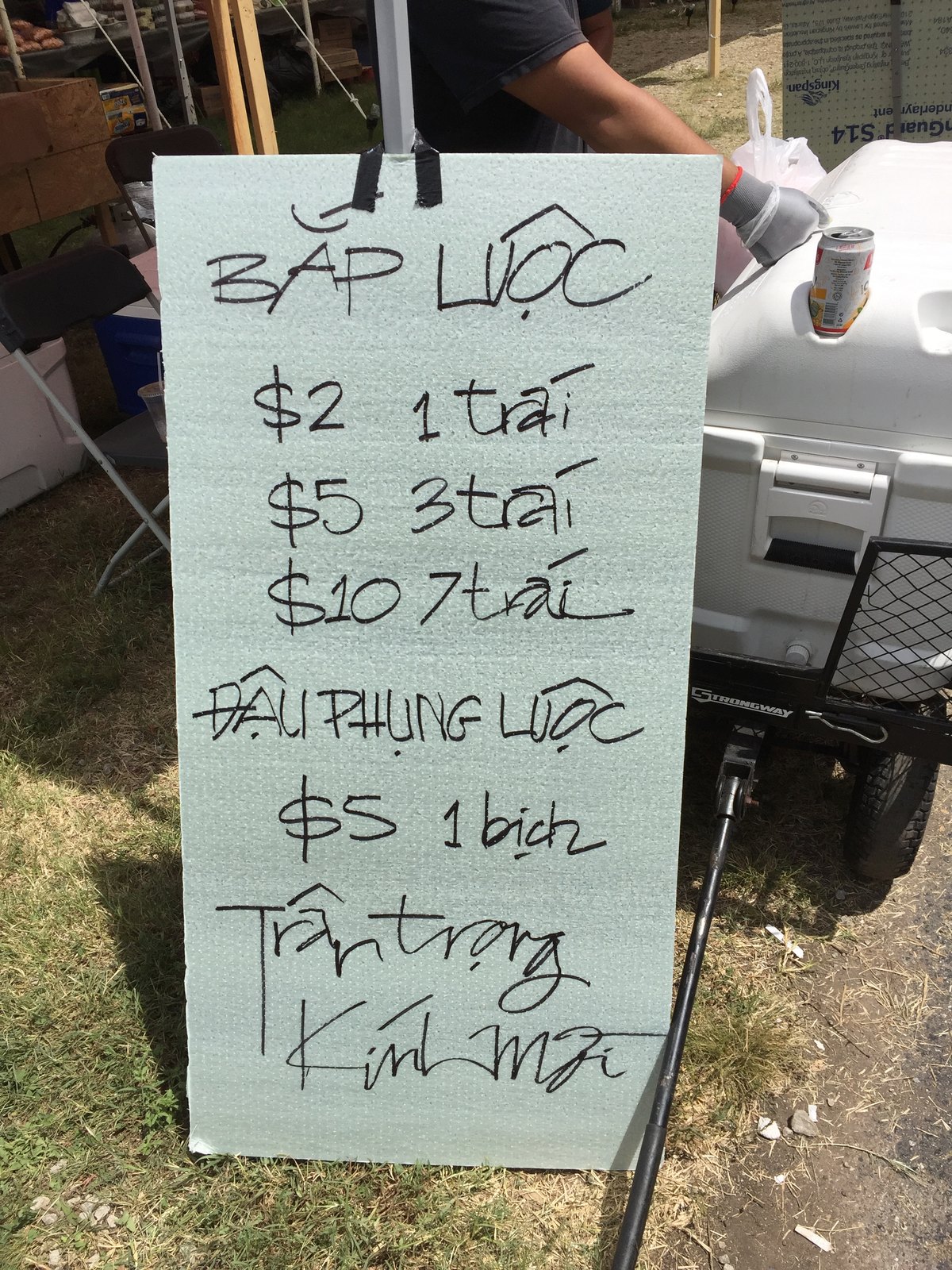
🇯🇵 Japan — 茹で落花生, and roadside stands in Chiba
Of everywhere I looked, Japan is the closest analogue to the American South, and I did not expect that at all.
Chiba prefecture grows over 70 percent of Japan’s peanuts. The peanut reached Japan in 1706, via East Asia; Chiba began cultivation trials on the Kujūkuri plain in 1876, and it spread with gubernatorial encouragement. In the Taishō era (1912–26), drought-resistant Chinese varieties were introduced at Yachimata and spread across the Shimosa plateau. The volcanic Kantō loam — ash from Fuji and Hakone, lying thick — turns out to be excellent peanut ground.
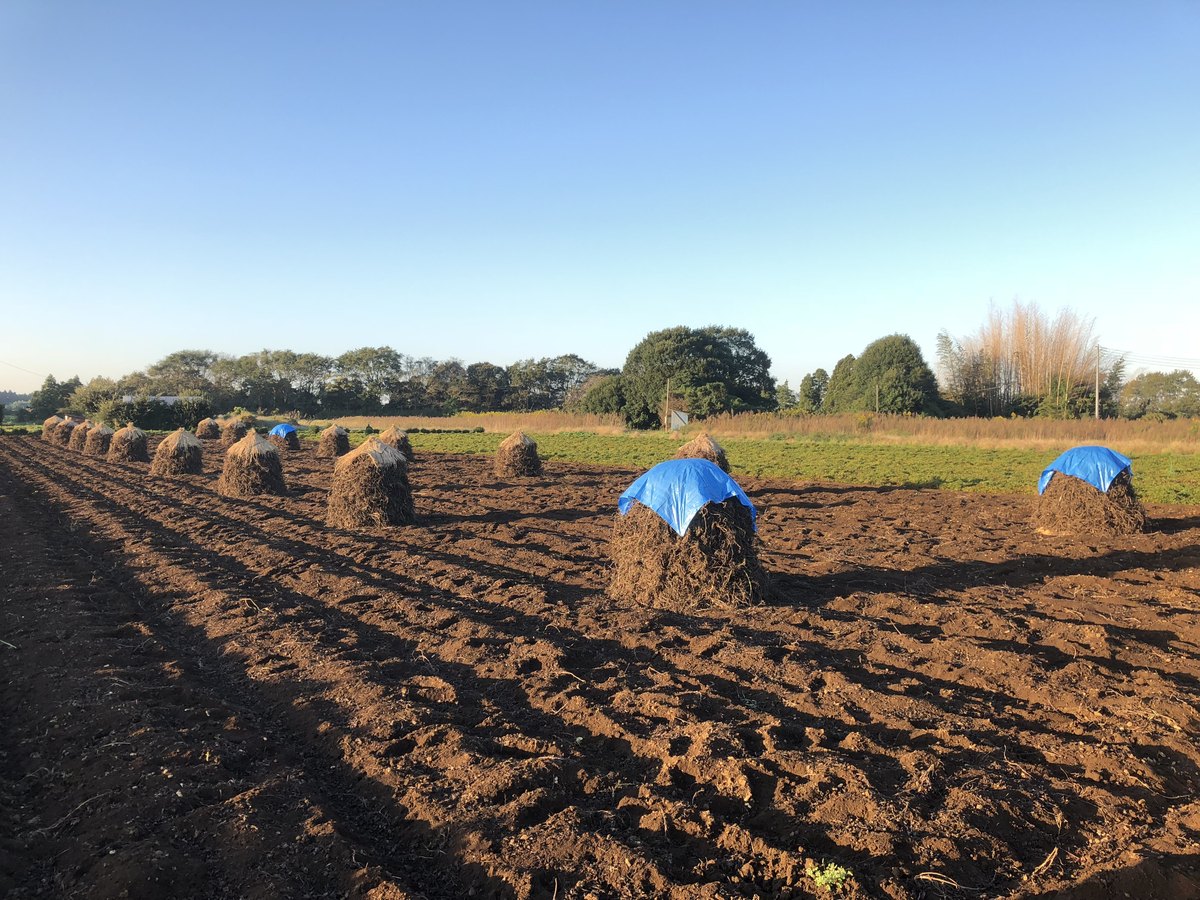
茹で落花生 — yude rakkasei, boiled peanuts.
⭐ And here is the part that made me sit up. From Japan’s Ministry of Agriculture, Forestry and Fisheries, on its regional-cuisines pages:
Boiled peanuts are a seasonal item in the areas they are grown, and are only made with peanuts freshly picked from the fields — because “fresh peanuts quickly begin to harden and lose their flavour once they are harvested.”
That is the green peanut rule, arrived at independently, and stated more strictly than we state it. In America we treat green peanuts as better; in Chiba they are treated as the only ones that count. Harvest runs September to late November, and outside that window the dish essentially isn’t made.
The method is austere and worth copying: rinse, salt at about 3% of the water’s weight, boil 40 to 50 minutes, cool in the strainer. No aromatics at all. That is a genuinely lower salt level than the Southern norm and a much shorter cook — the target is tender with some bite, not creamy.
They’re eaten plain, stirred into おこわ (okowa, seasoned glutinous rice), or dressed as 和え物 (aemono).
⭐⭐ And they are sold at 道の駅 — michi-no-eki, roadside stations.
Japan has roadside boiled-peanut stands. In Chiba, in season, you pull off the road and buy hot boiled peanuts from a place beside the highway, exactly as I did on Lady’s Island. Two countries, same crop calendar, same perishability problem, same commercial solution, no contact.
The variety used for boiling is a large-podded type called おおまさり (Ohmasari), bred for the pot rather than for roasting. ⚠ I have that from secondary sources and haven’t confirmed it against a Japanese agricultural primary source — treat the name as reported.
Recipe: Yude Rakkasei — Japanese Boiled Peanuts
🇻🇳 Vietnam — đậu phộng luộc
đậu phộng luộc in the south, lạc luộc in the north — the same dish, two dialects, and the split is a reliable little marker of which half of the country you’re in.
Raw peanuts simmered in salted water until tender, absorbing salt as they go. Nothing else. It is a drinking snack above all — the thing on the table with beer, among friends, at the informal end of the evening. Which is precisely the social slot boiled peanuts occupied at Charlie’s, and in Chinese 凉菜 culture, and in the Philippines.
⭐ It is remarkable how consistently this food ends up next to a drink. Something about needing both hands, generating a pile of shells, and taking a long time to eat makes it a conversation food everywhere it exists.
I wrote about the peanut’s wider role in Vietnamese cooking in the Vietnam section — this is the plainest thing that happens to it, and one of the best.
Recipe: Đậu Phộng Luộc — Vietnamese Boiled Peanuts
🇵🇭 Philippines — nilagang mani
Mani is peanut in Tagalog; nilaga is boiled. Nilagang mani.
The peanut arrived with the Spanish in the 1500s — the Manila galleon route, which brought it across the Pacific from the Americas rather than around through Africa or Asia, making the Philippines a third independent arrival of the same crop. It grows year-round there.
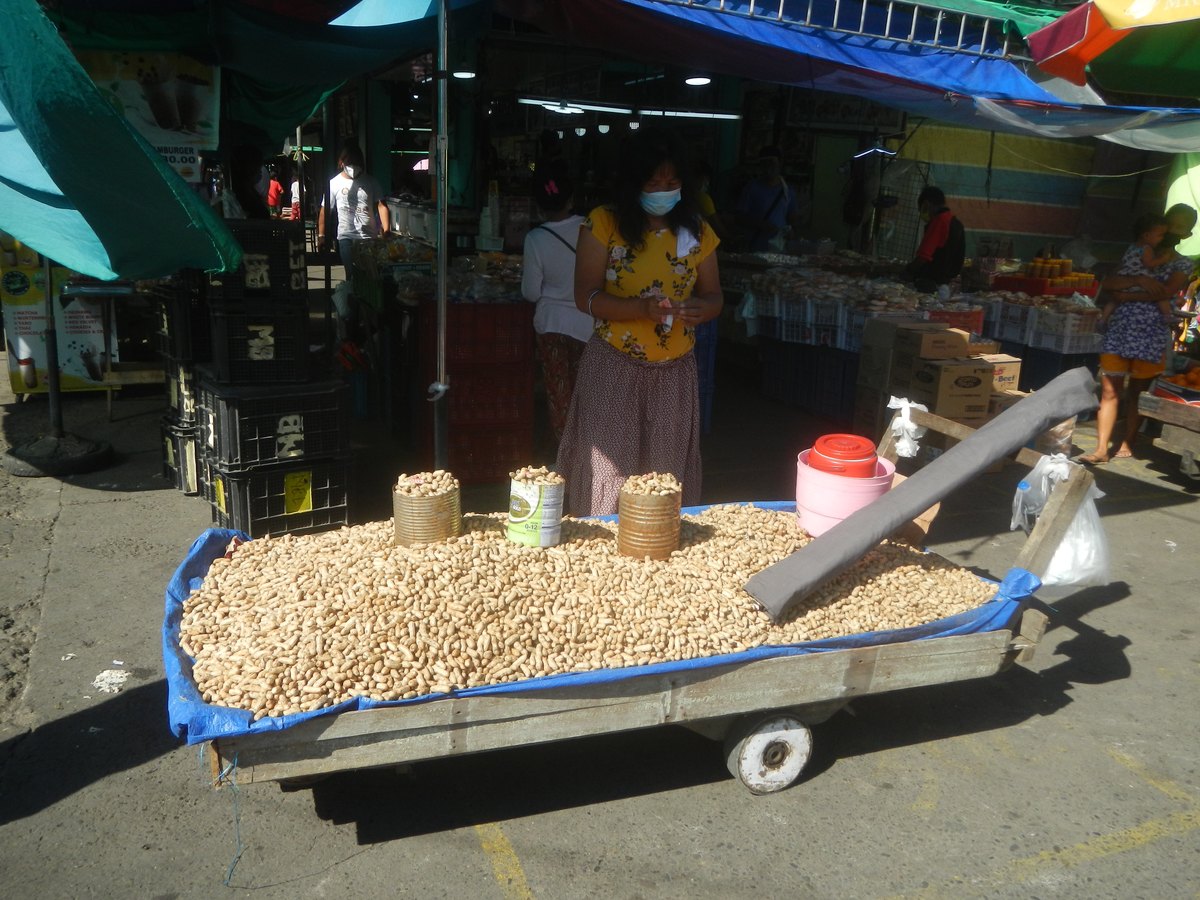
Sold as street food, hot, in bags, from carts and vendors. Salt, and generally a good deal of it; some versions go in with garlic. Eaten as a snack, and — again — with drink.
Recipe: Nilagang Mani — Filipino Boiled Peanuts
🇮🇳 India — the monsoon food
India does the most culinary work of anywhere on this list. Boiled groundnuts here are not the endpoint; they are an ingredient.
The plain version is boiled with salt, turmeric, and black salt (kala namak — sulfurous, funky, and completely transformative). Turmeric is worth pausing on: it turns the kernels yellow and adds an earthy bitterness that plays against the salt in a way nothing in the Southern repertoire does.
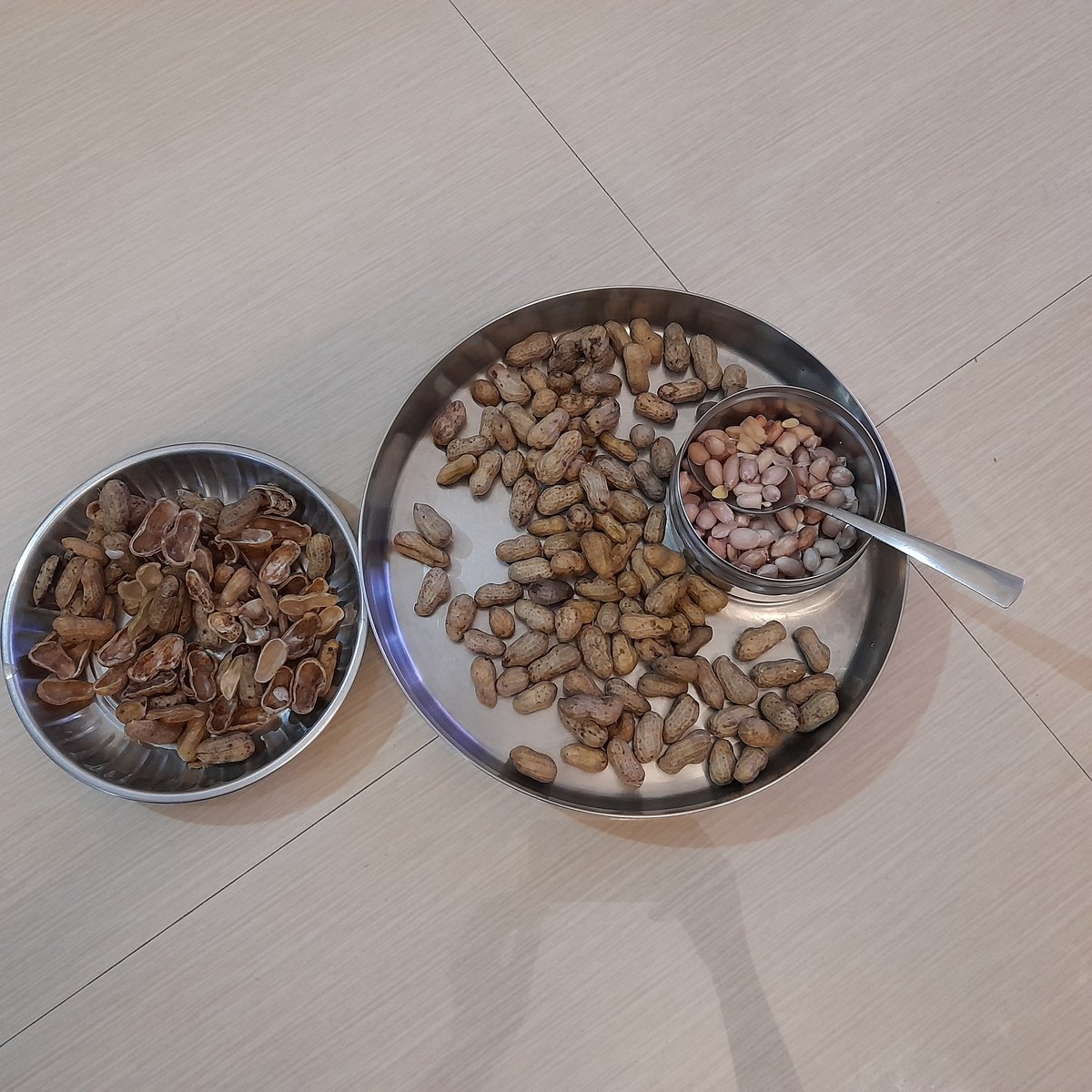
Then it gets built into chaat — the boiled peanuts tossed with chopped onion, tomato, coriander leaf, lime juice, red chili powder, topped with sev or slivers of raw green mango. At that point it’s a salad, and a very good one.
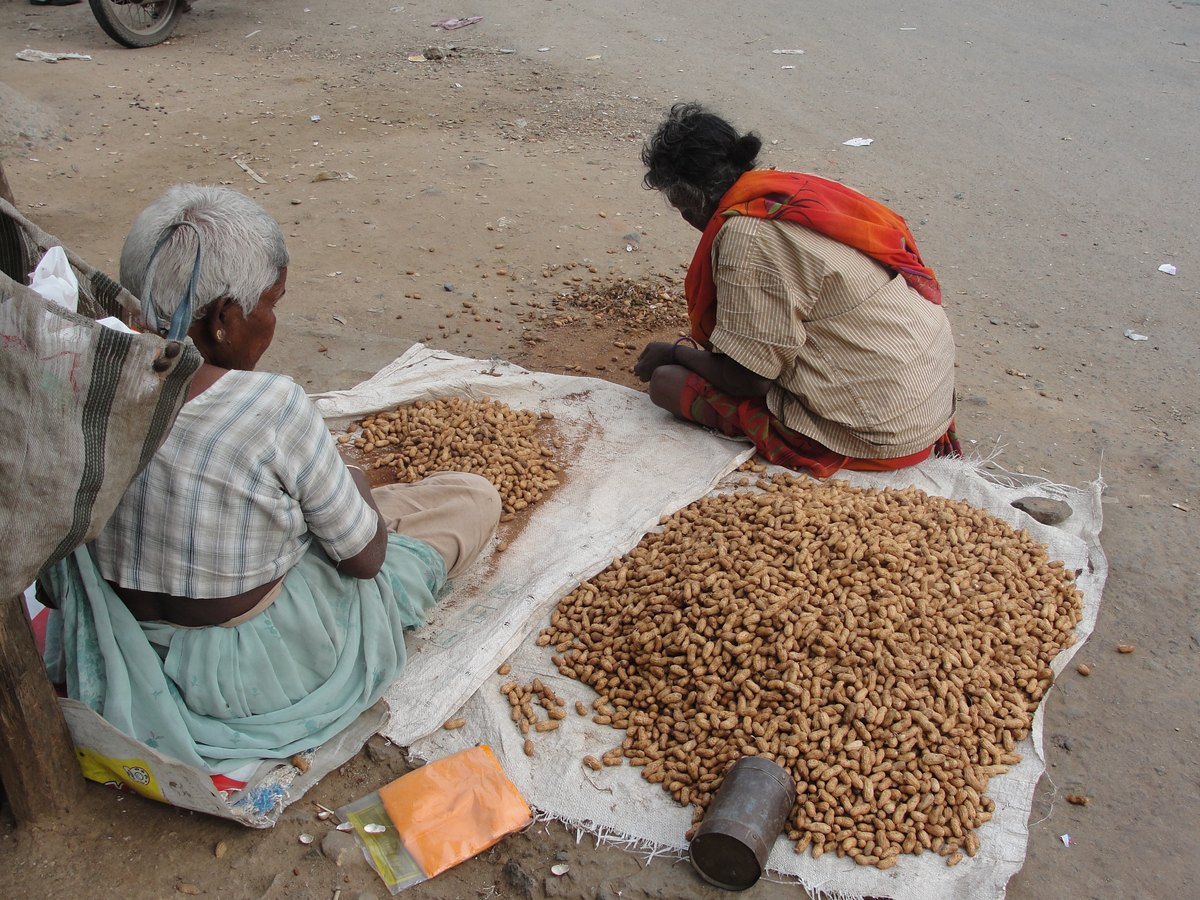
Sold from carts, in parks and markets, and historically on trains — the boiled-peanut seller working the carriages is a well-remembered piece of Indian rail travel.
⭐ And it is a monsoon food, eaten by families together in the rains, which is a completely different seasonal logic from the American harvest-glut one. Same dish, opposite reason.
Sources worth naming: Nandita Godbole (Masaleydaar: Classic Indian Spice Blends) and food scholar Archish Kashikar, both quoted in the Bitter Southerner survey that mapped much of this.
⚠ A note on timings. Indian boiled groundnuts are often shelled and always smaller, and the target texture is tender-firm rather than creamy — which is why Indian recipes quote 20–40 minutes where a Lowcountry recipe quotes four to six hours. Both are right for what they are making. I had that confusion sitting in my own files for years.
Recipe: Indian Boiled Peanut Chaat
🇹🇼 Taiwan · 🇸🇬 Singapore & Malaysia
Taiwan — sold traditionally by street hawkers. Confusingly, the local word is 土豆 (tǔdòu), which in Mandarin on the mainland means potato; in Taiwanese Hokkien it means peanut. Worth knowing before you order.
Singapore and Malaysia — 卤花生 or kacang rebus. Note the character: 卤 again, the same master-brine word as the bags on my counter, carried south by the Chinese diaspora. The local difference is that they are frequently shelled and cooked in dark soy sauce, which produces something considerably darker and sweeter than the Chinese in-shell version.
🇹🇭 Thailand · 🇮🇩 Indonesia · 🇲🇲 Myanmar
Thailand and Indonesia both boil peanuts and both sell them as street food. I found consistent references and thin detail, and I’d rather say that than pad it out.
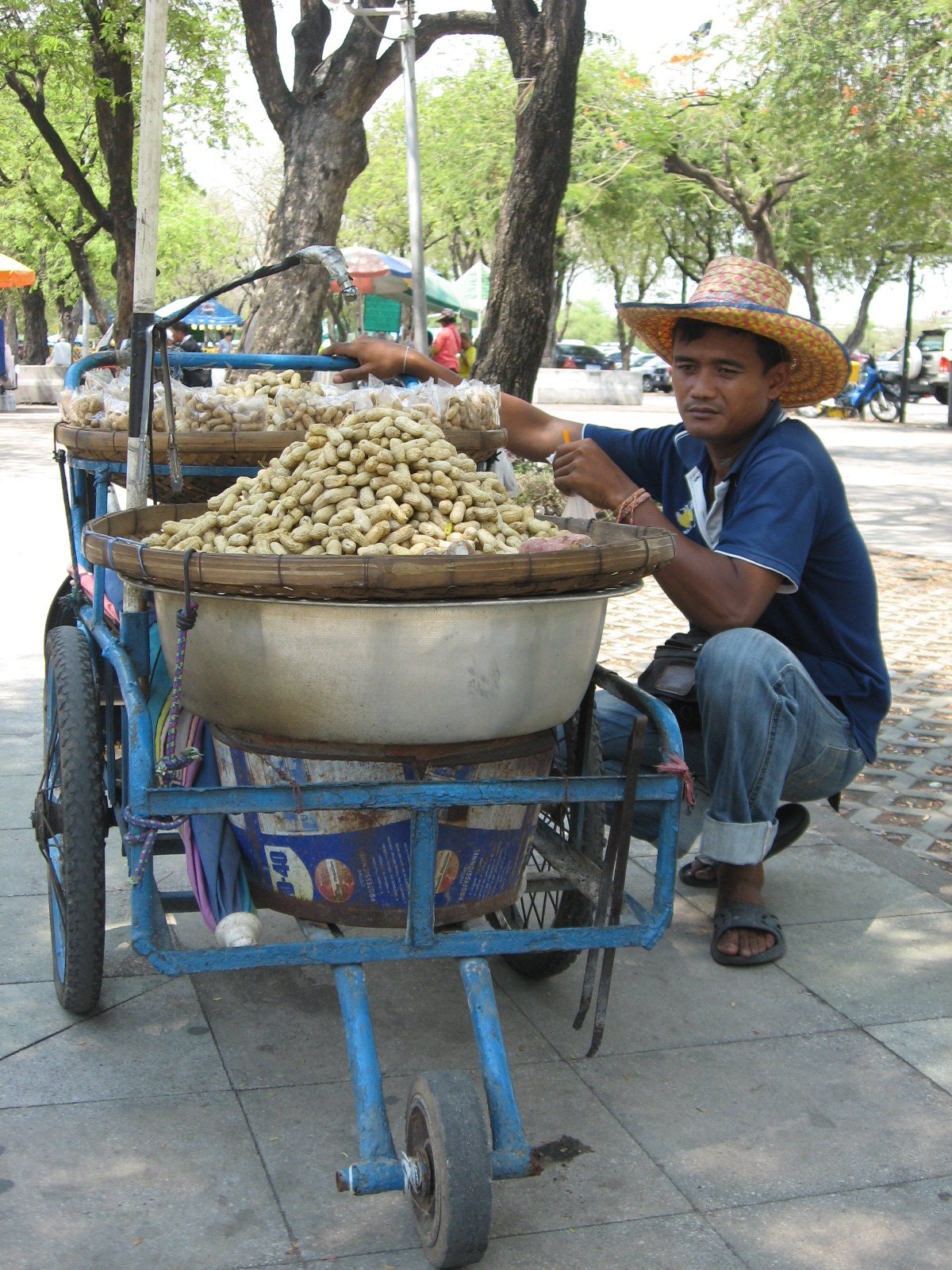
⭐ Myanmar deserves a specific mention, because they do it differently. Vendors on the Yangon–Mandalay expressway sell steamed peanuts rather than boiled — the same idea reached by a different route, and the only place in this whole survey where somebody is using steam instead of a pot of brine. The trade-off is obvious once you see it: steam cooks the kernel but cannot carry salt into it, so the seasoning has to happen afterwards.
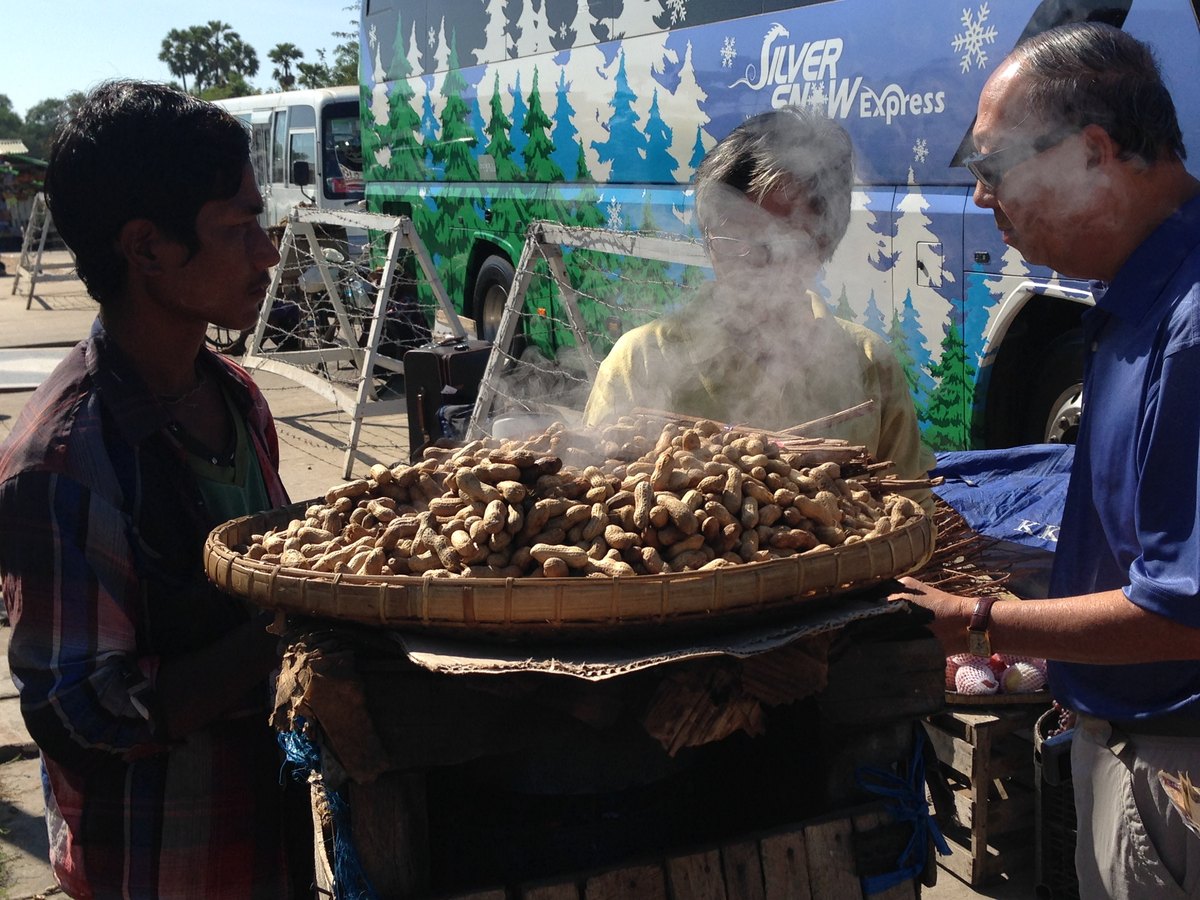
If you know any of these traditions properly, I’d like to hear about it.
The pattern
Laying them side by side, the same three facts keep turning up in places with no contact:
- It follows the harvest, or it follows the rain — a seasonal food with a short window.
- It is sold beside a road, hot, in a bag, by a small operator.
- It goes with a drink, and with company.
The seasonings differ completely. The social shape doesn’t differ at all.
Next: Africa, and the Boat Both Ways — where the boiling actually started.
Comments (0)