Stands, Jars and Cans
How this food actually reaches people — which turns out to be a more interesting question than it sounds, and includes one thing I have been calling by the wrong name for thirty years.
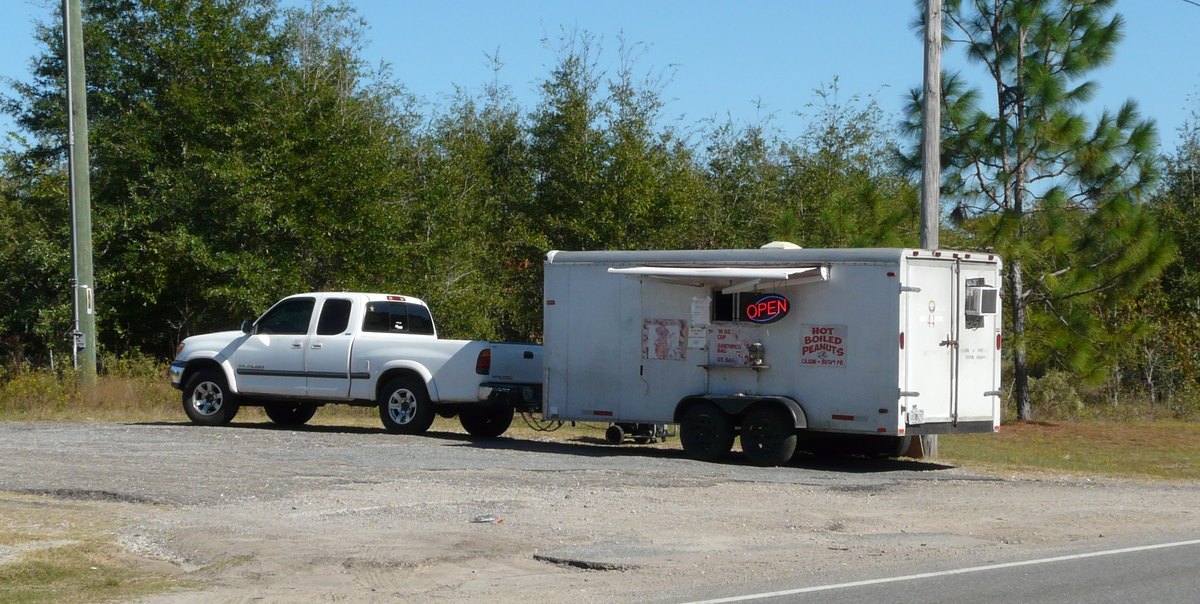
The stand
A stand is a pot, a burner, a bottle of propane, and a sign. That’s the whole business. The one on Lady’s Island had a hand-painted board that said BOILED PEANUTS and nothing else, because nothing else was needed.
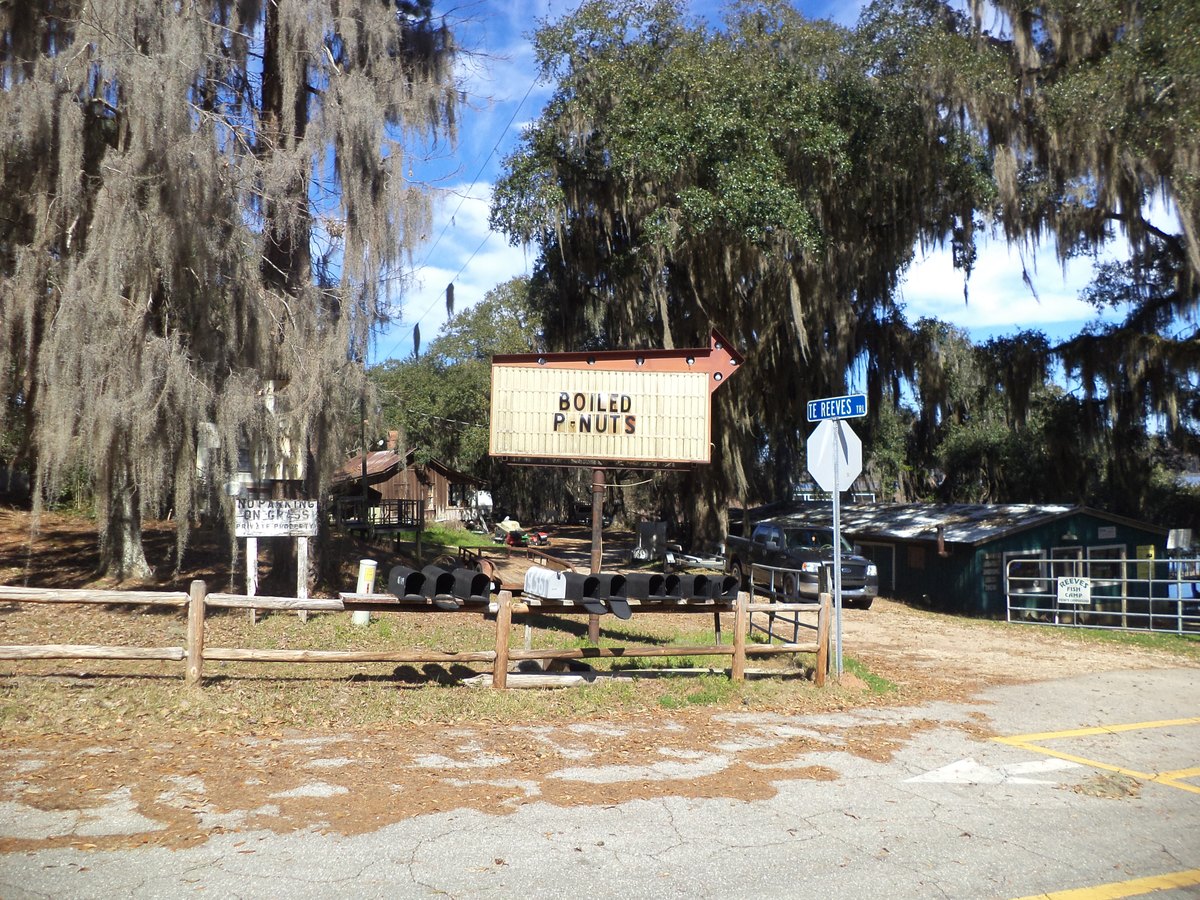
The economics have not changed since the 1890s. Peanuts come out of the ground in late summer, all at once. Green peanuts are wildly perishable. A farmer with a surplus in late August has a few days and a decision to make, and boiling is what turns an unsellable glut into something you can move by the bag beside a road.
⭐ Which is why the stand is seasonal and always has been. A stand running in October is selling this year’s crop; a stand running in March is selling dried raw peanuts or last year’s frozen, and the difference is real. If you drive past a hand-lettered sign in September, stop.
The vessel is almost always a turkey fryer — a 20–30 gallon pot on a propane stand — because it is the cheapest way to get a very large volume of water to a boil outdoors and hold it there for six hours. Nobody designed that; it is just what works, and it is what I found on Lady’s Island and what I use myself.
The peanut boil as an event
Before it was a business it was a party, and in a lot of places it still is.
You cannot boil a small amount efficiently — the pot, the propane and the six hours cost the same whether you cook two pounds or fifty. So you cook fifty, and then you have fifty pounds of a highly perishable hot food and a deadline, and the solution is people.
⭐ A peanut boil sits in exactly the same social slot as a fish fry, a crawfish boil, a clambake, or a hog killing — a preservation problem converted into an occasion. Everything about the food supports it: it takes both hands, it takes a long time to eat, it produces a pile of shells, it goes with beer, and nobody eats it sitting down at a table. It is engineered for standing around talking, and every culture that boils peanuts uses it that way.
The jar and the can
Which brings us to the grocery shelf, and to my own habit of buying them at Piggly Wiggly and Ingles.
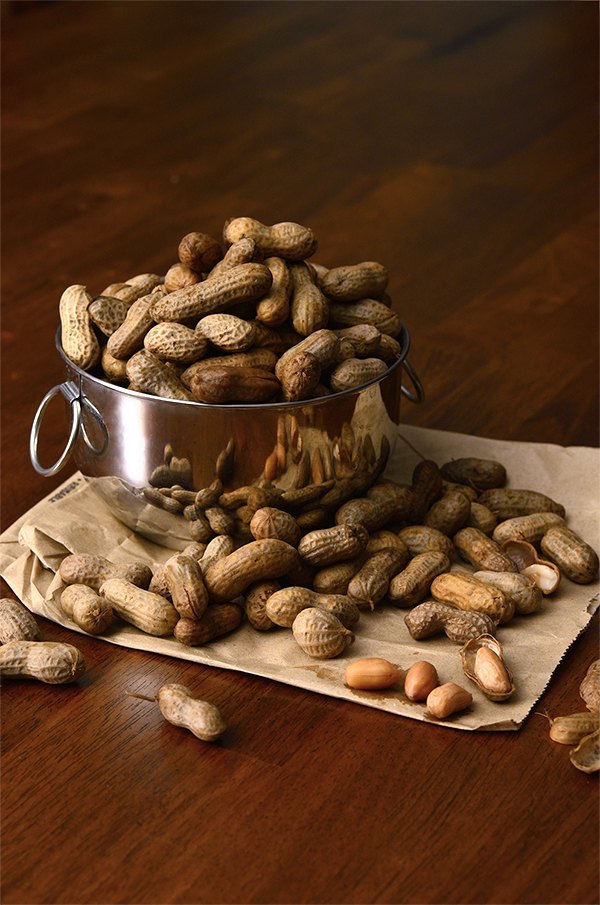
⭐ The dominant brand is Peanut Patch, made by McCall Farms of Effingham, South Carolina, under the Margaret Holmes label — described as America’s best-selling boiled peanut, sold in cans in groceries across the country, in Original, Cajun, Hot & Spicy, and BBQ, from peanuts grown by local South Carolina farmers.
Effingham is about ninety miles from Beaufort. The can I have been buying in Michigan for decades is packed a couple of hours up the road from the bar where I first tried them. I did not know that until I looked it up for this page.
⭐ And the flavors are the gradient in a can. Original is South Carolina. Cajun is Louisiana. Somebody at McCall Farms mapped the same drift I drove and turned it into SKUs.
The can works on exactly the physics of the pressure canner, and the Chinese retort pouch works on the same physics again. Three shelves — a Southern grocery, my pantry, a Chinese grocery — solving one problem three ways.
⚠ The honest quality note: canned boiled peanuts are softer than good fresh ones, because the retort process cooks them a second time. They are perfectly good and I buy them constantly. They are not the same as a hot bag from a stand in September, and no can ever will be.
🔴 Peanuts in a Dr Pepper — and what it’s actually called
Here is the thing I have been getting wrong.
I have always understood that dropping peanuts into a soda — a Dr Pepper, in my telling — is called a goober. I have said so for years, always with the caveat that this is only as far as I know.
The caveat was doing real work. I cannot find any source that calls the drink a goober.
What is thoroughly documented is the tradition itself, and it is a good one:
- Salted peanuts poured into a bottle of Coca-Cola, drunk so the peanuts come up with the soda.
- It dates to roughly the 1920s, across the textile-mill and farm South.
- ⭐ The best-attested origin story is practical, not culinary: manual laborers with dirty hands wanted a snack they did not have to touch. Tip the bag into the bottle and you get salt, protein and caffeine without ever putting fingers to food.
- The carts that sold Coca-Cola around mill grounds before vending machines were “dope wagons” — dope being period slang for Coke.
- RC Cola, Dr Pepper, and Mountain Dew are all attested as substitutes, and in Texas the Dr Pepper version has real currency.
- The documented names are “peanuts and Coke,” “peanuts in Coke,” and — the one I like — “a farmer’s Coke.”
🔴 And one detail that matters here: those are roasted, salted peanuts. Not boiled ones. A boiled peanut is wet and soft and would turn to sludge in a bottle of soda. So whatever the drink is called, it is not made with the peanuts this section is about.
⚠ What I am not going to do is tell you that “goober” is wrong. “Goober” is a completely standard Southern word for a peanut, regional naming is exactly the kind of thing that varies house to house and county to county, and the absence of a written source proves very little about spoken usage — plenty of real food names have never been written down. What I can say is: the documented name is “a farmer’s Coke,” and if somebody in your part of the world calls it a goober, you and they are the source. I’d genuinely like to know where it’s said that way.
The Zatarain’s question
The crab boil I kept finding in kettles toward Louisiana is Zatarain’s, a New Orleans seasoning house whose products — both the dry bag boil and the concentrated liquid — are standard equipment for crawfish, shrimp, and crab across the Gulf.
⚠ I have deliberately not written the company’s history here; I found conflicting founding dates and would rather leave a gap than print a date I can’t stand behind.
What matters for this section is the mechanism, and I’m confident about that: boiled peanuts drifted into an existing seafood-boil culture and got seasoned like everything else that went in that pot. Old Bay occupies the same slot further up the Atlantic coast. Nobody invented Cajun boiled peanuts; the peanut simply walked into the room.
The state snack
South Carolina made the boiled peanut its official state snack on 1 May 2006, bill H.4585, signed by Governor Mark Sanford.
I like that the state which legislated it legislated the plain version — peanuts and salt, the Beaufort recipe, the one with nothing in it. Georgia has the oranges and Louisiana has the crab boil, and both are better than they sound. But the official one, the one that got a bill number, is the one I bought in a zip-lock bag for a dollar and threw away.
Back to: Charlie’s, and the Stand on Lady’s Island
All my boiled peanut recipes: browse them here
Comments (0)