Green, Raw, or Just Dry
Almost every failed batch of boiled peanuts fails here, before the pot is even on. This is the one distinction worth getting right, and the vocabulary actively works against you.
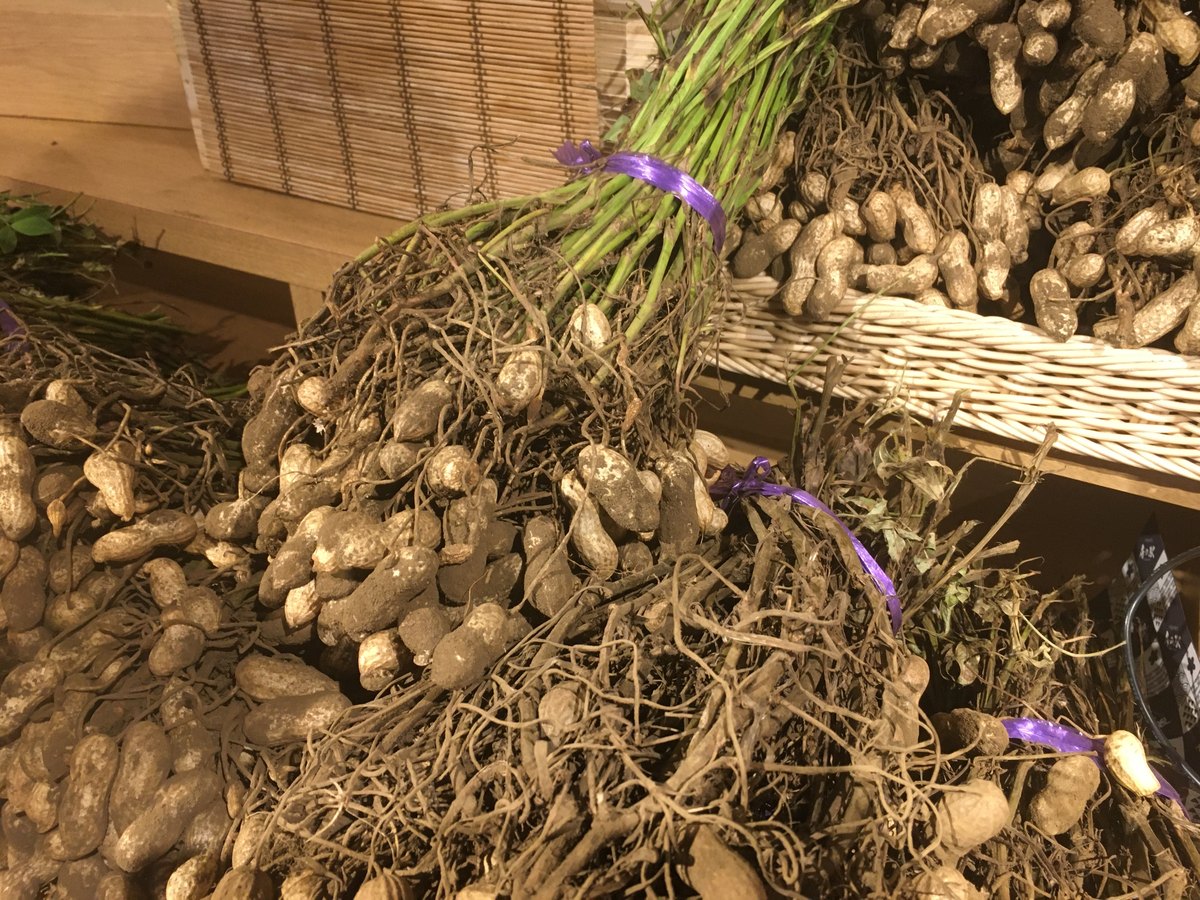
Three states, and only two of them are worth boiling
Green peanuts. Freshly dug, undried, straight out of the field. Moisture content roughly 35 to 50 percent. They are wet, heavy, and highly perishable — this is a fresh vegetable, not a pantry item. Buy them within about five days of digging, and refrigerate or freeze anything you are not cooking immediately. They will go off in a week at room temperature.
🔴 Green does not mean green. The shell is the ordinary tan-brown you expect; the kernels inside are white to pale pink. “Green” here means fresh, in the sense of green wood or green hay. Every first-timer looks for a green peanut, doesn’t find one, and assumes the market is out. Ask for green peanuts by name and you will get the right thing.
Raw peanuts. Full size, fully formed, but dried down for storage. This is what you can actually buy most of the year, and what I use most of the time. They boil perfectly well. They just need soaking and a great deal more time — the water you removed in drying has to go back in before anything else can happen.
Mature, roasting-dry peanuts. The bagged raw peanuts sold for roasting, and the worst choice. They will soften eventually and never go properly creamy.
Roasted peanuts are a different food entirely. The man at the Lady’s Island stand said you can boil roasted peanuts, but raw are much better, and he was being generous. Roasting sets the proteins and drives off the moisture you are trying to put back. You get something edible and faintly disappointing.
The practical version
| Moisture | Soak first? | Boil time | Where you get them | |
|---|---|---|---|---|
| Green | 35–50% | No | 2–4 hours | Farm stands, Southern farmers’ markets, late Aug–Oct |
| Raw (dried) | ~7–10% | Yes — overnight | 8–12 hours, or 4–5 hard | Groceries, online, year-round |
| Roasting-dry | low | yes, and still | longer, poorer | Avoid |
| Roasted | low | — | don’t | Different food |
⚠ My own numbers, honestly reported: at the stand and in my own kitchen the working figure for raw peanuts has always been 4 to 5 hours at a steady boil, checking every fifteen minutes or so after the four-hour mark. Slow-cooker, more like twelve. Those are real times from real batches, and they sit at the shorter end of the 8–12 hour range you will see quoted for dried raw peanuts — because a hard rolling boil does in five hours what a gentle simmer takes ten to do. Cook to the peanut, not to the clock.
🔴 A correction to my own recipe
My older Boiled Peanuts — Several Recipes note carries a line, picked up somewhere along the way, saying green peanuts need only 20–25 minutes and soaked raw ones 40 minutes.
That is wrong for what we are making here, and I am striking it. Those timings come from a different dish — small, often shelled peanuts boiled as an Indian street snack, where the goal is tender-firm rather than creamy. For in-shell peanuts cooked to Lowcountry doneness, twenty minutes gets you a hot raw peanut. The same note’s other figures — 4–5 hours on the stove, ~12 in a crock pot, 75–80 minutes in an Instant Pot — are the ones that match what I actually do.
It is an easy mistake to make and it survived in my files for years. Worth saying out loud rather than quietly deleting.
How to tell when they’re done
Forget the clock. There are two tests and they are both physical.
- The shell yields. Squeeze a pod between finger and thumb. A done peanut’s shell is soft and gives; a raw one is rigid and cracks.
- The kernel is creamy, not crunchy. Take one out, shell it, eat it. If there is any snap or chalk left in the middle, it isn’t finished. You are looking for the texture of a cooked butter bean — soft all the way through, slightly waxy, no resistance at the core.
There is no visual cue from outside the pot. You have to eat one. Then, twenty minutes later, eat another one.
Then turn the heat off — this is the step people skip
They are not finished when they are soft. They are finished after they have sat.
When the kernels go creamy, kill the heat and leave them in the brine — an hour at minimum, and better still until the pot has come down to room temperature. Overnight is not too long.
This is where the salt actually arrives. During the boil you are mostly cooking; during the steep you are mostly seasoning. It is why a batch tasted straight off the fire seems under-salted and the same batch four hours later is exactly right, and it is why adding more salt at the end of the boil is almost always a mistake — you haven’t tasted the finished product yet.
⭐ The man at the stand told me this in one sentence in 1991. A Chinese factory prints it on the bag as 低温泡卤 — low-temperature steeping in the brine. See China.
Storing them before you cook
- Green peanuts: refrigerate immediately; use within about five days of digging. They freeze well raw — and freezing green peanuts in September is how you have proper boiled peanuts in February.
- Raw dried peanuts: a cool dry pantry, like any dried legume. Check for mustiness before buying in bulk; damp storage is where peanuts develop problems.
- ⚠ Buy from somewhere with turnover. Old dried peanuts boil unevenly — some kernels go creamy while others stay chalky, and no amount of extra time fixes a mixed bag.
Next: Which Peanut — Valencia, Runner, Virginia, Spanish, and the red-skinned convergence between Georgia and Shandong.
Comments (0)