The South Is Not One Place
I have eaten my way across a lot of the South, and the longer I did it the less I believed in “Southern food” as a single thing.
The South is a set of gradients, not a set of borders.
That is the argument of this whole section, and I did not arrive at it from a book. I arrived at it from a bag of peanuts.
The dish that gave the game away
Driving from Beaufort, South Carolina, west over about a decade, I noticed that boiled peanuts change as you go. South Carolina puts peanuts and salt in the pot. Georgia stands drop in halved oranges. Alabama and Mississippi add garlic, onions, spices, crab boil. By Louisiana it’s Zatarain’s and jalapeños and the whole inventory.
Nobody announced a change. There is no sign at the state line. It shifts continuously, the way an accent does — and by the time you notice, you’re somewhere else.
⭐ That is the whole thesis in one snack, and it now has an entire section of its own — including the honest part, which is that as far as I can tell nobody has ever documented that drift. It is my observation, offered as that.
Once you’ve seen it in peanuts you start seeing it everywhere. Cornbread gets sweeter as you go one direction. Barbecue sauce changes base every hundred miles. Biscuits stop behaving the same way when the wheat changes. The seams show most clearly in the dishes that travel.
What the sub-regions actually are
Not a map, and deliberately not a tidy one:
The Lowcountry — the Carolina and Georgia coast and the Sea Islands. Rice, shrimp, oysters, benne. The most directly African-descended cooking in America, because Gullah Geechee culture survived here more intact than anywhere else. This is where I first ate boiled peanuts and where I heard the word goober without knowing it had crossed an ocean — and where I ordered Frogmore Stew off a sign because I thought it might be made of frogs.
Appalachia and the uplands — Tennessee, Kentucky, West Virginia, western Carolina and Virginia. Cold-climate, preservation-driven, thin soil, hunting and foraging. Leather britches, soup beans, ramps, sorghum. Not plantation food and never was. His own category name for it is “Hillbilly Lunches.”
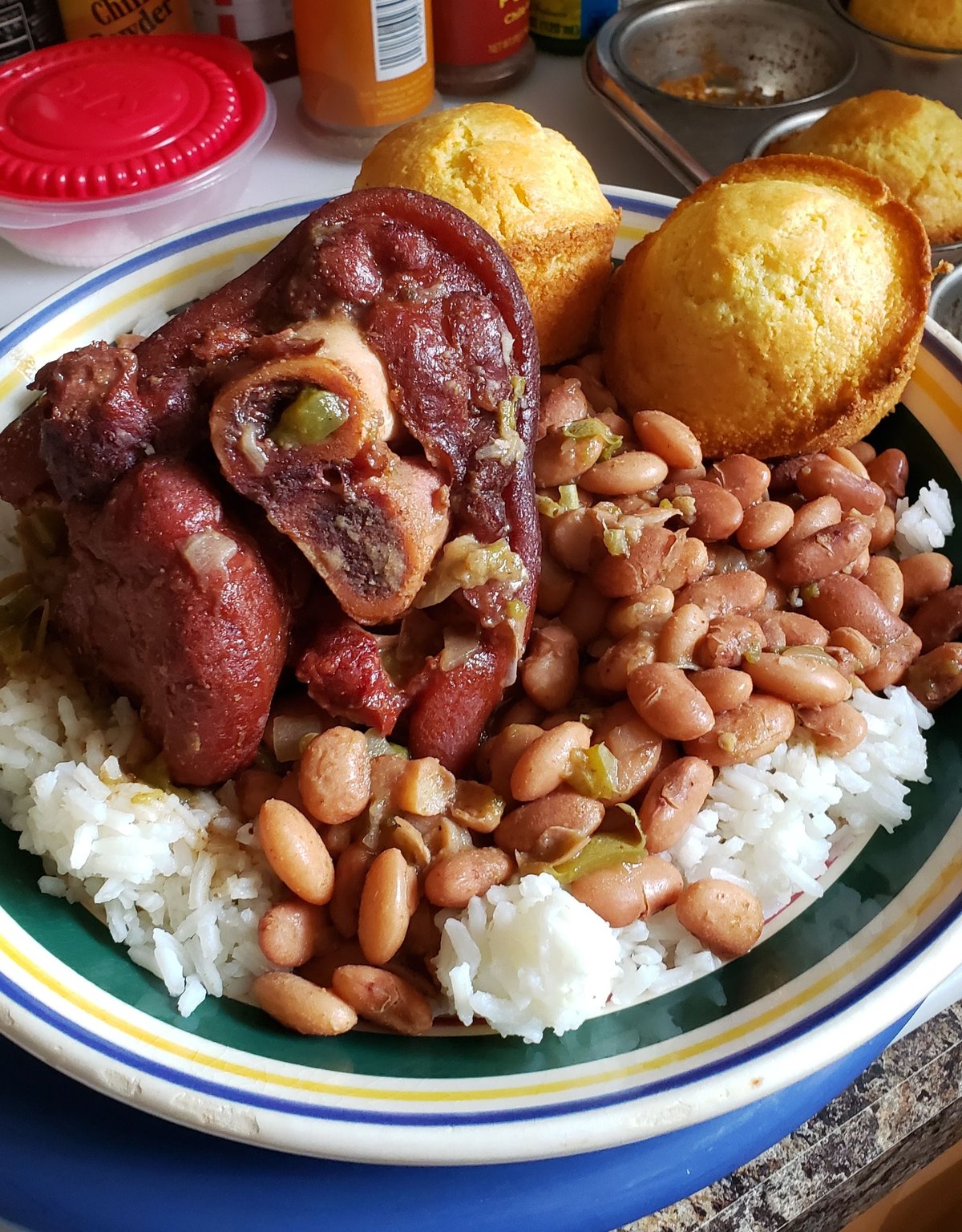
The Deep South / Black Belt — Alabama, Mississippi, west Georgia. Cotton country. Greens, cornbread, pork, field peas.
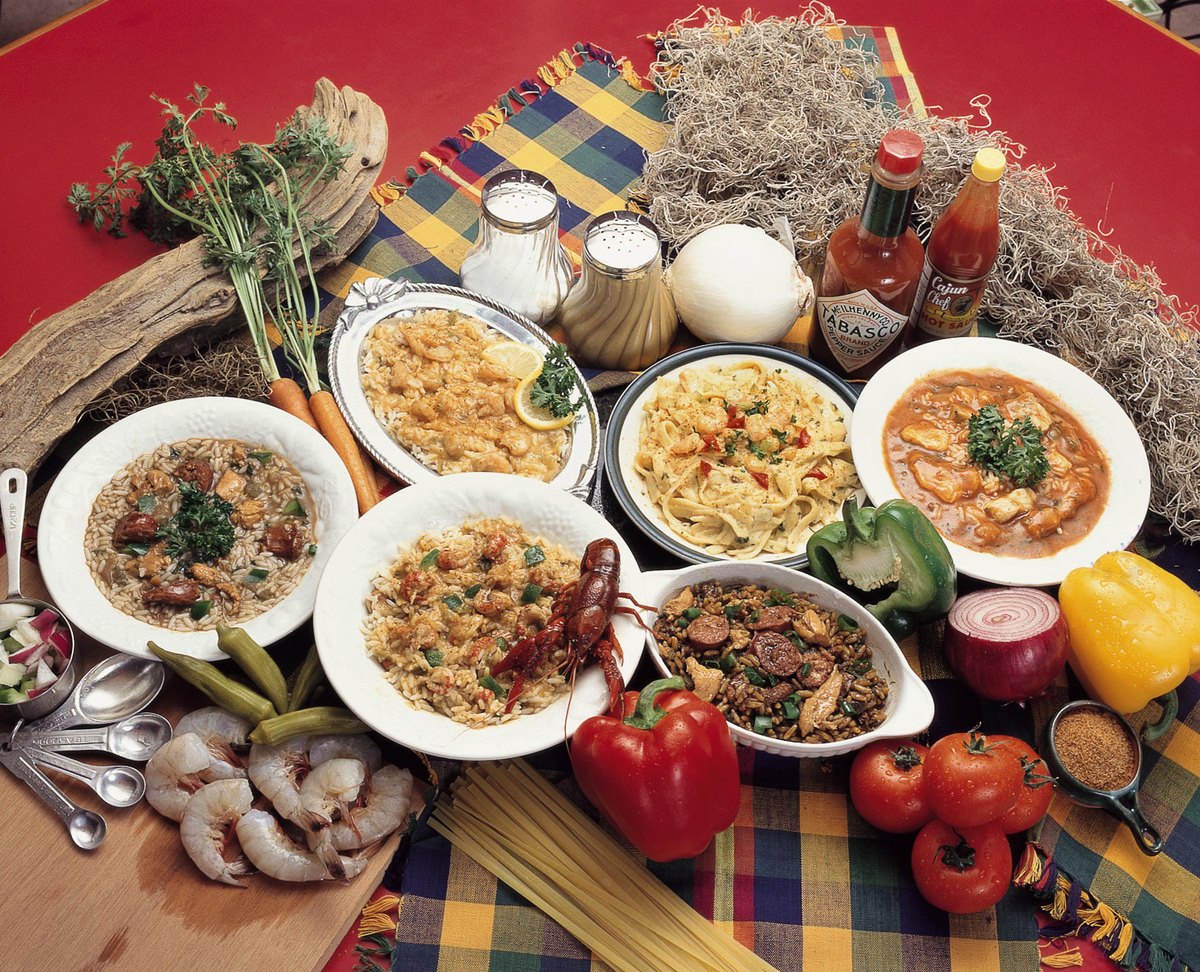
Louisiana — genuinely its own thing, with French, Spanish, West African, Haitian and Native inputs and its own vocabulary. It does not reduce to Cajun-versus-Creole either.
Texas and the Gulf rim — where the South stops being the South and starts being something with Mexico in it.
⚠ These bleed into each other and always have. Anyone who draws them as hard shapes is selling something.
Three things that turn out not to be about the South at all
The best finds in this section are the ones where the story people tell is a story about culture, and the real answer is about a supply chain.
1. Cornbread. The sugar argument is treated as a moral question. It is a milling question — the cornmeal changed, and the sugar is compensating for it. Here.
2. Biscuits. Southern biscuits behave differently because Southern flour is different wheat — 9% protein against 11.7%. It’s not the hands. It’s the bag. Here.
3. Boiled peanuts. Not a Southern invention at all. West African technique, South American plant, North American soil. Here.
⭐ In each case the folklore credits technique or character, and the evidence points at an ingredient that changed underneath everybody. That’s the pattern I’d hold onto if you read nothing else here.
Where I’m coming from
I’m from Michigan. I did not grow up on this food. I came to it through the Marine Corps, through Tennessee and South Carolina, and then through years of driving around eating in places I had no claim on.
That is worth stating plainly, because it shapes what this section can honestly be. I can tell you what I ate, where, and what changed as I moved. I can chase down where a claim came from and tell you when it doesn’t hold up. What I can’t do is tell you what any of it means to somebody who grew up inside it — and where a page here needs that, it says so instead of guessing.
Tennessee is where a loop closed I didn’t know was open: I grew up on Grandma Hay’s pickled peaches, assuming they were a family eccentricity, and found a whole Southern tradition standing behind her. That story is over in the Pickled section. I was in heaven.
The pages
- Boiled Peanuts — the dish this section’s argument came from, now its own deep dive.
- Cornbread and Buttermilk — the cornmeal changed, not the palate.
- Biscuits — the flour is the recipe, and a mill closed in 2007.
- Greens and Pot Likker — a US senator and a newspaper editor fought about this in public for a month.
- Hillbilly Lunches — 91 recipes of working food, and a word with no accepted etymology.
- Cajun and Creole — the distinction everybody repeats, and why the sources won’t back it.
- Country Ham and Red-Eye Gravy — the name is a description, not an anecdote about Andrew Jackson.
Comments (0)