Cajun and Creole
Everybody knows the distinction. Creole is city food, Cajun is country food. Creole has tomatoes, Cajun doesn’t. Creole is aristocratic, Cajun is rustic.
It’s tidy, it’s repeated everywhere, and the sources will not back it.
The history, which is at least solid
Around 3,000 Acadians arrived in south Louisiana between 1764 and roughly 1785, expelled from what is now Nova Scotia by the British. The word Cajun is a creolised pronunciation of Acadien. They settled the bayou country, the prairies and the river parishes.
Creole is the older and much slipperier word. In Louisiana it originally meant born here rather than in the old country — and it has been applied to people of French and Spanish descent, to people of mixed African, French and Spanish descent, to enslaved people born locally, and to tomatoes. It is a word about origin, not about ethnicity or class, and trying to make it mean exactly one thing is how the trouble starts.
🔴 Why the neat version doesn’t hold
“Creole is city, Cajun is country” is an oversimplification, and the sources say so outright. Cajuns moved to cities in large numbers. Creole families kept plantations and rural ties for generations. The line was porous from the beginning and it has been thoroughly blurred for a century.
⚠ The tomato test is a tendency, not a rule. Creole cooking does lean toward tomato and Cajun does lean away — but Cajun sauce piquante is built on tomato, and it is about as Cajun as a dish gets. If you’re going to use tomato as a heuristic, say it’s a heuristic.
⭐ The distinction I’d actually trust is about the pantry, not the people. New Orleans was a port with access to imported ingredients, French technique and money. The bayou and prairie country was not, and cooked from what it had. That is a difference in supply, and it produces most of the differences everyone attributes to temperament — which is the same shape as the cornmeal and the flour findings in this section. The pattern keeps recurring.
⭐ The roux, and where the argument really lives
A roux is flour cooked in fat, and in Louisiana how far you take it is the decision that defines the dish. This is the part of Louisiana cooking I have spent the most time on, so this section is mine rather than a summary.
Three variables, not one. Most writing treats a roux as a single dial — how dark. It isn’t. The final flavour depends on the darkness, the flour, and the fat — butter, bacon grease, lard, oil — and changing any one of them changes the result. A bacon-fat roux and a butter roux taken to identical colour are not the same ingredient.
On the darkness itself:
🔴 Never undercook a roux. An underdone roux tastes pasty, and of raw flour, and there is nothing you can do downstream to fix it. That flat floury note in a disappointing gumbo is almost always this and not the seasoning. It is the single most common failure and the easiest to avoid — keep going.
⭐ The darker you take it, the more complex the flavour gets — blond and buttery, then nutty, then toasty, then something genuinely deep and bitter-edged. And the trade is real: it burns easily. Dark roux demands constant attention and a moment’s inattention at the far end costs you the whole batch and the pan.
And there is a physical trade underneath the flavour one: the further you take a roux, the less it thickens. A very dark roux is nearly all flavour and barely a thickener, which is why a dark gumbo often leans on okra or filé for body. You are trading thickening power for complexity, and knowing that is what stops you wondering why your darkest gumbo is also your thinnest.
⏭ The oven method — my next experiment. You can reportedly make a roux in the oven rather than standing over a pan, which would trade attention for time and take the scorch risk off the table. I have not tried it yet. It is on the list, and when I do I’ll write down whether it actually tastes the same.
Cajun roux is traditionally made with oil or lard and taken dark. Creole roux more often uses butter and stops paler. That’s a real and useful generalisation, and it follows the pantry: butter was available in the city.
🔴 And here is a correction worth carrying over. The oldest printed Creole cookbook in my library — The Picayune’s Creole Cook Book — actively warns against a dark roux. Not silence on the matter: a warning. So “authentic Creole means a dark roux” fails against the primary source, and the dark-roux gospel is later than people think. The full working-out is in the Picayune’s own section.
The holy trinity
Onion, celery, bell pepper — the Louisiana base, in place of the French mirepoix’s onion, celery and carrot.
⭐ The substitution is agricultural, not aesthetic. Carrots do not love the Gulf climate; bell peppers thrive in it. A French technique landed in a place where one of its three vegetables didn’t grow well, and the cooking adapted around what was in the ground. Add garlic and some people call it the trinity plus the pope.
Gumbo
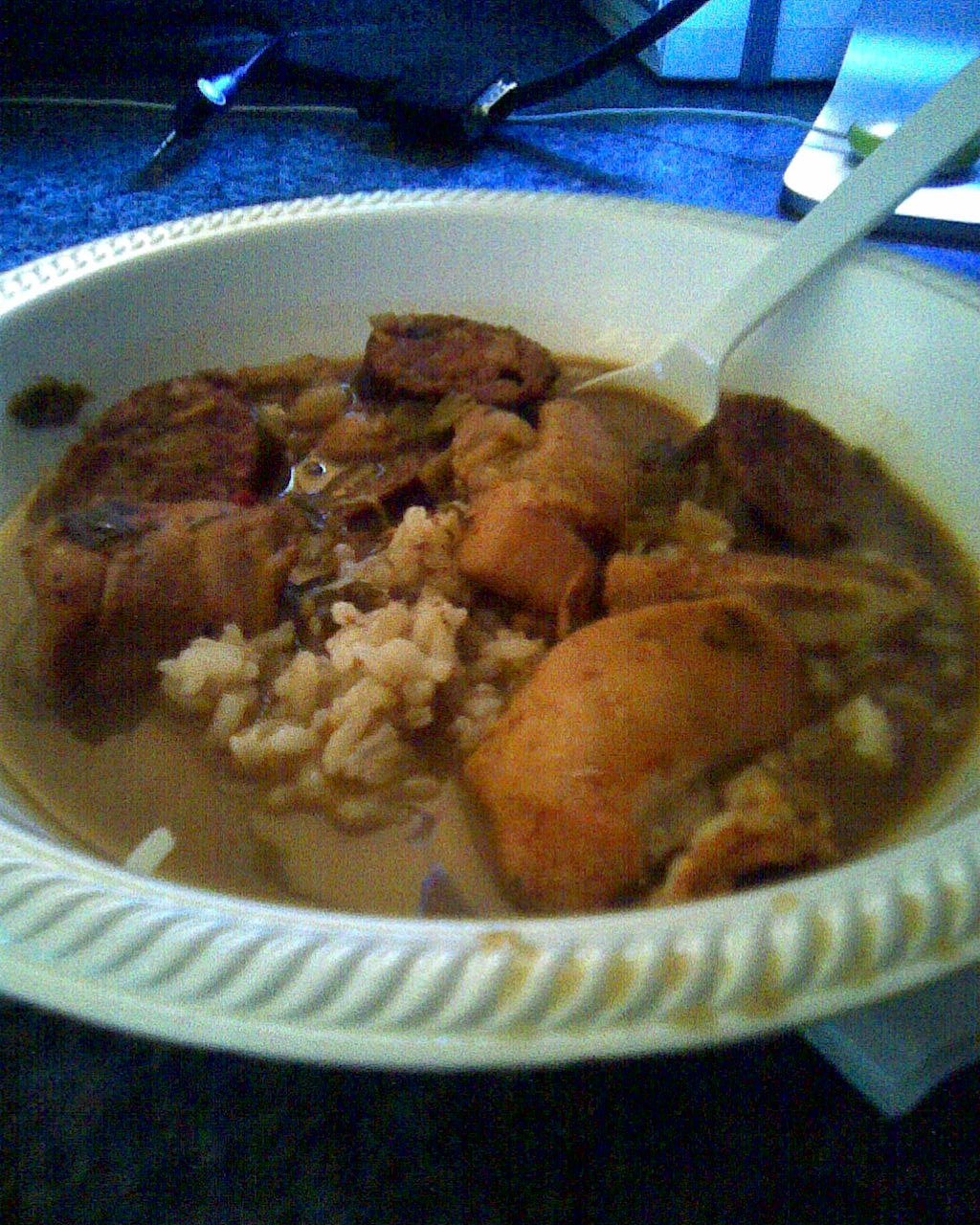
Gumbo is the argument in a pot, and there is no settling it. Seafood or chicken-and-sausage. Okra or filé — and traditionally not both, since they’re alternative thickeners. Tomato or no tomato. Dark roux or light. Rice in the bowl first or ladled over.
Even the name is contested, between a West African word for okra (ki ngombo and relatives) and the Choctaw kombo for filé. Both etymologies point at a thickener, and both point away from France — which tells you where the dish’s spine actually comes from, whichever way the word went.
⭐ This is the page’s best evidence for the pantry argument. Okra is West African and grows in the Gulf heat. Filé — dried ground sassafras — is Choctaw. Rice is the Lowcountry and West African staple. The roux is French, the sausage is German by way of Louisiana, and the tomato is Spanish and Italian. Gumbo is not French food with local ingredients. It is a genuinely new thing that could only have happened there.
⭐ Mine is a moving target, on purpose
I don’t have a gumbo. I have a range I keep working across — from a simple sausage gumbo with shrimp in it, all the way out to a full seafood gumbo — and I am always refining. That is not indecision. Gumbo rewards it: change the roux, change the protein, change the thickener, and you have genuinely made a different dish rather than a variation.
⭐ And gumbo is complex enough that it deserves a deep dive of its own rather than a section of a page about Louisiana. It has one now. Three thickeners from three continents, the roux in proper detail, and the primary source that shows the famous “never okra and filé” rule is not what anybody thinks it is.
My gumbos: Gumbo, New Orleans Creole · Andouille Sausage Gumbo
Jambalaya
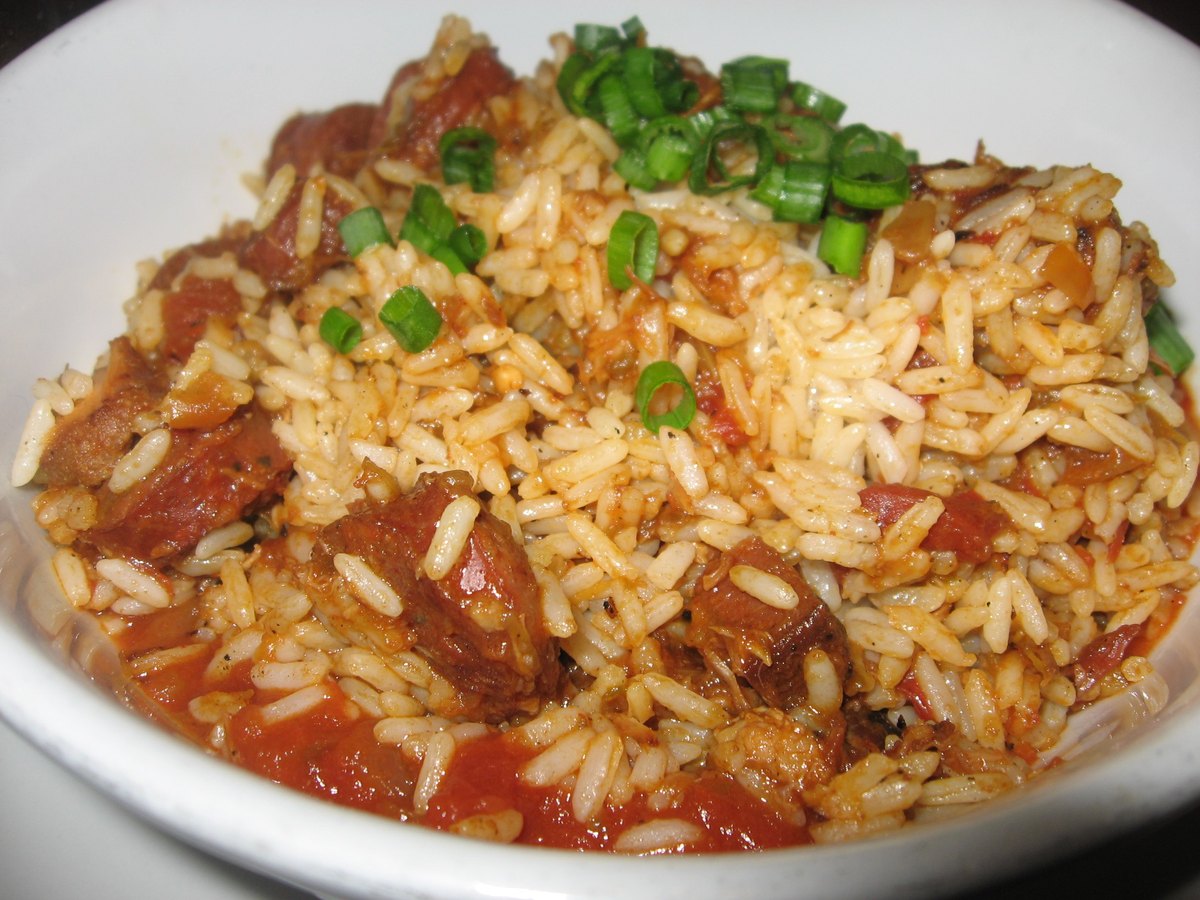
Rice cooked in the pot with everything else, which is what separates it from gumbo (served over separately-cooked rice) and from étouffée (a smothered dish, not a rice dish).
The usual split: “red” jambalaya with tomato, generally called Creole and associated with New Orleans; “brown” jambalaya without, associated with the prairie parishes, where the colour comes from browned meat and the fond in the pot. Its ancestry is usually traced to Spanish paella by way of the Louisiana pantry — saffron being unavailable and tomato standing in.
⭐ Mine is filed as an “ongoing recipe”, and I meant it literally. Like the gumbo, it is always on the move — not as complex, but just as varied. That distinction is worth keeping: gumbo has more moving parts, jambalaya has just as many possible outcomes. One pot, one set of decisions, an enormous spread of results.
⭐ And it is the most honest label on any recipe I have. A jambalaya you have stopped adjusting is a jambalaya you have stopped cooking.
Mine: Jambalaya, Louisiana — ongoing recipe · Cajun Jambalaya
And it reaches back across the ocean
Two connections this section keeps running into:
Red beans and rice on Monday — the dish pickled pork exists for. The red-bean tradition arrived in Louisiana in the late 1700s with French-speaking refugees from the revolution in Saint-Domingue, now Haiti. So Monday red beans and Haitian pikliz are cousins that came off the same boats.
⭐ And the peanut closes the loop. By the time the boiled-peanut gradient reaches Louisiana the pot is full of crab boil and jalapeños — and a Senegalese chef cooking in New Orleans today boils green peanuts with crawfish-boil spices, which puts the beginning and the end of that road in one pot.
More: Creole Pralines · browse the Cajun recipes
Next: Country Ham and Red-Eye Gravy — where the famous origin story turns out to be folk etymology.
Comments (0)