Cornbread and Buttermilk
Ask whether sugar belongs in cornbread and you will get a fight. It is treated as a question about character — Southern restraint versus Yankee sweet tooth, real cornbread versus cake.
I went looking for where the line came from, and the honest answer is more interesting and much less flattering to everybody:
The cornmeal changed. The palate didn’t.
The usual story, and the better one
The usual story is corn genetics — flint corn in the North, dent corn in the South, dent being softer and sweeter, so Southern cornbread never needed help. That’s real as far as it goes.
⭐ The stronger finding is about milling.
Traditional Southern cornbread needed no sugar because field-ripened, stone-ground meal is sweeter on its own. Corn left to ripen on the stalk, ground whole with the germ still in it, tastes of corn and carries its own sweetness.
Modern high-volume commercial meal is a different product:
- Harvested unripe and force-dried rather than field-ripened.
- Steel-milled rather than stone-ground.
- Degerminated — the germ removed, because the germ’s oil goes rancid and a shelf-stable bag needs it gone.
The result is measurably less sweet and less corny. So a modern cook adding a spoon of sugar isn’t corrupting a tradition. They’re compensating for an ingredient that got worse.
⚠ And I am not going to overcorrect this into “no true Southerner uses sugar.” Plenty do, plenty always did, and the sources are explicit about it. It’s a regional tendency, not a law, and anyone policing it is doing something other than cooking.
🔴 This is the same finding as the grits one, and I’m not going to re-derive it here — degermination, shelf life, and what the federal standard of identity actually permits are worked out on the Breakfast Favorites cornmeal page. Same mechanism, different dish, and it’s worth reading the two together.
The practical upshot: if you want cornbread that doesn’t need sugar, buy stone-ground whole-grain meal and keep it in the freezer. The freezer part isn’t fussiness — it’s the reason the industry degerminated in the first place.
What cornbread is actually for
Here’s the thing that gets lost when cornbread is treated as a side dish: for a great deal of Southern and Appalachian history, cornbread was the plate.
Wheat was expensive and often had to be shipped in. Corn grew. So corn was the daily bread, and the versions multiply accordingly — corn pone, corn dodgers, hoecake, johnnycake, cracklin’ bread with the pork rind rendered into it, hush puppies dropped into the fish grease.
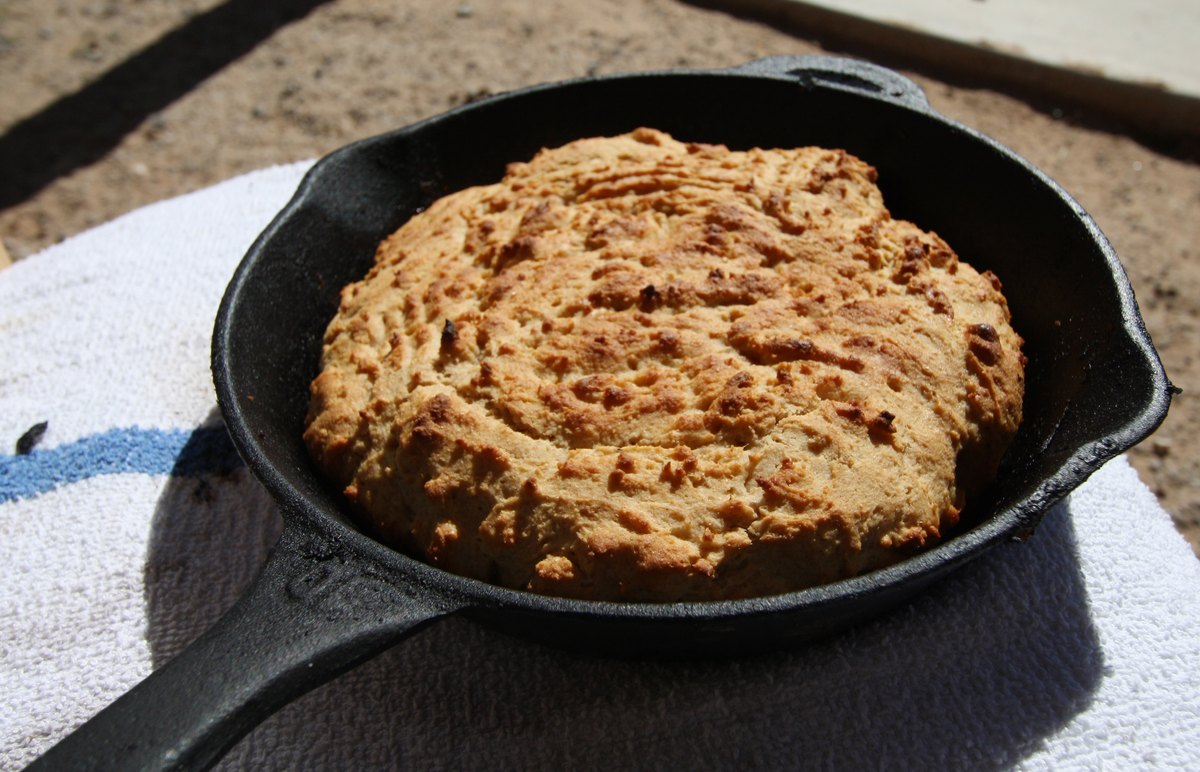
And it was mostly baked in cast iron, preheated with the fat already smoking, which is the whole reason a proper wedge has that crust. That’s its own section.
Recipes: Cast Iron Skillet Cornbread · Cornbread · Appalachian Corn Pone · Corn Dodgers · Cracklin’ Bread
Cornbread in a glass of buttermilk
This is the one I want to talk about, because it is the least glamorous thing in this section and probably the most revealing.
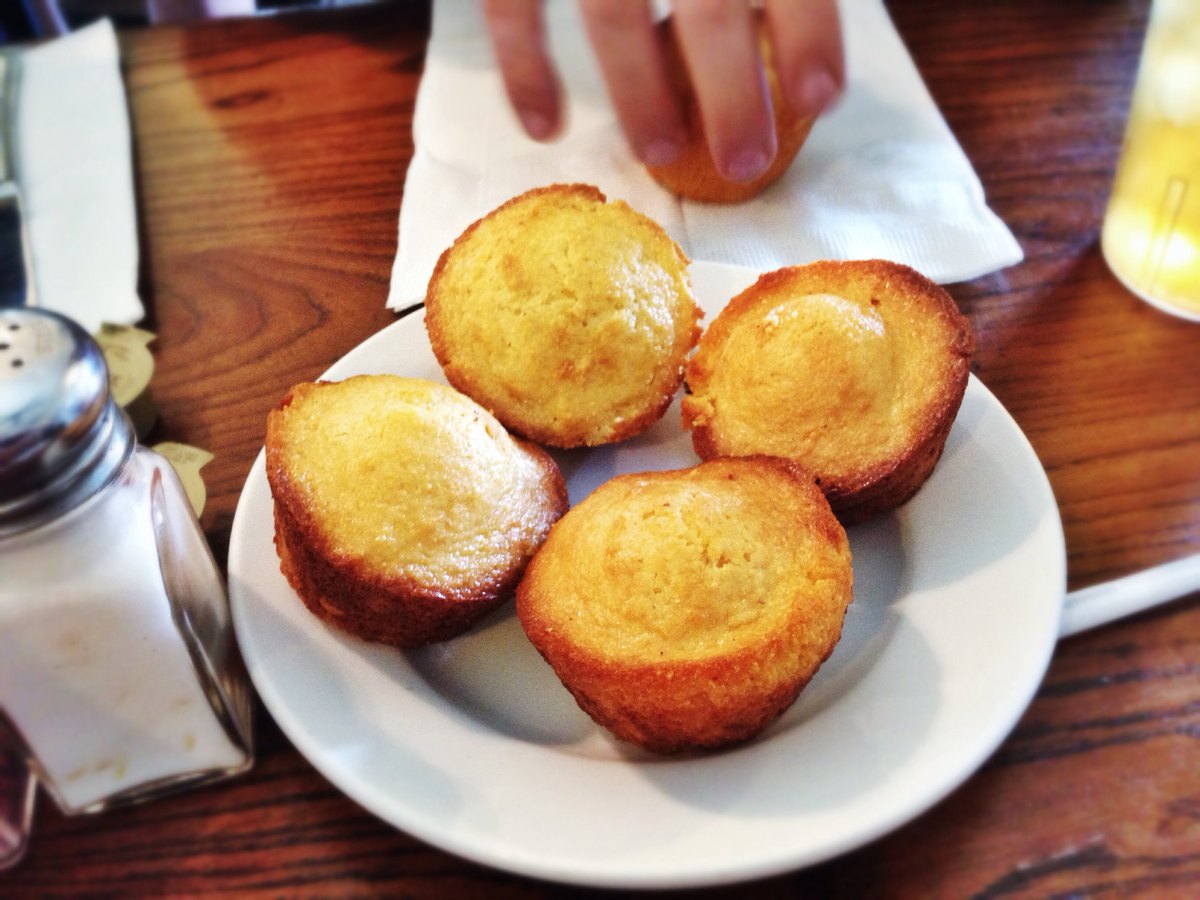
You crumble cold cornbread into a glass of buttermilk and eat it with a spoon.
That’s it. Some people drink it. Some pack it in a mason jar and take it to work.
It sounds like poverty food and it was poverty food, but that undersells what’s going on. It is a complete meal built from two leftovers: yesterday’s cornbread, and the liquid left after churning butter. Nothing bought, nothing wasted. The buttermilk’s acidity softens the crumb, the fat is already gone into the butter, and you end up with something cold, sour, filling and cheap.
⭐ The version in this collection is filed as a lunch, in a mason jar — which tells you exactly what it was for. It went to the field or the mill.
Recipes: Cornbread and Buttermilk (Mason Jar Lunch) · Cold Cornbread and Pinto Bean Plate · Cornbread with Molasses Poured Over · Southern Beans and Cornbread
⚠ This one is not mine yet
I want to be straight about this, because everything else in this section is something I have eaten or cooked.
I have not made this. I came across it, it stopped me, and it is on the list. So take the paragraphs above as me working out why it makes sense rather than as a report from someone who grew up spooning it.
⭐ It’s a spoon dish, not a drink — that much I’m confident about, and here is why: it is very much like the johnnycake I grew up on, and still eat quite a bit of. Cornmeal, something to soften it, a spoon. Once you have eaten one you recognise the other immediately, and that recognition is most of the reason I want to try it. My johnnycake is over in Breakfast Favorites.
So the dunk-versus-crumble argument on the next page has a third front, and I’ve already picked a side on this one without having earned it.
⚠ A note on the buttermilk itself: the buttermilk in that story is true churned buttermilk, the by-product of making butter — thin, tangy, slightly sweet. What’s in a carton today is cultured: milk deliberately soured with bacteria. Related, not identical, and the old version is thinner than you’d expect. If you’ve tried this with supermarket buttermilk and found it heavy, that’s why.
Pot likker’s cousin
Crumbling cornbread into liquid is not one habit, it’s a family of them. Cornbread into buttermilk, cornbread into pot likker, cornbread into soup beans, cornbread crumbled over a bowl of greens.
⭐ The pot-likker version started a public argument between a US senator and a newspaper editor that ran for the better part of a month — and it turned on whether you dunk or crumble. That’s the next page.
Next: Biscuits — where the flour turns out to be the recipe.
Comments (0)