Hillbilly Lunches
Hillbilly Lunches is my own category name, and it is the biggest single grouping in this part of my collection — 91 recipes. It’s what I call the food of the Appalachian uplands: what people ate at work, out of a pail or a jar, cold.
This page is about that food. But the name deserves one honest paragraph first, because I looked into it and the answer surprised me.
⭐ Nobody knows where the word comes from
I assumed there’d be a tidy etymology. There isn’t, and the scholarship says so plainly: no accepted etymology exists. The confident stories you’ll find online are guesses wearing a coat.
What is documented:
- First print attestation: the New York Journal, 23 April 1900 — with a definition that is openly derisive. It shows up in print as an insult, from outside, in a New York paper.
- The leading scholarly hypothesis is the historian Anthony Harkins’s: Scots “hill-folk” plus “billie” (a companion or fellow). ⚠ Offered as most likely, not established — Harkins is careful about it and so am I.
So the word arrived as a slur, and it has spent a century being partly reclaimed by the people it was aimed at, which is a common and complicated arc. I’m not going to pretend it has a clean origin when it doesn’t.
⭐ What I mean by it
Since it’s my label on 91 recipes, here is my own definition rather than a dictionary’s:
Appalachian dishes that were inexpensive for poor families many years ago — but that are actually quite tasty, and offer a solid comfort-food flair.
Three things in that sentence are doing work, and they’re worth pulling apart.
“Inexpensive… for poor families” is the origin, and it is not decoration. Every constraint below — the jar, the cold, the drying, the foraging, the tin of Vienna sausages — comes out of that one fact.
“Actually quite tasty” is the part I’d defend hardest, and the word actually is doing the heavy lifting. It carries a whole argument about how this food gets talked about — as hardship, as something survived rather than enjoyed. That is a condescension, and it is wrong. Soup beans with cornbread is not a sad meal. It is a very good one that happens to be cheap.
“Comfort-food flair” is why the recipes are still worth cooking now, when nobody is forced to. The economics that produced them are gone; the food is not.
⭐ That’s the honest frame, and it’s better than a reclaimed-slur essay would have been. The word is a historical accident with no settled origin. The cooking is a real tradition with real constraints and real results. The page is about the second thing.
What the food actually is
Look at the 91 recipes together and a very specific set of constraints falls out. This is working food, built to be carried and eaten cold, made from what a hillside farm produced or a forest gave up.
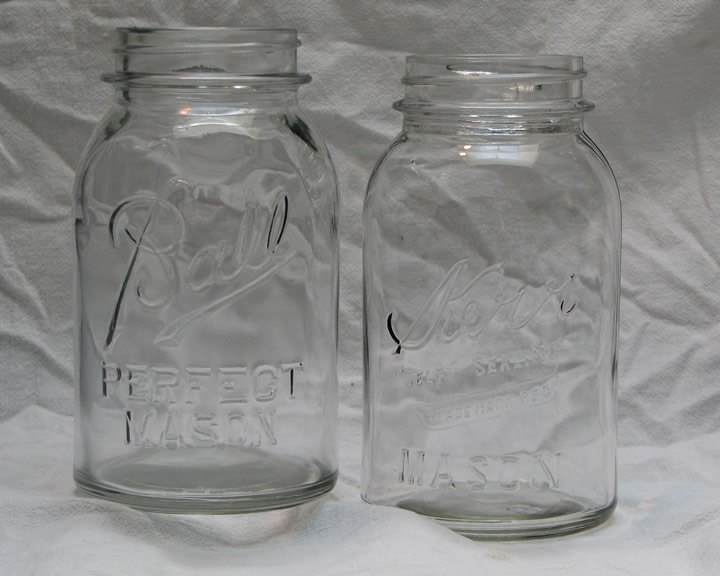
It travels. Cornbread and buttermilk in a mason jar. Soup beans in mason jars. Cheese grits in a mason jar. The jar is doing real work — sealable, reusable, free once you’d canned in it.
It’s good cold. Cold fried chicken. Cold biscuits with sorghum molasses. Cold fried potatoes and onions sandwich. Fried pork chops, cold. Nobody was reheating anything at the mine or the mill.
It’s preserved, because the growing season is short and the winter isn’t. Leather britches — green beans strung on thread and dried whole. Dried apple slices. Dried blackberries. Venison jerky. Chow chow. Souse.
It’s foraged and hunted. Ramps. Poke salat. Watercress. Hickory nuts. Squirrel, rabbit, venison, groundhog, raccoon, possum.
And then it’s whatever the company store sold. Vienna sausages and saltines. Potted meat and crackers. Fried Spam sandwich. Bologna and yellow mustard. Sardines on crackers with hot sauce. Pork and beans with franks.
⭐ That last group is the honest one. Plenty of writing about Appalachian food stops at the foraged-and-heirloom part because it flatters better. But a tin of Vienna sausages and a sleeve of saltines is genuinely what a lot of people carried, and leaving it out to keep the picture pastoral is its own kind of condescension. Cheap shelf-stable protein arrived and people ate it, because it worked.
This is not plantation food and never was
Worth saying directly, because “Southern food” flattens two very different things together.
The uplands were small farms on bad ground. Thin soil, steep hillsides, short season, hard winters, and — after the coal and timber companies arrived — a wage economy that took the men off the farm and made a portable lunch a daily requirement.
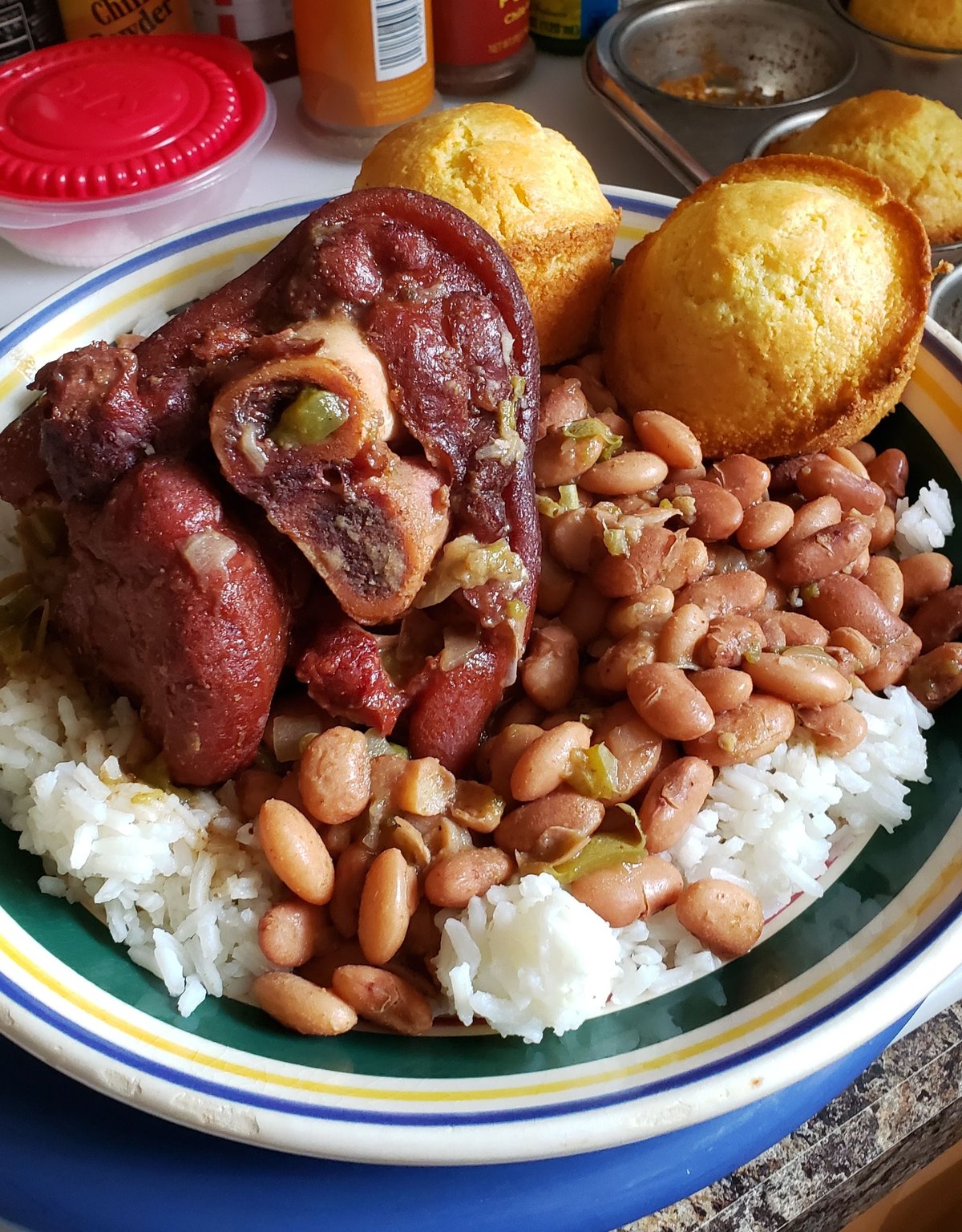
So this cooking is corn rather than wheat, because corn grew and wheat had to be bought. Pork rather than beef, because a hog forages, converts scraps, and can be killed and preserved by one family in a day. Beans as the protein backbone, dried and kept. Preserved everything. And sorghum instead of sugar, because sorghum grows in Tennessee and Kentucky and cane doesn’t.
⭐ Sorghum is the giveaway ingredient of the whole category. It’s a different plant from sugarcane, the syrup is thinner and more mineral and slightly sour, and it turns up here constantly — poured over cornbread, on cold biscuits, in a sandwich with peanut butter, in cookies. If a recipe reaches for sorghum, it comes from up in the hills. I’ve written about the wider family of tapped and boiled syrups over here.
And boiled peanuts are in here too
⭐ My Boiled Peanuts recipe is filed in this category, which I did not do deliberately but which turns out to be right. They’re sold at the roadside, eaten out of a bag with your hands, need no cutlery and no plate, and travel perfectly. Same logic, different latitude. They have their own section now.
Browse the whole category: all 91 Hillbilly Lunches recipes
Next: Cajun and Creole — where the distinction everybody repeats stops holding up.
Comments (0)