Kidneys, Sweetbreads and Brains
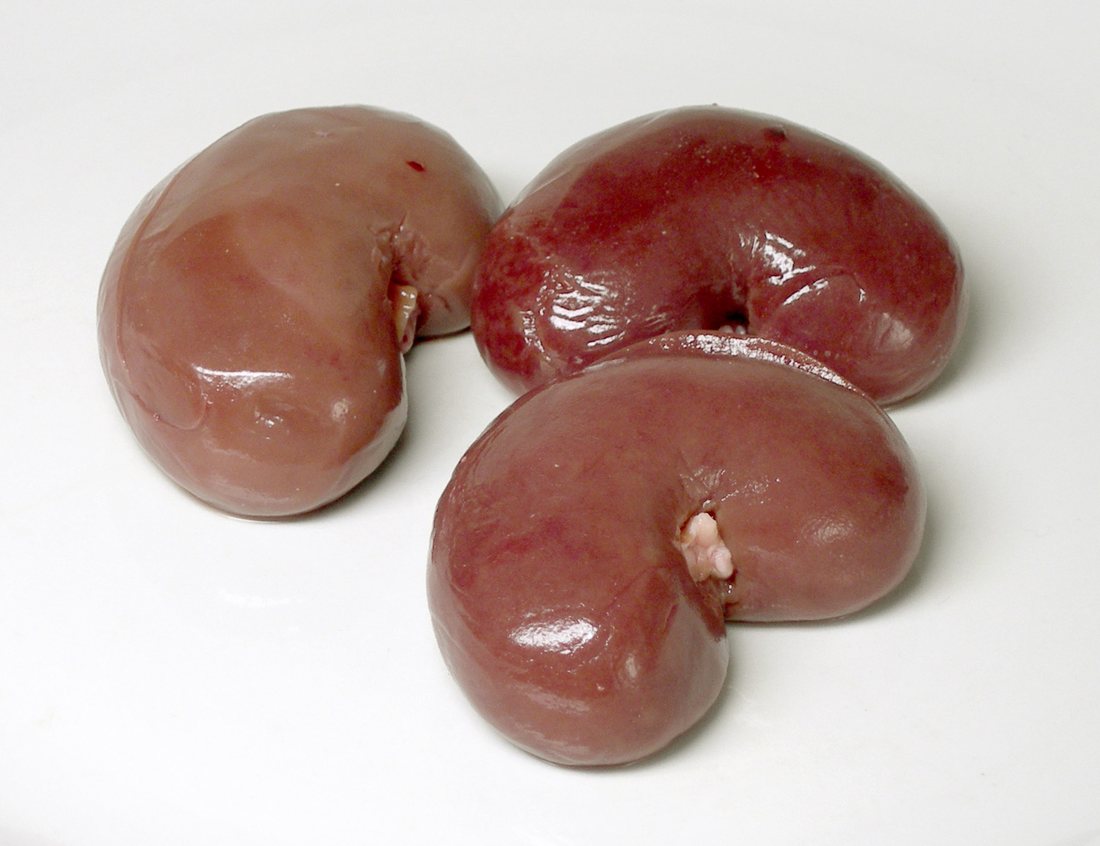
Lamb kidneys, small and bean-shaped. They are split, peeled and cored before cooking.
These three are the offal with the strongest reputations — kidneys for their smell, sweetbreads for their luxury, brains for being brains. Each rewards careful preparation, and each has a technique that matters more than the recipe.
Kidneys
The kidneys of lamb are small and bean-shaped; those of veal and beef are lobed like a bunch of grapes. Veal kidneys are the professional’s choice; lamb kidneys are the easiest to find and cook.
Preparation: peel off the thin membrane, halve the kidney, and cut out the white fatty core and its tubes — that core is where the strong flavour concentrates. Then cook them either very fast (seared, left pink) or very slow (braised). In between, they go rubbery. Kidneys keep only about a day in the refrigerator.
Soaking kidneys in milk, salt water or vinegar water to “remove the smell” is a long cooks’ tradition. No study measuring what it removes was found, so it is presented as practice, not science.
Mrs Beeton’s broiled kidneys (1861) are still the best quick method: split each kidney lengthwise “down to the root without separating,” skin it, skewer it flat, and broil six to eight minutes, cut side first, served with butter on hot plates, “very hot and quickly”: Broiled Kidneys (Mrs Beeton, 1861).
The kidney dishes
- Steak and kidney pudding and pie (Britain). The first published steak-and-kidney combination is Mrs Beeton’s, as a pudding (a suet crust, steamed), in the part-work edition of her book in 1859; kidney pies alone were common earlier, and “Rump Steak and Kidney Pie” was on a Liverpool menu in 1847. Cockney rhyming slang made it “Kate and Sidney.” The collection has Steak and Kidney Pudding.
- Devilled kidneys — lamb kidneys in butter with Worcestershire sauce, mustard and cayenne, a Victorian and Edwardian breakfast and gentlemen’s-club dish. The “devilling” technique appears earlier, in James Boswell’s diary.
- Rognons à la moutarde (France) — veal kidneys in a mustard cream sauce.
- The US Army, 1944 — Braised Kidneys and Kidney and Beef Pie, from TM 10-412.
Sweetbreads
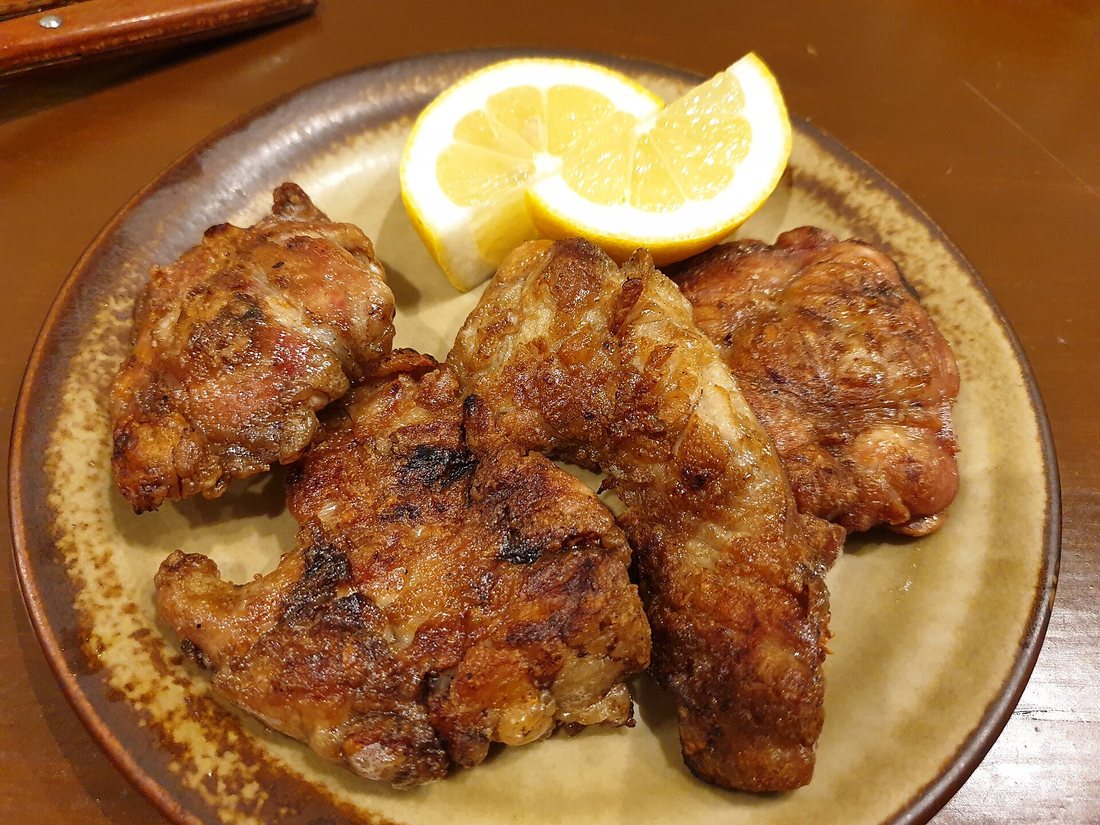
Grilled mollejas with lemon, in southern Spain. In Argentina the word means sweetbreads; in Colombia, gizzards.
“Sweetbread” names two different glands:
- the thymus — the “throat” or “neck” sweetbread, long and cylindrical, from young animals (it shrinks with age);
- the pancreas — the “stomach” or “heart” sweetbread, round.
Because the thymus becomes fibrous in grown animals, beef and pork sweetbreads are the pancreas; veal and lamb sweetbreads are usually the thymus. Menus rarely say which gland they are serving. Why they are called sweetbreads is unknown — see what offal is.
Preparation: soak in salt water or milk to draw out blood, poach briefly, peel off the outer membrane, then press, slice and either bread and fry them or grill them slowly over charcoal. The texture is soft, creamy and delicate — the most refined offal there is, and priced accordingly.
- Ris de veau — calf’s sweetbreads, the French classic.
- Creamed sweetbreads — in the US Army’s 1944 cookbook as Creamed Sweetbreads.
- Mollejas — grilled at the Argentine, Uruguayan and Paraguayan asado. A warning for anyone translating a recipe: mollejas means the thymus only in the Southern Cone. In Colombia, and in poultry cooking generally, mollejas means the gizzard.
Brains
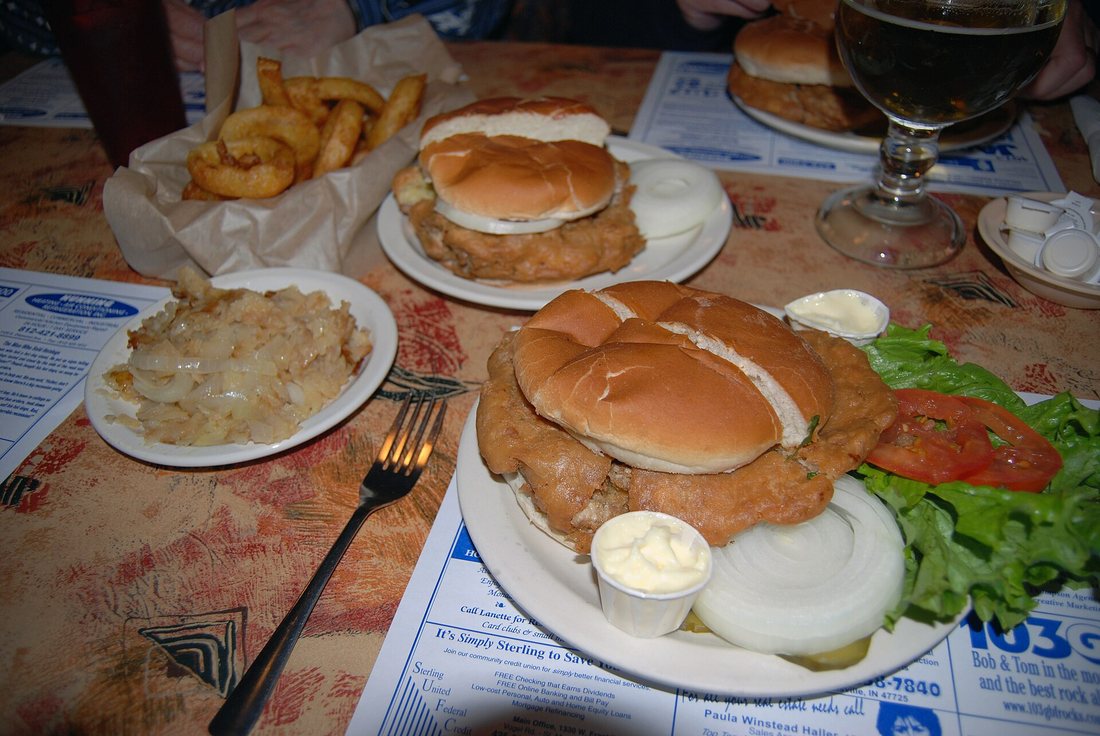
Fried brain sandwiches, the Ohio River valley diner classic — made with pork brains since the BSE rules.
Brain is the softest food on the animal — creamy, custard-like, mild. It is eaten from calf, lamb, pig and goat, and (from young animals only, in the United States) from cattle.
The classic preparation, much the same for two centuries: soak to draw out the blood; peel away the thin membrane; poach gently in water with a little vinegar and aromatics until firm; chill; then slice and fry, or fold into eggs. Mrs Beeton (1861) soaks sheep’s brains two hours in warm water, sets them in boiling salted water “with a little vinegar,” and plunges them into cold water.
The law and the cholesterol. Beef brains from cattle 30 months and older are banned as food in the US under the BSE rules; brains from younger cattle are legal, and pork brains always have been. And brain is the most cholesterol-dense ordinary food there is — about 3,000 mg per 100 g of beef brain (USDA); a 5-ounce can of pork brains in milk gravy has been reported at over 3,000 mg.
The brain dishes
- Tacos de sesos (Mexico) — from the tacos de cabeza stands, which often sell out of brains by midday.
- Bheja fry (India and Pakistan) — goat brains in onion, ginger-garlic and garam masala, often a breakfast dish with paratha.
- Cervelle au beurre noir (France) — poached calf’s brains, floured and sautéed, with browned butter and capers; it is in Escoffier.
- The fried brain sandwich (the Ohio River valley) — said to have come from the East St. Louis stockyards. The Hilltop Inn in Evansville, Indiana, a stagecoach stop from 1839, still serves one — now made with pork brains, because of the BSE rules.
- Brains and eggs (the American South) — brains folded into scrambled eggs, a Southern breakfast and diner dish. Canned pork brains in milk gravy were long sold for exactly this, and the Army’s 1944 cookbook fed it to a hundred men at a time: Brains and Scrambled Eggs and Breaded Brains.
A field note: brains and eggs in Tennessee
Pig brain, scrambled with eggs, was eaten several times at a small diner in Tennessee, during years of living there — the Southern breakfast in its ordinary, unremarkable form, which is how it should be met. The recipe in this collection, Pork Brains and Eggs, is built from the classic preparation above rather than from that diner’s own recipe, which was never recorded.
In this dive: What offal is · The history · Safety and the law · Liver · Heart and tongue · Kidneys, sweetbreads and brains · Tripe and intestines · Blood · Heads, feet and tails · Gizzards · Game offal · Fish offal · Every part on the list · Corrections
Comments (0)