Heart and Tongue: The Offal That Is Legally Meat
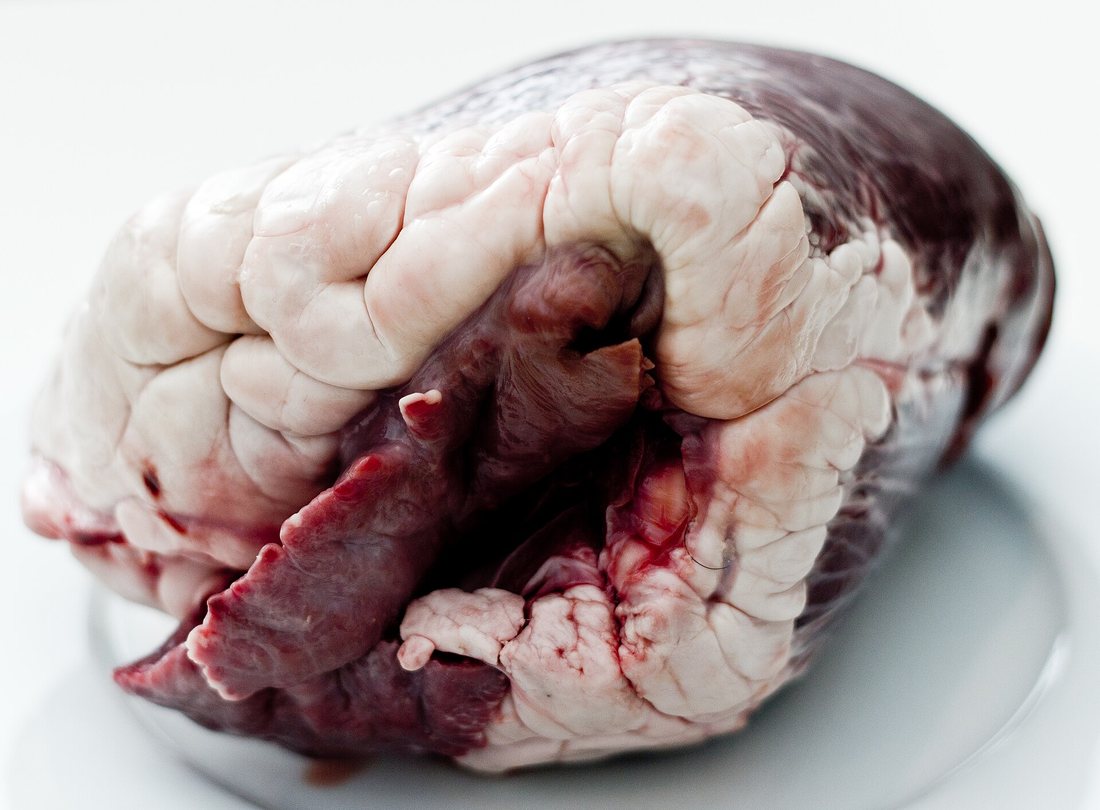
A whole beef heart. The fat cap and the vessels at the top are trimmed away; what remains is dense, lean muscle.
Heart and tongue are the easiest way into offal, for a simple reason: they are muscle. US federal law says so — “meat” includes the muscle “found in the tongue, diaphragm, heart, or esophagus” (9 CFR 301.2) — and the kitchen agrees. A heart tastes like very lean, dense beef; a tongue, once peeled, is one of the most tender and richly flavoured cuts on the animal. Neither tastes “organy” in the way liver or kidney does.
Heart
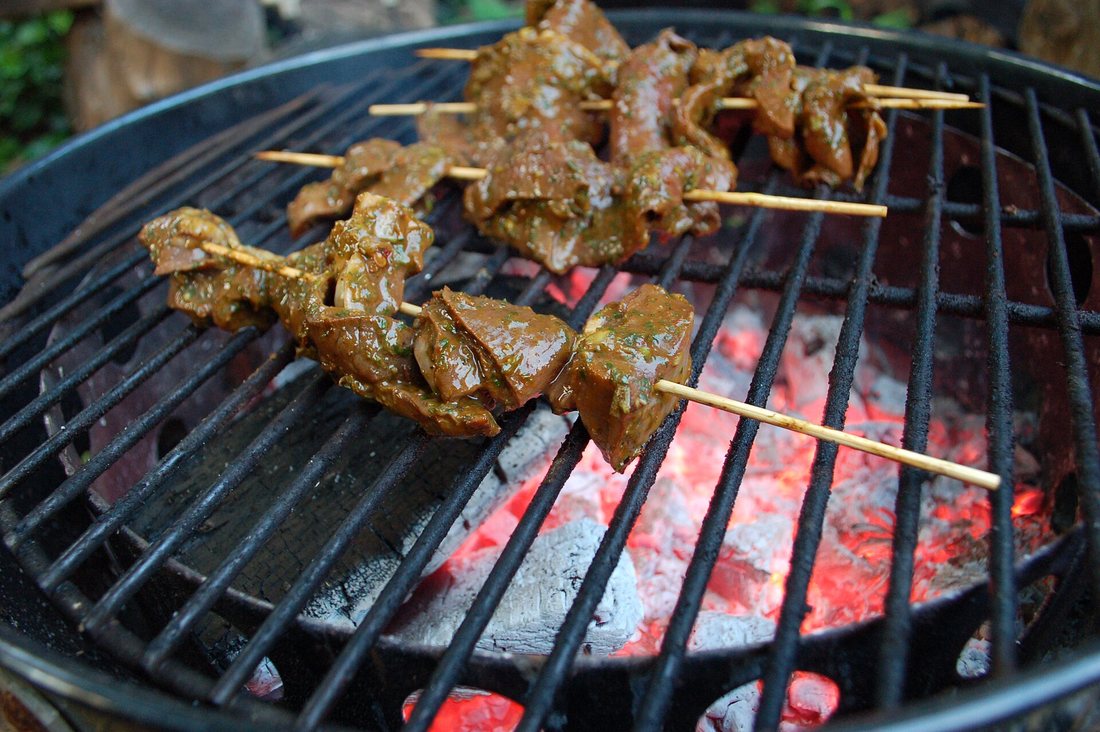
Anticuchos de corazón: beef heart, marinated in ají panca, cooked fast and hot over charcoal.
A heart is the hardest-working muscle in the body, and cooks accordingly: lean, dense, fine-grained, with a flavour of intense beef or venison. It is eaten from beef, veal, pork, lamb, deer, elk, moose and chicken.
Two ways to cook a heart, and nothing in between:
- Fast and hot — sliced thin or cubed, marinated, and seared or grilled to medium-rare. The Peruvian anticucho is the classic.
- Long and slow — braised or pressure-cooked until tender. A heart cooked to “medium” is tough; either stop early or keep going.
Trimming: cut away the fat cap, the valves, and the tubes and sinew at the top (recipes call these “the veins”). What remains is solid muscle.
Mrs Beeton’s 1861 roast heart is the old British way: soak it two hours, stuff it with forcemeat, and roast about two hours, “basting constantly” because it has “very little of its own fat,” served with redcurrant jelly. She recommended it “for its cheapness and economy.” The US Army was still stuffing and braising hearts in 1944: Stuffed and Braised Heart (Beef) and Country Style Heart (Pork or Veal).
Anticuchos: a Peruvian street food with a long history
Anticuchos de corazón — beef heart marinated in ají panca chile, vinegar, garlic, cumin and oregano, skewered and grilled — began as pre-Columbian skewers of llama meat. In the sixteenth century garlic was added and beef replaced llama, and the dish became associated with enslaved Africans in Lima, who cooked the offal the colonists rejected. Today it is sold by street vendors called anticucheras, and eaten above all in July and during the Señor de los Milagros procession in October. The collection has two versions: Anticuchos de Corazón (Peruvian Beef Heart Skewers) and Anticuchos (Cow’s Heart Kebabs).
Brazilian churrascarias grill skewered chicken hearts (coração de frango); the Sichuan cold dish fuqi feipian uses beef heart with tongue and tripe (see tripe).
A field note: hearts are tough, so they go under pressure
The hearts behind this collection’s recipe — rabbit, deer and beef — are, in the cook’s own words, “very tough,” so they usually go into a pressure cooker (an Instant Pot), sometimes a slow cooker. The other way is to slice the heart and braise it with bacon. Both are the long-and-slow route. The recipe is Slow-Cooked Heart.
For deer hearts in Michigan, read game offal first: prion protein has been found in the heart muscle of deer with chronic wasting disease, and Michigan offers free CWD testing.
Tongue
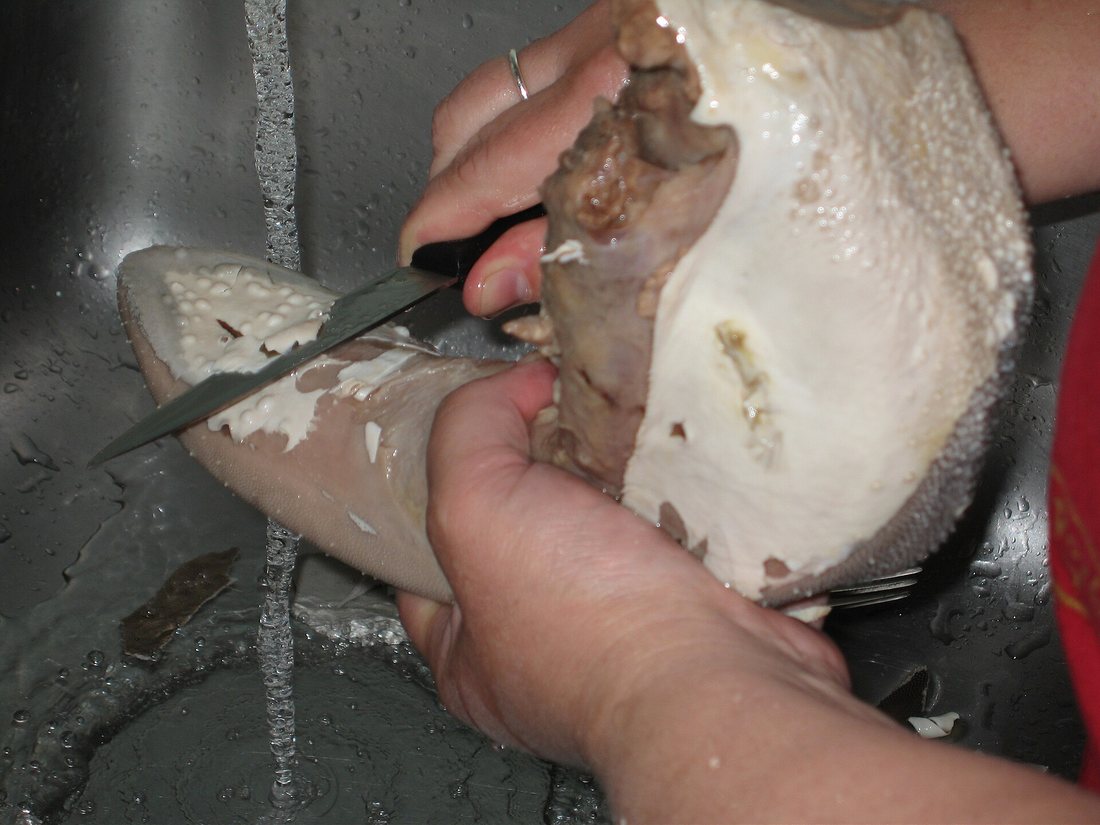
Peeling a simmered beef tongue. The skin comes away easily while the tongue is warm, and stubbornly once it is cold.
Beef tongue is a large, fatty muscle — fat supplies up to 72% of its calories — which is why it is so tender and rich once cooked. It is sold whole, usually 2–4 pounds, with a thick, rough skin that is peeled off after cooking.
The method is always the same: simmer the whole tongue with onion, garlic, bay and peppercorns until completely tender — three to five hours — then peel the skin while it is still warm (it comes away easily then and stubbornly once cold), trim the base, and slice. After that it can be seared, braised, pickled or served cold.
The dishes
- Tacos de lengua (Mexico). Simmered, peeled, sliced, seared and finished in a chipotle-tomato salsa, in warm corn tortillas. A saying holds that a taquería without lengua is not a real taquería: Tacos de Lengua.
- Gyūtan (Sendai, Japan). Thick-sliced grilled beef tongue, served with barley rice, oxtail soup and pickles. Its origin is told two ways. The popular version says the chef Sano Keishirō began grilling, in 1948, the tongues that the American occupation forces threw away. Sendai’s own gyutan association rejects that, saying the occupation army’s beef was imported and the first gyutan used local Miyagi and Yamagata tongues. Either way, by the time of the 2003 BSE import ban about 90% of Sendai’s tongues came from the United States, which is why the ban hit the city hard.
- Tongue with horseradish — Eastern European, German and Polish; and in Jewish delis, corned or pickled tongue sliced for sandwiches.
- Lengua a la vinagreta in Argentina and Uruguay — boiled tongue in vinaigrette.
- Tongue in Madeira sauce in France and Belgium.
- The US Army, 1944 — Simmered Tongue (Beef, Fresh or Smoked), Tongue with Horseradish Sauce, Tongue a la Maryland and Sliced Cold Tongue.
In this dive: What offal is · The history · Safety and the law · Liver · Heart and tongue · Kidneys, sweetbreads and brains · Tripe and intestines · Blood · Heads, feet and tails · Gizzards · Game offal · Fish offal · Every part on the list · Corrections
Comments (0)