How I Travelled
I was stationed at Marine Corps Air Station Iwakuni in 1985 and 1986, and what I did with those two years is the reason this section exists.
I bought a car. And then most weekends I drove — all over the country, as far as I could get and back. The weekends I did not drive, I took the train to Hiroshima or to Tokyo.
But the best food I ate in Japan did not come from either of those. It came from driving around southern Japan with no particular destination.
The method
It was not really a plan. It was a habit, and it went like this:
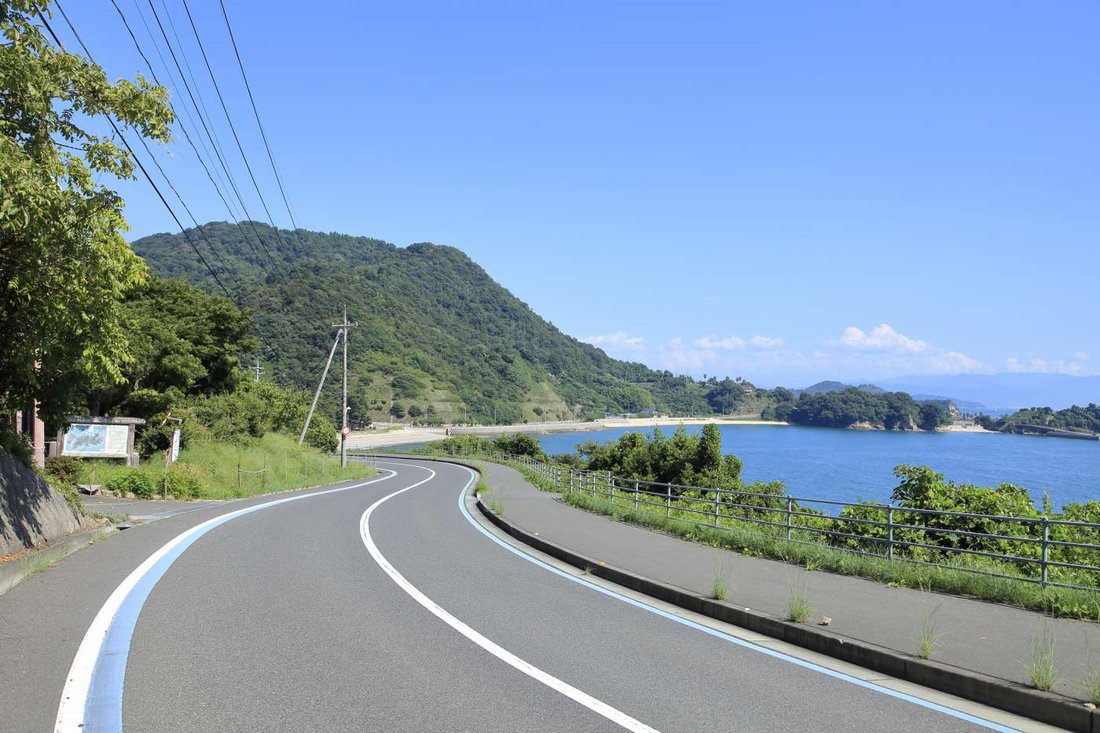
Drive a few hours, and stop. Usually at the sea. Usually at the docks — I do not entirely know why, except that the docks are where a working town actually is, and where anybody who is out at that hour is doing something.
Then ask around for a place to stay.
And more usually than not, I was invited to stay with a family.
That sentence still surprises me forty years later, and I want to be careful not to dress it up. I did not have a system. I did not speak the language. I was a young American serviceman with a car, stopping in small coastal towns and asking, mostly by gesture, where a person might sleep. And what happened, more often than not, was that somebody took me home.
The Japanese people were very warm and welcoming regardless of the language barrier. That is the plainest way I can put it, and it is the thing I would most want anybody to take from this whole section.
What I found there
I got to sit and eat meals with people who had very little, who had amazing food from their irori hearths.
Those two halves of the sentence belong together and I do not want them separated. People who had very little. And amazing food. Not despite each other — the food was good because of the way a household like that cooks, which is what the irori page is about.
And then the line I have repeated for four decades:
I doubt I could ever replicate the taste of the food that was cooked that way.
I used to think that was just nostalgia talking. It is not. There is a real mechanism, and it is worth explaining properly rather than filing under “everything tasted better when you were young.” That is the next page.
The not-knowing
Something I should say early, because it runs through everything here and through the pickles as well:
Much of the food I ate, I did not know what it was.
I do not mean I was uneasy about it. I mean I genuinely could not have told you the name of most of what was put in front of me, or what was in it, or how it was made. I ate it, and it was good, and that was the extent of my understanding.
I have gone back and looked a great deal of it up in writing this. Some of it I can now name. Some of it I still cannot, and where that is true this section says so rather than picking the most likely-sounding dish and pretending. There are three specific things in here — a stew, a chili in some tofu, and a whole category of pickled vegetables — where the honest answer is I do not know, and I would rather leave them open.
Why this is a food section and not a travel one
Because the food is what I actually retained.
I could not draw you a map of where I went. I could not tell you the names of most of the towns. But I can tell you what was hanging above the fire, and how the rice was held, and what the pickles tasted like, and what the alley shops in Iwakuni smelled like on a Friday night.
This was where I explored and learned so much about the Japanese people and their food. It was one of the most amazing times of my life.
Where to go from here:
- The Irori — the hearth, and the honest reason its food cannot be reproduced.
- At the Hearth — what was actually on it, including what I still cannot identify.
- The Iwakuni Ginza — the alleyways, and what that word is really doing.
- Okonomiyaki — the one I learned the most about, and the analogy that turns out to be built into the word.
- Sampuru — how a display case solved ordering for two years.
- Iwakuni — the town itself, its nine-holed lotus root and its lord’s sushi.
- What I Ate — the list, with what I have since found out about each of them.
- What It Changed — including the one thing I had wrong for forty years.
Comments (0)