Wood and Fire: What to Burn, How Dry, and Michigan's New Firewood Rule
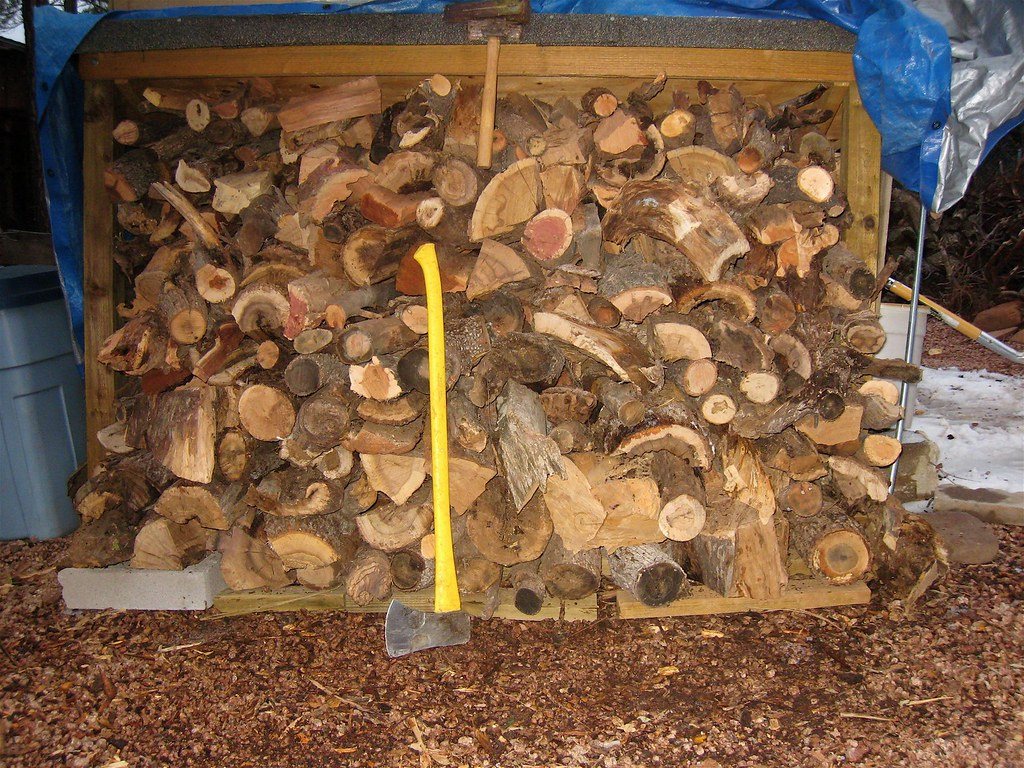
Split hardwood, stacked off the ground and covered on top only. For a pizza oven it is split smaller still and dried below 20% moisture.
In a wood-fired oven the wood is the thermostat. Its species, its dryness and the size of each piece decide how hot the oven gets, how steadily, and how much smoke it makes. A small portable oven is especially fussy, because its fire is tiny and burns out in minutes.
Which woods
The sources agree closely:
- The AVPN (the Neapolitan pizza association): “wood that does not give off smoke or odors that could change the aroma of the pizza itself (generally oak, ash, beech, and maple).” It must be “certified and of known origin.”
- Gozney’s manual: ash, alder, oak, beech, hickory, and fruit trees such as apple and pear. “Kiln dried hard woods are best as they are dense and have a lot of energy to burn.”
- Ooni sells kiln-dried oak and tells owners to burn “high-quality, kiln-dried hardwood” or lump charcoal — not briquettes.
Avoid:
- Softwoods and resinous woods — pine, fir, spruce, cedar, redwood and “fatwood.” Gozney says they produce creosote that builds up in the oven. Wirecutter found that most kindling sold in hardware stores is softwood — “too resinous” for these ovens.
- Anything treated, painted, stained or glued — pressure-treated lumber, plywood, particle board, pallets of unknown history, driftwood. Michigan’s environmental agency (EGLE) warns that treated lumber and painted building materials “contain high concentrations of hazardous compounds that produce toxic emissions when burned.”
- Wet, rotten or mouldy wood.
All four of the AVPN’s woods grow in Michigan, with two caveats: ash has been devastated by the emerald ash borer, and beech bark disease is one of the threats named in Michigan’s new firewood quarantine. (Cherry is not named by any source consulted, though it is a fruitwood of the kind Gozney lists.)
How dry
Dry wood is the single most important thing. Wet wood wastes its heat boiling off water, smoulders, and smokes.
- Under 20% moisture is the standard target. The EPA’s Burn Wise program: “Wood burns best at a moisture content of less than 20 percent. Test wood with a wood moisture meter before you burn it.”
- Gozney: “16% is the optimum moisture level for your wood, but anywhere between 10–20% is good.”
- The Naples research oven burned oak at under 6% — kiln-dry, far drier than wood seasoned outdoors usually gets.
- Seasoning outdoors takes at least six months: split the wood, stack it off the ground, and cover only the top — covering the sides traps moisture (EPA). Seasoned wood is darker, lighter, and “sounds hollow when hit against another piece of wood.”
A moisture meter costs little and settles the question for home-seasoned wood.
How big
Small ovens need small wood:
| Oven | Wood size |
|---|---|
| Ooni Karu 2 Pro | up to 8–9 inches long, 3 inches thick (see the Karu 2 Pro) |
| Ooni Karu 12 | 5-inch (13 cm) pieces; “keep 5 or 6 pieces of kindling burning at a time” |
| Gozney Dome | ”Smaller is better”: about 5½ × 1–2 × 1–2 inches |
| Naples masonry oven | 10-inch logs, about 1½ inches thick |
Wirecutter found that ordinary logs do not fit portable ovens and that cutting “bespoke hardwood kindling” at home is hard without a workshop — which is why makers sell boxed wood.
Tending the fire
- Light small. Kindling and natural firelighters — never lighter fluid, spirit or petrol.
- Feed little and often. The Karu 2 Pro manual caps each addition at 0.5 kg (about a pound). Gozney: “Avoid overfeeding the fire, there should never be flames coming out the mouth of the oven,” and add wood onto a bed of glowing embers, or it will smoke.
- Aim for a rolling flame. Wirecutter: feed the fire so it “stays big enough to send a continual arc of flame rolling along the top of the dome.” That arc is what cooks the top of the pizza (see how the oven cooks).
- Expect to tend it constantly. Test kitchens describe wood in a portable oven as “babysitting.”
- Budget the wood. Gozney’s figure of about 7.5 lb of hardwood per session held up in Wirecutter’s test.
Does the wood flavour the pizza?
Nobody has tested it, and the authorities disagree.
- Serious Eats says wood “imparts a specific flavor to the pies,” and Ooni’s marketing says its oak “infuses your dishes with all-natural flavours.”
- America’s Test Kitchen says the opposite: pizza “cooks too quickly to pick up any wood or coal flavor.”
- The AVPN — the body that defines Neapolitan pizza — treats smoke as a fault. Its wood must “not give off smoke or odors that could change the aroma of the pizza.”
No blind taste test of wood against gas at the same temperatures was found. Two things are clear. A well-run fire of dry hardwood burns cleanly and makes little visible smoke. And the pizza is in the oven for about ninety seconds. Much of what is called a “smoky” flavour may be the char on the crust, which tastes the same whatever the fuel. The honest reasons to cook with wood are the fire itself, the heat it gives, and the pleasure of cooking over it.
Charcoal, pellets and gas
- Lump charcoal works in the Karu and is allowed for cooking fires under Michigan law. It burns hot and makes more ash. Use lump, not briquettes.
- Wood pellets burn in pellet-specific ovens (and Ooni sells hardwood cooking pellets with no binders). Pellets are exempt from Michigan’s firewood quarantine. Heating pellets and food-grade cooking pellets are different products.
- Gas is the steady, easy alternative. The Karu 2 Pro takes an optional gas burner, but never runs wood and gas at once.
Michigan’s firewood rules
The emerald ash borer quarantines are over. Michigan repealed its interior quarantine on 1 October 2018, when the beetle had reached all but four of the state’s 83 counties, and the federal quarantine ended on 14 January 2021. Hardwood firewood can now move within Michigan. The state still asks people not to move firewood long distances, now mainly because of oak wilt and pests that have not arrived yet. MDARD recommends buying firewood “within 10 miles of where you plan to burn it.” Oak wilt matters here because oak is the likely fuel: it spreads on infected firewood, and Michigan asks that oaks not be pruned between April 15 and July 15.
A new rule takes effect on 1 January 2027. Under MDARD’s Firewood Exterior Quarantine, signed on 17 September 2026:
- No untreated firewood may enter Michigan from any other state or country. Only firewood heat-treated to a core of 60 °C (140 °F) for 60 minutes and certified may enter.
- “Firewood” means “all wood of any species … in a form and size appropriate for use as fuel, or … destined for use as fuel.” Boxed pizza-oven wood ordered from out of state falls under that definition.
- “Kiln-dried” is not “certified.” MDARD’s FAQ: “Is kiln-dried firewood automatically exempt? … No.” Kiln-drying removes moisture; it does not prove the core reached the temperature that kills insects and diseases. Look for the Michigan Certified Invasive-free mark, another state’s certification, or the USDA shield.
- Exempt: wood pellets, chips no more than an inch in two dimensions, and kiln-dried dimensional lumber.
- Wood from one’s own property in another state is not exempt.
- Enforcement: education in 2027; from 1 January 2028, warning letters, then fines of $1,000–$10,000 for repeat violations.
For a central-Michigan cook, the simple answer is local wood. Hardwood cut or bought within Michigan, near where it will be burned, is not affected by the new quarantine. Split it small, dry it under 20%, and it is the right fuel.
In this dive: The history · What makes it Neapolitan · How the oven cooks · Choosing an oven · The Ooni Karu 2 Pro · Wood and fire · Using the oven · Safety and the law · The dough · Pizza styles · Beyond pizza · Corrections
Comments (0)