Choosing an Oven: Portable, Masonry, Wood, Gas
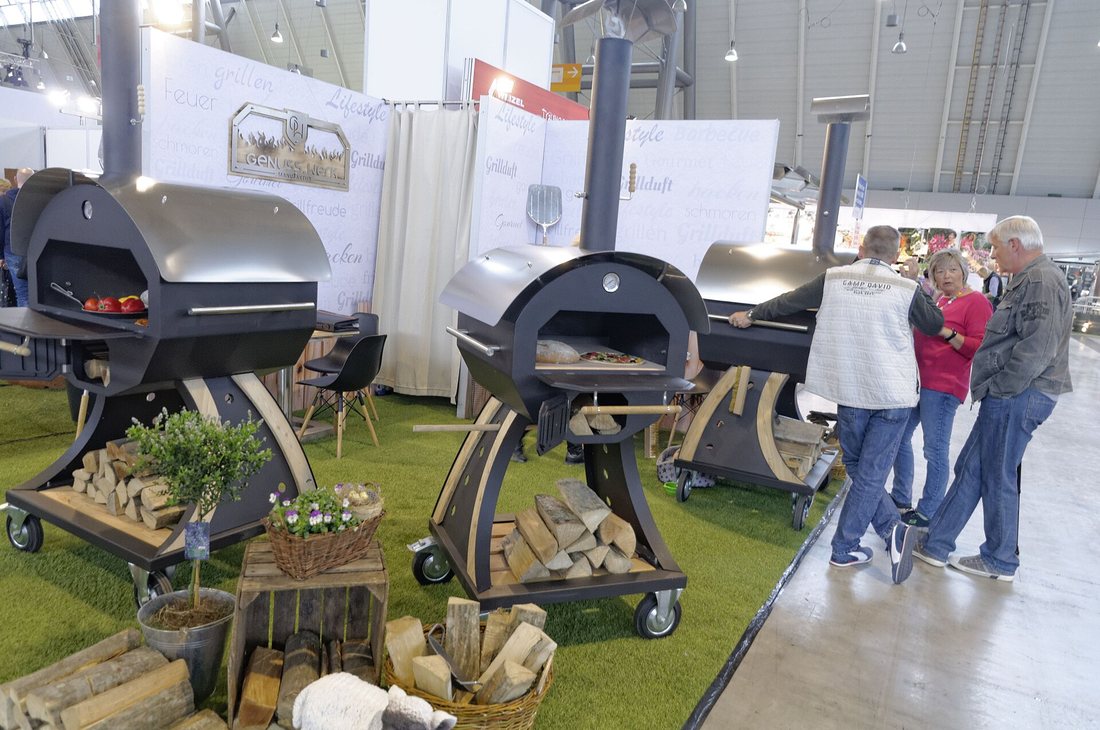
Freestanding wood-fired ovens at a trade fair in Stuttgart — the middle ground between a tabletop portable and a masonry oven.
There are three kinds of pizza oven for a home: portable ovens that sit on a table and heat in half an hour; heavy ovens that are portable in name but weigh as much as a person; and masonry ovens that are built in place and stay hot for a day. Each makes good pizza. They differ in what else they can do, how much tending they need, and what they cost.
This page lays out the trade-offs; it does not recommend a purchase. The oven this collection is weighing is examined on its own page. No pizza oven has been bought yet, and nothing here is a report of using one.
The comparison
Prices and specifications are from the manufacturers’ US sites as of September 2026. Test results are from America’s Test Kitchen (2025), Serious Eats (2026) and Wirecutter (2026).
| Oven | Fuel | Largest pizza | Weight | List price (US) | What testers found |
|---|---|---|---|---|---|
| Ooni Karu 2 | wood, charcoal; gas burner extra | 12” | 34 lb | $449 | About 1½ minutes a pizza; a gap at the back a pizza can slide into |
| Ooni Karu 2 Pro | wood, charcoal; gas burner extra (~$100) | 16” (ATK measured 15”) | 63 lb | $849 | On wood, ATK measured the stone at ~760 °F and the air at 1,069 °F |
| Ooni Koda 2 | gas only | 14” | 35 lb | $499 | ATK’s top pick in 2025 |
| Ooni Koda 2 Pro | gas | 18” | 66 lb | $799 | Serious Eats’ top pick in 2026 |
| Ooni Volt 2 | electric, indoor | 12” | 39 lb | $699 | 810 °F in 21 minutes (claimed 12) |
| Gozney Roccbox | gas; wood burner extra | 12” (ATK: 11”) | 46 lb | $500 | On wood, Wirecutter’s stone never passed 400 °F after 90 minutes of feeding |
| Gozney Dome (Gen 2) | wood, charcoal, gas | 16” | 137 lb | $2,300 | On wood, stone ~750 °F, air ~900 °F; “requires frequent tending” |
| Solo Stove Pi Prime | wood or gas versions | ~12” | 31 lb (wood) | $300–450 | Propane version took 40–45 minutes to reach 800 °F on a cold, windy day (claimed 15) |
| Alfa Moderno | wood or gas | 60×40 cm floor | 119–173 lb | not listed | Refractory brick floor; 500 °C claimed |
| Mugnaini Piccolo 80 masonry kit | wood | 2 × 12” | built in place | $3,800 (kit) | “Holds 250–350 [°F] overnight” (maker’s claim) |
| Chicago Brick Oven CBO 500 | wood | 1 × 12” | built in place | $5,499 | Requires a qualified installer |
The trade-offs that matter
Wood only, or wood with gas as a backup. The Karu line burns wood or charcoal, with a gas burner sold separately; the Gozney Dome comes gas-ready and sells a wood-airflow kit separately. Serious Eats and America’s Test Kitchen both find gas steadier and wood harder work, and Serious Eats suggests people new to these ovens “might benefit from practicing with a gas burner before trying wood.” Ooni does not allow gas and wood to burn at the same time.
Size. A pizza should be stretched an inch or two smaller than the oven, so it can be turned without hitting the walls (Andrew Janjigian, Serious Eats). A 12-inch oven realistically makes a 10–11-inch pizza; a 16-inch oven makes 12–14-inch pizzas comfortably. New York-style pizzas want the larger oven.
Heat-up. Portable ovens take fifteen to forty-five minutes, depending on fuel, wind and cold — and advertised times are almost always beaten by the stopwatch. A masonry oven takes hours.
Retained heat — the one thing a portable cannot do. A masonry oven stores heat in its mass and cooks bread, roasts and slow dishes for hours after the pizzas, on falling heat. A portable oven cools within a couple of hours. Heavier ovens such as the Dome (30 mm stone, thick insulation) sit in between. See beyond pizza.
Weight and storage. Testers recommend bringing portable ovens indoors when not in use, because covers alone let rust and mould develop — America’s Test Kitchen has “seen rust and mold form even when our ovens were under wraps.” For a Michigan winter that means carrying the oven into a garage or shed: easy at 34 lb, a two-person job at 63, impractical at 137. A masonry oven stays where it is built and needs a roof or a tight cover.
Door. An oven with a door heats faster and holds heat between pizzas better; Janjigian recommends one.
The small wood fire is the real limit. In a portable oven the fire is tiny, and tending it is the whole job. Wirecutter’s Karu 12 managed two pizzas per load of wood; its Roccbox wood burner never got the stone past 400 °F. Gozney’s own figure of about 7.5 pounds of hardwood per session (about $15) held up in Wirecutter’s test. And most kindling sold in hardware stores is softwood, which is the wrong fuel. See wood and fire.
Masonry: when it makes sense
A masonry oven — a kit such as the Mugnaini, a pre-built oven craned into place, or a Forno Bravo–style “Pompeii” oven built from free plans — is a building project. It makes sense for someone who wants to cook with wood all day: pizza, then bread, then roasts, then beans or a braise overnight. It needs:
- a foundation and a roof or cover;
- a flue that meets local building code;
- a slow series of curing fires before the first real fire (below);
- hours of firing before each use.
Curing a masonry oven: three makers, three schedules
A new masonry oven is full of water — in the mortar, the refractory castings, the hearth concrete and the insulation. Fired hard too soon, that water turns to steam throughout the dome at once and can crack it. So new ovens are dried out with small fires first. The manufacturers agree on the reason and disagree on the schedule:
- Forno Bravo (for its field-built “Pompeii”-type ovens; from a 2015 copy of its guide): let the finished oven stand a week, then five days of fires, 300, 350, 400, 450 and 500 °F, measured at the dome — the first held about six hours with kindling only; keep the fire in the centre and low enough that the flame does not touch the dome; close the door each night. No charcoal, no water to cool it, no space heaters. (Forno Bravo itself notes that the industry’s “curing” is really drying out.)
- Chicago Brick Oven (manual for its CBO ovens): hold the oven “as close to 212 °F as possible (do not exceed this temperature)” for two to three days, or carry in coals from a fire built elsewhere. Small cracks from expansion are normal; the warranty excludes damage from skipping the cure.
- Earthstone (factory pre-cured ovens): just two small one-hour fires, one a day, “lightly” touching the dome.
The spread follows how much wet material was placed on site: a hand-built oven needs the longest drying, a factory-built one the shortest. Follow the maker’s schedule for the oven in question. A portable oven needs no curing — only the manufacturer’s first burn (the Karu 2 Pro’s: fuel “red hot for at least 30 minutes” before cooking).
For bread specifically, the Breads section’s Rofco B40 page covers an electric stone-deck oven that bakes true deck-oven loaves without a fire.
The accessories every oven needs
- An infrared thermometer that reads to at least 900 °F. Every source treats it as essential, even for ovens with a built-in gauge, because built-in gauges read the air, not the stone.
- Peels — a wooden launching peel, a metal peel for retrieving, and a small round turning peel.
- Heat-resistant gloves, not ordinary oven mitts.
- A cover — none of the tested ovens except the Pi Prime came with one.
- A stable, non-flammable table.
- Dry hardwood cut small enough for the fuel tray.
- Cast iron for cooking anything other than pizza.
In this dive: The history · What makes it Neapolitan · How the oven cooks · Choosing an oven · The Ooni Karu 2 Pro · Wood and fire · Using the oven · Safety and the law · The dough · Pizza styles · Beyond pizza · Corrections
Comments (0)