Safety and the Law
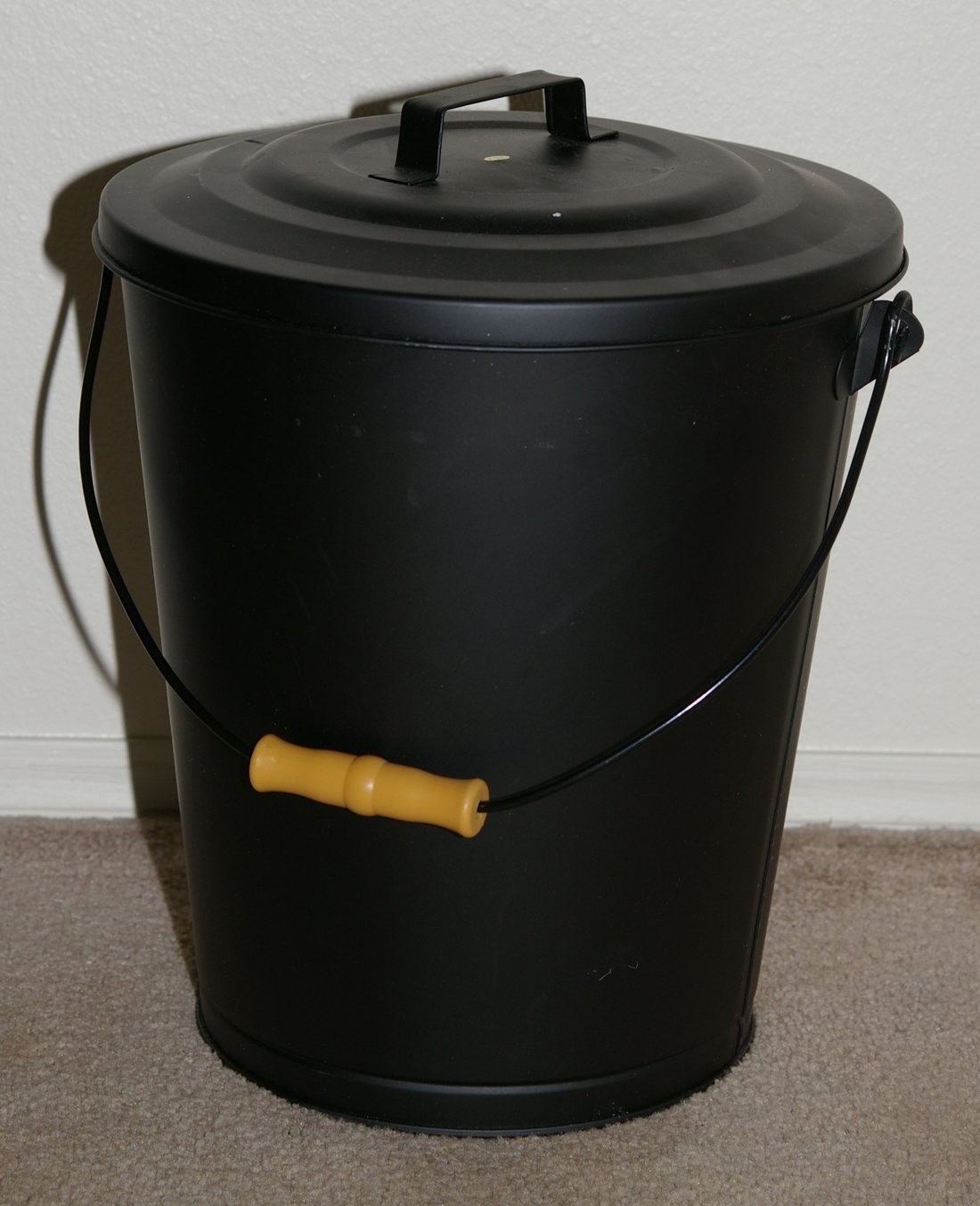
A lidded metal bucket — the right container for oven ash, which can still be hot a day later.
A pizza oven is a wood fire at 900 °F on a patio. Most of the hazards are obvious — burns, fire, smoke — and one is not: carbon monoxide. The law in Michigan is permissive about cooking fires, with two things worth knowing: local ordinances override the state, and a new firewood rule arrives on 1 January 2027.
Carbon monoxide: outdoors, always
A fire makes carbon monoxide, and a pizza oven is designed to burn outdoors with open air around it.
- The CDC counts “more than 400 Americans” who die each year from carbon monoxide poisoning not linked to fires, and says: “Never burn charcoal indoors.” Early symptoms are “headache, dizziness, weakness, upset stomach, vomiting, chest pain, and confusion.”
- The U.S. Fire Administration: charcoal, propane and wood-pellet grills are for outdoor use only, and not on porches or balconies.
- Ooni’s manual: never use the oven in “houses, tents, caravans, boats.” Gozney’s: “Never operate this appliance in enclosed areas,” “Do not use under any apartment or balcony or deck,” and never use it to heat a room.
- A garage counts as indoors, even with the door open. The CDC gives the same warning for running engines in attached garages “even with doors open.”
- If anyone feels those symptoms near a fire, get outside to fresh air immediately and call 911 (CPSC).
Where to put it
Clearances vary by source, so use the largest:
- The U.S. Fire Administration keeps outdoor fireplaces and fire pits “at least 10 feet away from your home or anything that can burn,” and a 3-foot “safe zone” around a grill for children and pets.
- Gozney’s Dome manual gives both “never … within 1.5 m” of any structure and, elsewhere, 30 cm at the back and sides and 100 cm at the front — its own figures disagree.
- Not under eaves, overhanging branches, a covered porch or an awning.
- On a flat, stable, non-flammable surface — a stone, concrete or steel table, not a wooden deck.
- Out of strong wind. Gozney: wind “can extinguish the flame and also cause irregular air pressure resulting in the flame and heat coming out the back.”
A built-in masonry oven with a chimney is a structure under the local building code; the township or county building department decides.
Burns
- Heat-resistant gloves, not ordinary oven mitts, especially for adding wood — flames come out of a fuel hatch when it opens.
- Cast iron from a pizza oven is dangerous. Andrew Janjigian: use a skillet that can take the heat, and “always use a completely dry kitchen towel or oven glove when retrieving a pan from the oven.” A damp cloth turns to steam in the hand.
- Keep children away during and after cooking. Gozney: the oven “can stay hot for a few hours after use,” and “some areas of the oven may still be hot when the body is cool to touch” (Ooni).
- No water on the stone — it will crack. And never water on a grease fire.
- No plastic or glass utensils in the oven (Gozney).
- No loose sleeves.
Ash
Ashes stay hot for a day or more. Gozney: “After 24 hours ashes can still be hot.”
- Remove ash only when the oven is completely cold.
- Use a metal container with a tight lid and a metal shovel.
- Keep the container away from anything that can burn until the ash is cold through.
- Never put ash in a paper bag, a plastic bin or a compost heap while it might still be warm.
Michigan: is a pizza oven legal?
Yes, by default. Michigan’s environmental agency (EGLE) allows “the burning of logs, brush, charcoal, and other similar materials for the purpose of food preparation or recreation, unless prohibited by local laws.” A wood-fired pizza oven burning clean wood is a cooking fire.
Three limits apply:
- Local law wins if it is stricter. EGLE: “Local open burning laws take precedence over state regulations only if they are more restrictive,” and “many communities prohibit open burning of any kind.” The township or city ordinance is the deciding document.
- Smoke and odour nuisances are illegal even for a lawful fire. EGLE: “Michigan air quality and solid waste regulations prohibit open burning that creates smoke or odor nuisances.” A smoky fire of wet wood that fills a neighbour’s house is the realistic legal risk — another reason for dry hardwood.
- Never burn treated or painted wood, which Michigan law separately prohibits in household burning.
Burn permits: in the Upper Peninsula and northern Lower Peninsula, the DNR runs the permit system; in the southern Lower Peninsula, permits come from the local fire department or governing body. Whether a cooking fire in a pizza oven needs one was not stated in any Michigan source consulted — the local fire department is the place to ask, especially during dry spells.
Michigan: the firewood rule from 2027
From 1 January 2027, untreated firewood from any other state or country may not enter Michigan; only certified heat-treated wood may. “Kiln-dried” alone does not qualify. Wood cut and bought within Michigan is not affected. The details are on wood and fire.
Food safety
The pizza is the easy part — it is cooked at 900 °F. The things to watch are the rest of the meal:
- Chicken to 165 °F in the thickest part (Ooni’s roast chicken recipe says the same).
- Steak to the doneness wanted, with a thermometer: 125 °F rare, 135 °F medium-rare.
- Dough kept cold while it waits, and out of the sun on a hot day.
In this dive: The history · What makes it Neapolitan · How the oven cooks · Choosing an oven · The Ooni Karu 2 Pro · Wood and fire · Using the oven · Safety and the law · The dough · Pizza styles · Beyond pizza · Corrections
Comments (0)