The Rest of the World
Curry is one of the most widely travelled foods there is, and almost everywhere it landed it became somebody’s national dish rather than a foreign one. Here is the tour.
Sri Lanka: the country that roasts
The most technically distinctive curry tradition on this page, and the one I would send anyone to first if they think they know what curry powder is.
Sri Lanka makes two curry powders from largely the same spice list, and the variable is heat applied before grinding:
- Unroasted (amu thuna paha) — pale khaki, mellow, coriander/cumin/fennel forward. For vegetable and delicate seafood curries, where the point is that the vegetable shows through.
- Roasted (badapu thuna paha) — genuinely dark brown, from dry-roasting the spices until they colour. Sharper, deeper, faintly smoky, and proportionally heavier on cumin and fennel. For meat and robust fish.
The roasted one would flatten a delicate fish curry, which is precisely why both exist. One spice list, one variable, two products — the same elegant logic as the Thai family map, arrived at independently.
Sri Lankan cooking also leans harder than India on true Ceylon cinnamon (which is the island’s own crop), pandan leaf, curry leaf, goraka (a sour dried fruit related to kokum), and Maldive fish — dried, smoked, rock-hard tuna, shaved in for umami.
My recipe: Curry Powder, Sri Lankan Roasted
Malaysia, Singapore and Indonesia
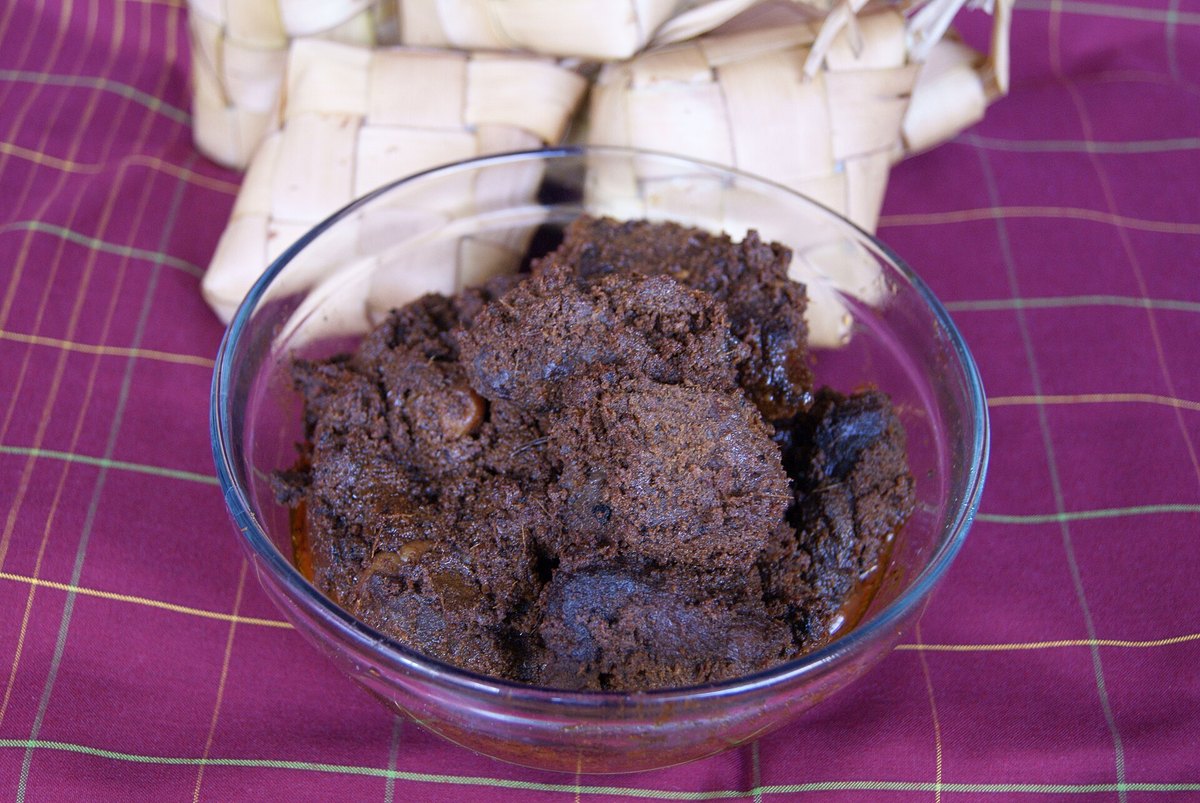
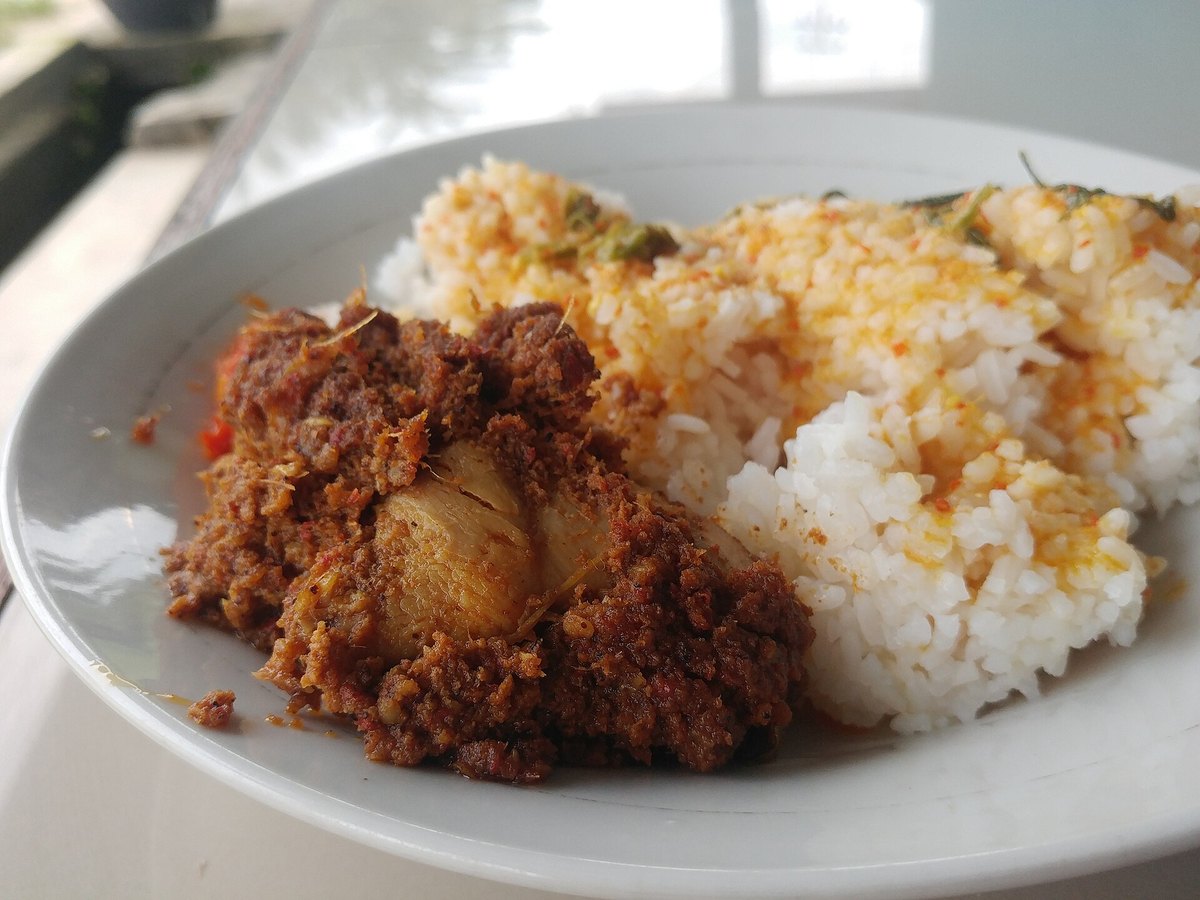
Rendang is the one to understand, because it is the curry that stops being a curry.
It starts as a coconut curry — beef, a wet spice paste (bumbu: shallot, garlic, galangal, lemongrass, ginger, turmeric, chili), coconut milk. Then it is cooked for hours, uncovered, until the coconut milk has completely gone: first it reduces to a sauce, then to a paste, then it breaks and the meat fries in its own liberated coconut oil and the residual solids, going dark brown and almost dry.
That is not a stew that got over-reduced. It is the point. The original purpose was preservation — a properly dried rendang keeps for weeks without refrigeration, which mattered enormously in Minangkabau West Sumatra. A wet, saucy “rendang” is really kalio, the same dish stopped halfway.
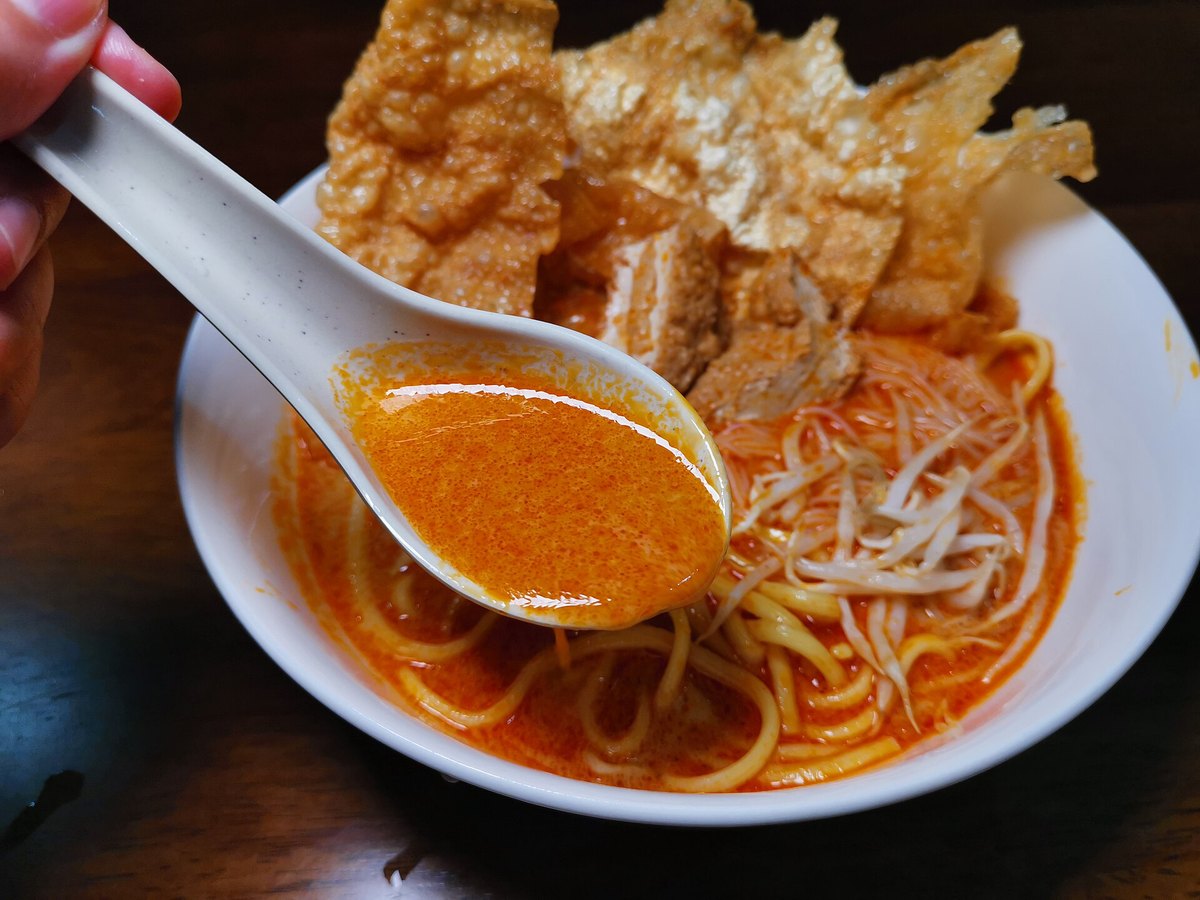
Laksa is the other great one — a coconut-and-noodle curry soup, and it splits into two families that are barely related: curry laksa (rich, coconut, Kuala Lumpur style) and asam laksa (sour, tamarind, fish-based, Penang, with no coconut at all). My file has the second kind: Asam Laksa and Asam Laksa, Penang, Quick.
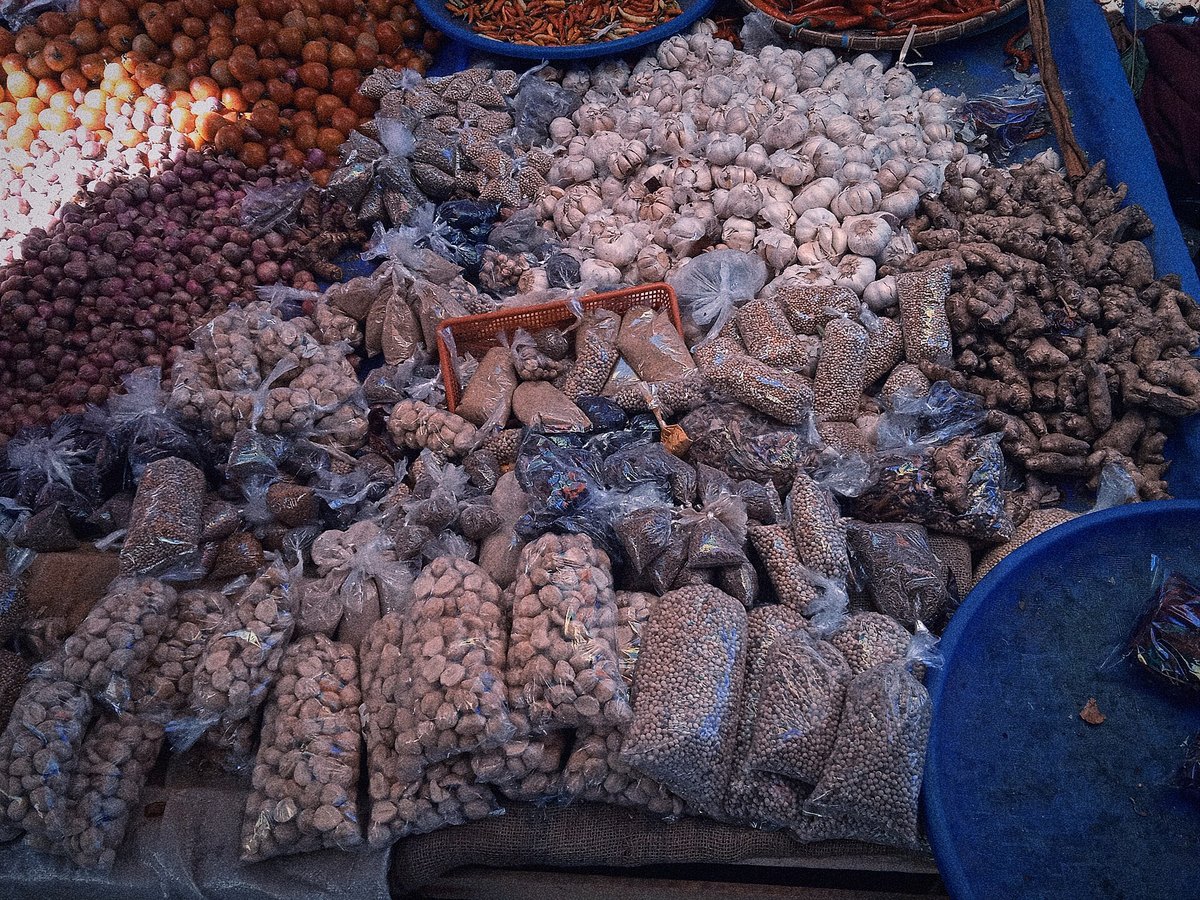
The Southeast Asian pastes as a group are called bumbu or rempah, and they are built the same way as a Thai paste — fresh wet aromatics pounded together — with candlenut often added as a thickener and belacan (fermented shrimp paste) doing the job Thai kapi does.
The Caribbean
Curry reached the West Indies twice over: with indentured labourers from India after abolition — overwhelmingly from Bhojpuri-speaking north India and from Tamil Nadu — and separately through British colonial supply.
Trinidadian curry is its own thing now. Very turmeric-forward, heavy on geera (cumin), often with amchar masala as a separate finishing blend, and the technique includes a step you will not find in India: the curry powder is mixed with water into a slurry and “burnt” in hot oil at the start — cooked hard until it seizes and darkens. Curry duck, curry goat, curry channa and aloo, and doubles (curried chickpeas in fried bara bread) are the canon.
Jamaican curry is different again — the powder usually carries allspice (pimento) and often more mustard, and the yellow is emphatic. Curry goat is the dish, with scotch bonnet and thyme, which is a Caribbean seasoning profile rather than an Indian one.
My recipe: Curry Powder, Caribbean
South Africa: Durban, and bunny chow
Durban has one of the largest Indian-descended populations outside India, from nineteenth-century indenture on the sugar estates, and Durban curry is hotter and more chili-forward than most of its Indian ancestors, with a distinctive deep-red masala.
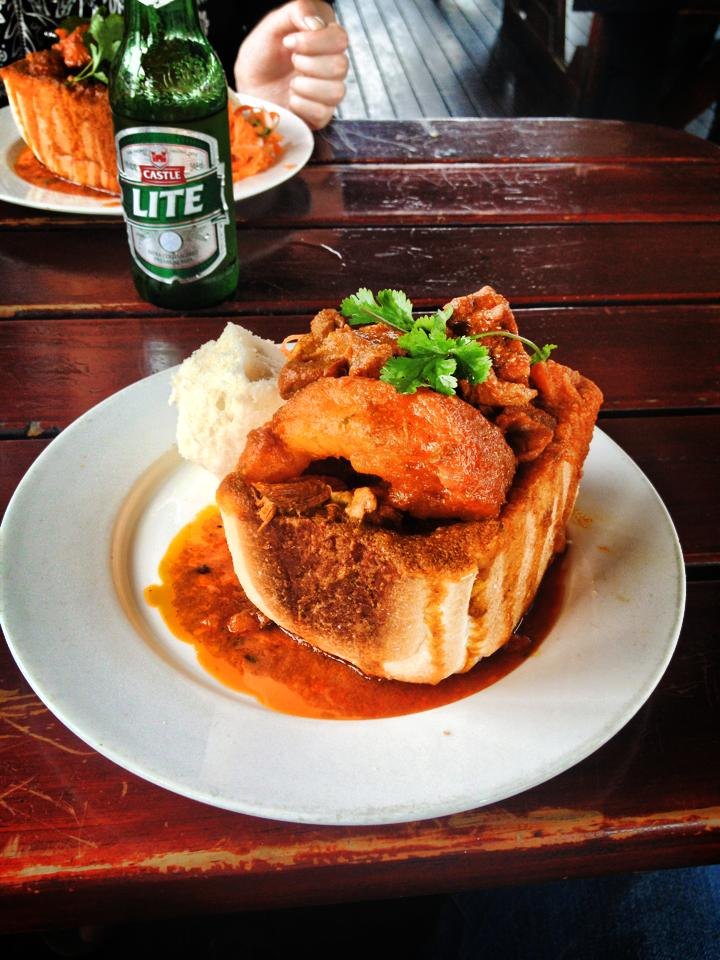
Bunny chow is its most famous form: a quarter or half loaf of white bread, hollowed out, and the hole filled with curry. The bread you scoop out sits on top as a lid.
⚠ No rabbit. The name most likely comes from bania — the Gujarati merchant caste who ran the shops that sold it — with accounts differing on the details. The usual story is that it was devised as portable food for workers who were barred from being served inside, and the loaf served as both container and cutlery. The “no rabbit” part is certain; the precise etymology is not.
Britain
Britain is not a footnote here; it is one of the major curry cuisines in its own right, and pretending otherwise is snobbery.
- The heat ladder — korma, bhuna, madras, vindaloo, phall — is a British restaurant invention (see the history), and an ingenious piece of service design.
- The base gravy. British-Indian restaurant kitchens run on a pre-made onion-and-spice base gravy, cooked in bulk, from which every dish on the menu is finished to order in a few minutes. It is why a curry house can serve thirty different dishes at speed, and it is a genuine culinary technology that is almost never described honestly.
- Kasuri methi — dried fenugreek leaf, crumbled in at the end. This is the restaurant smell and home cooks routinely leave it out.
- Balti — Birmingham, 1970s, cooked and served in a pressed steel bowl.
- Coronation chicken (1953) and mulligatawny (from Tamil milagu tannir, “pepper water”) are the older, Anglo-Indian layer.
Germany, and the strangest descendant
Currywurst — sausage, ketchup, curry powder — was devised in Berlin in 1949 by Herta Heuwer, using ingredients obtained from British soldiers. It sells in the hundreds of millions of portions a year and Volkswagen famously makes its own for its canteens.
It is on this site already: Currywurst and Currywurst Sauce.
Its ancestry is unambiguous — it descends from the British tin, not from India. Which makes it the purest illustration of the argument in the history page: the tin was itself an exportable invention, and it seeded dishes that owe nothing directly to any Indian kitchen.
And back around
The last stop is the one that closes the circle. Yellow curry in Thailand is named kaeng kari — using the loanword — because Thailand knew perfectly well it was importing something. Khao soi in the north uses curry powder too, arriving overland instead of by sea.
A Tamil word went out on a Portuguese ship, became an English tin, and came back to Southeast Asia as an ingredient in a Thai paste. Four hundred and sixty years, and it ends up in a mortar.
Comments (0)