India: The Country With No Curry
There is no dish called curry in India, and there never was. What there is instead is a map, and the map is the interesting part.
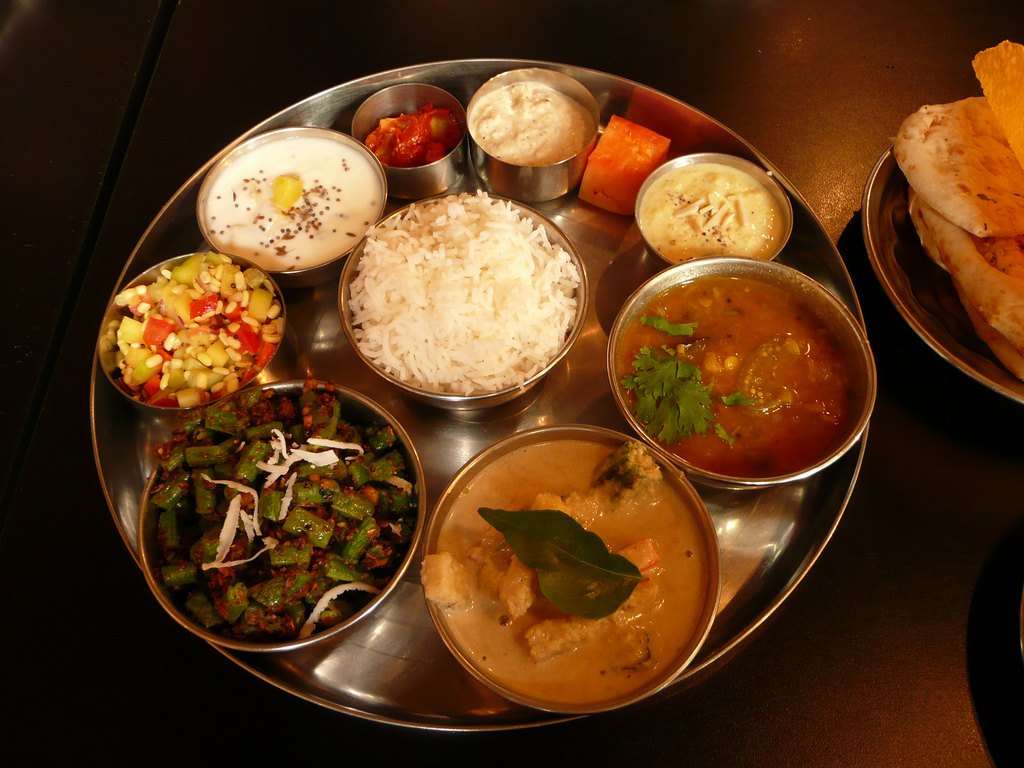
The technique, before the regions
Nearly every northern-style Indian gravy is built by the same sequence, and if you learn it you can cook fifty dishes:
- Whole spices in hot fat — cumin seed, bay, cardamom, cinnamon, clove. They sizzle and perfume the oil. (This step at the start is tempering; the same move done at the end and poured over is tarka.)
- Onion, cooked properly. Not five minutes. Fifteen to forty, until genuinely browned. This is the single biggest gap between a home curry and a restaurant one — the sugar has to come out of the onion, and it takes as long as it takes.
- Ginger–garlic paste, cooked until the raw smell goes.
- Ground spices, in the fat, 30–60 seconds, until they darken and smell cooked.
- Tomato, cooked down hard until the oil visibly separates back out at the edges. That separation is the signal the base is done — the same taek man moment the Thai pastes look for, in a different cuisine.
- The main ingredient, then liquid, then simmer.
- The finish — cream or yoghurt, garam masala, crushed kasuri methi, coriander leaf.
That whole process, especially steps 2–5, is what bhuna means: frying the base until it stops being raw and starts being a sauce. Rushing it is the commonest failure.
The north
Wheat country. Bread rather than rice, dairy rather than coconut, ghee rather than oil, and the warm spices — cardamom, cinnamon, clove — used generously. Mughal court cooking left a deep mark: rich, nutty, restrained on chili.
- Korma — braised in yoghurt with a nut paste (almond or cashew). Mild is a consequence of the method, not the goal. Creamy Indian Vegetable Korma
- Rogan josh — Kashmiri, lamb, and the deep red comes from Kashmiri chili and ratan jot (alkanet root), not from heat. A rogan josh that is fiery has been misunderstood. Lamb Rogan Josh
- Butter chicken (murgh makhani) — Delhi, mid-twentieth century, and genuinely traceable to Moti Mahal, where the sauce was reputedly devised to use up tandoori chicken that had dried out. Butter Chicken (Murgh Makhani)
- Dal makhani — black urad dal and kidney beans, cooked overnight. Dal Makhani
- Rajma, chana masala, saag — the everyday food. Rajma · Chana Masala · Saag Aloo
The south
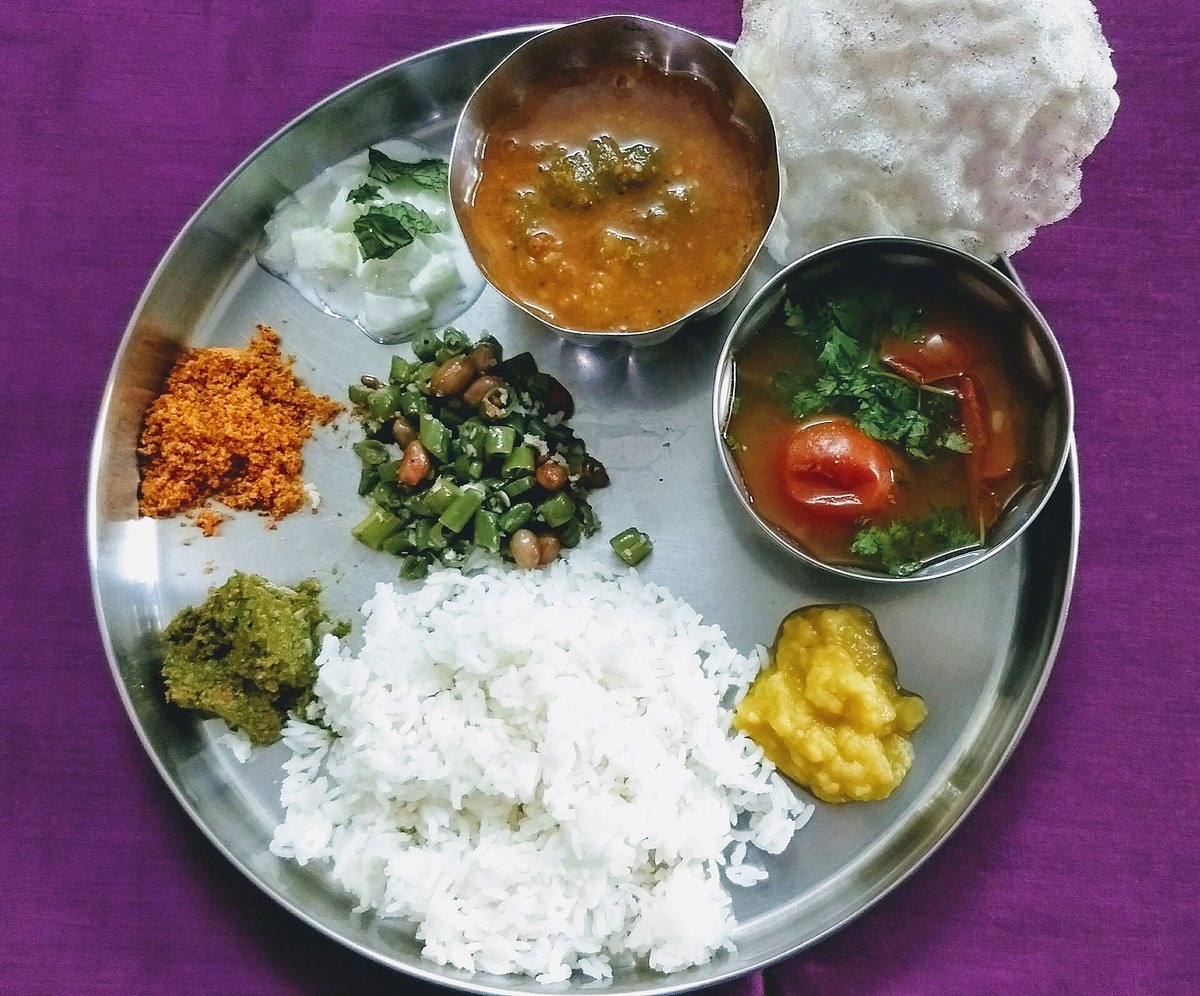
Rice country. Coconut instead of dairy, tamarind for sour, curry leaf and mustard seed in the tempering, and the tarka poured over at the end rather than only built at the start.
- Sambar — lentil and vegetable stew with tamarind, and its own spice blend (sambar podi). It is eaten daily and it is not a “curry” in the restaurant sense at all.
- Rasam — thin, peppery, sour, drunk almost like a broth.
- Kerala fish curry (meen curry) — coconut, tamarind or kokum, curry leaf, and a distinctly different sourness from the north’s tomato. South Indian Fish Curry · Indian Fish Curry · Fish Curry (Indian)
- Chettinad — Tamil Nadu, and about as hot and as aromatic as Indian food gets.
The southern spice set is the one that most obviously does not fit in a tin of curry powder — curry leaf and mustard seed and asafoetida are not in the British blend, which is why a supermarket curry powder cannot make a South Indian dish.
Goa, and the vindaloo correction
🔴 Vindaloo has nothing to do with potatoes.
The Hindi word for potato is aloo, so the folk etymology writes itself and it is wrong.
Vindaloo is Portuguese: carne de vinha d’alhos — “meat in wine and garlic.” It was a shipboard preservation method: pork packed in wine-vinegar and garlic keeps on a long voyage. The Portuguese brought it to Goa in the early sixteenth century, and Goan cooks adapted it — palm vinegar in place of the wine, and a whole spice paste added: dried Kashmiri chilies, cumin, clove, cinnamon, black pepper, tamarind.
In Goa it is still usually pork, still vinegar-sharp, and its defining quality is sourness, not heat. Vindaloo Paste (Vinha d’Alhos) is in my file now.
The British-curry-house vindaloo — the one at the top of the heat ladder above madras — is a different dish that borrowed the name. It kept the chili and threw away the vinegar, which is like keeping the shell of a sports car and removing the engine. And it very often does have potato in it, because the name suggested it should.
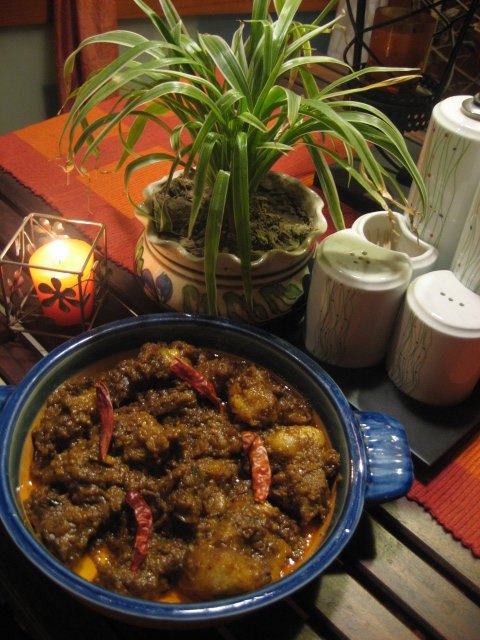
Goa is also where the chilies came ashore. The Portuguese ships that carried vinha d’alhos carried Capsicum, and Goa is one of the first places in Asia where the two met (the history).
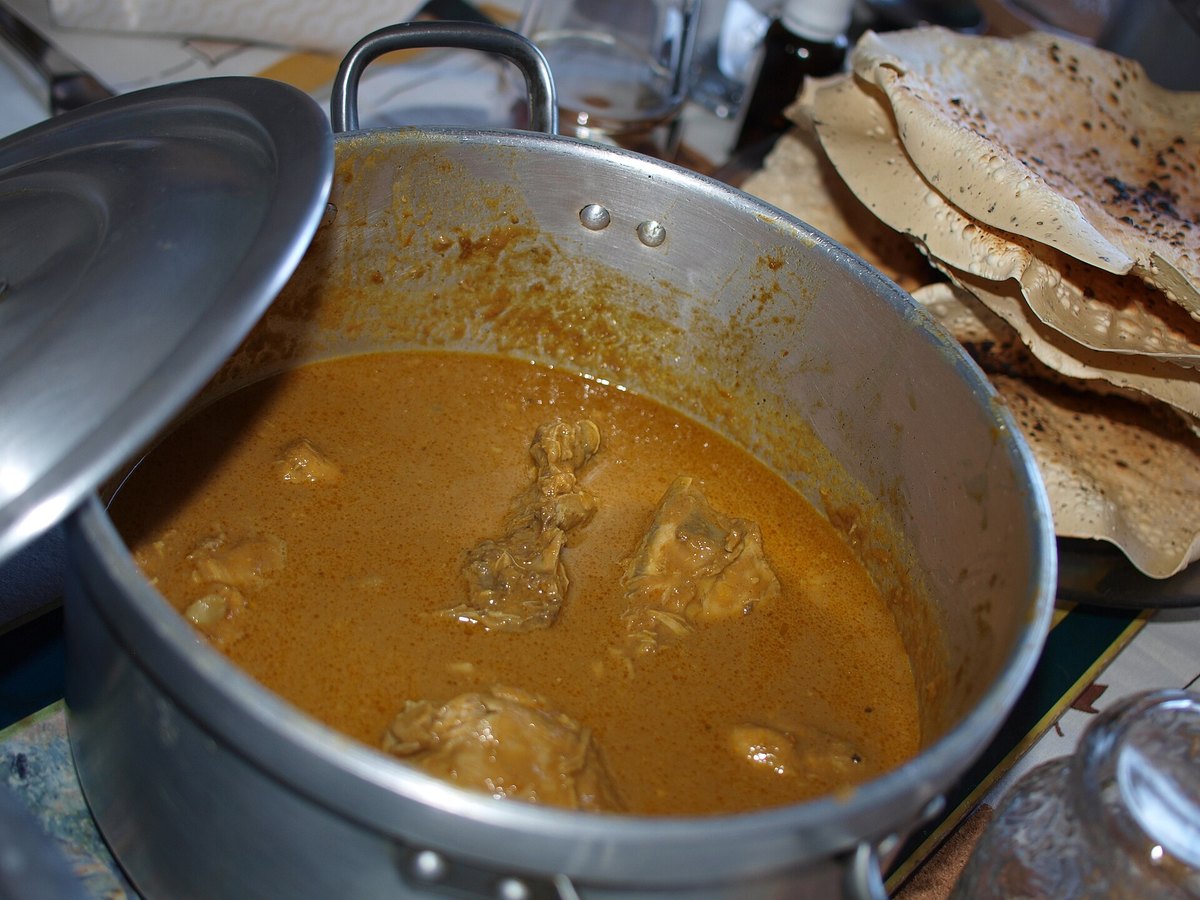
And Goa still uses the Portuguese word. A chicken curry there is a caril de frango — the same caril Garcia da Orta wrote down in 1563, four and a half centuries later, on the same coast.
Bengal and the east
Mustard oil — pungent, sinus-clearing, unlike any other cooking fat — and panch phoron, the five-seed blend (fenugreek, nigella, cumin, black mustard, fennel) used whole, never ground, bloomed in oil. Fish and freshwater river fish dominate. Sweetness is used more deliberately than anywhere else in India.
Chicken tikka masala: the most argued-about dish in Britain
It deserves its own paragraph because the story is usually told with more confidence than the evidence supports.
The Glasgow account: Ali Ahmed Aslam, of the Shish Mahal, improvised a sauce from tinned condensed tomato soup, cream and spices in the 1970s for a customer who complained his chicken tikka was dry. Aslam is widely credited with it, and when he died in 2022 the obituaries said so. In 2001 Foreign Secretary Robin Cook called it “a true British national dish” in a speech, and that line did more than anything else to fix the story in place.
The objections: food historians Peter and Colleen Grove point to a recipe for Shahi Chicken Masala in Mrs Balbir Singh’s Indian Cookery (1961) — three years before the Shish Mahal opened. And the Moti Mahal family in Delhi claim their version goes back to the 1940s, which overlaps with the butter-chicken story above.
⚠ My honest reading: something very like it existed in India before Glasgow, and the specific dish that conquered Britain plausibly was assembled in a British curry house. Both can be true, and neither is proven to the standard I would want before printing it as fact. The dish is real; the origin story is folklore-shaped.
In my file: Chicken Tikka Masala (Ramsay) · Chicken Tikka Masala (Zimmern) · Tikka Masala, Chicken · Fish Tikka Masala · Shrimp Tikka Masala · Tofu Tikka Masala — and, tellingly, Chicken Tikka (Without the Masala), which is the original grilled dish before anyone put it in a sauce.
Next
The rest of the world — where the tin and the technique went next.
Comments (0)