Red — *Kaeng Phet*
The trunk of the family tree. Learn this one and you have most of four others.
What makes it red
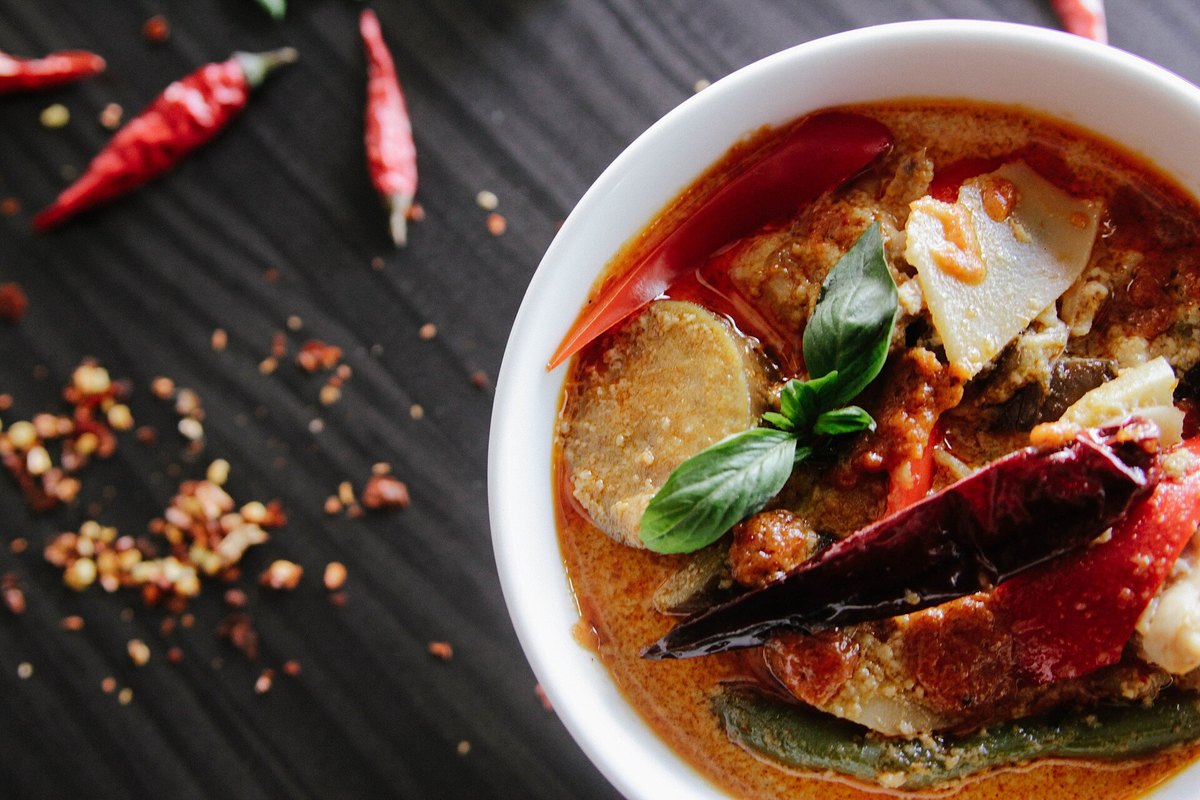
Dried red chilies, soaked. That is the whole answer, and it is more specific than it sounds.
Red paste uses dried long red chilies — in Thailand phrik chi fa haeng (long “sky-pointing” chilies) and phrik kaeng, sometimes with a few dried bird’s eyes for heat. They are stemmed, usually deseeded, soaked in warm water until pliable, squeezed out, and pounded.
Two consequences fall out of “dried”:
- The colour is deep and slightly brick-toned, not bright. Drying darkens the pigment. A red paste that is fire-engine bright has usually had colour added.
- The heat is rounder and slower than green. Drying converts some of the fresh, volatile sharpness into something deeper and raisin-like. It is not milder because the chilies are milder — it is milder because dried chili reads differently on the palate than fresh. See the green page for the other side of that.
Thai cooks do not treat the amount of chili as fixed, either. The classic move for colour without heat is to use a proportion of large mild dried chilies (the same trick as Kashmiri chili in India, or guajillo in Mexico) and add heat separately.
The rest of the paste
Beyond the chilies, red paste is the reference set for the whole family:
- Lemongrass — pale lower stalk only, sliced thin across the grain
- Galangal — not ginger, and the substitution genuinely changes the dish
- Garlic and shallot — Thai shallots if you can get them, small and purple
- Coriander root — the part Western recipes almost always omit and Thai cooks consider essential; earthier and more savoury than the leaf. If you cannot find roots, the lower stems are a fair stand-in and the leaves are not.
- Makrut lime zest — the knobbly peel, and it is more perfumed than any other lime
- White peppercorn — the traditional heat before chilies arrived, and still in the paste
- Roasted coriander and cumin seed — ground, in modest amount
- Shrimp paste (kapi) — funky, fermented, and the umami backbone
- Salt — which does mechanical work in the mortar, not just seasoning (see making paste)
My recipe: Thai Red Curry Paste (Prik Gaeng Phet)
Cooking it
The method is on the Thai system page and it is the same for all the coconut pastes: crack the cream, fry the paste in the coconut fat, then let it down.
For red specifically:
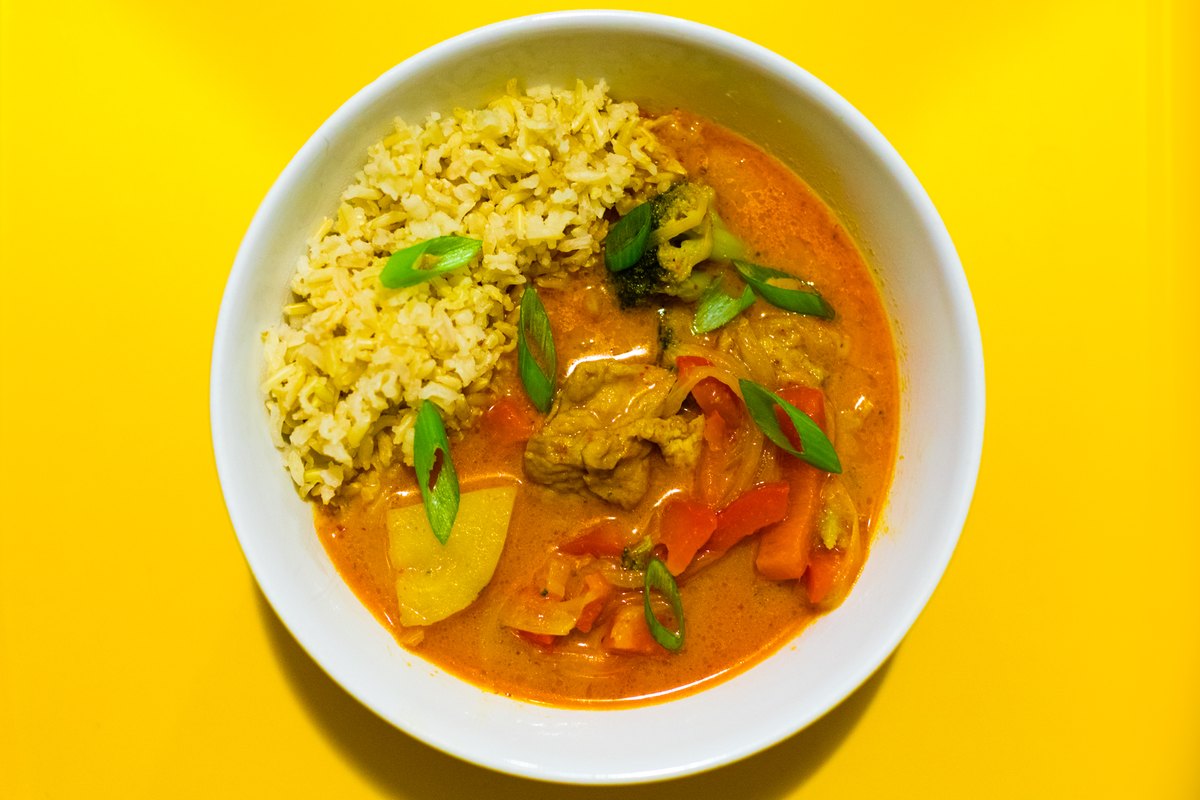
- Meat: chicken thigh, pork, beef, duck. Roast duck red curry (kaeng phet pet yang) with pineapple, tomato and lychee is one of the great dishes of the cuisine and it uses the sweetness of the fruit against the paste deliberately.
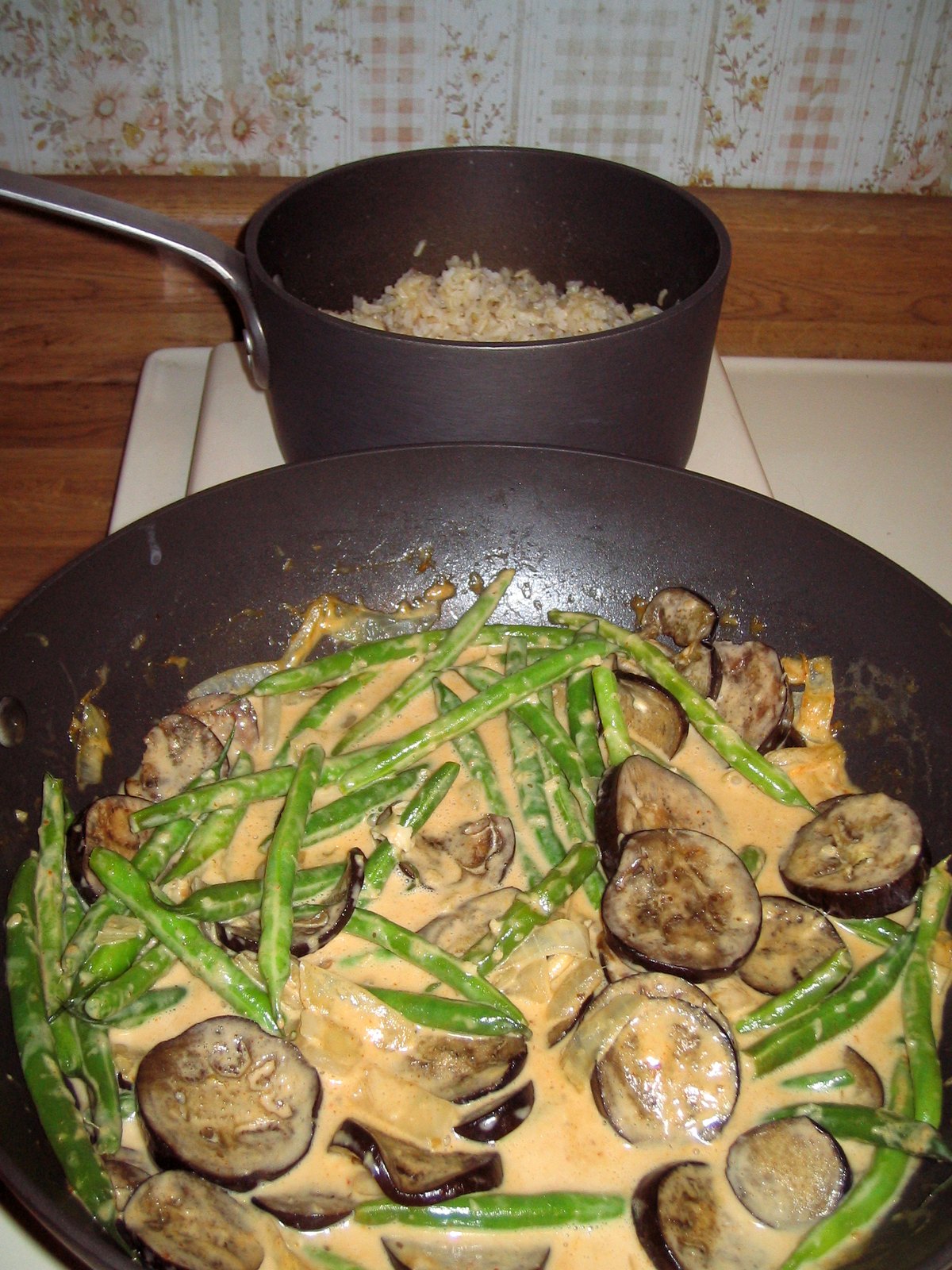
- Vegetables: bamboo shoots, Thai eggplant (the golf-ball ones), pea eggplant, red pepper.
- Finish: fish sauce, palm sugar, torn makrut leaves, Thai basil off the heat.
What red gives you next
Change one variable and you have a different curry with the same base:
- + turmeric and Indian dry spice → yellow
- + roasted peanuts, thicker, less liquid → panang (here)
- − the dry spice → kaeng khua, used with pineapple, fish and shellfish
- − the coconut milk entirely, + more chili and wild herbs → kaeng pa, jungle curry, which is fierce and is the one that reminds you these dishes existed before coconut milk was the default
That last one is worth trying once precisely because it is so unlike the Western picture of Thai curry. Water instead of coconut, no sweetness to hide behind, a lot of green peppercorn and krachai. It is bracing.
In my collection
Red paste is the workhorse in my file — it is the paste behind Fish Curry (Thai), Instant Pot Chicken Curry, and it is what Noodles and Company Bangkok Curry is reaching for.
⚠ A defect in my own file, noted while writing this. The Fish Curry (Thai) record has its entire ingredient list twice — once clean, once again with trailing commas, an artefact of however it was originally imported. It is not a cooking error but it is a mess to read from. Flagged for the next cleanup pass.
Comments (0)