How It Is Made: Koji, Moromi, Press
Brewed soy sauce is made in four movements, and the whole subject becomes legible once they are named: grow the mould, drown it in brine, wait, squeeze. Everything else on the shelf — every type, every national style, every price point — is a variation on where those four steps are set.
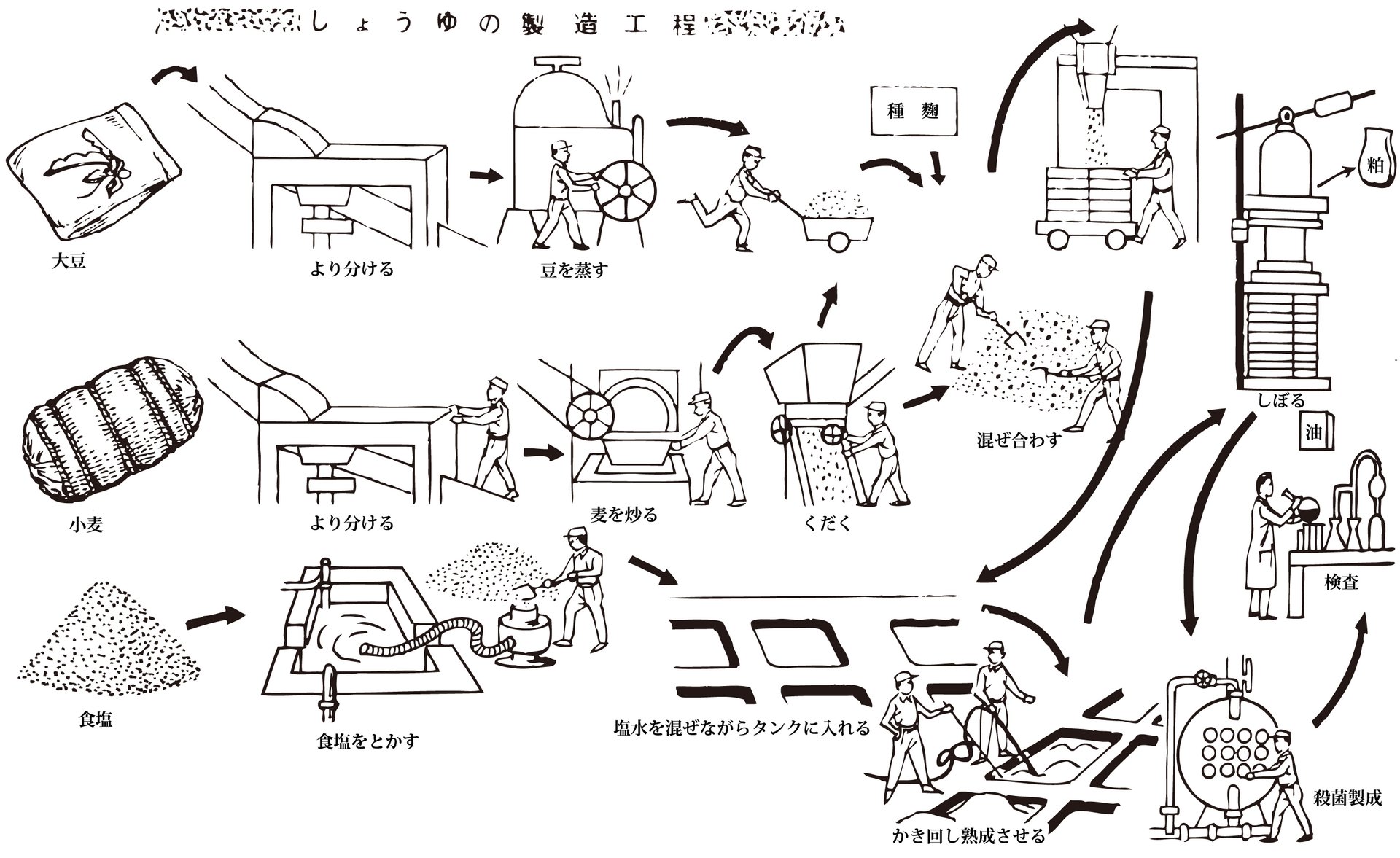
Step one: the raw materials, and how they are prepared
Brewed Japanese soy sauce has four ingredients: soybeans, wheat, salt, water. That is the entire list, and it is the first thing to look for on a label.
The two grains are treated in opposite ways, and the asymmetry is deliberate:
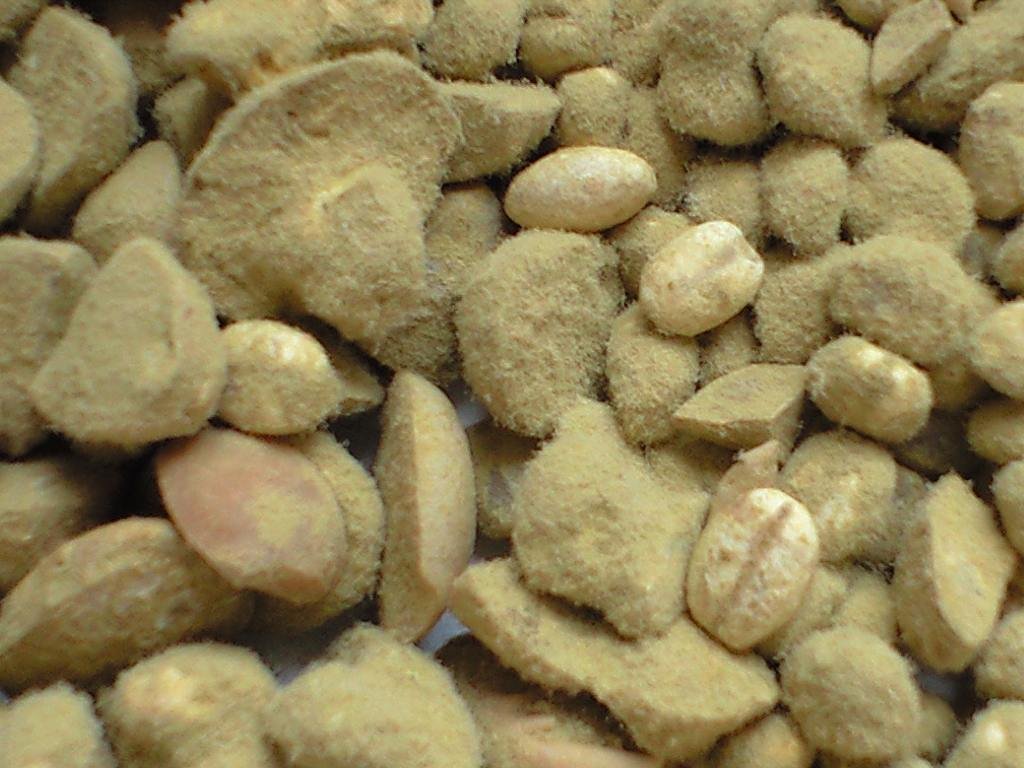
- Soybeans are steamed, usually under pressure, until the protein is denatured and accessible. They may be whole (marudaizu, 丸大豆) or defatted flakes — the by-product of oil extraction. Defatted soy is cheaper, ferments faster, and is used for the large majority of production; whole-bean sauce is a premium claim and is printed on the label when it is true.
- Wheat is roasted and cracked. Roasting is not a formality: it develops the colour and much of the aroma, and it gelatinises the starch so the mould’s amylases can reach it.
⭐ The division of labour is exact. The soybean supplies protein, which becomes amino acids, which become umami. The wheat supplies starch, which becomes sugar, which becomes alcohol, acid and aroma. A sauce made without wheat will be deep and blunt; a sauce made mostly of wheat will be pale and sweet. Both exist, and both are covered on the Japanese types page.
Step two: koji — three days of enzymes
The steamed soy and cracked wheat are mixed, cooled, and inoculated with Aspergillus oryzae or its close relative A. sojae, grown from a purchased starter called tane-koji (種麹).
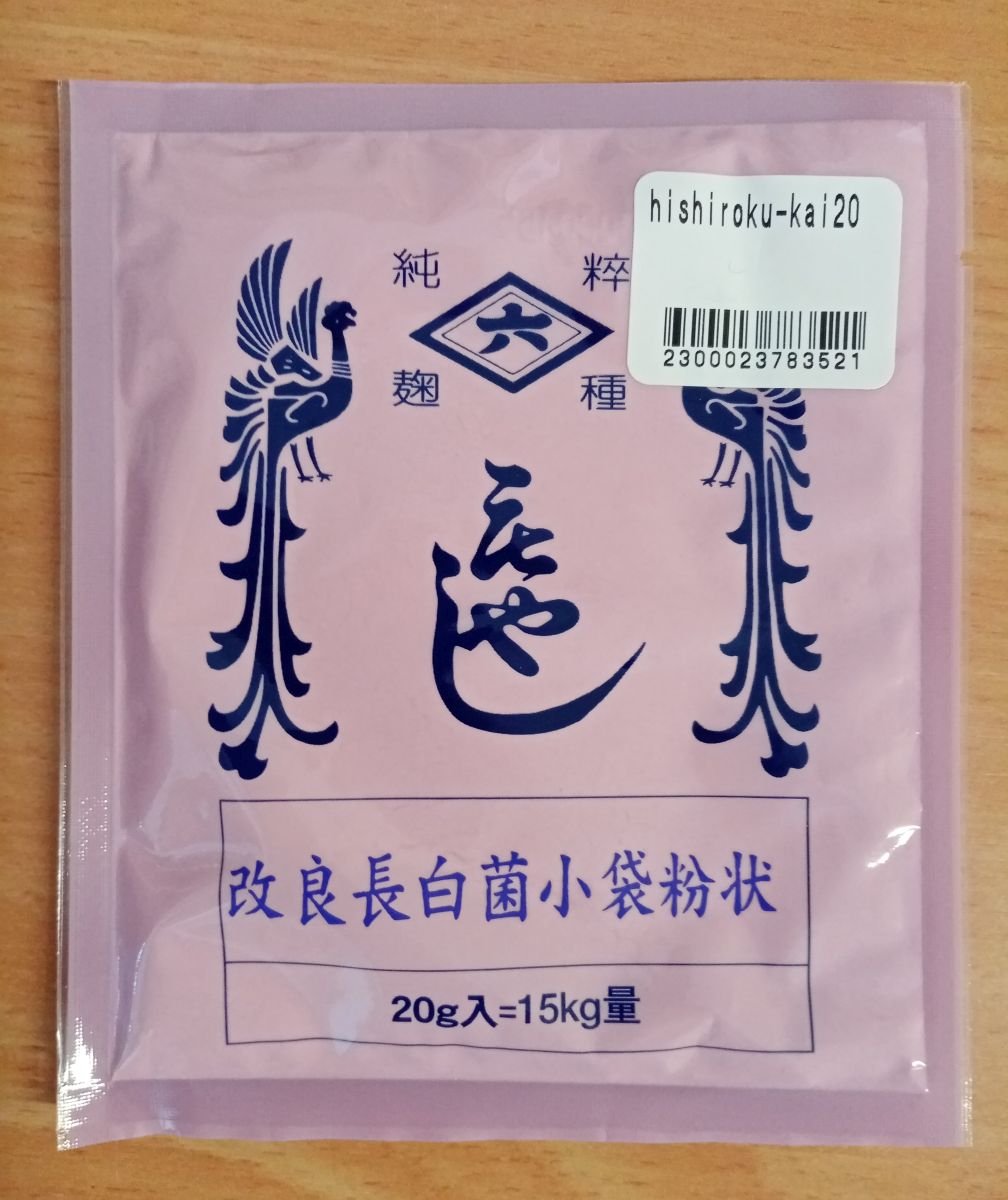
For about three days the bed is held warm and humid and turned to shed the heat it generates, until the grain is furred over and smells sweet and faintly of chestnuts.
The mould is not the flavour. The mould is a machine for making enzymes, and it makes three that matter:
| Enzyme | Cuts | Yields |
|---|---|---|
| Protease | Protein | Peptides and free amino acids — above all glutamate |
| Amylase | Starch | Glucose and maltose |
| Lipase | Fats | Fatty acids, precursors to aroma |
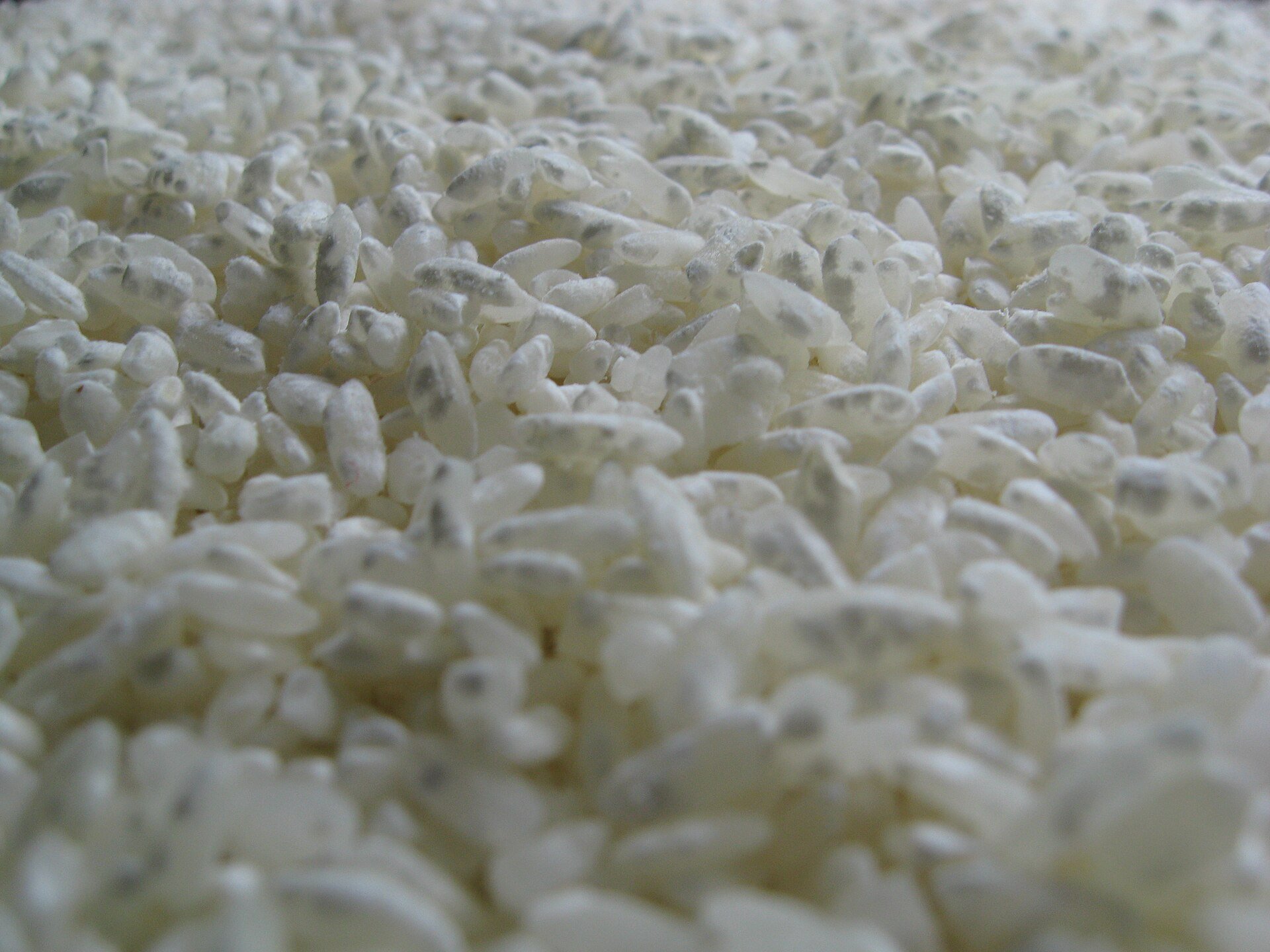
This is the same organism, and the same three days, that produce miso, sake, mirin and rice vinegar. The full family is laid out on the fermentation dive’s koji, miso and soy page; what follows here is only the branch that ends in a bottle.
⚠ Wild-catching the mould is not an option. A. oryzae is a domesticated organism with no toxin genes expressed; several of its wild relatives produce aflatoxins, and they cannot be told apart by eye. Every brewery, at every scale, uses a purchased culture.
Step three: moromi — brine, and then a very long wait
The finished koji is mixed with salt water to make a thick mash called moromi (諸味). This is the step that decides almost everything.
The brine brings the mash to roughly 17–18% salt, and that concentration is doing one specific job: it stops nearly everything from growing, and permits a very short list of organisms that can. Fermentation from here on is a matter of who survives.
The succession, in order:
- Tetragenococcus halophilus — a halotolerant lactic acid bacterium, and the dominant early organism. It drops the pH, produces lactic acid, and contributes esters.
- Zygosaccharomyces rouxii — a salt-tolerant yeast that takes over as the acidity rises. It produces ethanol, isobutyl and isoamyl alcohols, 2-phenylethanol, and — critically — HEMF and HDMF, two furanones that are the signature aroma of soy sauce and are present in almost nothing else.
- Later yeasts of the Candida / Starmerella group, adding phenolic notes.
⭐ These two organisms are the core pair, in every soy sauce tradition studied, regardless of country or process. The recipes diverge; the microbiology converges.
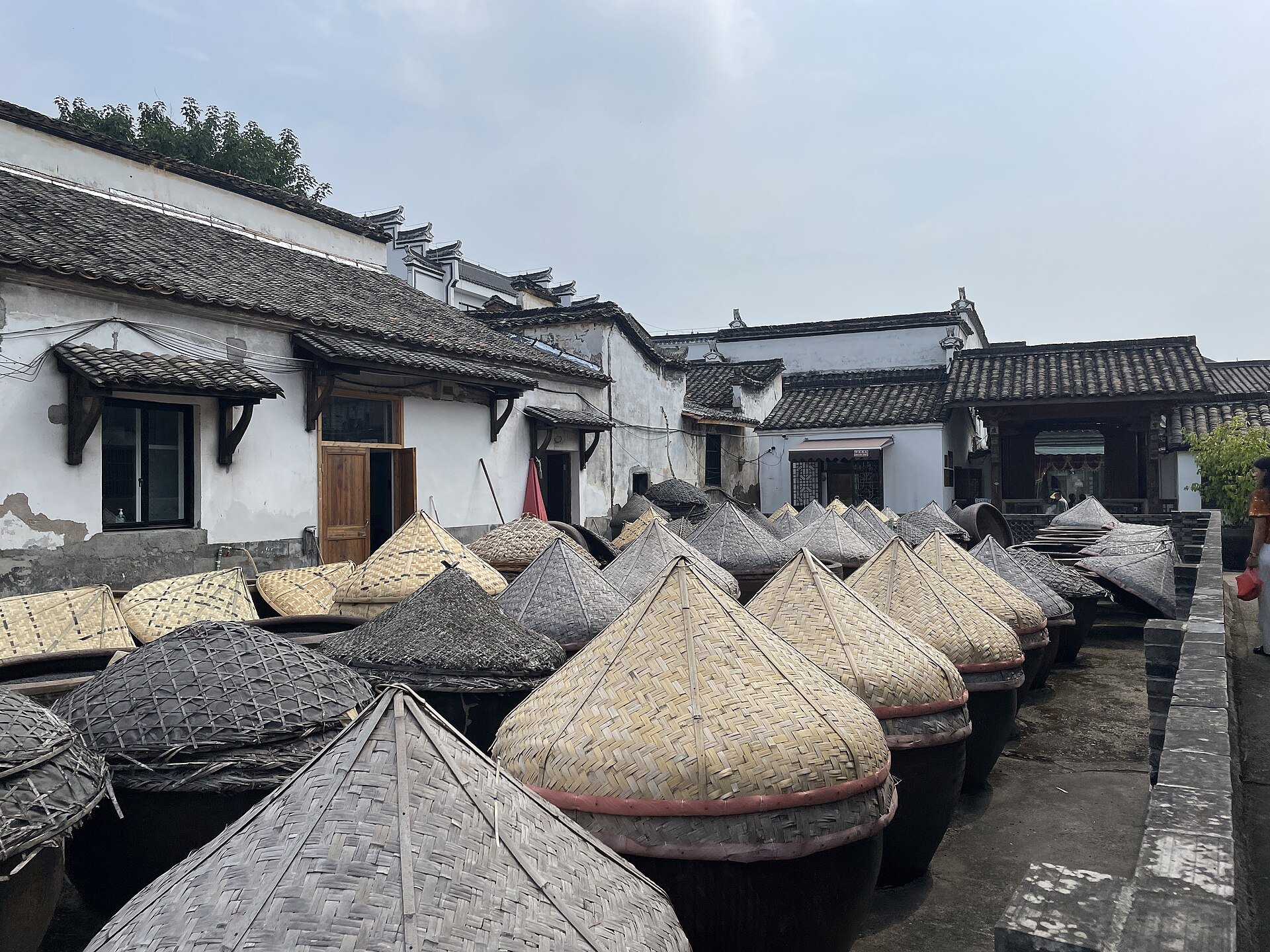
The mash is stirred — kai-ire (櫂入れ) — to aerate it and keep the surface from going wrong. In a traditional brewery this is a person with a long paddle and a plank over a barrel, and it is the image most people carry of the whole industry.
How long? Between six months and three years, with six to twelve months typical for standard koikuchi. Chinese practice splits into two named methods: high-salt dilute-state fermentation, which takes about three times as long and produces the better sauce, and low-salt solid-state fermentation, which is faster, less salty and markedly less good.
Step four: pressing, and the step nobody mentions
The mature moromi is wrapped in cloth, stacked in a press — a fune — and squeezed over several days. The liquid that comes out is called kiage (生揚げ), raw soy sauce, and it is not the finished product.
Raw soy sauce is still full of live enzymes and live yeast. It is cloudy, it will keep changing, and it will spoil. So it goes through hi-ire (火入れ) — pasteurisation at around 80 °C.
Hi-ire does four things at once, and this is the most underrated step in the process:
- Kills the yeast and denatures the enzymes, so the sauce stops moving.
- Sets the colour, darkening it through Maillard reactions.
- Fixes the aroma, driving off harsh volatiles and generating cooked ones.
- Clarifies it — proteins coagulate and are filtered out.
⚠ Unpasteurised soy sauce — nama shōyu (生醤油) — is sold, and it is a genuinely different thing: lighter, fresher, more volatile, and perishable. It must be refrigerated and used quickly. It is not “better”; it is earlier.
Finished koikuchi carries 2–3% ethanol from the yeast stage. That alcohol is part of the flavour, contributes to keeping quality, and is worth knowing about for anyone avoiding alcohol for religious or medical reasons.
The one number that describes quality
Across every tradition, the analytical measure that actually tracks quality is nitrogen — specifically the amino acid nitrogen liberated from the soybean protein. It is the closest thing the industry has to an objective score, and it is what the national grading systems are built on.
- China prints it. The national standard grades soy sauce on amino acid nitrogen (氨基酸态氮): ≥0.80 g/100 mL for special grade, then ≥0.70, ≥0.55 and ≥0.40 for first, second and third. The number is on the bottle and it is the most useful thing there.
- Japan grades on composition too — chiefly nitrogen and alcohol — as 標準 (hyōjun, standard), 上級 (jōkyū) and 特級 (tokkyū, special), with the trade adding 特選 (tokusen) and 超特選 (chōtokusen) above that.
⭐ More nitrogen means more protein was broken down, which means more time, better raw material, or both. It is the one specification that cannot be faked with caramel colour.
In this dive: The story · How it is made · Tamari and shoyu · The Japanese types · Chinese soy sauces · Korean ganjang · Beyond the big three · Brewed and chemical · Salt, time and aging · The gluten question · Buying, storing and using · Corrections
Comments (0)