Salt, Time, and What "Aged" Does and Does Not Mean
Two variables dominate soy sauce: how much salt went into the mash, and how long it sat there. Almost every difference between bottles traces back to one of them.
They are also the two things most heavily mythologised on labels, because both sound like quality and neither is regulated in the way buyers assume.
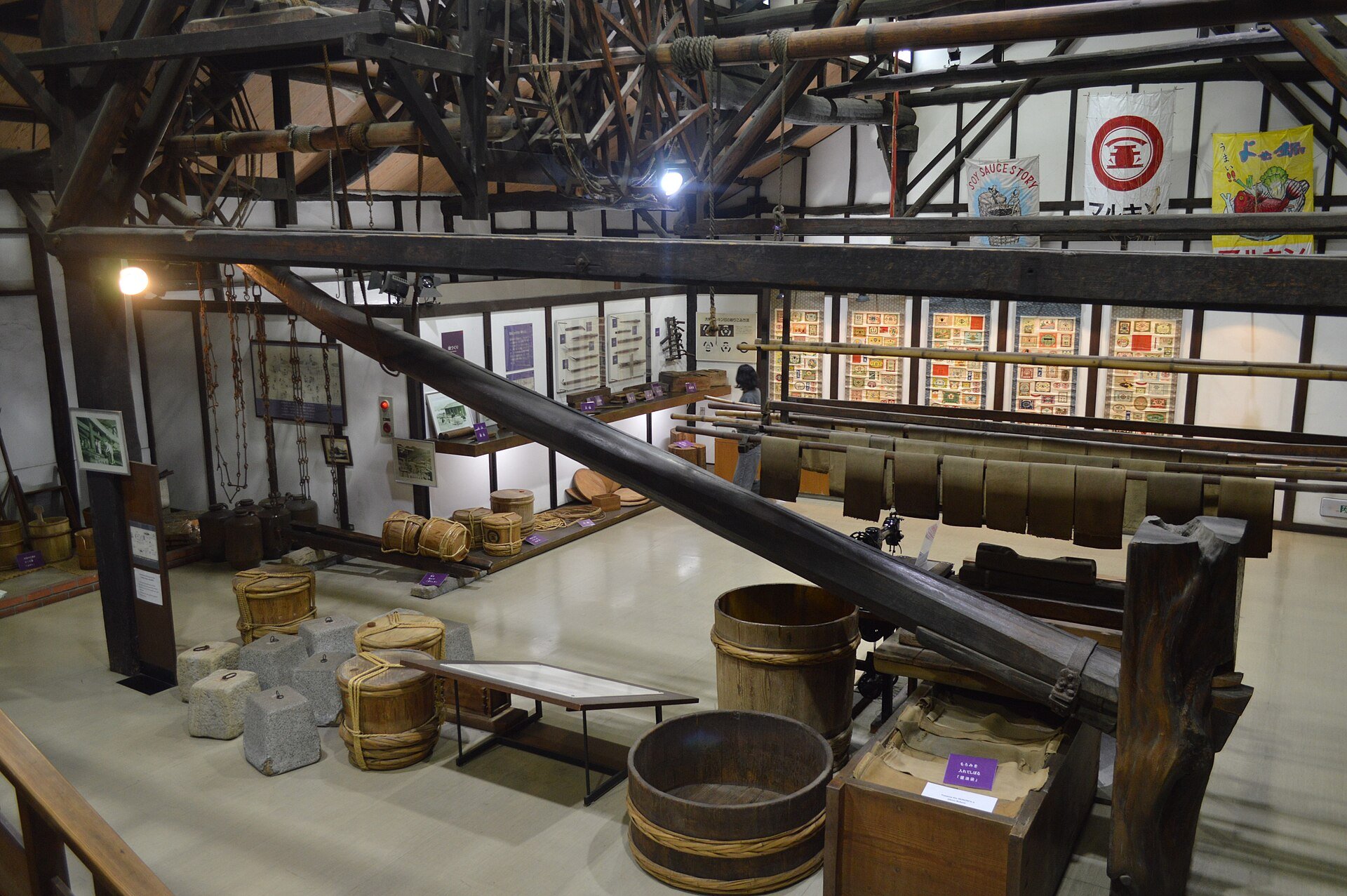
Salt is set once and never changes
The brine goes in at the start of the moromi stage and brings the mash to roughly 17–18% salt. From that moment the salt concentration is fixed. Nothing later in the process removes it, and time does not reduce it.
The salt is not there to preserve the sauce. It is there to choose who lives in it.
At 17% salt, essentially nothing grows — except the short list of halotolerant organisms the process depends on: Tetragenococcus halophilus, then Zygosaccharomyces rouxii. The salt is a selection filter, and a soy sauce fermentation at low salt is not a gentler version of the same thing; it is a different and far less controlled ferment, which is exactly why the Chinese low-salt solid-state method produces a poorer sauce than the high-salt dilute-state method.
⭐ This is the single most important consequence: there is no such thing as a traditionally brewed low-salt soy sauce. The salt is load-bearing. Anything marketed as reduced-sodium had the salt taken out afterwards.
Reduced-sodium is subtraction, not a different recipe
This is worth spelling out because the packaging implies otherwise.
Less-sodium soy sauce is brewed exactly like the standard product and then has approximately 40% of its salt removed after fermentation and ageing are complete.
| Sodium per tablespoon | |
|---|---|
| Regular soy sauce | ~920 mg |
| Less-sodium soy sauce | ~590 mg (about 38% less) |
| Table salt | ~6,975 mg |
Two things follow. First, soy sauce is an extraordinarily efficient way to deliver savour per unit of sodium — about 85% less sodium than the same volume of salt, while carrying glutamate, acidity and aroma that salt does not. Second, a sauce with 40% of its salt stripped out is less microbiologically stable than the one it came from, which is a genuine reason to refrigerate it rather than a manufacturer’s preference.
What time actually does
Fermentation and maturation run from about six months to three years, with six to twelve months typical for standard koikuchi. Over that period:
- Colour darkens, through Maillard reactions between amino acids and sugars, accumulating melanoidins. This is why old soy sauce is dark — and why added caramel colour is such an effective counterfeit.
- Free amino acids accumulate as proteases keep working. This is the nitrogen the grading systems measure.
- Aroma develops, chiefly HEMF and HDMF from the yeast stage, plus esters, higher alcohols and phenolics.
- Harshness declines. Raw young sauce is sharp; time rounds it.
What time does not do
🔴 “Aged” is not a regulated claim on soy sauce anywhere. There is no equivalent of a Scotch whisky age statement — no legal definition, no minimum, no audit. A bottle saying “aged three years” is making a producer’s assertion, and it may well be true, but it is not a certified one.
And three specific non-effects:
- Ageing does not reduce salt. A four-year sauce and a six-month sauce from the same brewery have essentially the same sodium.
- Ageing does not rescue a hydrolysate. Acid-hydrolysed base does not improve with time; there are no enzymes left to do anything.
- Darkness does not prove age. As the Chinese dark soy panel shows, colour is the fourth ingredient on some bottles. Colour is the cheapest thing on the shelf to fake.
⭐ The honest proxy for age and quality is the nitrogen figure, not the colour and not the word “aged.” Chinese bottles print it as 氨基酸态氮; Japanese bottles compress it into 特級.
Wood, and what less than one percent means
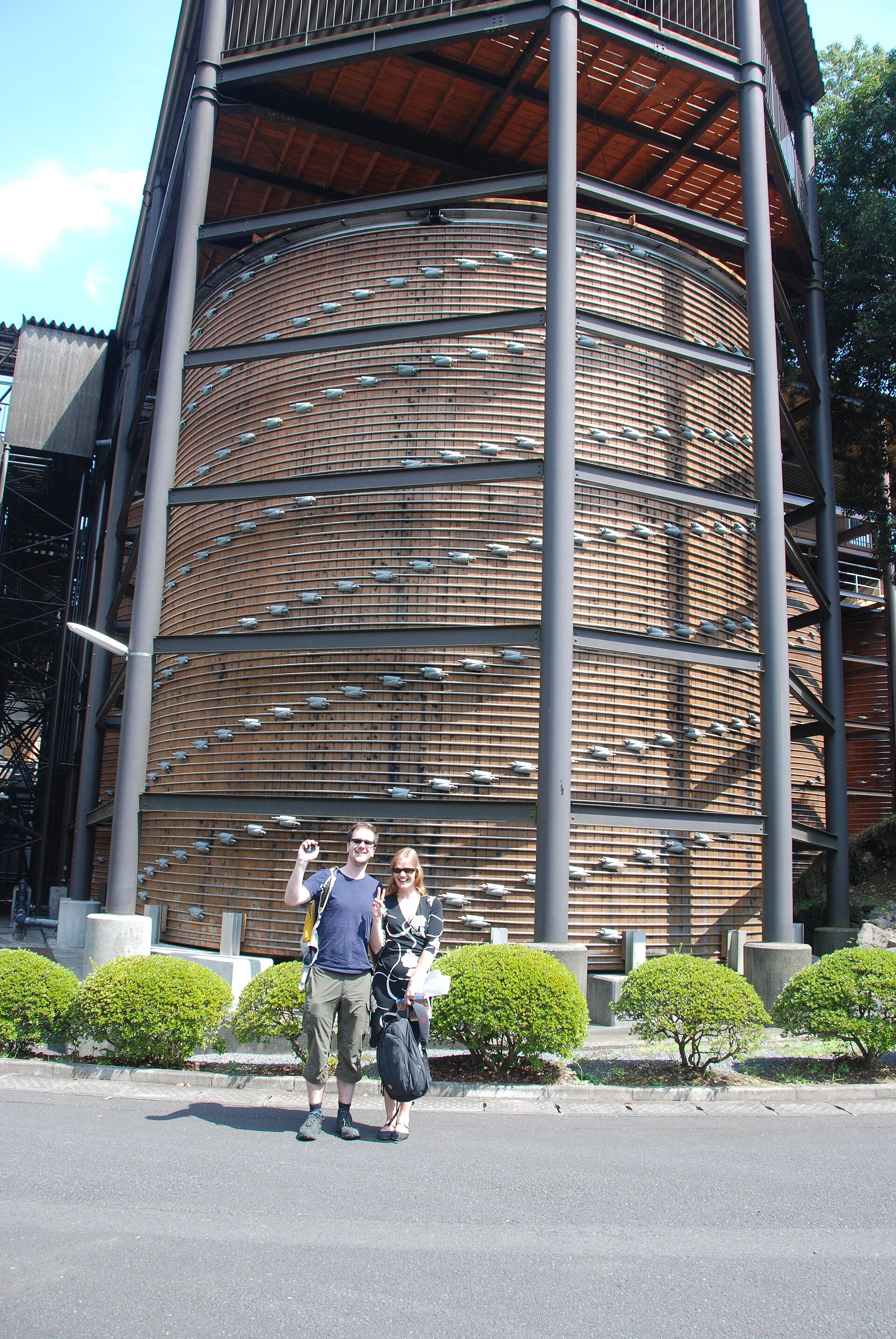
Traditional Japanese soy sauce was fermented in kioke — enormous cedar barrels bound with bamboo, some of them a century or two old. After the Second World War the industry was pushed hard toward stainless steel, which is cleaner, cheaper, controllable and does not need a cooper.
Today under 1% of Japanese soy sauce is brewed in wooden barrels.
The case made for kioke is that the wood’s grain harbours a resident microbial population unique to each brewery, which participates in every subsequent fermentation — so the barrel is not a container but an ingredient, and a barrel that is discarded cannot be recreated. ⚠ That is the producers’ account and it is plausible microbiology; this dive did not locate controlled work quantifying the contribution.
What is not in doubt is the cooperage problem. The craft of building barrels that size nearly died with the last generation of makers, which is why Yamaroku Shoyu on Shodoshima started the Kioke Craftsman Revival Project — a brewery teaching itself and others to build barrels, because no one was left to buy them from.
⭐ The interesting thing about the 1% figure is what it implies about everything else: 99% of the world’s finest-reputation soy sauce is fermented in steel tanks, and it is very good. Wooden-barrel sauce is worth seeking out and worth paying for; it is not the dividing line between real and fake. The dividing line is fermentation against acid hydrolysis, and that is a much larger gap than steel against cedar.
In this dive: The story · How it is made · Tamari and shoyu · The Japanese types · Chinese soy sauces · Korean ganjang · Beyond the big three · Brewed and chemical · Salt, time and aging · The gluten question · Buying, storing and using · Corrections
Comments (0)