The Japanese Types: Five Standards, and a Colour That Lies
Japan classifies soy sauce formally. The Japanese Agricultural Standard (JAS) recognises five types, and unlike most food vocabulary these are legal categories with definitions attached rather than marketing words.
The five are koikuchi, usukuchi, tamari, saishikomi and shiro. They are usually presented as a scale running from pale to dark, which is tidy, memorable, and actively misleading — because the thing most people infer from that scale is saltiness, and saltiness runs the other way.
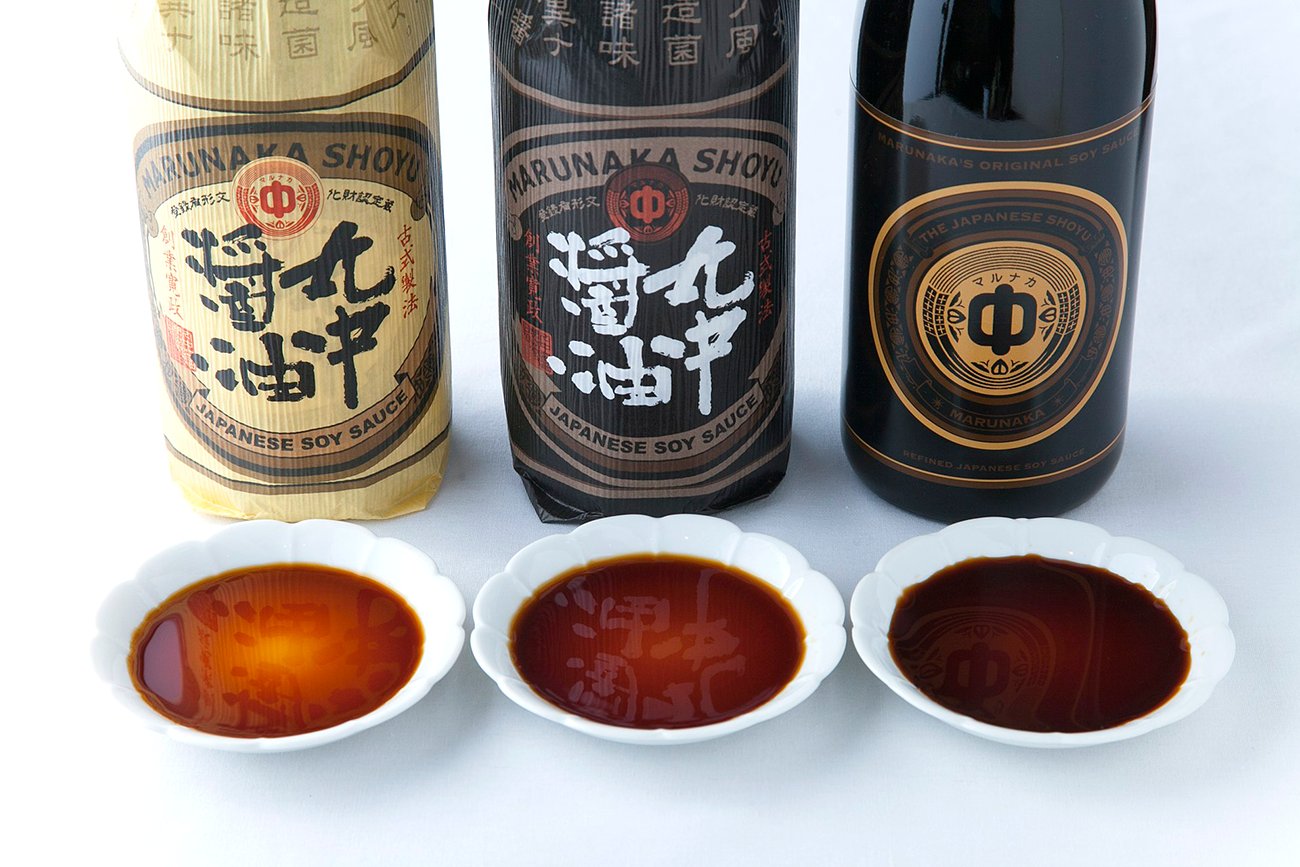
The table that corrects the intuition
| Type | Share of production | Grain | Salt | Free glutamate |
|---|---|---|---|---|
| Koikuchi 濃口 | ~80% | Soy + wheat, roughly equal | 16–17% | 980–1,680 mg/100 g |
| Usukuchi 淡口 | ~10% | Soy + wheat, more brine | 18–19% | 730 mg/100 g |
| Tamari たまり | small | Soy-dominant | 16–17% | 1,720 mg/100 g |
| Saishikomi 再仕込 | small | Soy + wheat, brewed twice | 12–14% | 890 mg/100 g |
| Shiro 白 | very small | Wheat-dominant | 17–18% | 460 mg/100 g |
(Salt and glutamate figures from the Umami Information Center. Note that the saishikomi and shiro figures rest on that single source and were not independently corroborated here.)
🔴 Read the salt column against the colour. The palest everyday sauce, usukuchi, is the saltiest. The darkest and most intense, saishikomi, is the least salty by a wide margin — around a quarter less salt than the standard bottle. Colour and salt are close to inversely related across the Japanese range, which is the exact opposite of what the pale-to-dark presentation implies.
Koikuchi — the default, and rightly
濃口, “thick mouth.” Roughly 80% of Japanese production, made from approximately equal parts soybean and roasted wheat, brewed six months to two years.
This is the balanced one, and “balanced” is meant technically: koikuchi carries measurable saltiness, sweetness, sourness, bitterness and umami, plus the aromatic fraction that comes from the wheat. It is the only one of the five that can do every job in a kitchen adequately.
⭐ If a recipe says “soy sauce” with no qualifier and comes from a Japanese source, it means koikuchi. If it comes from a Chinese source it means light soy, which is a different product. That single ambiguity is responsible for a great many disappointing dinners.
Usukuchi — pale, and saltier
淡口, “light mouth” — light in colour, and the name has been mistranslated into English as “light soy sauce” often enough to cause real harm, because English speakers hear “light” and think reduced sodium.
Developed in Tatsuno, in south-western Hyōgo, around 1666, for a Kansai cuisine that wanted seasoning without staining. The brewery differences are specific:
- The wheat is only lightly roasted, limiting colour development.
- More brine and less koji are used, slowing fermentation and keeping it pale.
- Amazake or mizuame — sweet fermented rice, or glucose syrup — is added at the end. This began as a way to restrain colour and turned out to add a pleasant sweetness, and it remains standard.
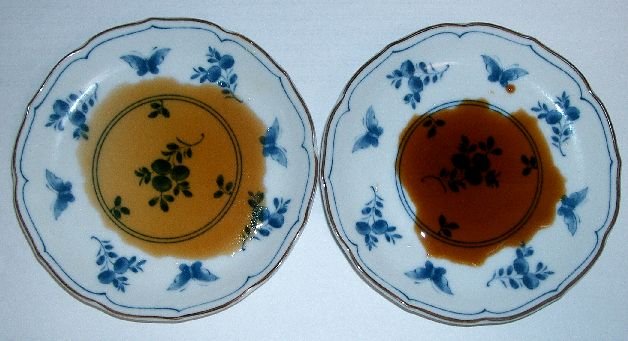
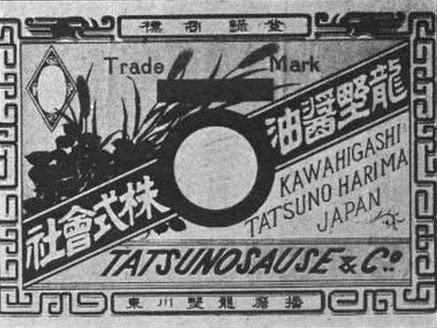
Use it where colour is the point: clear soups, dashimaki tamago, simmered vegetables, anything where a pale ingredient should stay pale. Use less of it than you would koikuchi, because it carries about two percentage points more salt.
Tamari — the outlier
Covered in full on its own page, because the thing most people believe about it is wrong. In brief: soy-dominant, thick, the highest glutamate of the five, brewed mainly in Aichi, and descended from miso run-off rather than from soy sauce brewing.
Saishikomi — brewed twice
再仕込, “re-charged.” Made exactly like koikuchi, with one substitution: finished soy sauce is used in place of the brine.
The moromi is therefore built on a liquid that already carries a year’s worth of amino acids, sugars and aroma, and the whole fermentation runs again on top of it. The result is dark, thick, deeply aromatic — and, because no fresh salt water was added, the least salty type at 12–14%.
It is sometimes called kanro shōyu, “sweet dew,” and it is a dipping and finishing sauce, not a cooking one. Used in a braise its expensive aromatics simply boil off.
⚠ This is the type most likely to be described in English as “extra strong” and assumed to be the saltiest. It is the mildest of the five on salt and the strongest on everything else.
Shiro — the mirror of tamari
白, “white.” Developed in Hekinan, Aichi — the same prefecture as tamari, and the exact inversion of it: wheat-dominant, often around 90% wheat to 10% soybean, fermented briefly.
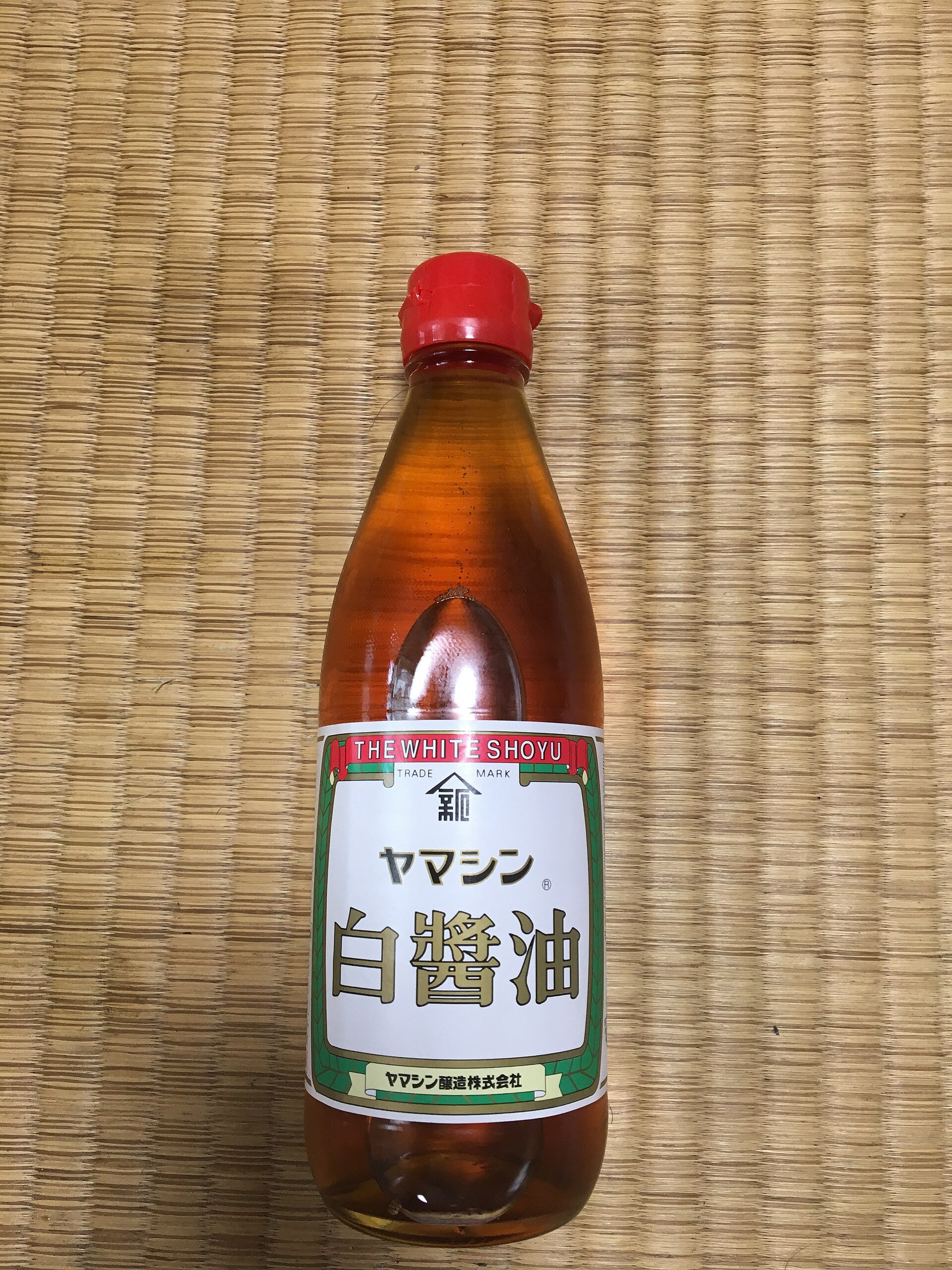
Very little protein goes in, so very little glutamate comes out — 460 mg/100 g, a quarter of tamari’s. What it has instead is sugar and aroma: it is distinctly sweet, delicate, and almost colourless in a dish.
Used in chawanmushi, clear dashi, pale pickles, and increasingly by chefs who want the seasoning without any of the visual signature. It is the newest of the five and the least traditional.
Reading the other half of the label
The five types answer what recipe. A second, entirely separate JAS classification answers whether it was actually fermented, and it is the one worth checking:
| Term | Meaning |
|---|---|
| 本醸造 (honjōzō) | Genuinely brewed. No amino acid liquid. This is the one to buy |
| 混合醸造 (kongō-jōzō) | Amino acid liquid added to the mash, then fermented and aged |
| 混合 (kongō) | Amino acid liquid blended into finished soy sauce |
“Amino acid liquid” (アミノ酸液) is acid-hydrolysed vegetable protein, and JAS caps how much may be used: no more than 80% on a nitrogen-equivalent basis. The blended styles are traditional in Kyushu, Hokuriku and some other regions, where a sweeter sauce is preferred — the hydrolysate carries no sweetness of its own, so sweeteners are usually added with it. They are not frauds, and they are clearly declared; they are simply a different and cheaper product. The wider argument is on brewed and chemical.
Three more words worth knowing on a Japanese label:
- 丸大豆 (marudaizu) — made from whole soybeans rather than defatted flakes.
- 有機 (yūki) — organic.
- 特級 (tokkyū) — special grade, the top statutory grade, awarded on chemical composition and chiefly on nitrogen. Above it the trade adds tokusen (特選) and chōtokusen (超特選).
⭐ A bottle marked 本醸造 · 丸大豆 · 特級 has told a buyer, in three terms, that it was fermented, from whole beans, to the highest statutory nitrogen grade. No equivalent shorthand exists in English.
In this dive: The story · How it is made · Tamari and shoyu · The Japanese types · Chinese soy sauces · Korean ganjang · Beyond the big three · Brewed and chemical · Salt, time and aging · The gluten question · Buying, storing and using · Corrections
Comments (0)