Breakfast at Ten Past Six
The best thing my camera did on this trip, it did by accident.
On the morning of 19 March 2026 I photographed a bowl of phở at 06:12, sitting at a steel table on the pavement in Ho Chi Minh City. Nine minutes later I was photographing a bánh mì. By 06:49 I had eaten both.
I did not plan that as a piece of research. I was hungry and it was early. But the timestamp is the whole point, so I am going to lean on it.
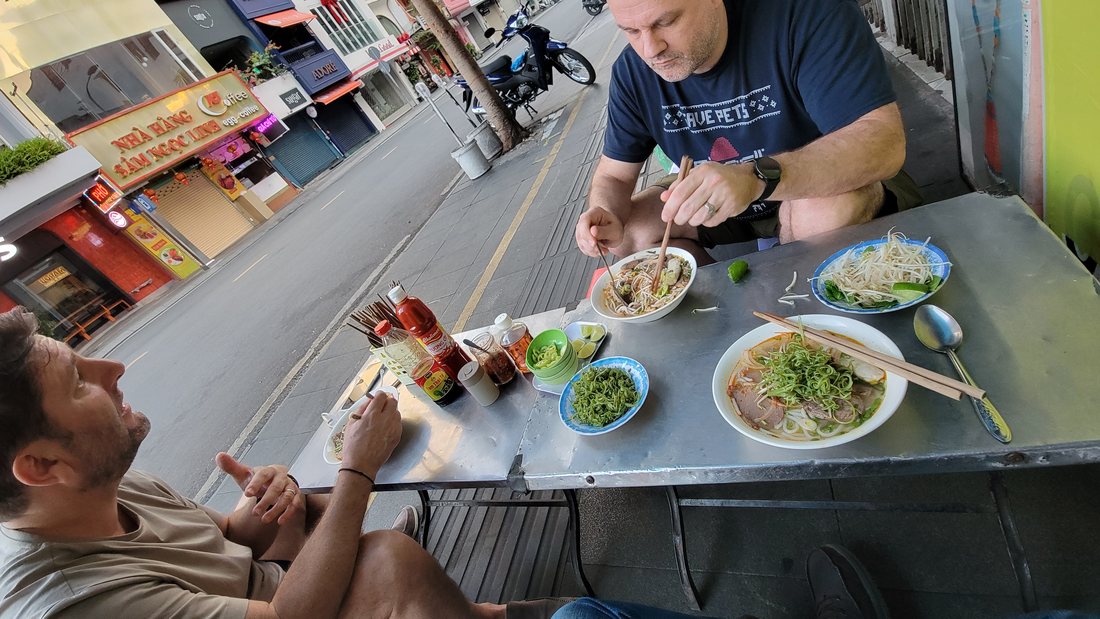
Phở is a breakfast food, and I did not know that
I had eaten phở plenty of times before this trip. Always at dinner, always in America, usually in a room with tablecloths.
In Saigon at six in the morning, on a pavement, it is breakfast — and it is the ordinary, unremarkable, everybody-is-doing-this breakfast. The stools are low. The table is steel. The broth has been going since long before you got up, because that is the only way a broth like that can exist by six.
⭐ This is the thing I keep running into on this site and it happened again here: the version of a dish that travels abroad is very often the dinner version, moved to dinner because that is when foreigners eat out. The dish did not change. The meal it belongs to did.
Which reframes it. A bowl of phở is not a rich evening dish that some people happen to eat early. It is a morning dish — broth, rice noodles, herbs, a squeeze of lime — that we have been serving at seven in the evening under candlelight and then calling authentic.
I am not being sniffy about that. I have eaten and enjoyed a great deal of seven-in-the-evening phở. But at 06:12, on a steel stool, it made a different kind of sense.
The qualification, which is in my own photographs
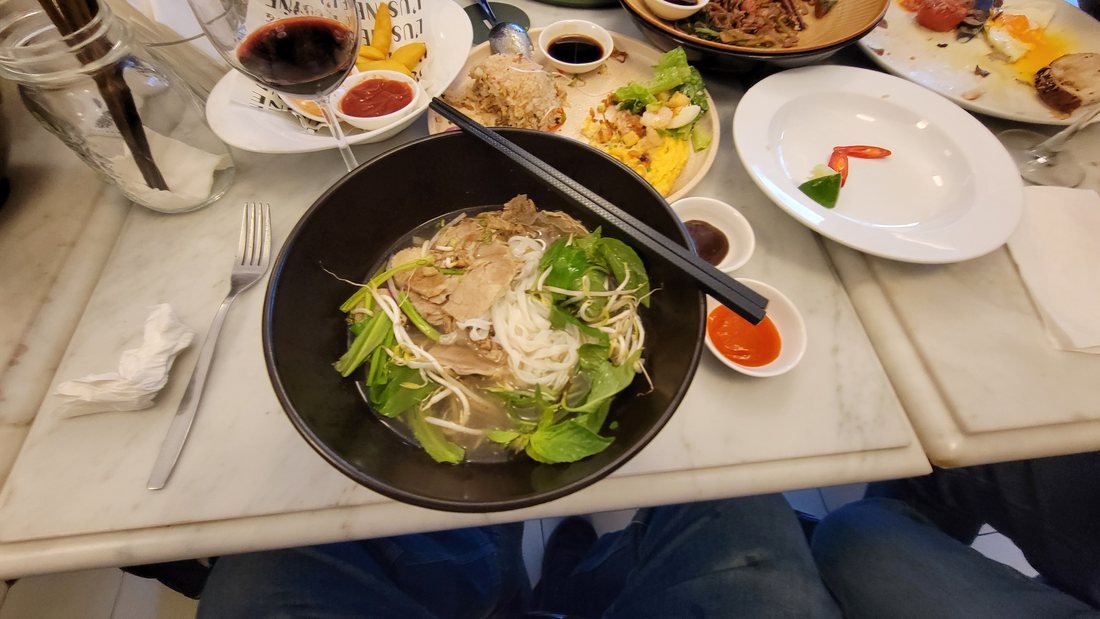
I should not overstate the case, because two evenings earlier I ate phở at 17:53, indoors, at a marble table, and it was excellent.
So the honest version is not “phở is only a breakfast food and everyone else has it wrong.” People in Saigon eat it at both ends of the day, and this bowl is proof from my own camera. The claim that survives is narrower and I think more useful: the pavement six-in-the-morning bowl is the ordinary one, and it is the one that does not travel. What gets exported is the sit-down evening version — the one with a knife and fork on the table — and then that version gets called the real thing.
Note the herb plate arriving on the side rather than in the bowl. That is the same rule as the bánh xèo: the greens are not a garnish and they are not the kitchen’s decision. They come separately because you are supposed to be the one adding them.
Then a bánh mì, twenty minutes later
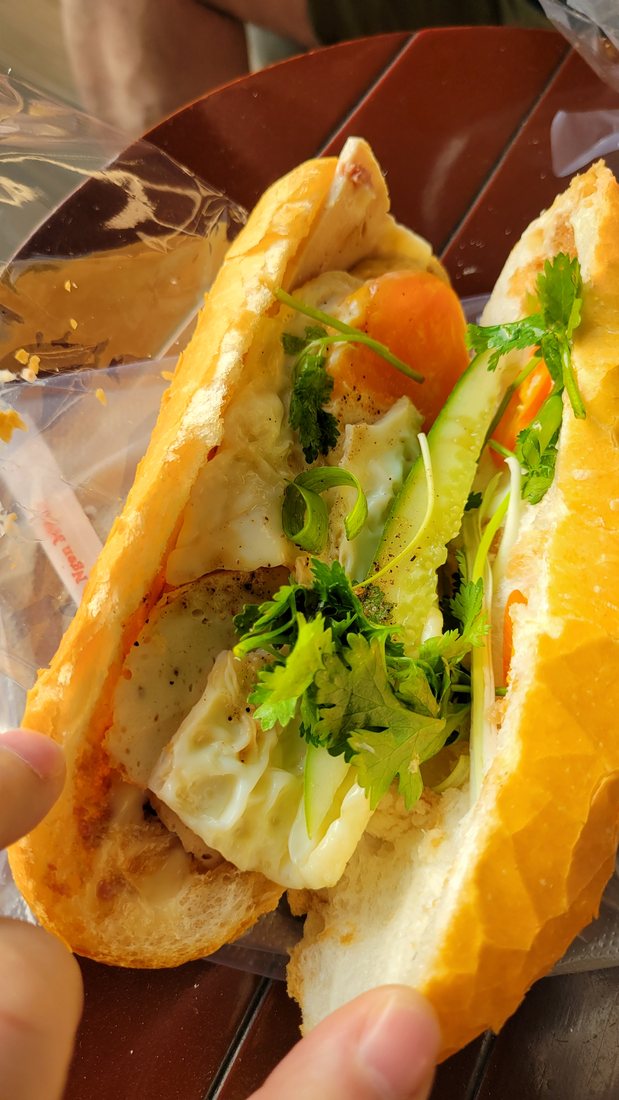
The bánh mì photograph is the clearest food picture I brought home, and it is worth reading like a diagram, because a bánh mì is a stack of separate decisions:
- The baguette. Thin, crisp shell, almost hollow. It is a French loaf that Vietnam rebuilt — lighter, airier, and much more shatter-y than the French one, and better for this job because of it.
- The pâté, spread on the inside. The French part that stayed French.
- The egg, fried.
- The pickled vegetable — carrot and daikon, the đồ chua that turns up in half the food on this trip.
- Coriander, whole sprigs, not chopped.
- Chilli, fresh, sliced.
Every one of those is doing a different job — fat, acid, heat, herb, crunch, and a bread engineered to fail cleanly under your teeth rather than fight you. Take any one out and the sandwich sags.
⭐ And note what is not in it: no butter, no lettuce, no tomato, no mayonnaise-as-the-point. The moisture is doing its work through the pâté and the pickle, not a dressing. That is why a good bánh mì does not go soggy in the twenty minutes it takes to eat it standing up.
The part I want to be honest about
I can tell you what was in these two things because I photographed them close up and I can see them.
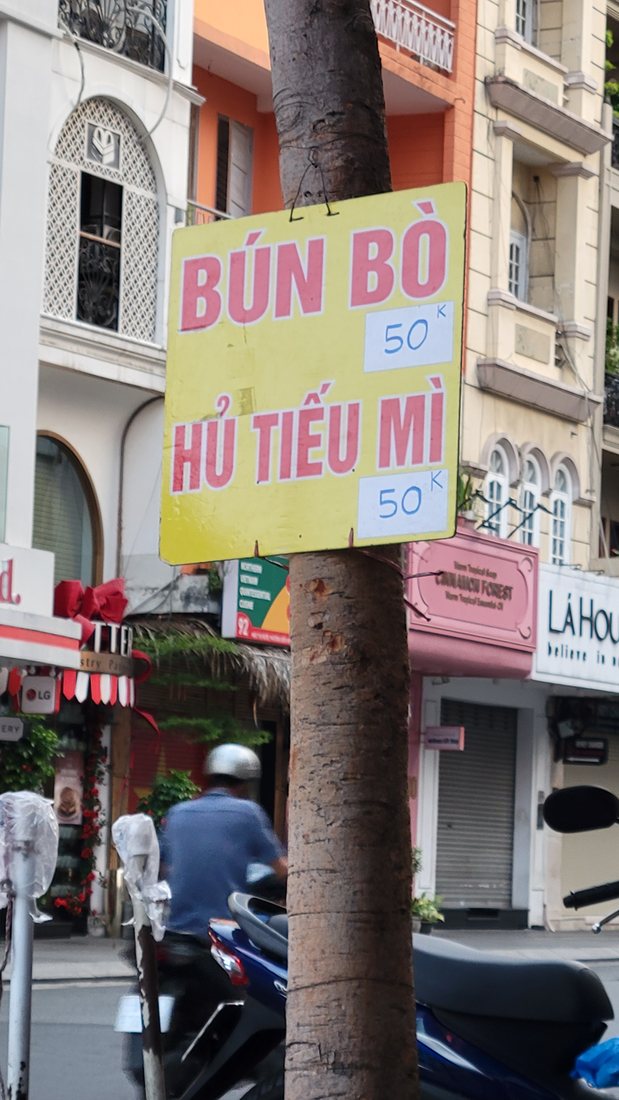
I cannot tell you the name of either stall. I did not photograph the signs, I did not ask, and at that hour I was more interested in eating than in documenting. Both of these are unnamed by me on purpose rather than given a plausible name I would be inventing.
What I would cook to get back there
The two dishes on this page are the two most useful things I brought home, because both are genuinely reproducible in Michigan.
Phở is a long broth and an assembly job — the work is all in the stock, and the stock is mostly patience and a hot oven for the bones and aromatics. Bánh mì is not really a recipe at all; it is a shopping list plus a pickle, and the pickle is the only part you actually have to make.
The pickle turns out to be the load-bearing item across this entire trip, so it gets its own recipe and I keep pointing at it.
Next: Cơm Tấm Mộc — the single most reproducible plate of the whole trip.
Comments (0)